Comparing China’s Tiananmen Incident to the U.S. War on the Philippine People

April 22, 2015

China has admitted that some of its citizens and troops were wounded and killed during the unrest known as the Tiananmen Incident and/or Massacre. On Wiki, you will read that there were 241 – 2,600 deaths and 7,000 – 10,000 injured. In addition, on June 19, Beijing Party Secretary Li Ximing reported to the Politburo that the government’s confirmed death toll was 241, including 218 civilians (of which 36 were students), 10 PLA soldiers and 13 People’s Armed Police, along with 7,000 wounded (5,000 soldiers and police along with 2,000 civilians).

Now for the barbaric war the United States waged on the Philippine people. If you haven’t heard about this war before, don’t be surprised, because it has been suppressed (not censored). I mean, when’s the last time you’ve heard about it in the U.S. media compared to the number of times you’ve heard of China’s Tiananmen Square Massacre in 1989. In fact, when I posted What really happened in Tiananmen Square in 1989, Michael Brant left this comment, “This could have been written by the PRC media spin department.”  I wonder what Brant would say about the U.S. war against the Philippine People—if he’s ever heard of that brutal war.

After the Spanish American War, America took possession of the Philippine islands and waged war against the native people killing between 300k – 1 million noncombatants. This conflict was caused by the struggle of the First Philippine Republic to gain independence from the United States following the latter’s acquisition of the Philippines from Spain after the Spanish–American War.

There is a 2010 film about this war called Amigo. I think the odds favor that you have never heard of this film that doesn’t portray the U.S. as the freedom loving country most Americans think it is. In fact, the film’s widest release in the U.S. was in 10 theaters and total domestic earnings were $184,705.  The production budget for the film was $1.5 million, and it never had a global release. The film is available through Amazon as an instant video to stream, but no DVD is available. I haven’t seen this film yet, because I’m still waiting for the DVD.

I think it’s always good to have the facts before passing judgment, and history does count if you are aware of it as long as it isn’t suppressed or revised.

Jesus Christ said, So when they continued asking Him, He lifted Himself up and said unto them, “He that is without sin among you, let him first cast a stone at her.” John 8:7

If we take what He said seriously, then does any American have a right to annually condemn China for what happened during the Tiananmen incident in 1989 without also condemning the United States for what it did in the Philippines?

______________________________

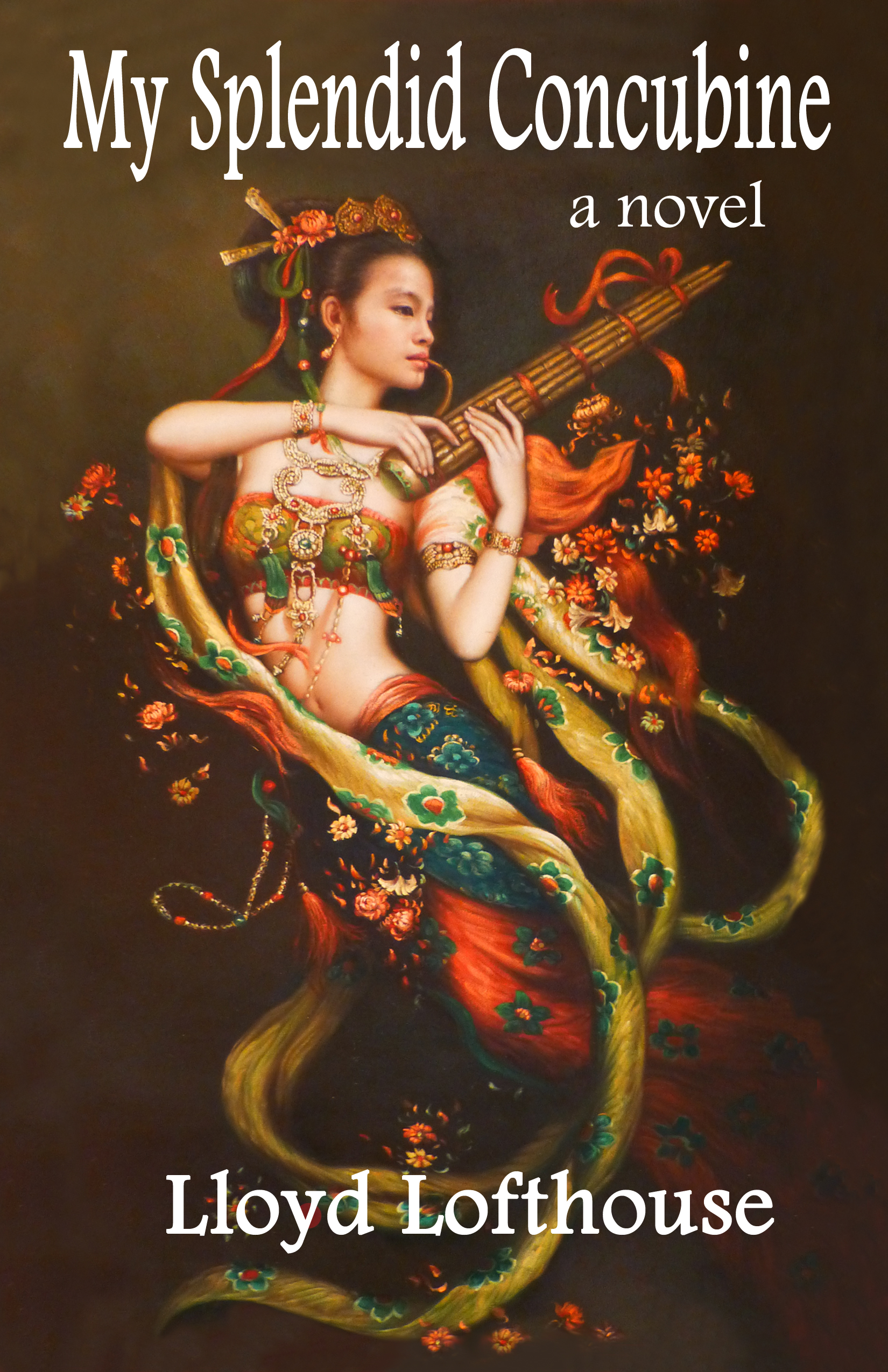
Lloyd Lofthouse is the award-winning author of My Splendid Concubine [3rd edition]. When you love a Chinese woman, you marry her family and culture too. This is the love story Sir Robert Hart did not want the world to discover.
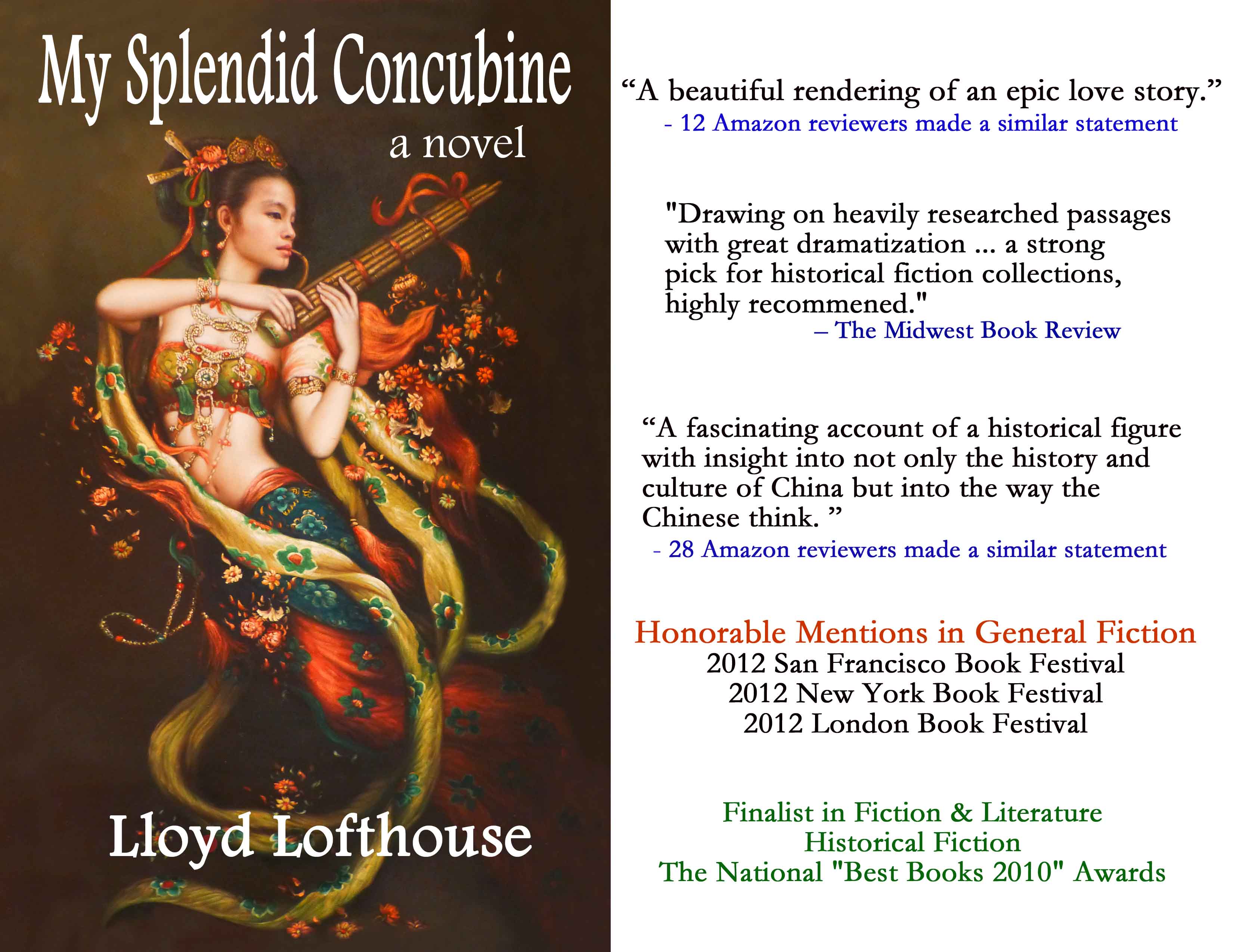
2015 Promotion Image for My Splendid Concubine

Subscribe to “iLook China”!
Sign up for an E-mail Subscription at the top of this page, or click on the “Following” tab in the WordPress toolbar at the top of the screen.

About iLook China

China’s Holistic Historical Timeline


The growing epidemic of illegal Drug use in China

February 4, 2015

There is a price that comes with living in a so-called “free” world with human rights that extend to every citizen — even hard-core criminals.

Besides violent crime and human trafficking (slavery), one of those challenges is the illegal drug trade.

For instance, in the United States, The DEA reports that Mexican drug cartels are making a bigger push to organize their black market activities in the United States, Europe and neighboring Latin American countries.

In fact, the US Justice Department reported, “The illegal drug market in the United States is one of the most profitable in the world.”

What about China? Between 1950 – 1976, China had little crime and had eliminated illegal drug use.  Under Mao, the drug traffickers were executed and addicts either rehabilitated or shot. Those who survived fled to Hong Kong, Macao, Europe and the United States. But after Mao’s death, that started to change.

Until the 1970s, China’s economy was managed by the communist government and was kept closed from other economies. Together with political reforms, China in the early 1980’s began to open its economy and signed a number of regional trade agreements.

Eventually China joined the World Trade Organization in December 2001. This meant that China could only engage in trade with the world following rules the CCP did not make. After China joined the World Trade Organization (WTO), the service sector was considerably liberalized and foreign investment was allowed; restrictions on retail, wholesale and distribution ended. Banking, financial services, insurance and telecommunications were also opened up to foreign investment.

That’s when the illegal business of trafficking in illegal drugs returned to China with a vengeance.

Since the early 1980’s, due to China’s economic boom to lift hundreds of millions out of poverty, some parts of the country now battle social problems, including soaring rates of drug addiction. One of the worst affected areas is China’s southern province of Yunnan, the entry point for most heroin.

Yunnan’s border is easy to cross from the infamous Golden Triangle. In Yunnan, a fix of heroin costs about the same as a US chocolate bar.

To deal with this challenge, Chinese authorities send heroin addicts to a drug rehabilitation center at the provincial capital of Yunnan province, which is where the largest drug rehabilitation center in the world is located.

The heroin addicts spend two years in a strict rehabilitation program to help kick the habit. However, once released, many return to addiction.

The Atlantic.com reports that “The country’s economy has exploded over the past quarter-century. … Only 25 years ago, narcotics and illicit drug use were nearly unheard of. Today, Chinese society and government authorities are increasingly grappling with the explosion in drug use and drug addicts, as well as how to respond to the phenomenon. With more relaxed borders, increased wealth, and greater individual freedoms, drug addiction and its consequences threaten to become a permanent fixture within Chinese society.”

In 1992, there were less than 180,000 registered drug abusers in China. By 2014, that number had climbed to about 2.5 million.

_______________

Lloyd Lofthouse is the award-winning author of My Splendid Concubine [3rd edition]. When you love a Chinese woman, you marry her family and culture too. This is the lusty love story Sir Robert Hart did not want the world to discover.

Honorable Mentions in General Fiction
2012 San Francisco Book Festival
2012 New York Book Festival
2012 London Book Festival
2009 Los Angeles Book Festival
2009 Hollywood Book Festival

Finalist in Fiction & Literature – Historical Fiction
The National “Best Books 2010” Awards

 E-book_cover_MSC_July_24_2013

Subscribe to “iLook China”!
Sign up for an E-mail Subscription at the top of this page, or click on the “Following” tab in the WordPress toolbar at the top of the screen.

About iLook China

China’s Holistic Historical Timeline


Infamous Angel Island—the Ellis Island of America’s West Coast

October 22, 2014

There is a poem on the Statue of Liberty that ends with “Give me your tired, your poor, Your huddled masses yearning to breathe free, The wretched refuse of your teeming shore. Send these, the homeless, tempest-tossed to me, I lift my lamp beside the golden door!”

Angel Island in San Francisco Bay was America’s west coast Ellis Island, but those famous last lines on the Statue of Liberty Poem did not apply to the Chinese and other Asians.

From 1919 to 1940, mostly Asian immigrants entered the US through Angel Island.

After 1940, the immigration station on Angel Island was forgotten until a California Park Ranger, Alexander Weiss, discovered the stories carved in the walls.

He thought that there were stories here as if there were ghosts waiting to be heard.

Over half of the Angel Island immigrants came from China and Japan and most of the carvings on the walls were poems written in Chinese.

A former detainee, Dale Ching, went through the station in 1937 when he was sixteen.  Even though Dale’s father was born in the United States, he still had to go through the immigration station.

While the East Coast’s Ellis Island welcomed immigrants, Angel Island’s story was one of sadness and suffering.

Most European immigrants who went through Ellis Island stayed a few hours, but immigrants on Angel Island were kept locked up under armed guard with barbed-wire fences surrounding the buildings and some people stayed for days, weeks, months and years.

The park service wanted to tear the Angel Island buildings down but Weiss found supporters and they struggled to preserve this history.  They succeeded and the restoration project was challenging.

Alexander Weiss sums up the video saying we should know both the right and the wrong from U.S. history.

_______________

Lloyd Lofthouse is the award-winning author of My Splendid Concubine [3rd edition]. When you love a Chinese woman, you marry her family and culture too. This is the love story Sir Robert Hart did not want the world to discover.

Low-Res_E-book_cover_MSC_July_24_2013

Subscribe to “iLook China”!
Sign up for an E-mail Subscription at the top of this page, or click on the “Following” tab in the WordPress toolbar at the top of the screen.

About iLook China

China’s Holistic Historical Timeline


Discover three of Asia’s Republics–Singapore: Part 3 of 3

January 16, 2014

I’ve written about the Republic of Singapore before in The Reasons Why China is Studying Singapore.

Singapore is a model “republic” respected around the world. In fact, Singapore is tied for number one in the Corruption Perception Index for 2010 with a score much better than the U.S. Source: Transparency.org

Focus Singapore says, “It is interesting to note that Singapore laws are very strict with harsh punishments for smoking and littering in public places.”

For example, “A drug offence in Singapore can attract severe penalties including a death penalty.… Homosexual acts, including kissing between men, are illegal in Singapore and penalties include imprisonment.”

Human Rights Watch reports, “Singapore officials should cease using criminal defamation and contempt laws to silence government critics. … Free speech is an endangered species in Singapore.”

In fact, “Singapore remains the textbook example of a politically repressive state,” said Phil Robertson, deputy Asia director at Human Rights Watch. “Individuals who want to criticize or challenge the ruling party’s hold on power can expect to face a life of harassment, lawsuits, and even prison.” Source: Human Rights Watch

But the Western media often ignore human rights violations in Singapore, because, “The United States has maintained formal diplomatic relations with Singapore since it became independent in 1965. Singapore’s efforts to maintain economic growth and political stability and its support for regional cooperation harmonize with U.S. policy in the region and form a solid basis for amicable relations between the two countries.”

About religion — “Singapore generally allows religious freedom, although religious groups are subject to government scrutiny, and some religious sects are restricted or banned. Almost all Malays are Muslim; other Singaporeans are Taoists, Buddhists, Confucianists, Christians, Hindus, or Sikhs.” Source: U. S. Department of State

Lee Kuan Yew, Prime Minister from 1959 to 1990, was the world’s longest serving prime minister and was elected seven times. His son Lee Hsien Loong has been Prime Minister since 2004. When he runs for office, there is no competition.

When examined closely, Singapore seems similar to China except for China’s policy that leaders may only serve two five-year terms and must retire at sixty-seven.

Return to Discover three of Asia’s Republics: Part 2 or start with Part 1, South Korea

_______________

Lloyd Lofthouse is the award-winning author of My Splendid Concubine [3rd edition]. When you love a Chinese woman, you marry her family and culture too. This is the love story Sir Robert Hart did not want the world to discover.

His latest novel is the multiple-award winning Running with the Enemy.

Subscribe to “iLook China”!
Sign up for an E-mail Subscription at the top of this page, or click on the “Following” tab in the WordPress toolbar at the top of the screen.

About iLook China

China’s Holistic Historical Timeline


Discover three of Asia’s Republics–Thailand: Part 2 of 3

January 15, 2014

Transparency.org ranks Thailand’s corruption at 78—tied with China.  India, for comparison, ranks 87th—worse than China and Thailand.

A Blog about Political Prisoners in Thailand claims that there is no freedom of speech in Thailand. Saying what you feel or think can get you thrown in jail.

Thailand also passed a Computer Crimes act in 2007. The language in one section sounds similar to language in China’s Constitution that Western Critics often complain of.

The Asian Human Rights Commission writes that Thailand chained wounded detainees recently under an Emergency Decree. “For many years, the AHRC and other concerned organizations and individuals have voiced outrage at the shackling and otherwise barbaric treatment of accused criminal prisoners in Thailand.”

In May 2010, Reuters reported that Bangkok was being cleaned up after the worst riots in modern history. “At least 54 people were killed and more than 400 injured in the latest bout of violence which began on May 14. Almost 40 buildings in the city were set on fire and the tourism and retail sectors have been devastated.”

And analysts report that “The political problems are not over….”

About women in Thailand, the 1997 Constitution increased legal protections for women and persons with disabilities. However, some inequities in the law remained and some protections were not enforced. Violence and societal discrimination against women were problems. Societal discrimination against hill tribes and religious and ethnic minorities continued. There were reports of forced labor and child labor. Trafficking in women and children, coerced prostitution and labor were serious problems. Source: U.S. Department of State

We seldom hear about Thailand in the Western media for problems that don’t exist in China. Even when there is turmoil and unrest in Thailand, the news reports in the West are friendly compared to the language used to report incidents that take place in China.

However, the reason for this soft treatment is obvious. Thailand has had close relations with the United States since the end of the Second World War. Threatened by communist revolutions in neighboring countries such as Vietnam, Cambodia, and Laos during the Cold War, Thailand actively sought U.S. assistance to contain the spread of communist in the region. Source: U.S. Department of State

Continued on January 16, 2014 in Discover three of Asia’s Republics: Part 3 or return to Part 1

_______________

Lloyd Lofthouse is the award-winning author of My Splendid Concubine [3rd edition]. When you love a Chinese woman, you marry her family and culture too. This is the love story Sir Robert Hart did not want the world to discover.

His latest novel is the multiple-award winning Running with the Enemy.

Subscribe to “iLook China”!
Sign up for an E-mail Subscription at the top of this page, or click on the “Following” tab in the WordPress toolbar at the top of the screen.

About iLook China

China’s Holistic Historical Timeline