Cheating is a Global Problem

June 11, 2013

I guess I’m naïve or stupid or something. During the nine years I attended colleges and universities to earn my BA in journalism and MFA in writing, I did all my own work. It didn’t even occur to me that I could pay someone else to do the work for me.

And when I read, “Rampant cheating hurts China’s research ambitions” (Yahoo news), I was disappointed at the lack of balance. There was no mention that cheating is a problem globally—not just in China.

Was this another example of China bashing?

I taught journalism and was an adviser for an award winning high-school newspaper for several years, and the student reporters learned to write balanced pieces—even for the opinion page. I taught that both sides of an issue should be heard even if the balance isn’t perfect and one side is not politically correct.


Listen to the first few minutes to get the idea.

Since Yahoo’s headquarters are in Sunnyvale, California, I’m going to focus on cheating in America to correct this imbalance.

ABC News/Primetime published “A Crisis in America’s Schools — How It’s Done and Why It’s Happening“.  “…according to a 2002 confidential survey of 12,000 high school students, 74 percent admitted cheating on an examination at least once in the past year…. Lifting papers off the Internet is one of the newer trends in plagiarism — and technology is giving students even more ways to cheat nowadays.”

Then there’s “High-Tech Cheating in College” about cheating at MIT, California Polytechnic State University at San Louis Obispo, and Stanford University. “Many colleges offer no comprehensive approach to minor academic cheating (the exceptions are institutions with honor codes, though few have them according Tracy Mitrano, Cornell University’s director of information-technology policy.”

Then there is Lance Armstrong and the US cycling team.

Discover Education Chinese Style

_______________

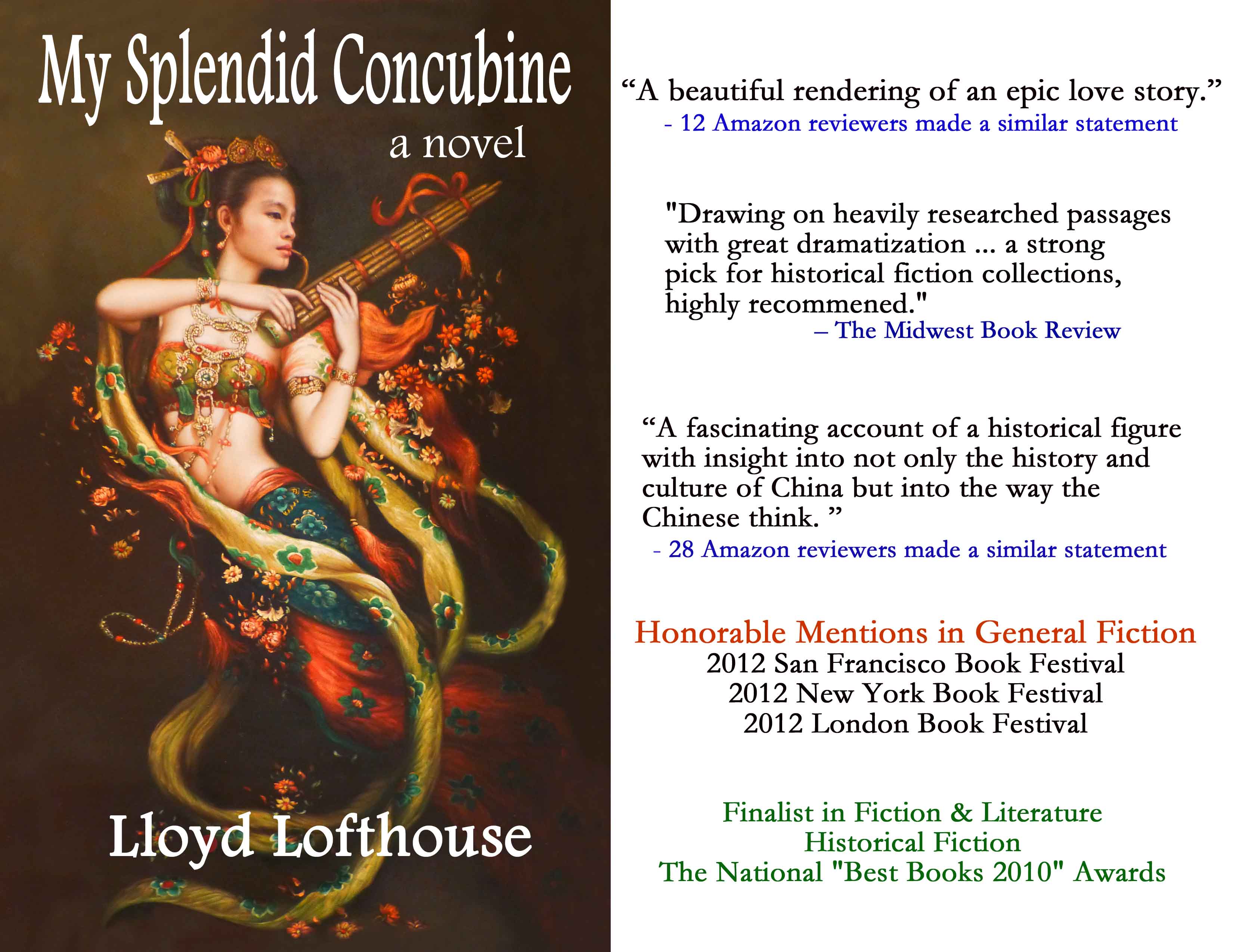
Lloyd Lofthouse is the award-winning author of My Splendid Concubine [3rd edition]. When you love a Chinese woman, you marry her family and culture too. This is the love story Sir Robert Hart did not want the world to discover.
His latest novel, Running with the Enemy, was awarded an honorable mention in general fiction at the 2013 San Francisco Book Festival.

Subscribe to “iLook China”!
Sign up for an E-mail Subscription at the top of this page, or click on the “Following” tab in the WordPress toolbar at the top of the screen.

About iLook China


The Voice of Shanghai Dies—Shocking Fans

June 6, 2013

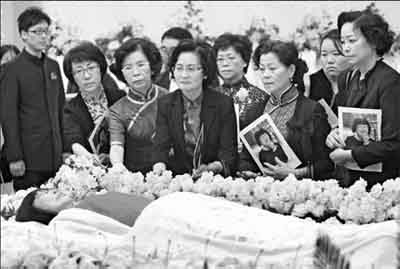
Cheng Naishan, a mainland Chinese author and writer known for her work about life in Shanghai, died recently of leukemia.

The Blue House, a novel that is also available in English, French and Spanish, is about the world of romance, business and family life in Shanghai during and after The Cultural Revolution.

Image of Cheng Naishan

Her work is known for the history, culture and legacy of Shanghai in the 1930s before World War II when the city was known as the “Paris of the Orient”.

Cheng was born in 1947 into a family of bankers. The family moved to Hong Kong in 1949, and returned to Shanghai—out of patriotism—in 1956. Her first story was published in a literary magazine in 1979 launching a literary career in China that spanned more than three decades.

“I know some people say I always write about the old Shanghai and try to keep the flavor of old Shanghai and that makes my writing look less modern,” she said in a 2012 interview with an official publication run by the government-backed Shanghai Federation of Literary and Art Circles. “I am not concerned about what those people say about me because in my heart the old Shanghai is just an endless story and I won’t stop writing about it.”

The editor of the Shanghai Dialect column for Xinmin Evening News, Lyu Zheng said, “She can write adeptly about the lower-class life experience of dumping the chamber pot, as well as upper-class social life between coffee cups.”

funeral of Cheng Naishan

Her husband, Yan Erchun, said, “Naishan has great love for the city of Shanghai, especially the district of Jing’an. She was born and raised here. There are endless stories she wanted to write about Shanghai.”

Cheng was diagnosed with leukemia in the winter of 2011, and she continued writing until near the end.

Discover Life is a Miracle, a movie review

_______________

Lloyd Lofthouse is the award-winning author of My Splendid Concubine [3rd edition]. When you love a Chinese woman, you marry her family and culture too. This is the love story Sir Robert Hart did not want the world to discover.

Subscribe to “iLook China”!

Sign up for an E-mail Subscription at the top of this page, or click on the “Following” tab in the WordPress toolbar at the top of the screen.

About iLook China


Making the Hajj from China: Part 1/2

May 27, 2013

This two-part post may come as a surprise to many in the West that think there is no religious freedom in China.

In fact, China handles religious freedom similar to how Singapore does, and Singapore is seldom if ever criticized in the Western media for this practice.

The U.S. Department of State says that Singapore’s government has broad powers to limit citizens’ rights and handicap political opposition, which it uses. One of those restrictions is a limited freedom of religion.

However, the Constitution for the Republic of Singapore offers the same fundamental liberties China and the US does, which includes freedom of speech, assembly and association and freedom of religion.

For example, Singapore bans the Jehovah’s Witnesses and the Unification Church by making public meetings illegal. The Falun Gong has also had problems in Singapore.

China, on the other hand, recognizes five religions — Buddhism, Taoism, Islam, Catholicism and Protestantism but has banned certain new religious movements that are considered cults. China does not recognize cults as religions.

In the video embedded with this post, Al Jazeera follows Chinese Muslims as they prepare to undertake the hajj pilgrimage.

The ancient city of Xian in Shaanxi province is home to about 60,000 ethnic Chinese Muslims.

Xian claims it has a Muslim history going back more than thirteen hundred years when Islam was first introduced to China in 650 AD.

In fact, the oldest mosque in China was built in 685-762 AD in Xian during the reign of Emperor Xuanzong of the Tang Dynasty.

Chinese Imam Ma Yi Ping speaks both Chinese and Arabic. He studied at the Islamic University of Medina and has made the hajj several times. He was taught to be a devout Muslim by his parents during Mao’s time when the mosques in China were closed.

Despite the persecutions that took place during the Cultural Revolution (1966 – 1976), Islam survived in China.

Ma Yi Ping says that after Mao and the Gang of Four were gone and China opened for trade with the world, he did not have to study the Quran in secret anymore.

Since the 15th century, Xian Muslims have been going to Mecca in Saudi Arabia for the annual Hajj pilgrimage.

In the past, during the ancient days of the Silk Road, these journeys started and ended in Xian’s Muslim quarter. Today is no different.

Continued on May 28, 2013 in Making the Hajj from China: Part 2

_______________

Lloyd Lofthouse is the award-winning author of My Splendid Concubine [3rd edition]. When you love a Chinese woman, you marry her family and culture too. This is the love story Sir Robert Hart did not want the world to discover.

Subscribe to “iLook China”!
Sign up for an E-mail Subscription at the top of this page, or click on the “Following” tab in the WordPress toolbar at the top of the screen.

About iLook China


2013 San Francisco Book Festival Award Winners

May 6, 2013

Running with the Enemy by Lloyd Lofthouse was awarded an honorable mention in general fiction at the 2013 San Francisco Book Festival.


Pageflex Persona [document: PRS0000035_00034]

The winner of the general fiction category went to John Irving’s In One Person published by Simon & Schuster, and the grand prize was awarded to The Power of Starting Something Stupid: How to Crush Fear, Make Dreams Happen & Live Without Regret by Richie Norton with Natalie Norton — Shadow Mountain Publishing.

John Irving won the National Book Award in 1980 for The World According to Garp, and he received an O. Henry Award in 1981 for the short story “Interior Space. In 2000, he won the Oscar for Best Adapted Screenplay for The Cider House Rules.

Richard Norton, the grand prize winner of the 2013 San Francisco Book Festival, is the CEO of Global Consulting Circle. He is a sought after speaker and consultant for the corporate growth and personal development industries. Norton has shared the stage with bestselling authors such as Stephen Covey, author of The 7 Habits of Highly Effective People, and Kevin Rollins, former CEO of Dell Computers.

Lloyd Lofthouse is the author of the award winning My Splendid Concubine and Running with the Enemy. His short story, A Night at the ‘Well of Purity’ was named a finalist in the 2007 Chicago Literary Awards. Anchee Min, Lloyd’s wife, is the author of Red Azalea, a New York Times Notable Book of the Year—in addition to national bestsellers Becoming Madame Mao and Empress Orchid, which was a finalist for the British Book Awards. Min’s memoir, the sequel to Red AzaleaThe Cooked Seed—will be released May 7, 2013.

The award winners for the 2013 San Francisco Book Festival will be honored on May 18, 2013 at a public free festival and a private awards ceremony held at the Sir Francis Drake Hotel in San Francisco.

_______________

Lloyd Lofthouse is the award-winning author of My Splendid Concubine [3rd edition]. When you love a Chinese woman, you marry her family and culture too. This is the love story Sir Robert Hart did not want the world to discover.

Subscribe to “iLook China”!
Sign up for an E-mail Subscription at the top of this page, or click on the “Following” tab in the WordPress toolbar at the top of the screen.

About iLook China


China’s last Empress Dowager-regent

April 8, 2013

The Last Empress of China ruled the Qing Dynasty as a coregent after her husband, the Xianfeng Emperor died in 1861, and her son, The Tongzhi Emperor (1856 – 1875), was too young to rule China.

Technically, The Empress Dowanger Tzu Hsi (Cixi) wasn’t the last empress.

However, she was the last empress to rule China as a regent for her son, and then her nephew after her son died at age 19.

Sterling Seagrave, the author of Dragon Lady, writes, “Absurdly little was known about her life. The New York Times printed a long, error filled obituary calling her Tzu An, the title of her coregent, who had died twenty-seven years earlier.”

Many current history texts have slandered the Dowager Empress Tzu Hsi (1835 – 1908) without much evidence as one of history’s most monstrous women—a ruthless Manchu concubine who seduced and murdered her way to the throne in 1861 to rule China through prevision, corruption and intrigue.

This is how many still think of Tzu Hsi. In addition, she has been accused of murdering her son, and then years later her nephew, who died the day before she did.

Instead, her son may have died of syphilis because it was rumored he preferred prostitutes to the hundreds of virgin concubines that belonged to him.

Some rumors claim that Tzu Hsi had her nephew poisoned, but Yuan Shikai may also have poisoned him. There is no evidence to support either theory.

How did the Tzu Hsi earn such a bad reputation? It seems that she earned this reputation similar to how today’s China has been smeared in much of the Western media.

To understand how this came about, I will make a comparison to Jayson Blair, a young reporter for the New York Times who wrote more than 600 articles for the newspaper. During his short career with the New York Times, Blair committed repeated “acts of journalistic fraud”, including stealing material from other papers and inventing quotes.

Blair’s fraud was revealed in 2003, while he was still working for the newspaper. Source: BBC News

However, Jayson Blair was not the first reporter to commit “acts of journalistic fraud”.

Edmund Backhouse did the same thing writing about Empress Dowager Tzu Hsi at the beginning of the 20th century, and his lies and deceit wouldn’t be discovered until Sterling Seagrave was researching for his book Dragon Lady decades later.

And Backhouse’s journalistic fraud served as the foundation for most history texts still used today that continue to slander Tzu Hsi.

To do Tzu Hsi justice and to discover the truth, one should read Seagrave’s Dragon Lady, The Life and Legend of the Last Empress of China.

To learn who the real woman was we may want to consider what Robert Hart had to say about Hzu Hsi in his letters and journals.  Robert Hart arrived in China from Ireland in 1854 to learn the language and work as an interpreter for the British consulate in Ningpo. In 1859, almost five years later, Hart quit his job with the British and went to work for the Emperor of China as an employee. He returned to England in 1908.

For most of his stay in China after 1859, Hart was Inspector General of Chinese Maritime Customs and worked closely with the Imperial ministers and Manchu princes. Before returning to England, Hart met with the Dowager Empress in a private audience.

Hart referred to Tzu Hsi as “the Buddha” and later “the old Buddha” since she was a devout Buddhist and it is obvious that he thought of her with affection and admiration.

In fact, Hart, who is considered the Godfather of China’s modernization, at no time indicated in anything he wrote that Tzu Hsi was conspiratorial, sinister or manipulative. However, he did indicate that she was strong-willed and hot-tempered, clever and had ability.

Tzu Hsi died in 1908 a few weeks after Robert Hart left China. The Qing Dynasty collapsed in 1911.

Discover more of The Qing Dynasty (1644 – 1911)

_______________

Lloyd Lofthouse is the award-winning author of My Splendid Concubine [3rd edition]. When you love a Chinese woman, you marry her family and culture too. This is the love story Sir Robert Hart did not want the world to discover.

Subscribe to “iLook China”!
Sign up for an E-mail Subscription at the top of this page, or click on the “Following” tab in the WordPress toolbar at the top of the screen.

About iLook China