I was once an avid reader, but then I became a writer and eventually an author. I preface this exploration of Simon Winchester’s “The Man Who Loved China” with that opening sentence, because I want to make it clear that when I decided to become a writer back in 1968, I went from reading one or two paperbacks daily to reading maybe one or two a month. It takes time to learn the craft of writing and more time to write, edit and revise.
For that reason, I’ve been aware of “The Man Who Loved China” for several years, and put off buying and reading it due to how much time I actually have to read. Then, one recent Sunday, after eating at Herbivore in Berkeley, California, I walked to Half Price Books and also stopped at Pegasus Books where I found a used, unabridged copy of the audio book and bought it—9 hours on 8 compact discs.
I was on the last disc when I decided to buy the paperback and add it to my China collection.
To borrow the blurb on the cover of the paperback, I found this biography to be “The fantastic story of the eccentric scientist who unlocked the mysteries of the Middle Kingdom.” I was blown away with the story of Joseph Needham’s life—he was an incredible, free thinking genius who refused to conform.
I totally agree with this pull quote for the YouTube video above: “In sumptuous and illuminating detail, Simon Winchester, the bestselling author of The Professor and the Madman (“Elegant and scrupulous” —New York Times Book Review) and Krakatoa (“A mesmerizing page-turner”—Time) brings to life the extraordinary story of Joseph Needham, the brilliant Cambridge scientist who unlocked the most closely held secrets of China, long the world’s most technologically advanced country in THE MAN WHO LOVED CHINA.”
Because of what I learned about Joseph Needham and his Science and Civilisation in China (1954–2008), a series of books initiated and edited by this British biochemist and self-trained Sinologist (1900–1995), I want to share a hateful, ignorant, mean, trollish, biased, racist comment that arrived recently for one of the posts on this Blog. The reason I’m doing this is because this one comment represents the thinking of far too many ignorant fools outside of China and specifically in the United States.
****
The post this comment was left for was Amy Chua talks to China’s Tiger Women. That comment will never be approved for that post.
“Tiger parenting is great if you want your child to be as dull-witted as the 1.4 billion people in the PRC. It is also great if your desire is to rear morally void sociopaths who walk by people dying on the streets rather than helping them. Those same people traded their children and ate them during the ‘great leap forward’. Any race which can feast on the flesh of their children should not be emulated. China has been around for 5000 years and to show for this they have ‘death by 1000 cuts’, infanticide and insolence.
“If tiger parenting is so great then what are the results? China is an innovation laggard, (sure they write patents but for the most part they are junk. See how many they write but fail to monetize those patents).
“Aside from this, where is China’s Einstein, Van Gogh, Davinci, Plato , Homer, etc. Five thousand years of history, twenty percent of the world’s population and two great thinkers. What a pathetic shit-stain.
Have a great time there you sell out piece of shit.”
****
Science and Civilisation in China deals with the history of science and technology in China, and the series was on the Modern Library Board’s 100 Best Nonfiction books of the 20th century.
In 1954, Needham—along with an international team of collaborators—initiated the project to study the science, technology, and civilisation of ancient China. This project produced a series of volumes published by Cambridge University Press. The project is still continuing under the guidance of the Publications Board of the Needham Research Institute (NRI), chaired by Christopher Cullen.
If you visit this page at Cambridge.org, you will read: “Dr. Joseph Needham’s account of the Chinese achievement in science and technology will stand as one of the great works of our time. It has been acclaimed by specialists in both East and West and also by readers with wider and more general interests. The text, based on research of a high critical quality, is supported by many hundreds of illustrations and is imbued with a warm appreciation of China. … He begins by examining the structure of the Chinese language; he reviews the geography of China and the long history of its people, and discusses the scientific contacts which have occurred throughout the centuries, between Europe and East Asia.”
Needham left us with a question that he never answered, and real China experts—not the trollish fool who left that comment on my Blog I’m sharing only in this post—are still debating that answer today, an answer to the curious fact that after centuries of scientific and technological creativity, everything in China suddenly ground to a halt in approximately 1500 AD. Needham wanted to know what happened, but he never answered his own question.
Needham’s research on China discovered that the ancient Chinese who lived before Europe’s Christian era (Before the birth of Jesus Christ), the old Chinese living when Europe had its Dark Ages, and the medieval Chinese en masse of the twelfth and thirteenth European centuries—did essentially all the inventing (an average of 15 important innovations a century for a total of more than 1,500). Then came the sixteenth century, when the Renaissances was fully under way in Europe, and the creative passions of China suddenly seemed to dry up; the energy began to ebb away and die.
Some critics claim the reason for this is because China is not a democracy, but that can’t be right because China has never been a democracy—especially during the fifteen hundred years it was the wealthiest and most scientifically and technological advanced country on the planet. Starting with the brutal Qin Dynasty (221 BC—206BC), followed by the Han (206 BC – 220 AD), then the Tang (618 – 907 AD) and Song Dynasties (960-1127 AD), China was ruled by emperors and a rigid imperial bureaucracy with a brutal legal system. To discover more, I suggest reading Duhaime’s Timetable of World Legal History—“China has the oldest continuously operating legal system in the world.”
I think the answer to Needham’s question starts with the Mongols—the first ethnic minority to conquer and rule China—that founded the Yuan Dynasty (1271-1368), and that led to a revolt by a number of Han Chinese groups, including the Red Turbans in 1351. The Red Turbans were affiliated with the White Lotus, a Buddhist secret society. The first Ming emperor started out as a penniless peasant and a Buddhist Monk who joined the Red Turbans in 1352. As the first emperor of the Ming Dynasty (1368-1644), he established a network of secret police from his own palace guard. They were partly responsible for the loss of 100,000 lives in several purges over the three decades of his rule. In addition, it was under Ming rule that the first Europeans, the Portuguese, established trade with China and settled Macau in 1557 as a permanent trade base in China—and this would turn out to be a horrible mistake for China.
It didn’t help that in the early 17th century, because of unusually dry and cold weather that shortened the growing season—effects of a larger ecological event now known as the Little Ice Age—famine, alongside tax increases, widespread military desertions, a declining relief system, and natural disasters such as flooding and inability of the government to manage irrigation and flood-control projects properly caused widespread loss of life and normal civility. The central government, starved of resources, could do very little to mitigate the effects of these calamities. Making matters worse, a widespread epidemic spread across China from Zhejiang to Henan, killing an unknown but large number of people. In fact, the deadliest earthquake of all time, the Shaanxi earthquake of 1556, occurred during the Jiajing Emperor’s reign, killing approximately 830,000 people.
Then the Qing Dynasty (1644 – 1912 AD)—another minority from north of the Great Wall, the Manchu—swept aside the Ming, and the Manchu were very suspicious of the Han Chinese. To avoid a revolution like the one that rid China of the Mongols, the Qing Emperors and their Manchu armies brutally suppressed the Han Chinese and deliberately kept competent people from rising to vital position in government and the military. Before the Qing, the most common method used to promote Han Chinese from within was through meritocracy using a university exam system that dates back to the Han Dynasty.
But even suppressing the Han Chinese and keeping them from positions of leadership in almost every sector of the government—note that it was mostly Han Chinese who were responsible for all of the impressive scientific and technological innovations that Needham documented taking place in China for more than fifteen hundred years before the 16th century—didn’t stop the rebellions. Under the Qing Dynasty, China suffered a series of devastating rebellions that claimed more than 60 million lives. The most devastating was the Taiping Rebellion led by a Christian convert who claimed to be the younger brother of Jesus Christ—if European Christian missionaries had not forced their way into China following the first Opium War, this rebellion would have never happened. Then there were the two Opium Wars—started by Christian countries—the Boxer Rebellion, the 1st Sino-Japanese War (1894-1895) followed by the second and most devastating Sino-Japanese War (1937-1945) that alone caused more than 20 million deaths in China.
How can anyone expect a country to prosper and continue to lead the world in innovation during an era starting in the 16th century that was plagued by natural disasters, rebellions, and wars that culminated with the Civil War between the Communists and the Nationalists ending with Mao’s devastating Cultural Revolution that destroyed its business and education sectors?
When Mao died in 1976, China’s education system was all but gone and had to be rebuilt from scratch, and many of the country’s public school teachers were dead from suicide or execution. In addition, if you read “The Man Who Loved China,” you will also discover that during World War II, one goal of the Japanese was to destroy China’s educational system, and the Japanese armies did all they could to destroy China’s universities, burn China’s libraries, and execute China’s scholars whenever possible.
______________________________
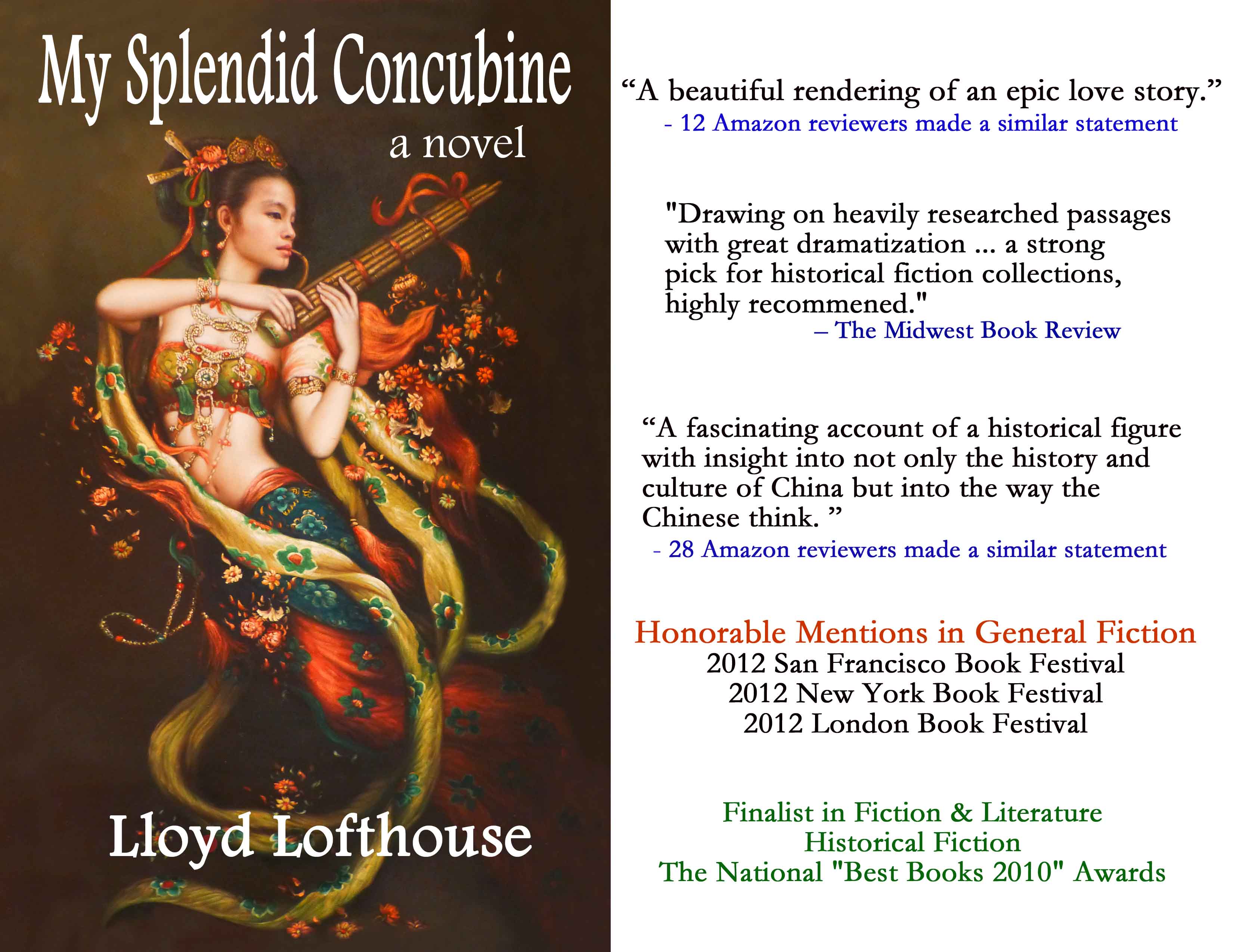
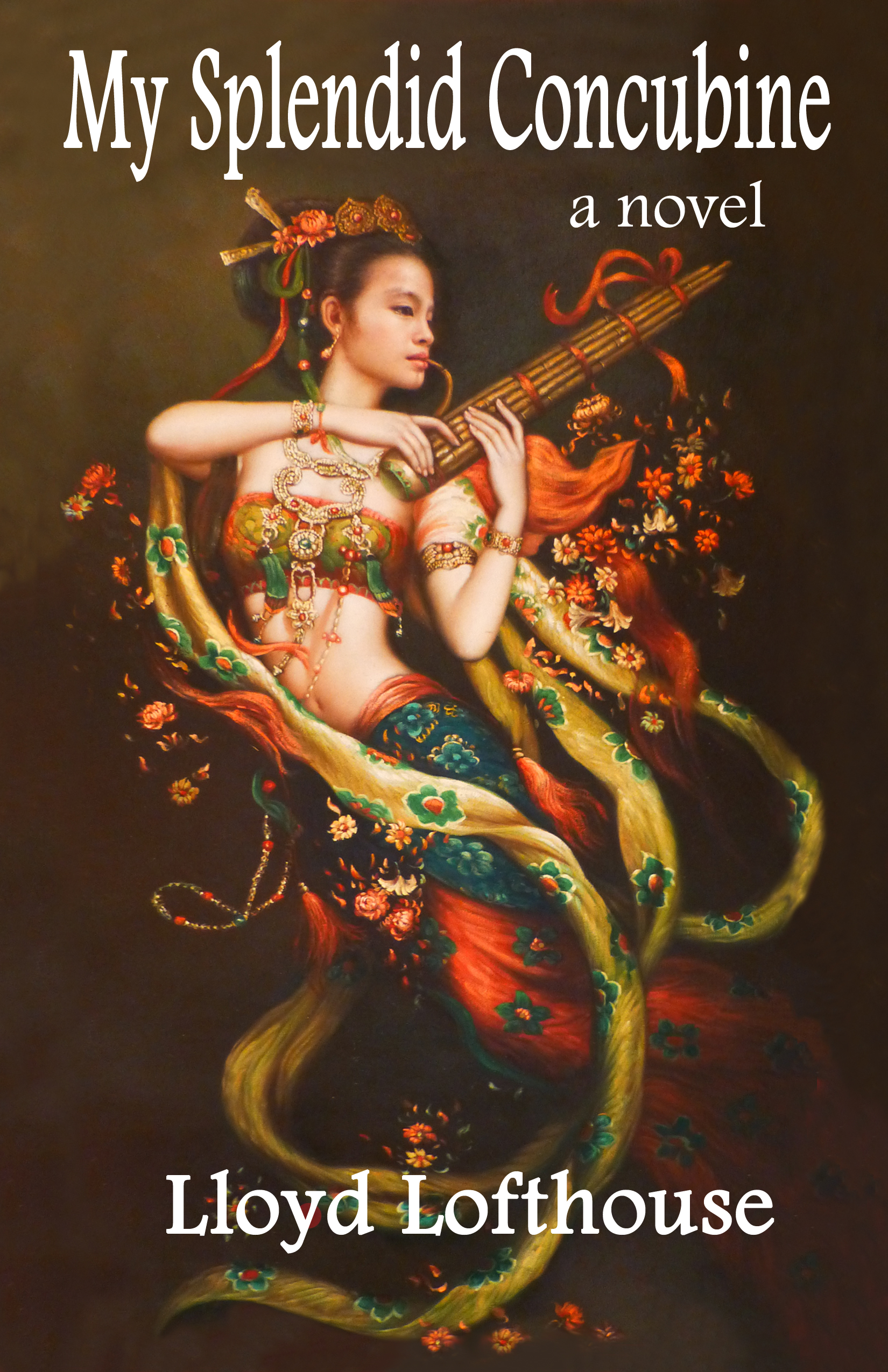
Lloyd Lofthouse is the award-winning author of My Splendid Concubine [3rd edition]. When you love a Chinese woman, you marry her family and culture too. This is the lusty love story Sir Robert Hart did not want the world to discover.
Subscribe to “iLook China”!
Sign up for an E-mail Subscription at the top of this page, or click on the “Following” tab in the WordPress toolbar at the top of the screen.


 Posted by Lloyd Lofthouse

 iLook China