a democracy in name only – a bumbling empire for sure

June 17, 2015

The China Mirage, supported by overwhelming factual evidence that was willingly suppressed or ignored for decades, clearly reveals that America is not the peace loving democracy that most Americans think it is.

The reality is that the U.S. is a global empire that took its first step toward World War II in the Pacific on July 8, 1853, when Commodore Matthew Perry commanded a U.S. Navy squadron that sailed into Tokyo harbor. Perry—under orders from President Millard Fillmore—demanded a treaty permitting trade and the opening of Japanese ports to U.S. merchant ships. The reluctant Japanese leaders, who wanted to be left alone, were not given a choice if they wanted to avoid the same invasions China had suffered mainly at the hands of the British and French during the Opium Wars.

After being forced to open its doors to Western trade so American corporations could profit—to protect itself in the future—Japan industrialized and built a powerful and ruthless modern military.

The second step toward war in the Pacific took place about fifty years later when President Theodore (Teddy) Roosevelt started to meddle in Asia’s affairs. The book reveals that Teddy urged Japan to invade Korea leading eventually to Japan’s invasion of China, because Teddy was obsessed with the Japanese and felt strongly that Japan’s role should be to protect Asia from being colonized by the European colonial powers even if it meant Japan’s military would dominate all of Asia.

The third step toward war in the Pacific would be the bumbling, ignorant, secretive, back-stabbing, dysfunctional and manipulative administration of President Franklin D. Roosevelt—with help from the powerful and wealthy lying Christian China Lobby that based its thinking on a faulty premise that the Chinese loved democracy and wanted to become a Christian country just like the United States.

The powerful China Lobby’s ignorant and severely flawed agenda would cause the deaths of more than 25 million civilians (mostly Chinese) and 6 million troops (mostly Chinese) in addition to the bombed out devastation of Southeast Asia, China, Korea and Japan.

Following World War II and the Korean Conflict, the same ignorant and arrogant thinking led to the Vietnam War where U.S. troops fought for almost 20 years, and the United States dropped more bombs on Southeast Asia than it did in all of World War II.

Readers will discover that Henry Luce, the publisher of Time and Life Magazines, who was called the most influential private citizen in America at the time, was a perfect example of how anyone who has too much power and wealth can create their own reality based on lies that often evaporate later leaving future generations to deal with the damage caused by these fools.

Today, Henry Luce had been replaced by other ignorant, arrogant, wealthy and powerful fools, and they go by the names of, for instance, Bill Gates, Eli Broad, the Koch brothers, and the Walton family. I think if we looked at history closely we would discover that the rich and powerful have often meddled with the lives of others and then either die or refuse to admit they were wrong.

The First Amendment of the U.S. Constitution that protects the media from government intervention and meddling does not mean the media is balanced and honest. In fact—most of the time—the opposite is true. The so-called free U.S. media is often a propaganda machine that churns out fictions masquerading as truth—mostly owned and controlled by six corporations and at the top six powerful dictatorial oligarchs just like Henry Luce.

To be clear, those media corporations might be doing business in a democracy, but they are not democracies, and they have the power to fool and manipulate the people, the U.S Congress and even the President of the United States.

______________________________

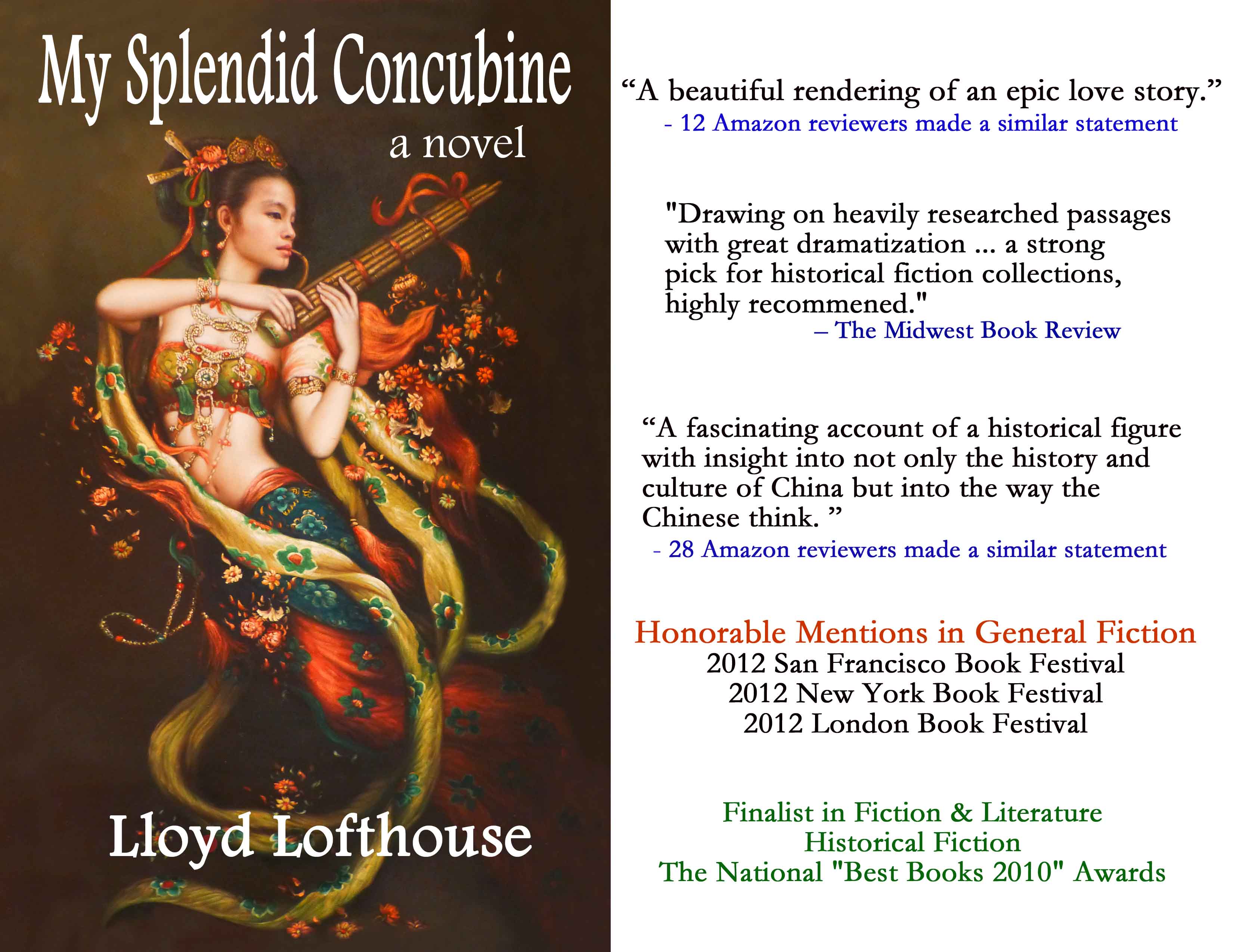
Lloyd Lofthouse is the award-winning author of My Splendid Concubine [3rd edition]. When you love a Chinese woman, you marry her family and culture too. This is the lusty love story Sir Robert Hart did not want the world to discover.

IMAGE with Blurbs and Awards to use on Twitter

Subscribe to “iLook China”!
Sign up for an E-mail Subscription at the top of this page, or click on the “Following” tab in the WordPress toolbar at the top of the screen.

About iLook China

China’s Holistic Historical Timeline


Nixon Opens the Door to China—Viewed as Single Page

June 9, 2015

In 1969, the Soviet Union was planning a nuclear attack on China. The USSR only backed down when President Nixon’s administration warned Moscow that such a move would start World War Three since the US would bomb Russia in retaliation.

The United States, under President Nixon (1969-1974), clearly indicated that China’s interests were closely related to America’s. – Free Republic

At the time, I’m sure President Nixon had no idea how close those relations would become.

More than 43 years ago in February 1972, President Richard Nixon went to China and changed the course of history a second time. His motives may not have been meant to encourage China to become the economic powerhouse it is today.

However, if it weren’t for Nixon, the odds say the Soviet Union would have bombed China with nuclear weapons and China would have retaliated.

While flying to China, President Nixon made notes. Here are a few.

What they (China) want? Build up their world credentials, Taiwan, and get the U.S. out of Asia (In 1968, Nixon ran for President promising to get the U.S. out of Vietnam).

What we (the US and China) both want? Restraint on USSR

The BBC reporter in the embedded video says that Nixon’s trip to Beijing wasn’t to see if China would help get the US out of Vietnam. Instead, the trip was designed to put pressure on the USSR with a goal to make them agree to strategic arms limitations.

Soon after Nixon’s China trip, the Soviets were forced to negotiate and within three months signed two arms control agreements.

What I find interesting is how often US Presidents (and politicians) have been wrong about China.

In 1961, President John F. Kennedy said if China had nuclear bombs, it would swallow Southeast Asia. That never happened and today China has more than three hundred nuclear bombs with the missiles to deliver them to targets thousands of miles distant.

In 1965, China successfully tested its first nuclear bomb. President Lyndon Johnson said it was “the blackest and most tragic day for the free world”.

How was that day the “blackest and most tragic day for the free world”?

After all, China has never used a nuclear weapon on another country as the US did on Japan to end World War II by bombing Hiroshima and Nagasaki killing about a quarter million people.

In fact, about 25 American POWs were also killed in the first blast. Most of the Japanese dead were noncombatants—the elderly, women and children.

Di Text.com reports that the US firebombed (with napalm) 67 Japanese cities in World War II.  More than half of Tokyo (one of the 67 cities) was destroyed. Estimates of the number killed in Tokyo range between 80,000 and 200,000.

Robert S. McNamara was reported to have said, “If we’d lost the war, we’d all have been prosecuted as war criminals.”

Has Communist China inflicted that many casualties on another nation’s civilian population? Don’t forget that Japan killed about 30 million Chinese during World War II.

When President Nixon went to China, he met with Chairman Mao, who was suffering from poor health. In four years, he would die, and Nixon would be the only president in US history to resign while in office due to the Watergate Scandal.

After Nixon resigned as the US president, the Chinese offered him a home in China where he would be allowed to live in peace away from his political enemies.

Two months before his meeting with Mao in Beijing, Nixon had approved a bombing operation in North Vietnam.

Many called it the Christmas bombings since it took place over the holidays. It was the first continuous bombing in Vietnam since President Lyndon Johnson had halted bombing in 1968.

Over 20 thousand tons of bombs were dropped during the campaign. That’s forty million pounds of explosives.

Ironically, Nixon ran for election as the “Peace Candidate” in 1968. Can you think of other US politicians that have used similar promises (later broken) to win elections?

Because of Nixon’s record of being an anticommunist, no one would have thought that he would have unexpectedly gone to China to meet with Mao and the CCP’s top leaders.

“Newly released audiotapes and secret documents from the Richard Nixon Presidential Library show a president obsessed with controlling the media and his public persona during the latter stages of his doomed administration.”

I find it ironic that this comes from a former president of a country that often criticized China’s control of its media. Is it possible that US politicians are jealous and want the same control over the US media?

While in China, President Nixon gave a speech in the Great Hall of the People in Beijing.

This was the first time a U.S. president had visited the People’s Republic of China (PRC), and China was considered one of America’s greatest enemies.

While in China, Nixon would meet with Zhou Enlai, who was the first Premier of the PRC. Zhou Enlai (along with Deng Xiaoping) played an important role in the future development of the Chinese economy and restructuring Chinese society leading to the China of today.

In fact, Zhou Enlai not only avoided the purges of high-level Chinese Communist Party officials during the Cultural Revolution, but he also attempted to contain the damage caused by the teenage Red Guard and to protect others from them. This made him very popular with the people near the end of the Cultural Revolution.

Zhou Enlai supported peaceful coexistence with the West.  He would die eight months before Mao.

It is ironic that one of the main reasons Richard Nixon became the vice-president of President Eisenhower was due to his strong anti-communist stance.

If you listen to Nixon’s speech in Beijing carefully, you will hear how he managed to slip in a veiled criticism of the fact that the media was free to report what they wanted in the US.

Nixon says of his visit to the Great Wall, “As I walked along the Wall, I saw the sacrifices that went into building it. I saw what is showed about the determination of the Chinese people to retain their independence throughout their long history. I thought about the fact that the Wall tells us that China has a great history and that the people who built this wonder of the world also have a great future.”

I wonder if Nixon realized how true his statement was.

Is it possible that Nixon’s trip to China provided Deng Xiaoping the support needed to reject revolutionary Maoism and launch China’s capitalist revolution a few years later?

______________________________

Lloyd Lofthouse is the award-winning author of My Splendid Concubine [3rd edition]. When you love a Chinese woman, you marry her family and culture too. This is the lusty love story Sir Robert Hart did not want the world to discover.

IMAGE with Blurbs and Awards to use on Twitter

Subscribe to “iLook China”!
Sign up for an E-mail Subscription at the top of this page, or click on the “Following” tab in the WordPress toolbar at the top of the screen.

About iLook China

China’s Holistic Historical Timeline


China’s eBook Explosion

May 20, 2015

The first time I visited China in 1999, we visited Book City in Shanghai. It was the largest bookstore I’d seen—ever! Book City had several floors with elevators and escalators, and at each floor I had to wait in line to get on the next escalator up.

It was that busy. Bookstore owners in the US only get to dream of such traffic.

Most of the books were by Chinese authors and written in Chinese. One small segment on the fourth floor offered books from the rest of the world and most were in English.

Then, for a few years, bookstores owned by private companies—not state owned—sprouted like mushrooms, but today, as in the United States, those brick and mortar bookstores may be struggling to survive.

The Independent in the UK said, “Hard times for traditional books as China’s digital publishing industry grows. Pity the poor paperback. The days of the traditional book in China are numbered, according to figures just released by the central government, it seems more and more people are now turning their attention to digital forms of publishing.”

And the Chinese are buying eBooks with a passion, as you may witness from the next embedded video.

It you have never been to China, you should not be surprised, because China has had a thriving publishing industry for longer than a thousand years and more than 95% of its population is literate.

Vearsa.com reported (March 30, 2015), “The eBook market, and in particular the English language eBook market, in China is still in its infancy but the scope and impact of eBooks in China is evolving at an incredible pace.” In addition, Digital Bookworld.com says, “China’s book market is growing fast. And ebooks in particular are on the rise thanks largely to the worldwide mobile boom impacting publishers everywhere.”

After all, the Chinese invented paper and the printing press centuries before it appeared in Europe. In China, the printing press was invented during the Tang Dynasty between the 4th and 7th century AD. In Europe, Gutenberg’s movable type press didn’t appear until about 1450 AD—the Chinese beat the West by about a thousand years with this innovation (hundreds of other). Computer Smiths.com

______________________________

Lloyd Lofthouse is the award-winning author of My Splendid Concubine [3rd edition]. When you love a Chinese woman, you marry her family and culture too. This is the lusty love story Sir Robert Hart did not want the world to discover.

2015 Promotion Image for My Splendid Concubine

Subscribe to “iLook China”!
Sign up for an E-mail Subscription at the top of this page, or click on the “Following” tab in the WordPress toolbar at the top of the screen.

About iLook China

China’s Holistic Historical Timeline


Chinese long history is rich in calligraphy, music, poetry, and painting

May 13, 2015

UNESCO says the Guqin represents China’s foremost solo musical instrument tradition. Legend says that the Guqin has a 5,000 year history compared to Chinese writing that dates back nearly 3,000 years.

The body of the Guqin is a long and narrow sound box made of Catalpa wood with two holes, one large and one small. The large hole is called the “phoenix pool” and the small one the “dragon pond”.

This seven-stringed instrument was played by noblemen and scholars and was not intended for public performances. Twenty years of training were often required to become proficient.

Since it is known that Confucius played the Guqin, the instrument is sometimes referred to by the Chinese as “the father of Chinese music” or “the instrument of the sages”.

For millennia, the strings of the Guqin were made of various thicknesses of silk.

However, in recent times, the silk has been replaced with nylon wound around steel strings. Some say without silk, the Guqin doesn’t sound as rich.

The Guqin was one of four subjects the ancient scholars perfected. The other three were chess, calligraphy and painting. For centuries many Chinese felt China was so civilized due to these practices that no other country would bother them. Why bother to study how to fight wars? Why spend what it would take to keep the military modern and strong?

Then in 1794 came the White Lotus Rebellion (100,000 rebels killed), followed by the Opium Wars (50,000 killed), the Taiping Rebellion (20 million killed), The Nian Rebellion (75 thousand killed), Punti-Hakka Clan Wars (500 thousand killed), Miao Rebellion (75,000 killed), Hui Rebellion (millions killed), the Du Wenxiu Rebellion (1 million killed), the Dungan Revolts (8 to 12 million killed), the Boxer Rebellion (more than 100 thousand killed), the Sino-Japanese War (10 thousand killed), the Xinhai Revolution (almost 200 thousand killed), China’s Civil War between the Communists and Nationalists (8 million killed), and Japan’s invasion of China during World War II (15 to 20 million killed).

Compared to what China suffered, during the 8-year long American Revolution, total casualties were less than 60 thousand, and in the 4-year long American Civil War there were 620 thousand casualties.

That explains why—when the gunpowder settled in 1949, after 155 years of revolution, civil war and war—after Mao came to power, he launched a series of reforms with the goal to make China strong again to stop the revolutions and invasions. These reforms ended with the Cultural Revolution—1965 – 1976, with about 1.5 million killed and millions of others suffering imprisonment, seizure of property, torture or general humiliation.

During this period, the Guqin fell out of favor as the literati were persecuted as the scape goats of China’s long suffering.

______________________________

Lloyd Lofthouse is the award-winning author of My Splendid Concubine [3rd edition]. When you love a Chinese woman, you marry her family and culture too. This is the lusty love story Sir Robert Hart did not want the world to discover.

2015 Promotion Image for My Splendid Concubine

Subscribe to “iLook China”!
Sign up for an E-mail Subscription at the top of this page, or click on the “Following” tab in the WordPress toolbar at the top of the screen.

About iLook China

China’s Holistic Historical Timeline


Yuan Shikai, China’s second president and its last emperor

May 6, 2015

For thousands of years, the history of China has been defined by wars, rebellion, power struggles and famine, which explains why today’s central government worries about famine and allowing dissidents a voice.

Between 1911 and 1976, three Chinese men were responsible for much of the devastation and death that swept over China causing tens of millions of deaths (not counting what the Japanese did during World War II). Those Chinese leaders were: Yuan Shikai, Chiang Kai-shek and Mao Tse-tung.

In 1911 when the Qing Dynasty fell, Yuan Shikai was a general and commander of the most modern military force in Imperial China. He kept his position by supporting the revolutionaries that brought down the Qing Dynasty.

After the Qing Dynasty fell, rebellion spread through the Yangtze River Valley before revolutionaries from fourteen provinces elected Sun Yat-sen president of a provisional (temporary) government and in January 1912, Sun announced the establishment of the Republic of China.

However, generals controlled China’s provinces and refused to give up power. China’s young republic was essentially the capital city of Nanjing.

On March 20, 1913, Yuan Shikai’s agents assassinated Sung Chiao-jen, who helped Sun Yat-sen become the first president. Sun demanded that those responsible be brought to justice.

Yuan Shikai resisted, sparking a “so-called” second revolution and on September 15, 1913, he ordered Sun Yat-sen’s arrest. To survive, Sun fled to Japan as a political refugee. He wouldn’t return to China until a few months after Yuan Shikai’s death.

Yuan Shikai, supported financially by the British Empire, became China’s second president, but after 1914, World War I caused a reduction in Britain’s financial support.

Weakened, Yuan Shaikai was forced to accept twenty-one demands made by Japan, which included giving up Chinese territory. He agreed on May 7, 1916, which is now considered National Humiliation Day.

Yuan Shaikai was unable to establish control beyond Nanking so he declared himself emperor. His attempt to replace the republic with a monarchy and him as emperor touched off revolts in southwestern China followed by uprisings of Sun Yat-sen’s followers in several other provinces.

This resulted in twelve years of warfare between the warlord generals of China’s provinces and the weak Republic of China.

Yuan Shikai died in 1916, then Sun Yat-sen returned to lead the republic. Sun Yat-sen died in 1925, which led to the Civil War between the Chinese Communist Party and Chiang Kai-shek’s Nationalists.

______________________________

Lloyd Lofthouse is the award-winning author of My Splendid Concubine [3rd edition]. When you love a Chinese woman, you marry her family and culture too. This is the lusty love story Sir Robert Hart did not want the world to discover.

2015 Promotion Image for My Splendid Concubine

Subscribe to “iLook China”!
Sign up for an E-mail Subscription at the top of this page, or click on the “Following” tab in the WordPress toolbar at the top of the screen.

About iLook China

China’s Holistic Historical Timeline