Far from the Facts

June 29, 2010

Due to a China Law Blog post, I spent the better part of an hour hunting for a quote from Sir Robert Hart where he compares China and England’s legal systems in the 19th century. In the quote, which I couldn’t find, Hart points out that the British and Chinese legal systems differ because of culture—one is based on the individual and China’s is not.

Robert Hart's statue in Shanghai (1913 - 1942)

In I Wish All China Could be California Girls, Dan Harris (China Law Blog) mentions a post I wrote, Belching for China, and then he takes the topic further. Harris writes, “I agree with iLooks overall premise, but I am not so sure Hindrey’s article is the right one on which to go off, because it is neither simplistic nor jingoistic…”

To make his point, Harris provides better evidence written by a personal Injury lawyer, William Marler, who feels that China needs a few good lawyers and a legal product liabilty system similar to the US.

That is the last thing China needs. In my “opinion” many of America’s problems stem from a lottery ticket mentality and bumper stickers saying, “Go Ahead and Hit Me and Make My Day.”

Marler writes that executing a top food-safety official in China for taking bribes is not the way to solve problems in food safety. What Marler doesn’t understand is that removing a rotten egg from the carton is sending a message to the Chinese and they get it. The Chinese have punished convicted criminals like this for more than two thousand years—far longer than any Western culture. In fact, today’s China is far less brutal since 1976.

To strengthen his point, Harris uses evidence from Stan Abrams at China Hearsay, another lawyer who chastises Marler for getting his facts wrong.  

What I learned from Harris and Abrams was that people like Marler and Hindrey and their stereotypical “opinions” about China are examples of what many in America believe, which is usually far from the truth.

_________________________

Lloyd Lofthouse,
Award winning author of the concubine saga, My Splendid Concubine & Our Hart. When you love a Chinese woman, you marry her family and culture too. 

Sign up for an RSS Feed for iLook China


The Opium Wars in the 19th Century (1800s)

June 28, 2010

China began the 19th century confident of its superiority over the rest of the world.  China’s population numbered 400 million. The Qing (Manchu) Empire controlled the world’s biggest economy.  China enjoyed a favorable balance of trade with the West—receiving a huge amount of money for its silk, porcelain, and tea.

By 1800, the British consumed 10,000 tons of tea annually.  So much money poured into China, that one Chinese merchant became the richest man in the world, and all foreign business with was restricted to one city, Canton.

However, Britain had a product to reverse that balance of trade—opium. The British shipped opium into China and up its rivers to almost every part of China.  So many became addicted to the drug, the stability China was threatened.

Then in 1839, the Emperor acted to stop the opium trade. Lin, the man in charge, wrote to Queen Victoria asking for her help. Ignored by Great Britain, Lin resorted to confiscating the opium and destroying it, which led to the Opium Wars started by Britain and France, who respected nothing but force. China lost the war and was forced to pay for a war they did not want and did not start.

In the British parliament, William Gladstone criticized his government calling the Opium war a disgrace.

See Mao’s War Against Illegal Drugs

______________

Lloyd Lofthouse is the award-winning author of the concubine saga, My Splendid Concubine & Our Hart. When you love a Chinese woman, you marry her family and culture too.

If you want to subscribe to iLook China, there is a “Subscribe” button at the top of the screen in the menu bar.


The Prince’s Garden

June 26, 2010

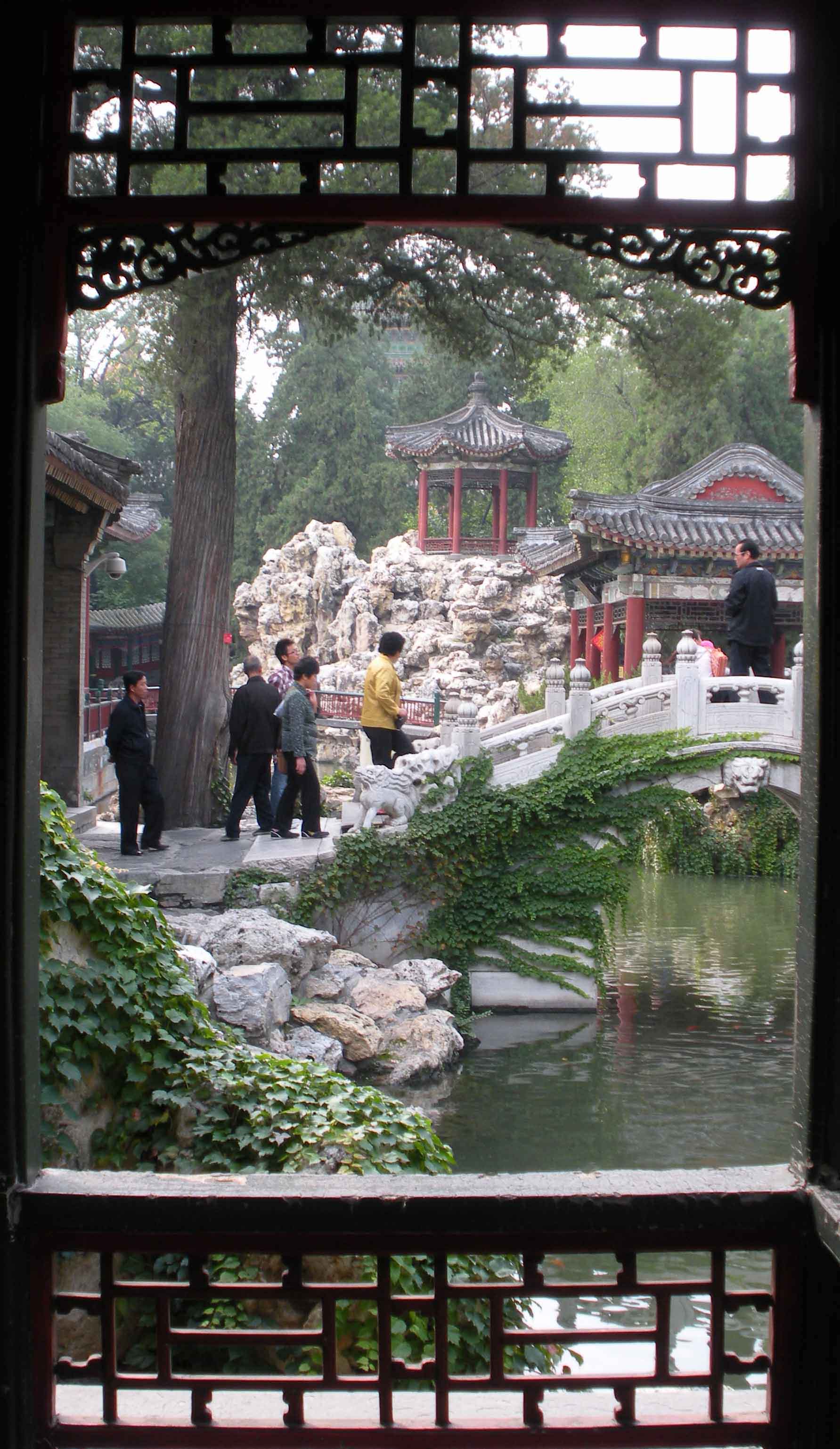
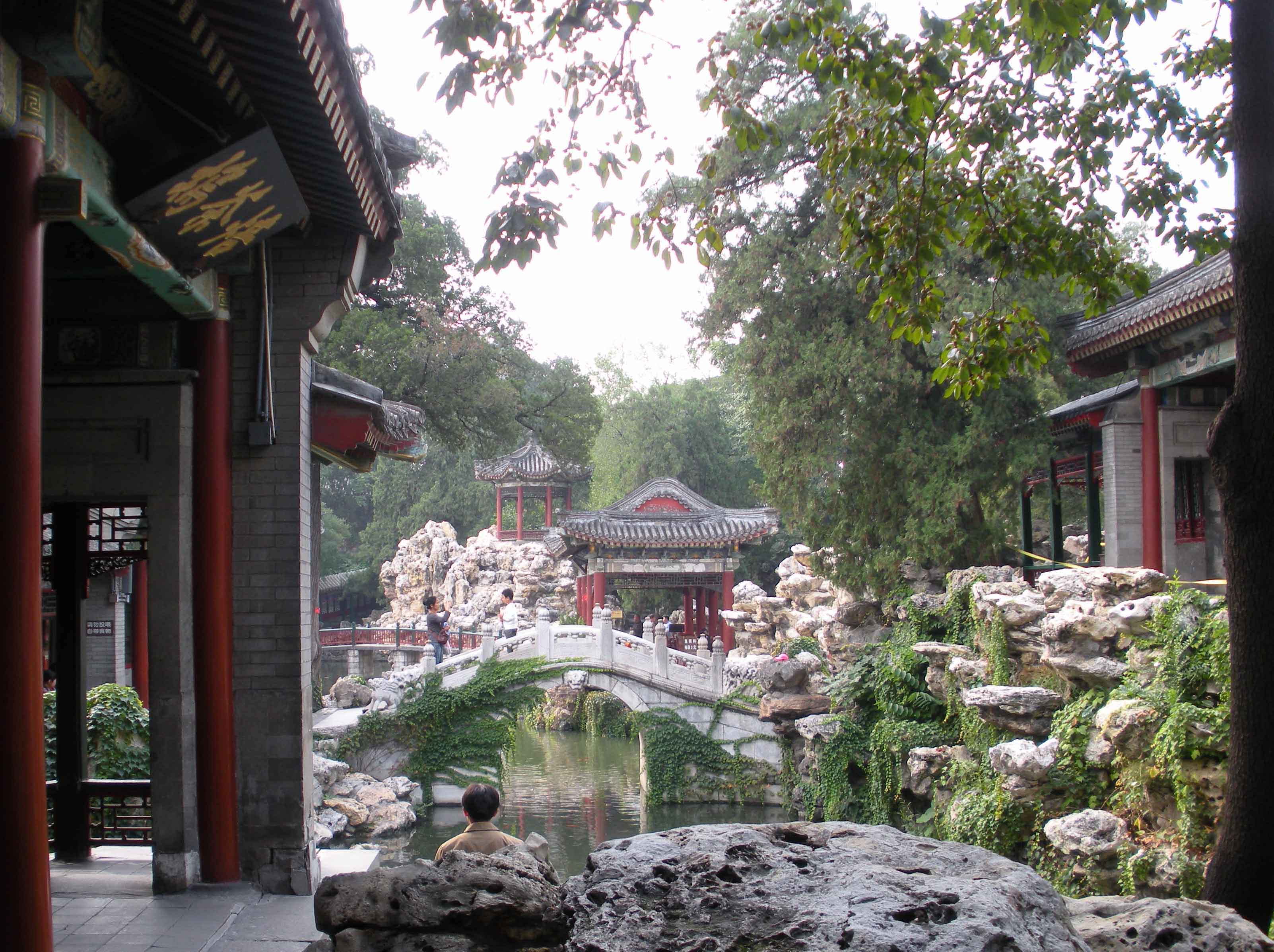
These photos were taken inside Prince Kung’s (1833-1898) palace and garden (once called Gongwangfu). This palace is in Beijing’s Beihai district. Prince Kung was Emperor Hsein Feng’s (1831-1861) younger brother.

As Inspector General for the Emperor of China, Robert Hart, known as the Godfather of China’s modernism, lived in the same hutong that Prince Kung lived in.  The Forbidden City was on the far side of Tiananmen Square.

Robert Hart, the main character in “My Splendid Concubine” and “Our Hart”, often met Prince Kung in this garden.

After 1950, for several decades, this palace and the garden became a communal home for many Chinese. In recent years, the garden, considered one of the best in China, was renovated and is now a tourist attraction, which attracts thousands of visitors daily.

To design a proper Chinese garden one must build a big place in a small space.  Prince Kung’s garden and estate is surrounded by a high wall and outside is Beijing.  Once inside, it is easy to forget that outside the walls is a crowded city. It was also easy for the Qing (Manchu) royals to forget about what was happening throughout China.

Discover The Summer Palace

________________________

Lloyd Lofthouse is the award-winning author of the concubine saga, My Splendid Concubine & Our Hart. When you love a Chinese woman, you marry her family and culture too.

To subscribe to “iLook China”, look for the “Subscribe” button at the top of the screen in the menu bar, click on it then follow directions.


Mao’s War Against Illegal Drugs

June 25, 2010

From The Opium Monopoly by Ellen N. La Motte, we learn how opium addiction became an epidemic in China. Although The Chinese knew about opium for more than a thousand years, it wasn’t until the Portuguese arrived in the 18th century that  the Chinese used it as a drug by smoking it. Merchants from Britain, France, Portugal, America and other nations became the drug cartels that plagued China into the 20th century.

In 1729, the emperor issued the first anti-opium edict, but the supply of opium flooding China went from 220 chests in 1729 to 70,000 in 1858.

It is estimated that before 1950, as many as 20 million Chinese were addicts. Then Mao had the Red Army execut the drug dealers and forced millions of addicts into compulsory treatment.

Opium growers, who did not want to comply, fled into the Golden Triangle Region of Southeast Asia where many of Chiang Kai-shek’s nationalist troops had gone to escape defeat. Those generals also did business with the CIA, and American soldiers in Vietnam became the new customers. It is estimated that at least 20% of the almost nine million American troops that served in Vietnam became addicted.

China remained free of drugs until Deng Xiaoping declared, “Getting Rich is Glorious” and opened China to world trade. In 2003, it was estimated that China had four million regular drug users even with China’s strict laws concerning illegal drug use.

Sources: Opium and Illegal Drugs in China and How Maoist Revolution Wiped Out Drugs in China

To learn more about Mao’s China, see China’s Great Leap Forward

______________

Lloyd Lofthouse is the award-winning author of the concubine saga, My Splendid Concubine & Our Hart. When you love a Chinese woman, you marry her family and culture too.

If you want to subscribe to iLook China, there is a “Subscribe” button at the top of the screen in the menu bar.


Imperial Power or Republic

June 25, 2010

Did you know that after World War II, the CIA recruited Nazi war criminals to help fight the Cold War? Source: Third World Traveler

The Associated Press reported recently in Lessons from failed Cold War spy mission in China that the CIA admitted a cloak-and-dagger plot to destabilize China in 1952.  When the plot failed, there was a cover up. Now, the mistakes the CIA made are being used as a teaching tool so the next time the CIA plots regime change, they have a better chance to succeed.

However, the CIA should have learned that lesson in 1953 when the agency replaced the elected prime minister of Iran, an ardent nationalist, with Mohammad Reza Shah Pahlavi, a dictatorial monarch, who—due to his brutality— was replaced in 1979 by American hating Islamic Fundamentalists. Source: New York Times

Then there was the CIA’s support for the Dalai Lama in the 1960s as reported by the New York Times followed in the 1980s by the The Iran-Contra Affair during Reagan’s Presidency. Later, President H. W. Bush issued six pardons to the Reagan loyalists—or should I say patriots—who went to jail for illegal activities while serving in President Reagan’s administration.

The CIA’s crowning achievement was when the agency become the “World’s Real Drug Lords” as reported in Serendipity, which chronicles the CIA involvement in the drug trade from 1947 to the 1990s.  If you ever wondered how marijuana, cocaine and heroin addicted so many in America and other Western countries, you need look no further. In fact, after the West lost China as the dumping ground for drugs like opium, new customers were needed to keep the gold flowing.

Do these actions by the CIA support the language of the following documents?

“We hold these truths to be self-evident, that all men are created equal, that they are endowed by their Creator with certain unalienable Rights, that among these are Life, Liberty and the pursuit of Happiness. — That to secure these rights, Governments are instituted among Men, deriving their just powers from the consent of the governed, — That whenever any Form of Government becomes destructive of these ends, it is the Right of the People to alter or to abolish it, and to institute new Government, laying its foundation on such principles and organizing its powers in such form, as to them shall seem most likely to effect their Safety and Happiness.” Source: Declaration of Independence

“We the people of the United States, in order to form a more perfect union, establish justice, insure domestic tranquility, provide for the common defense, promote the general welfare, and secure the blessings of liberty to ourselves and our posterity, do ordain and establish this Constitution for the United States of America.” Source: Constitution of the United States

See What is the Truth about Tiananmen Square?

________________________

Lloyd Lofthouse is the author of the award winning My Splendid Concubine and writes The Soulful Veteran and Crazy Normal.

Sign up for an RSS Feed for iLook China