Basic Health Care in China

March 1, 2010

Basic care in China does not include a stay in a hospital, which would cost about $100 a night compared to a thousand or more in America. Since the best doctors live in the major cities, the best-equipped hospitals are there too.

If a peasant living in the countryside becomes seriously ill, he may have to travel a long distance to get proper medical care. That is, if he has the money. Medical care in China is all about money just like in the United States. Money opens hospital doors and pays the rent for the surgeon’s scalpel.  To understand the challenges that come with living in China’s rural areas, I suggest reading this post on Mark’s China Blog.

Chinese pharmacy

However, when it comes to drugs, the Chinese government has factories in every province that manufactures drugs at a low cost. This is one commodity where the prices are controlled. For example, a bottle of antibiotics in the U.S. that costs $80 would cost $14 in China. That cost is still out of reach for many rural peasants living on an average hundred dollars a year (six or seven hundred yuan). 

Maybe Emperor Wudi from the Han Dyansty had the right idea when he decided that certain necessary commodities and services should not be part of the private market economy.

_________________________

Lloyd Lofthouse is the award-winning author of the concubine saga, My Splendid Concubine & Our Hart. When you love a Chinese woman, you marry her family and culture too. 

Sign up for an RSS Feed for iLook China


China’s Health Care Today

February 28, 2010

The health care system built under Mao’s leadership no longer exists. Doctors and nurses are trained the same as in the United States. Since Mao’s death, in one of the greatest policy reversals of modern times, China dissolved free medical care in its rural communities, privatized vast areas of the economy and shifted public-health resources toward the cities. Socialized medicine vanished.

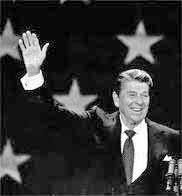
President Ronald Reagan

President Ronald Reagan’s administration seems to have been the role model for these changes. During Reagan’s years, the U.S. saw a steep rise in the for-profit sector in medicine, in particular the for-profit hospital chains.

Other Republican presidents like the first George Bush continued this rush toward a for-profit, free market approach to health care. What has happened in the United States is starting to happen in China. There is no room for the poor and uninsured and uninsurable beyond what is considered basic services like blood pressure tests and taking your temperature along with a bit of advice.  

If you don’t have the money or a health plan linked to retirement, you face a death sentence. And like America, everyone working for the government (elected or not) has the best health care.

See China’s Health Under Mao


China’s Health Care During Mao’s Time

February 27, 2010

After the Communists won China in 1949, health care improved. Prior to that, life expectancy for the Chinese people was thirty-five years. By Mao’s death in 1976, average life expectancy had increased by twenty years.

There were three basic areas of medical care. Free substandard medical care was provided to the proletarian working class, meaning workers and peasants.

Mao started a program called ‘bare-foot doctors’. This program was the backbone of rural health care in China. This meant anyone could become a doctor.

  • Video: Documentary of Bare-Foot Doctors in China

Mao told the people that if you wanted to be a doctor, you didn’t need to go to medical school. All you had to do was have the motivation to provide medical care to needy people and the government would support you and provide limited training.

The second class of medical care went to people like teachers, clerks and secretaries, ‘friends’ of the working class, the proletariat. The only difference was that these ‘friends’ had to pay to get medical treatment. It was possible to face financial ruin from one hospital stay.

The third class were termed enemies of the proletariat like former shop-owners, landlords and denounced intellectuals like liberal arts professors. These people were denied treatment altogether.

Learn about China’s Urban Rural Divide

______________

Lloyd Lofthouse is the award-winning author of The Concubine Saga. When you love a Chinese woman, you marry her family and culture too. This is the love story Sir Robert Hart did not want the world to discover.

To subscribe to “iLook China”, look for the “Subscribe” button at the top of the screen in the menu bar, click on it then follow directions.


Only a Name

February 27, 2010

I’ve heard and read that the United States has the greatest government on the earth.

I disagree.

It’s true that America is the wealthiest and most powerful country on the planet. But the most important difference is that the United States has a “Bill of Rights” designed to protect the citizens from government abuse. Remove the “Bill of Rights” and what do we have—a government that will get carried away with unrestricted powers like so many have in the past.

The Founding Father’s (at least the key players) understood that power corrupts and absolute power corrupts absolutely. King George taught them that, so they developed a structure to limit that corruption so it would not spill over and hurt the citizens.

The sad thing is that the “Bill of Rights” doesn’t protect citizens from street gangs and drug dealers and all the other crazy things that go on in a country with the largest prison population on the planet. China has the second largest prison population and that is about half of those locked up in America while China has four times the population.

And many ignorant people in the United States believe China is a bad place to live because of a government with the word “Communist” in front of it. Words are words. There is little difference between the word Democrat (8 letters), Communist (9 letters) and Republican (10 letters).

See “China’s Modern Dynasty” at http://wp.me/pN4pY-9j


Learning from China’s History

February 27, 2010


I’m weighing in on the health care debate. I’m an impartial observer, because I already have socialized medicine through the VA. Serving in Vietnam earned me that benefit, and the VA works better than most systems.

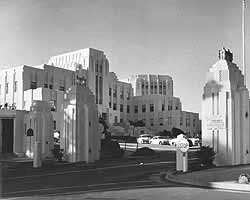
VA Medical Facility, San Francisco

We can learn from history if we pay attention. In 141 B.C.E., a new Han emperor sat on the Dragon Throne in China. His name was Wudi. He ruled for fifty-four years. Wudi believed that all people should have the right to buy certain commodities essential to survival and they should not be included in the free-market system. He implemented government monopolies in certain critical areas like salt, alcohol and iron. Prices were controlled so everyone paid the same low price.

After his death, a national debate known as the “Debate on Salt and Iron” took place. The government monopolies were abolished, and the poor could no longer afford many essentials. The rich grew wealthier. Soon after that, the Han Dynasty entered a period of stagnation like what is taking place in America today, and the Han Dynasty eventually collapsed. 

What could we learn from what happened in China during the Han Dynasty?
Isn’t health care a commodity essential to survival?

Learn about China Investing Big in Education

______________

Lloyd Lofthouse is the award-winning author of the concubine saga, My Splendid Concubine & Our Hart. When you love a Chinese woman, you marry her family and culture too.

If you want to subscribe to iLook China, there is a “Subscribe” button at the top of the screen in the menu bar