Powerful Chinese Women

March 22, 2010

Empress Wu Zetian founded her own dynasty in 690 and ruled to 705 AD. During the Tang Dynasty, women had more freedom and did not bind their feet. They also contributed in the areas of culture and politics.

The Empress Dowager Tzu Hsi, Orchid, ruled China for half a century (1861 – 1908) but was never officially the emperor. She ruled through her son and then a nephew.

Today, Chinese women have assumed important positions in the government. Female deputies total about 22% of the National People’s Congress, and women make up close to 18% of the 11th National Committee of the Chinese People’s Political Consultative Conference. There are more than 230 women holding ministerial or provincial positions. source
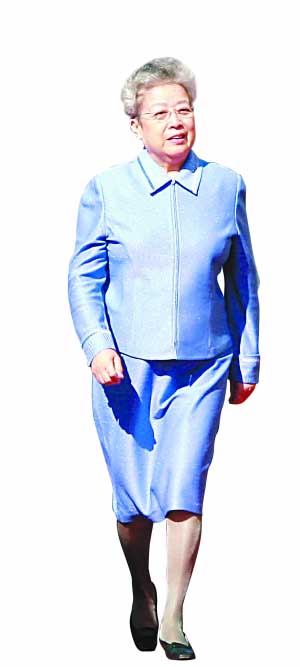
Wu Yi, known as the Iron Lady

Among these powerful women are examples such as Wu Yi, who served as vice mayor of Beijing; deputy minister in the foreign trade ministry and as the health minister, where she reshaped the nation’s image in the fight against SARS. Then there is Song Xiuyan, the governor of Qinghai Province. Song is the only female provincial governor in China. Next is Liu Liying, who, as a judge, developed a legendary reputation fighting corruption.

Discover The One-Child Tragedy

_______________

Lloyd Lofthouse is the award-winning author of My Splendid Concubine [3rd edition]. When you love a Chinese woman, you marry her family and culture too. This is the love story Sir Robert Hart did not want the world to discover.

His latest novel is the multiple-award winning Running with the Enemy.

Subscribe to “iLook China”!
Sign up for an E-mail Subscription at the top of this page, or click on the “Following” tab in the WordPress toolbar at the top of the screen.

About iLook China

China’s Holistic Historical Timeline


Women’s Rights in China

March 21, 2010

Dramatic changes in women’s rights have been achieved in a culture where for millennia women were stereotyped as inferior to men, had no rights and served as slaves, concubines and prostitutes. Marriages were arranged—sometimes at infancy.

In 1949, foot binding was abolished and the All-China Women’s Federation (ACWF) was formed and supported by the Communist Party. Change in China, as in the United States, has been a painful evolutionary process. However, the struggle to gain equality appears to have moved faster than the United States where the women’s rights movement started in 1848 and still isn’t over.

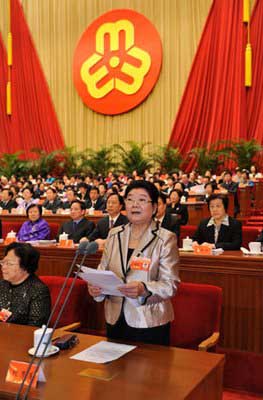
10th National Women’s Congress in China

At the 10th National Women’s Congress in the Great Hall of the People in Beijing, in 2008, Deputy-Chairwoman Huang Qingyi said, “Sex discrimination in employment should be eradicated and the income gap between men and women should be further narrowed.”

It was also been reported that domestic violence is a severe threat to women. Chinese authorities reported 50,000 complaints annually, according to figures released by the ACWF. The domestic violence fact sheet shows this is also a problem in the United States.

Sexual discrimination was supposed to have been abolished in China back in 1949, when Chairman Mao Zedong famously announced, “women hold up half the sky”, but it wasn’t.  It has only been a few years since China outlawed sexual harassment.

Today, statistics show China has about 27,000 women and children’s rights protection agencies.

Discover Changing Times for Women’s Rights

______________

Lloyd Lofthouse is the award-winning author of My Splendid Concubine [3rd edition]. When you love a Chinese woman, you marry her family and culture too. This is the love story Sir Robert Hart did not want the world to discover.

His latest novel is the multiple-award winning Running with the Enemy.

Subscribe to “iLook China”!
Sign up for an E-mail Subscription at the top of this page, or click on the “Following” tab in the WordPress toolbar at the top of the screen.

About iLook China

China’s Holistic Historical Timeline


Shanghai

March 15, 2010

The first time I flew into Shanghai, the jet landed at Hangqiao Airport.

There was no Pudong with its Maglev Train, which can move 150 to 200 km/h, running eighteen miles to the city.

Even with the larger Pudong, Hangqiao still handled 25 million passengers in 2009, but more fly into Pudong.

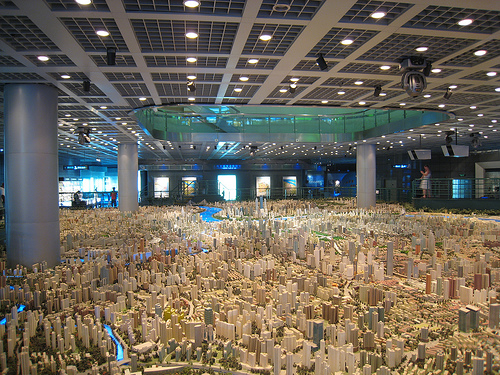
Model of Shanghai

China’s leaders are finishing the job Qin Shi Huangdi started twenty-two hundred years ago, and it’s not easy.

The first emperor unified China with one written language.

Now, the country is being stitched together with one language, Mandarin. It may take several generations.

People are used to speaking the language they grew up with.

There are fifty-six with more dialects, like Shanghainese. Learning English is also mandatory in the public schools.

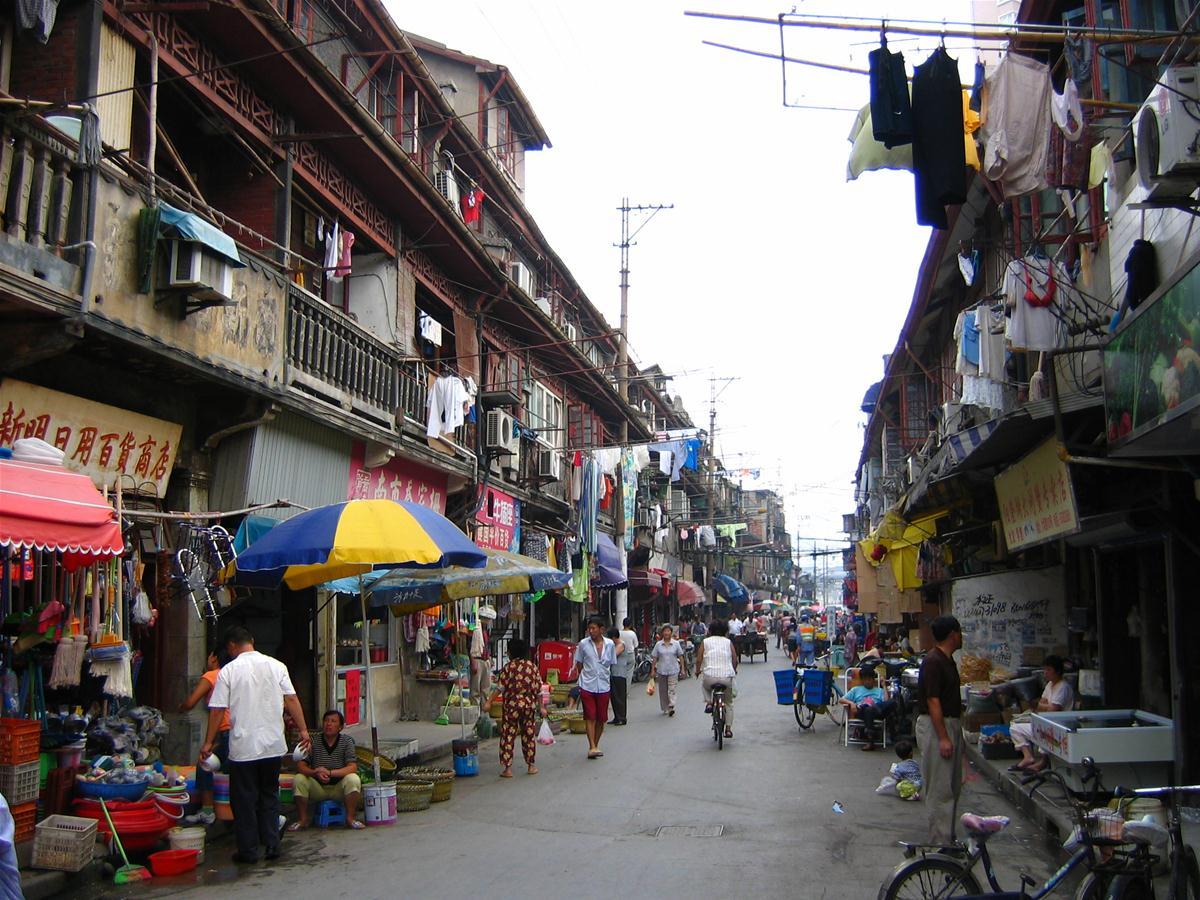
Old Shanghai – I’ve shopped here.

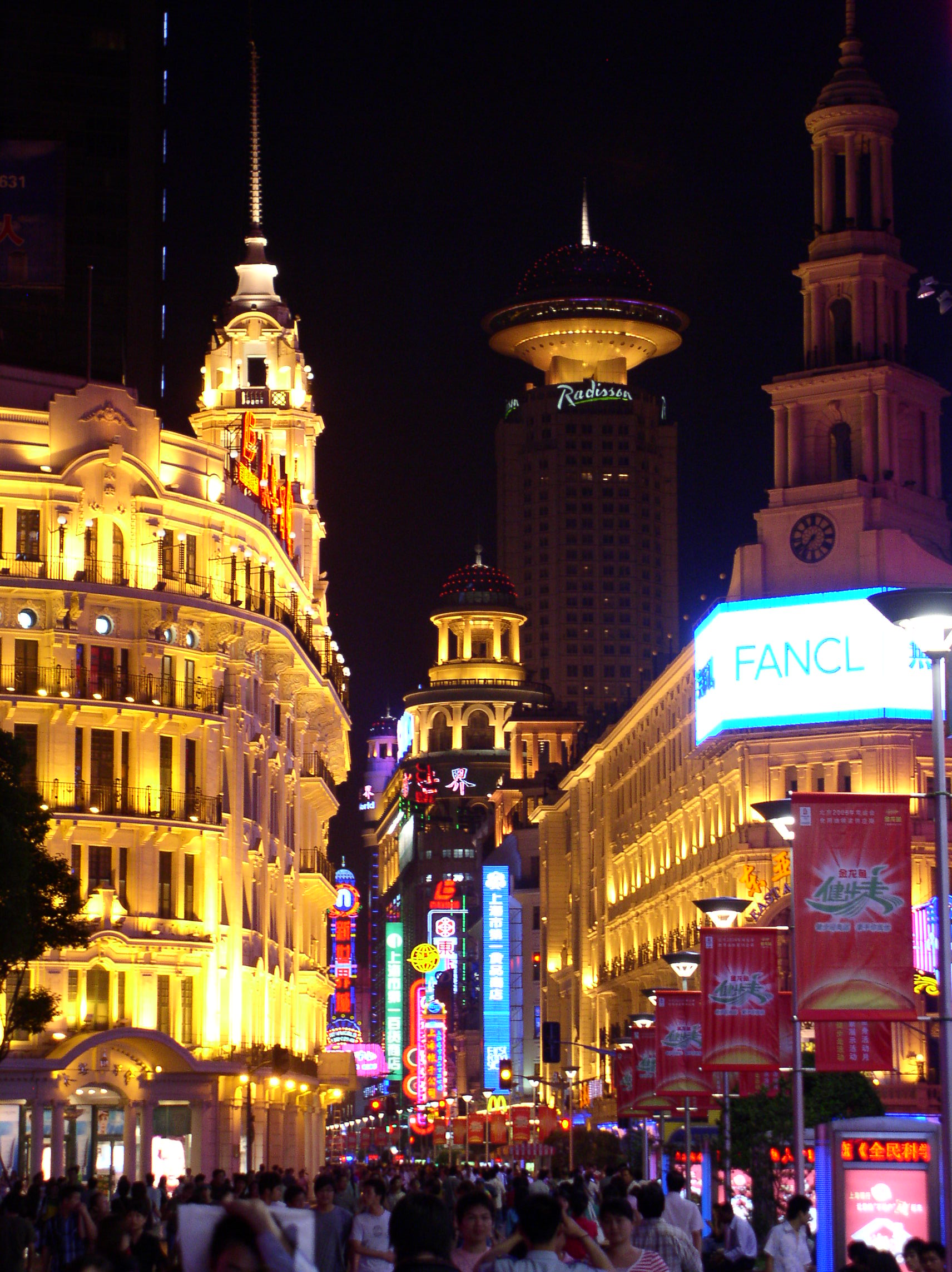
One-hundred-fifty years ago, Shanghai was a sleepy fishing town.

Then England and France started two opium wars with China to force the emperor to allow them to sell the drug to his people.

The treaty that ended the first opium war made Shanghai a concession port and part of the outside world bringing expats, who are still arriving.

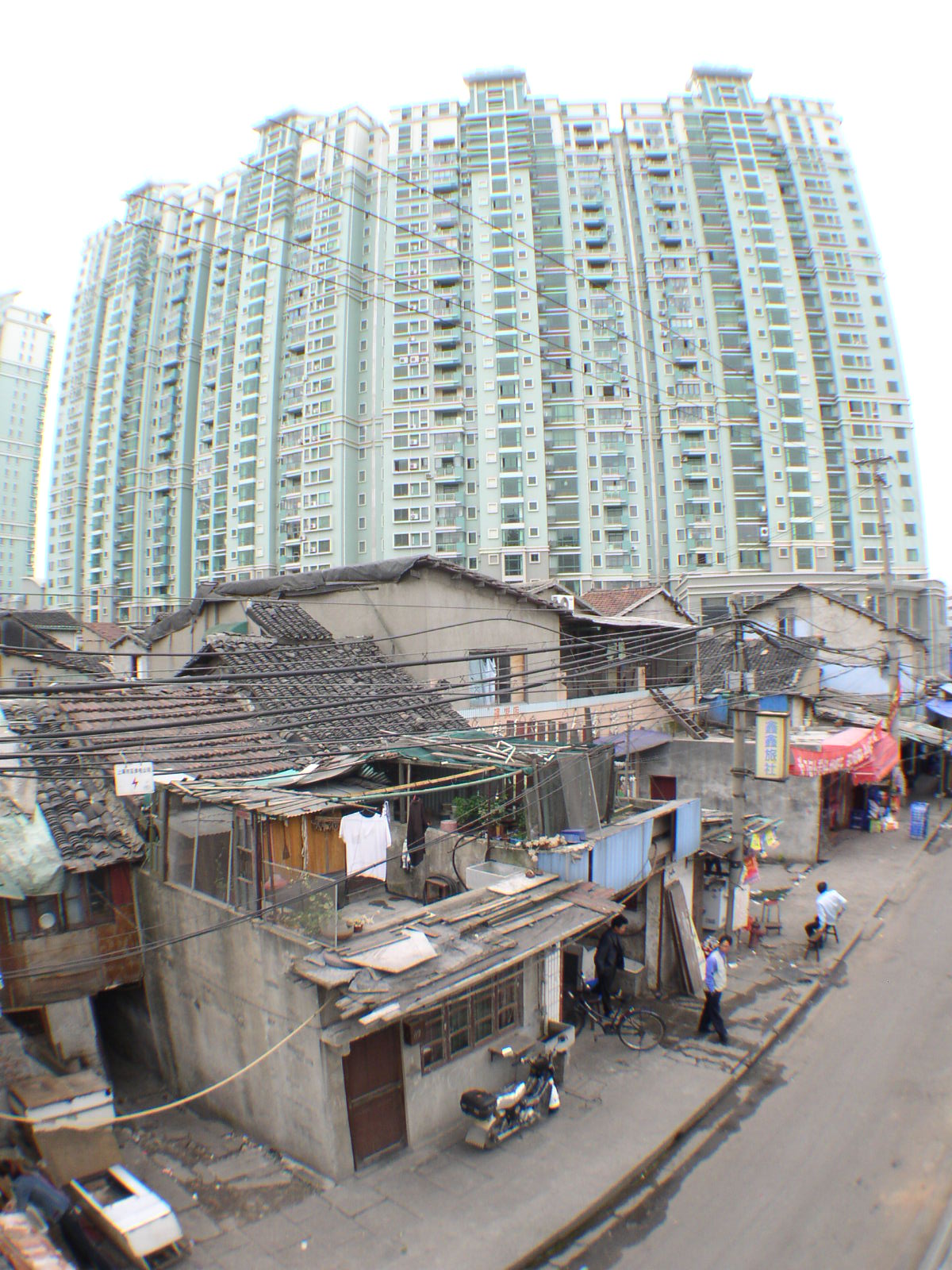
Today, there are twenty million residents and 4,000 high-rises with more on the way. They sprout like mushrooms.

The 101-story World Financial Center is China’s tallest building.

Visit the Shanghai World Expo

The next four Shanghai photos are courtesy of Tom Carter, photo journalist and author of China: Portrait of a People

Tom Carter, photo journalist

See the Shanghai Huangpu River Tour

See more at National Geographic, Shanghai Dreams

See more about Shanghai at Eating Gourmet in Shanghai

Discover Hollywood Taking the “Karate Kid” to China

_______________

Lloyd Lofthouse is the award-winning author of My Splendid Concubine [3rd edition]. When you love a Chinese woman, you marry her family and culture too. This is the love story Sir Robert Hart did not want the world to discover.

Subscribe to “iLook China”!
Sign up for an E-mail Subscription at the top of this page, or click on the “Following” tab in the WordPress toolbar at the top of the screen.

About iLook China


The Last Word

March 13, 2010

During the Copenhagen Climate Summit, China was criticized for not signing a pledge to reduce carbon emissions.  I don’t think China’s was ready to sign and had to go home to study the situation to see what they could do before they made a commitment.  All (take a look) of China’s politburo members, the top government body in China, are scientist or engineers.

On March 10, China told the United States to make stronger commitments on climate change and provide environmental expertise and financing to developing nations. That was a few days after China announced it was planning to reduce its carbon footprint by 40-45% (from 2005 levels) and generate 15% of its electricity from renewable technologies by 2020.

Solar Cells

Obama, on the other hand, only pledged reducing green house gas emissions “in the range of 17%” by 2020. 

This is what I think happened after China’s representatives left Copenhagen.  Those scientists and engineers that make up China’s ruling body gathered facts, discovered what China could achieve, then formulated long-range goals. Most scientists and engineers think that way.

President Obama is a lawyer. Most of the elected representatives in America’s two houses of congress are lawyers.

See what China has been doing by reading “Health Care, Urban Real Estate and Renewable Energy Update” http://wp.me/pN4pY-er and “China Going Green” http://wp.me/pN4pY-3f


A Difference in Defensive Thinking

March 13, 2010

Teddy Roosevelt said, “Speak softly and carry a big stick.”

I’m not sure that America speaks all that softly and that stick has been around the world more than once and has been expensive.  I did a bit of virtual sleuthing and the military budgets approved by the Congress between 1946 to 2009 have cost the American tax-payer about 23 trillion dollars. These figures do not include the wars since World War II.

Korea cost more than five hundred billion (2008 dollars).
The Vietnam War cost more than a trillion.
To date, the cost of war in Iraq since 2003 has cost 747.3 billion and Afghanistan 299 billion since 2001.

China intervened in the Korean War and sent hundreds-of-thousands of troops. To understand why the Chinese got involved, hear Mao’s words during the Vietnam War. “Vietnam is the gums to our teeth. What happens when the gums are gone?” Between 1965 and 1970, over 320,000 Chinese soldiers served in North Vietnam.

China's Military

“Rather than worrying about this development, we should understand that Beijing’s maintenance of a large, modern military is driven by history.” Source: Huffington Post  “On 4 March 2010, Beijing announced China’s declared defense budget will only increase by 7.5% this year — the slowest rate in 20 years.”

To learn more, read “When the Generals Laughed” http://wp.me/pN4pY-dG