Investing in Education: China vs. the United States

September 19, 2013

China is making HUGE investments in education. In 1998, then-President Jiang Zemin called for a massive increase in enrollment in higher education. Since then, high school and college enrollments in China grew. Source: FP-Foreign Policy, April 14, 2010

For example: China’s enlarged enrollment to higher education started in 1999, which boasted China’s shift in higher education from elite higher education to mass higher education. The enrollment to colleges/universities increased by 42 percent, compared to the year of 1998. Source: All Academic.com

Then in March 2013, Premier Wen Jiabao announced that China’s expenditures on education had reached 4% of GDP in 2012, a goal set almost twenty years earlier. “Government spending on education totaled 7.79 trillion yuan over the past five years, increasing at an average annual rate of 21.58 percent to reach 4 percent of the GDP in 2012,” Wen said in his annual work report delivered to deputies to the top legislature. (7.79 trillion yuan is equal to $1.25 trillion). Source: China Daily

For example, during the 1967-1985 period, total government expenditure on education averaged 2% of GNP, and 7.7% of the total national budget. Source: Columbia.edu

One result: The overall literacy rate has gone from 20% in 1950 to 92.2% of the total population today.

Compared to China, in the United States, education spending peaked in 1976 at 5.9% of GDP before dropping to flat line at about 5.5% annually.

In China, more than thirty percent graduate with degrees in engineering or technology. But in the United States, only five percent of university students graduate in these fields, while U.S. universities produce more psychologists.

That is why President Obama has encouraged American students to study science. Source: White House

What’s going to happen if America’s students do not start working hard to become engineers and scientists?

In 2040, the Chinese economy will reach $123 trillion, or nearly three times the economic output of the entire globe in 2000.  It’s a fact that people with an education in engineering and science earn more and are more productive.  China and India combined are turning out more than 600,000 engineers a year—ten times that of the United States. Source: Rocketry Planet

Discover China’s Holistic Historical Timeline

_______________

Lloyd Lofthouse is the award-winning author of My Splendid Concubine [3rd edition]. When you love a Chinese woman, you marry her family and culture too. This is the love story Sir Robert Hart did not want the world to discover.

His latest novel is the multiple-award winning Running with the Enemy.

Subscribe to “iLook China”!
Sign up for an E-mail Subscription at the top of this page, or click on the “Following” tab in the WordPress toolbar at the top of the screen.

About iLook China

China’s Holistic Historical Timeline


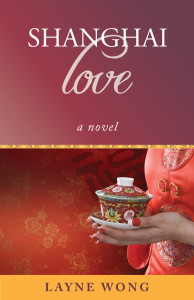
Interracial love in China during World War II, a book review of “Shanghai Love”

August 13, 2013

From the title, we already know the story is about love in Shanghai, and it doesn’t take long to discover who the two main characters are that are destined to meet.

It is 1938, and in chapter one, we are introduced to Peilin in China. In chapter two we meet Henri in Nazi Germany.

But the love story isn’t what made this novel worth reading. It was the journey the two characters must take to find each other. They are both doctors. Henri is Jewish and trained in western medicine. He has to leave his family behind in Germany and flee to China to avoid Hitler’s Nazis who are hunting for him because he dared to love a woman who was not Jewish.

Peilin was trained by her grandfather in Chinese herbal medicine, and by the time Henri meets her, she has already been married to a ghost for some time.

As a young girl, a marriage was arranged to a boy almost twice Peilin’s age, but when he was a young man—before the marriage—he was killed in combat fighting the Japanese who invaded China in July of 1937. By the time Pearl Harbor is bombed by the Japanese in December 1941, China has already been fighting Japan for more than four years. To give you an idea of how horrible it was, by the end of World War II, China lost ten to twenty million people to the war compared to 418,500 for the United States.

One would think with her fiancé dead, Peilin would be free to move on with her life, but no—because in China it is expected that Peilin must still marry the man’s ghost, stay a virgin for life and live with her in-laws who will buy a baby for her to raise as if she were its biological mother and the dead man its father.

Shanghai-Love-front-cover-194x300

The story is set in an era when both the Chinese and Europeans disapproved of interracial relationships. In Germany, there was racism against the Jews. But in China, there is prejudice from some Chinese because Henri is white. In addition, many of the Jewish refugees look down on the Chinese culture and disapprove of Henri spending time with Peilin. It seems that these two are fated to be star-crossed lovers.

I recommend reading this story because it offers a reminder of the horrors of war and racism. During World War II, 20,000 European Jews fled to Shanghai, one of the few places in the world that put no limits on the number of Jews it would accept.

Another plot thread that runs through the novel is the focus on Chinese herbal medicine and how different it is from the western concept of medical care. The Chinese were studying advanced medical care long before the West. In fact, Chinese medical tradition is more than 5,000 years old including herbal medicine, acupuncture, massage, exercise and dietary therapy—concepts that the West didn’t pay serious attention to until near the end of the 20th century.

I’m not going to tell you how the love story turns out between Henri and Peilin. You will have to buy and read the novel to discover that.

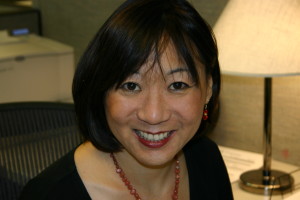
Layne Wong, the author of Shanghai Love

Layne Wong, the author of Shanghai Love

I bought my copy of “Shanghai Love” by Layne Wong at an author event held at the Bancroft Hotel in Berkeley, California earlier in 2013.

_______________

Lloyd Lofthouse is the award-winning author of My Splendid Concubine [3rd edition]. When you love a Chinese woman, you marry her family and culture too. This is the love story Sir Robert Hart did not want the world to discover.

His latest novel is the multiple-award winning Running with the Enemy.

Subscribe to “iLook China”!
Sign up for an E-mail Subscription at the top of this page, or click on the “Following” tab in the WordPress toolbar at the top of the screen.

About iLook China

China’s Holistic Historical Timeline


Mao’s 24-hour war to cleanse China of illegal drugs

July 16, 2013

From The Opium Monopoly by Ellen N. La Motte, we learn how opium addiction became an epidemic in China. Although The Chinese knew about opium for more than a thousand years, it wasn’t until the Portuguese arrived in the 18th century that  the Chinese used it as a drug by smoking it. Merchants from Britain, France, Portugal, America and other nations became the drug cartels that plagued China into the 20th century.

In 1729, the emperor issued the first anti-opium edict, but the supply of opium flooding China went from 220 chests in 1729 to 70,000 in 1858.

It is estimated that before 1950, as many as 20 million Chinese were drug addicts. To solve this problem, Mao had the People’s Liberation Army execute the drug dealers and forced millions of addicts into compulsory treatment—all in twenty-four hours.


Opium growers, who did not want to comply, fled into the Golden Triangle Region of Southeast Asia where many of Chiang Kai-shek’s nationalist troops had gone to escape defeat. Those generals also did business with the CIA, and American soldiers in Vietnam became the new customers. It is estimated that at least 20% of the almost nine million American troops that served in Vietnam became addicted.

China remained free of drugs until Deng Xiaoping declared, “Getting Rich is Glorious” and opened China to world trade. In 2003, it was estimated that China had four million regular drug users—even with China’s strict laws concerning illegal drug use.

And in America, where human rights are king, drug users and sellers often end up in prison costing taxpayers an average of $47,000 annually for each of the more than 2-million convicted criminals that are locked up explaining why America has more people serving time in prisons than any other country on the planet—that price tag is more than $90-billion a year.

Sources: Opium and Illegal Drugs in China and How Maoist Revolution Wiped Out Drugs in China

To discover more of Mao’s China, see China’s Great Leap Forward

_______________

Lloyd Lofthouse is the award-winning author of My Splendid Concubine [3rd edition]. When you love a Chinese woman, you marry her family and culture too. This is the love story Sir Robert Hart did not want the world to discover.

His latest novel is the multiple-award winning Running with the Enemy.

Subscribe to “iLook China”!
Sign up for an E-mail Subscription at the top of this page, or click on the “Following” tab in the WordPress toolbar at the top of the screen.

About iLook China


Cheating is a Global Problem

June 11, 2013

I guess I’m naïve or stupid or something. During the nine years I attended colleges and universities to earn my BA in journalism and MFA in writing, I did all my own work. It didn’t even occur to me that I could pay someone else to do the work for me.

And when I read, “Rampant cheating hurts China’s research ambitions” (Yahoo news), I was disappointed at the lack of balance. There was no mention that cheating is a problem globally—not just in China.

Was this another example of China bashing?

I taught journalism and was an adviser for an award winning high-school newspaper for several years, and the student reporters learned to write balanced pieces—even for the opinion page. I taught that both sides of an issue should be heard even if the balance isn’t perfect and one side is not politically correct.


Listen to the first few minutes to get the idea.

Since Yahoo’s headquarters are in Sunnyvale, California, I’m going to focus on cheating in America to correct this imbalance.

ABC News/Primetime published “A Crisis in America’s Schools — How It’s Done and Why It’s Happening“.  “…according to a 2002 confidential survey of 12,000 high school students, 74 percent admitted cheating on an examination at least once in the past year…. Lifting papers off the Internet is one of the newer trends in plagiarism — and technology is giving students even more ways to cheat nowadays.”

Then there’s “High-Tech Cheating in College” about cheating at MIT, California Polytechnic State University at San Louis Obispo, and Stanford University. “Many colleges offer no comprehensive approach to minor academic cheating (the exceptions are institutions with honor codes, though few have them according Tracy Mitrano, Cornell University’s director of information-technology policy.”

Then there is Lance Armstrong and the US cycling team.

Discover Education Chinese Style

_______________

Lloyd Lofthouse is the award-winning author of My Splendid Concubine [3rd edition]. When you love a Chinese woman, you marry her family and culture too. This is the love story Sir Robert Hart did not want the world to discover.

His latest novel, Running with the Enemy, was awarded an honorable mention in general fiction at the 2013 San Francisco Book Festival.

Subscribe to “iLook China”!
Sign up for an E-mail Subscription at the top of this page, or click on the “Following” tab in the WordPress toolbar at the top of the screen.

About iLook China


Where Saving Money is a Virtue

May 7, 2013

Hung Huang, one of China’s four Opras, and the CEO of China Interactive Media Group, the host of TV talk show Crossing Over and one of the top-five most popular Bloggers in China wrote a post for the New York Times Economix Blog about why the Chinese save so much.

She thinks the Chinese save out of fear.

I don’t agree, because China is not unique when it comes to Asians saving money. Galbi Think.org says, “Savings rates for East Asian economies averaged about 35% of GDP.

For a comparison, the long term saving rate in the US is less than 7%.

Another study reported by All Business.com says, “The fact that the saving rate of rural households (in China) is considerably higher than that of urban households—even though their income levels are so much lower—is surprising.”

Not so surprising. I married into a Chinese family and I’ve come to believe the Chinese can out frugal anyone. The less earned, the more the Chinese save.  All it takes is saying no to buying frivolous junk and eating out when the money isn’t there.

In fact, I found the comments to Huang’s post to be more convincing.

Melvin Chin says, “Asians, including Chinese, Japanese, and Koreans, are predominantly brought up with the concepts of frugality and saving from very young. … Saving teaches them to be proud of what is accumulated, enjoy the fruits of abundance, and cherish the habit as a virtue.”

B. Ray says, “The strong family connection is the reason for Chinese to save. It is the same in Taiwan. Almost every elder person I know saves for their descendents.”

Fei says, “Simply look at the generations of Chinese who live in North American, you’ll find out that the majority of them still maintain a lifelong enthusiasm of saving … because saving is a habit that’s deeply rooted in the Chinese culture.”

If all Asian cultures are so good at saving money and are all collective cultures, what does that say about the West and North America’s individualistic cultures?


_______________

Lloyd Lofthouse is the award-winning author of My Splendid Concubine [3rd edition]. When you love a Chinese woman, you marry her family and culture too. This is the love story Sir Robert Hart did not want the world to discover.

Subscribe to “iLook China”!
Sign up for an E-mail Subscription at the top of this page, or click on the “Following” tab in the WordPress toolbar at the top of the screen.

About iLook China