Interracial love in China during World War II, a book review of “Shanghai Love”

August 13, 2013

From the title, we already know the story is about love in Shanghai, and it doesn’t take long to discover who the two main characters are that are destined to meet.

It is 1938, and in chapter one, we are introduced to Peilin in China. In chapter two we meet Henri in Nazi Germany.

But the love story isn’t what made this novel worth reading. It was the journey the two characters must take to find each other. They are both doctors. Henri is Jewish and trained in western medicine. He has to leave his family behind in Germany and flee to China to avoid Hitler’s Nazis who are hunting for him because he dared to love a woman who was not Jewish.

Peilin was trained by her grandfather in Chinese herbal medicine, and by the time Henri meets her, she has already been married to a ghost for some time.

As a young girl, a marriage was arranged to a boy almost twice Peilin’s age, but when he was a young man—before the marriage—he was killed in combat fighting the Japanese who invaded China in July of 1937. By the time Pearl Harbor is bombed by the Japanese in December 1941, China has already been fighting Japan for more than four years. To give you an idea of how horrible it was, by the end of World War II, China lost ten to twenty million people to the war compared to 418,500 for the United States.

One would think with her fiancé dead, Peilin would be free to move on with her life, but no—because in China it is expected that Peilin must still marry the man’s ghost, stay a virgin for life and live with her in-laws who will buy a baby for her to raise as if she were its biological mother and the dead man its father.
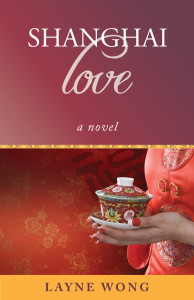
Shanghai-Love-front-cover-194x300

The story is set in an era when both the Chinese and Europeans disapproved of interracial relationships. In Germany, there was racism against the Jews. But in China, there is prejudice from some Chinese because Henri is white. In addition, many of the Jewish refugees look down on the Chinese culture and disapprove of Henri spending time with Peilin. It seems that these two are fated to be star-crossed lovers.

I recommend reading this story because it offers a reminder of the horrors of war and racism. During World War II, 20,000 European Jews fled to Shanghai, one of the few places in the world that put no limits on the number of Jews it would accept.

Another plot thread that runs through the novel is the focus on Chinese herbal medicine and how different it is from the western concept of medical care. The Chinese were studying advanced medical care long before the West. In fact, Chinese medical tradition is more than 5,000 years old including herbal medicine, acupuncture, massage, exercise and dietary therapy—concepts that the West didn’t pay serious attention to until near the end of the 20th century.

I’m not going to tell you how the love story turns out between Henri and Peilin. You will have to buy and read the novel to discover that.

Layne Wong, the author of Shanghai Love

Layne Wong, the author of Shanghai Love

I bought my copy of “Shanghai Love” by Layne Wong at an author event held at the Bancroft Hotel in Berkeley, California earlier in 2013.

_______________

Lloyd Lofthouse is the award-winning author of My Splendid Concubine [3rd edition]. When you love a Chinese woman, you marry her family and culture too. This is the love story Sir Robert Hart did not want the world to discover.

His latest novel is the multiple-award winning Running with the Enemy.

Subscribe to “iLook China”!
Sign up for an E-mail Subscription at the top of this page, or click on the “Following” tab in the WordPress toolbar at the top of the screen.

About iLook China

China’s Holistic Historical Timeline


From Mao to the Met

March 12, 2013

Arriving early at the local library to attend a lecture called the Wit and Wisdom of Abraham Lincoln, I stopped by the library’s used bookstore first and found a three-dollar DVD of Hao Jiang Tian’s From Mao to the Met. Later that evening, my wife said she had been looking for that DVD, and she invited her sister and father to join us when we watched it.

Funded by the Committee of 100, this one-man show features Metropolitan Opera basso Hao Jiang Tian weaving song and story into a compelling tale of growing up in China under Chairman Mao, based on his autobiography (with co-author Lois B. Morris) “Along the Roaring River: My Wild Ride from Mao to the Met“.

What I enjoyed most about the one-man show was that Tian never condemned Mao, the CCP or China for his bitter-sweet journey.


Instead, this fantastic opera singer says it was fate that led him from Mao to the Met. When you stop to think about it, fate is the river-of-life known later as history—the current that carries all of us through life often without much say in that history.

As a child, Tian hated his piano lessons. Then with the arrival of Mao’s Cultural Revolution, Tian said, “So one happiest day came when I heard an announcement from the loudspeakers: My piano teacher was arrested as a counterrevolutionary. And then I was so happy. And so immediately I ran to the courtyard, screaming and jumping with joy.”

Thirty years later, Tian returned to Beijing and visited his piano teacher, who said, “Well, that was a crazy period, and it was so hard to figure out who was right and who was wrong.”

In his one man show, Tian performs songs of the Cultural Revolution, American standards such as “Some Enchanted Evening”, Irish song “Danny Boy” and operatic arias from his favorite roles; Tian tells the story of the music-and the woman- that changed his life.

NPR says, “For more than 20 years, the basso voice of Hao Jiang Tian has filled major American opera houses. As one of the few Chinese stars in opera, his life story is as remarkable as his work. … Tian is one of the few opera singers to emerge from China.” Source: NPR.org

Discover China’s Invisible Man – Liu Bolin

_______________

Lloyd Lofthouse is the award-winning author of My Splendid Concubine [3rd edition]. When you love a Chinese woman, you marry her family and culture too. This is the love story Sir Robert Hart did not want the world to discover.

Subscribe to “iLook China”!
Sign up for an E-mail Subscription at the top of this page, or click on the “Following” tab in the WordPress toolbar at the top of the screen.

About iLook China


A bit of advice on doing business in China

January 14, 2013

An expatriate living in China sent me a copy of The Australian’s Goodwill Offers a Rich Yield by Greg Rudd.  The commentary was published in that newspaper back in May 2009.

However, what Greg Rudd says is just as important today as it was then regardless of the few negative voices that left comments.

I find it interesting that the negative comments from such as “lao de lao ren” and “RN of Canberra” may be from ignorant individuals that do not realize that the US Founding Fathers despised “democracies” and built a “republic” where only white male property owners (excluding Jews) could vote—about 10% of the 3.9 million people counted in the first U.S. Census of 1790, and 90% were farmers.  That number included almost 700,000 slaves in the land of the free. That means about 320,000 may have been eligible to vote.

“RN of Canberra” even compared China to Hitler’s Nazi Germany, which isn’t even close. There is no comparison. Today’s China is a much safer place to live than Nazi Germany was and there are no signs that China plans to go out and wage war against the rest of the world or set up gas chambers and start killing people as the Nazis did.

Both “lao de lao ren” and “RN of Canberra” express that China should become a democracy. Well, the CCP has about 80 million members and they do vote in addition to the 600 million rural Chinese that vote in elections for village political posts such as mayor. That’s more than 10% of the population.

In fact, the first time the US was officially called a democracy was by President Woodrow Wilson more than a century after the US was founded. Why, after the Civil War, veterans were known as the Grand Army of the Republic (GAR)—not the Grand Army of a Democracy.

Presidents John Adams and Thomas Jefferson both said democracy was no better than mob rule, which explains why the Founding Fathers created the Electoral College to select presidents and why George W Bush lost the popular vote to Al Gore but became president anyway.

Greg Rudd offers some advice about China in his commentary.

He says, “My mother taught me when you walk into someone’s house you shouldn’t be rude. You may not like what you see sometimes, and advice and suggestions can be given in the right spirit and in the right atmosphere, but always remember it is not your house.

“When we are in China’s house we should show respect and when they are in our house they should show respect.”

Greg Rudd is managing director of GPR Asia, based in Beijing. GPR advises on investment and joint ventures.

GPR Asia works with Asian companies who wish to invest/joint venture/merge or acquire companies in Australia and/or with Australian companies that wish to invest/joint venture/ merge or acquire companies within the Asian region.

Discover more about Doing Business in China

______________

Lloyd Lofthouse is the award-winning author of The Concubine Saga. When you love a Chinese woman, you marry her family and culture too. This is the love story Sir Robert Hart did not want the world to discover.

Subscribe to “iLook China”!
Sign up for an E-mail Subscription at the top of this page, or click on the “Following” tab in the WordPress toolbar at the top of the screen.

About iLook China


Indiana Jones, make room for Irene Blum

January 7, 2013

Ballantine Books sent me an advanced, uncorrected proof of Kim Fay’s The Map of Lost Memories. Because I’m not going to check or read the finished book, note that the final novel may have been revised.

After reading the uncorrected proof, I think Kim Fay’s novel is brilliant at times, average at times and sometimes falls flat then revives to be brilliant again repeating the cycle. In fact, Fay’s descriptions were so vivid they transported me to Shanghai, Saigon and Cambodia, and I could smell and see these exotic places—some I have visited and Fay’s descriptions rang true.

The main character in The Map of Lost Memories is Irene Blum, who in 1925 slams into the glass ceiling and is passed over for a job she deserves, the curatorship of the museum where she grew up and then worked. Instead, the job goes to a man who has the proper credentials even though he does not have Irene’s experience or global connections.

This leads Irene to steam across the Pacific to resurrect her career by finding several copper scrolls that record the lost history of Cambodia’s ancient Khmer Empire (802 – 1431 AD).

Irene’s first stop is Shanghai where she is sucked into the power struggle between the nationalists and communists and barely escapes with her life. Her next stop is Saigon and from there she travels to Cambodia with her motley crew, visits Angkor Wat and then is off to discover a lost temple in Cambodia’s rugged northeast near Laos that may be the rival of Angkor Wat.

Along the way, she collects a crew of dysfunctional allies each with his or her own agenda. There is the drug-addicted Simone Merlin, who appears to be a dedicated communist out to save the poor Cambodians from being exploited by the French colonial powers.

Then there is Louis, a world renowned scholar of the Khmer civilization and Angkor Wat, who was a childhood friend and former lover of Simone.

Irene also finds romance with the mysterious Mark Rafferty, who is linked to her mentor Henry Simms, a wealthy and powerful old man dying of cancer and another reason why Irene is racing to find the copper scrolls that will reveal the history of the Khmer empire ruled by Jayavarman VII (1125–1218), the last of the great Angkor kings.

At one time, the Khmer Empire was one of the most, if not the most, powerful empires in Southeast Asia. In fact, recent satellite images have revealed that Angkor Wat, the capital of the Khmer Empire, was the largest pre-industrial urban center in the world at that time.

However, history reveals there will always be empires that rise to flatten other cultures and countries and then fall. For example: the Aztec, Han, Inca, Roman, Spanish, French, British, Greek, Persian, and Egyptian. I doubt that the future will ever see Italy rise to equal the Roman Empire.

The Khmer Empire of Jayavarman VII was no different.

I enjoyed this novel and if you enjoy an Indiana Jones adventure, this book is for you. At the end of the novel, I had a feeling that we may see more of Irene in subsequent novels as the adventure continues.

Discover China’s Three “Journeys to the West”

______________

Lloyd Lofthouse is the award-winning author of The Concubine Saga. When you love a Chinese woman, you marry her family and culture too. This is the love story Sir Robert Hart did not want the world to discover.

Subscribe to “iLook China”!
Sign up for an E-mail Subscription at the top of this page, or click on the “Following” tab in the WordPress toolbar at the top of the screen.

About iLook China


China’s Annual New Year Migration

December 31, 2012

We visited China and traveled during one of China’s national holidays in 2008.

My sister and her youngest daughter went with us—both are evangelical Christians and mentioned they didn’t believe in China’s one-child policy. I heard this more than once but after they arrived in China and experienced that migration, both stopped preaching about the one-child policy.

It was so crowded, it was as if we were swimming through an ocean of people.

That’s when I decided that my next trip to China will not be during any of China’s national holidays.

In fact, to deal with this migration, inhabitat.com says, “China has released a massive rail development program, which will expand the high-speed rail service to 42 more high-speed lines by 2012.”

This Al Jazeera report is about China’s annual New Year Migration of 2010. For readers who haven’t been to China, this may be your only chance to experience a taste of what it is like to live in a country with more than 1.3 billion people.

Tony Birtley of Al Jazeera, reports from a train heading south from Beijing to Hebei province.

Birtley says, “Welcome to the Chinese New Year and to the world’s biggest annual migration.… There’s something like 2,000 people on this train and you can hardly move.”

The rail system in China barely manages to move the average 220 million people traveling home to celebrate the Chinese New Year with family. But the Chinese lunar New Year is on Sunday, February 10, 2013.  That’s when you want to avoid visiting China unless you want to experience this holiday with the  Chinese. If so, pick a city and avoid traveling.

It is possible that a passenger will have to stand for a trip of 16 to 48 hours to reach their destination.

Discover Harbin’s Winter Wonderland

______________

Lloyd Lofthouse is the award-winning author of The Concubine Saga. When you love a Chinese woman, you marry her family and culture too. This is the love story Sir Robert Hart did not want the world to discover.

Subscribe to “iLook China”!
Sign up for an E-mail Subscription at the top of this page, or click on the “Following” tab in the WordPress toolbar at the top of the screen.

About iLook China