Chinese Herbalism

March 15, 2010

If given a choice, I will use herbal medicines when I’m sick instead of modern Western medicine, which will be my last resort.

The use of herbal medicines in China has been traced back to the Zhou Dynasty, late Bronze/early Iron Age, about 2500 to 3000 years ago. The video at the end of this post will give you a better idea how herbalism came to be.

Li Shizhen

In 1596, hundreds of years before Western modern medicine, Li Shizhen spent decades writing down the vast knowledge of herbal lore.

His book, the Ben Cao Gang Mu (1596), has been used as a pharmacopoeia, but it was also a treatise on botany, zoology, mineralogy and metallurgy.
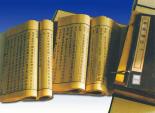
 
Ben Cao Gang Mu

The Ben Cao Gang Mu mentions 1,892 different herbs and is divided into 6 sections, 52 scrolls and 60 different categories.

It has been reported that Darwin had a copy of the Ben Cao Gang Mu with him on his voyage of discovery in 1831.

In fact, the World Health Organization reports that about 80% of people worldwide use herbal medicines for their healthcare.

Discover more about Health Care Without Drugs

______________________________

Lloyd Lofthouse is the award-winning author of My Splendid Concubine [3rd edition]. When you love a Chinese woman, you marry her family and culture too. This is the lusty love story Sir Robert Hart did not want the world to discover.

#1 - Joanna Daneman review posted June 19 2014

Where to Buy

Subscribe to “iLook China”!
Sign up for an E-mail Subscription at the top of this page, or click on the “Following” tab in the WordPress toolbar at the top of the screen.

About iLook China

China’s Holistic Historical Timeline


Hitting Endless Home Runs

March 15, 2010

First home run—China is becoming the world leader in green energy. You may read about it in China Going Green.

Second home run—Although America has ample supplies of rare earth elements (in the ground) needed for high-tech products, China is the only country processing these elements. The cost to build a processing plant in the United States runs between 500 million and one billion. Source: Holding a Vital Key to Humanity’s Future

“U.S. Rare Earths’ Chief Executive Officer Edward Cowle explained that rare earth elements have become increasingly common in high technology equipment including:

  • computer hard drives and cellular phones
  • MRI machines
  • environmental products such as electric cars, wind turbines and solar panels
  • military weapons, including the electronic controls and electric motors used in missiles

“U.S.-based production for these important manufacturing and military applications may be in jeopardy because China currently supplies the majority of rare earth elements that are used in these applications.” Source: Technology Metals Research

High speed rail in China

Third home run—Now, using French, German and Japanese technology, China plans to bid for contracts to build high-speed rail for the U.S. market and is already exporting this technology to Europe and Latin America. The White House recently announced $8 billion in grants for rail projects including the high-speed systems in California, Florida and Illinois. Source: The Huffington Post

See China’s Fast Track Growth

______________

Lloyd Lofthouse is the award-winning author of The Concubine Saga. When you love a Chinese woman, you marry her family and culture too. This is the love story Sir Robert Hart did not want the world to discover.

To subscribe to “iLook China”, look for the “Subscribe” button at the top of the screen in the menu bar, click on it then follow directions


The Last Word

March 13, 2010

During the Copenhagen Climate Summit, China was criticized for not signing a pledge to reduce carbon emissions.  I don’t think China’s was ready to sign and had to go home to study the situation to see what they could do before they made a commitment.  All (take a look) of China’s politburo members, the top government body in China, are scientist or engineers.

On March 10, China told the United States to make stronger commitments on climate change and provide environmental expertise and financing to developing nations. That was a few days after China announced it was planning to reduce its carbon footprint by 40-45% (from 2005 levels) and generate 15% of its electricity from renewable technologies by 2020.

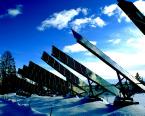
Solar Cells

Obama, on the other hand, only pledged reducing green house gas emissions “in the range of 17%” by 2020. 

This is what I think happened after China’s representatives left Copenhagen.  Those scientists and engineers that make up China’s ruling body gathered facts, discovered what China could achieve, then formulated long-range goals. Most scientists and engineers think that way.

President Obama is a lawyer. Most of the elected representatives in America’s two houses of congress are lawyers.

See what China has been doing by reading “Health Care, Urban Real Estate and Renewable Energy Update” http://wp.me/pN4pY-er and “China Going Green” http://wp.me/pN4pY-3f


Tolerance to Infinity Guest Post by Bob Grant

March 13, 2010

Originally published at Speak Without Interruption on February 17, 2010 by Bob Grant — publisher/editor for Speak Without Interruption. Posted on iLook China, 3/13/10 at 08:00

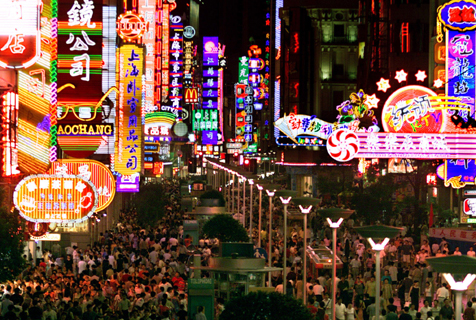
(Note: There are more photos at the original site. The Nanjing Road photo here does not appear at Speak Without Interruption.)

Wherever people normally congregate in groups—shopping areas, elevators, subways, airports, city streets, and the like—there are a lot more people in China congregating in those same places.  Again, I can only use my own experiences – in these types of crowds in China – but I was amazed how tolerant people were of each other.  In some cases I was squeezed to the people next to me so closely that I could almost feel their hearts beating.  In these situations – personal space was at zero.  I was crammed into a subway once and could literally stand – without holding on to anything – because we were packed so close together (not that I really had anything to hold on to anyway).  The exit from this subway was orderly and people were polite to each other – and me.  At our stop, we had to ask people to move, which was difficult for them, but we got off with no problems or delays.

Nanjing Road, Shanghai - this is the normal crowd

 I am not certain the Chinese people have a choice living – and working – among that many other people.  However, I saw it as another attribute of China and its people.  As a “Westerner” I could have easily been accosted by anyone in these large crowds as most of the time I was the only non-Chinese among them.  But this never happened.  No one stared at me or otherwise acknowledged me as anything other than one of them.  Perhaps I am reading too much into these situations, but I will go with my feelings here and believe this is a nation of extremely tolerant individuals. 

 Places I went did not always have these types of crowds, but in the locations where large crowds congregated, I was always impressed by the politeness of my fellow “Crowdies”.  I can’t say the same for other crowds, in which I have found myself, in the US and other parts of the world.  I think China is unique in this area and its people have Tolerance to Infinity.

 Read China Trip 2008 at  http://wp.me/pN4pY-c


Health Care, Urban Real Estate and Renewable Energy Update

March 9, 2010

Rural citizens of China have been protesting the lack of quality health care outside the cities where eight hundred million Chinese live. This topic was also a subject for debate in China’s legislature, known as the National People’s Congress. (see Basic Health Care in China (http://wp.me/pN4pY-bO)

Another complaint China’s government wants to deal with is the shocking price increases to buy a home in one of China’s cities. Housing costs in seventy Chinese cities jumped 9.5% from a year earlier. The government wants to bring those prices down to make housing more affordable.

During the Copenhagen Climate Summit, China was criticized for not signing a pledge to reduce carbon emissions. China recently announced that it is planning to reduce its carbon footprint by 40-45% (from 2005 levels) and generate 15% of its electricity from renewable technologies by 2020. Over the next ten years, we should see these changes taking place. Since most of China’s leaders are engineers, they often set long-term goals.

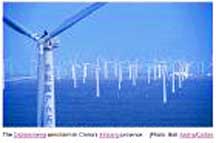
Chinese Wind Farms

By comparison, President Obama said at Copenhagen that the United States intended to reduce its greenhouse gas emissions “in the range of” 17% by 2020.  Since the Chinese government doesn’t have to deal with American conservatives, who do not believe carbon emissions are causing global warming and block legislation and spew confusion at every chance, I’d place my bet on China achieving their goals first.