Blaming the Jews—Again!

March 28, 2010

Hitler blamed the Jews and killed millions. Christians blame today’s Jews for the crucifixion that happened almost two thousand years ago. Many in Islam want to destroy them.

Now, the Mathaba News Network is doing it—blaming the Jews for the world’s financial crisis. Look at the headline Mathaba splashed across a page on their Website about “Currency Wars“, a best seller in China about the current world economic crises, and the picture they use. Both are biased and misleading . Are the writers and editors at Mathaba racists and anti-Semitic?
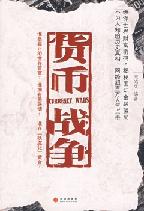
Cover for "Currency Wars"

“The book’s author, Song Hongbing, claims that behind world-changing events like the battle of Waterloo, Adolf Hitler’s rise to power, President Kennedy’s assassination, and the deep recession in Asia during the 1990s stood an intricate conspiracy aimed at increasing Jews’ wealth and influence.”  Huh—the Jewish people are responsible for Hitler’s rise to power?

Reading further, I discovered that the Rothschild family is mentioned as the prime villain. Since when does one Jewish family represent thirteen million people?

I’m not Jewish, but I have Jewish friends, who are not part of a global conspiracy to control the world’s currencies—two of my friends are teachers, another runs a non-profit, and a fourth is a designer, but according to Mathaba’s headline, they are guilty because they are Jews. Who owns Mathaba? Iran.

I’ll tell you the real reasons why “Currency Wars” is a bestseller in China. China hasn’t suffered from the economic crises, and they control their currency. The Chinese want to know how the “masters” did it and learn from their mistakes.

See Deep Family Roots

______________

Lloyd Lofthouse is the award-winning author of the concubine saga, My Splendid Concubine & Our Hart. When you love a Chinese woman, you marry her family and culture too.

If you want to subscribe to iLook China, there is a “Subscribe” button at the top of the screen in the menu bar.


Transporting Goods by Road in China

March 26, 2010

Originally Published (see more photos here) at Speak Without Interruption on February 19, 2010 by Bob Grant—publisher/editor for Speak Without Interruption. Posted on iLook China, 3/26/10 at 08:00

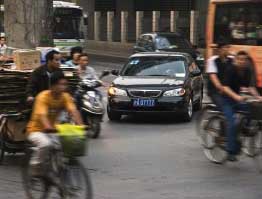
About any time, day or night, in major Chinese cities you can see any type of vehicle transporting all imaginable products on the roads. There are trucks carrying ocean containers and Mercedes carrying people. I have traveled to England, Ireland, Holland, Italy, Canada, Mexico, Indonesia, Malaysia, Korea, and China. I would not call myself a “world traveler” but, of all the countries in which I have traveled, I found China to be the most diverse in terms of the types of vehicles that transported goods on their roads.

Regardless of where my travels took me in China—rural or city—there were always a lot of people transporting goods in any type of vehicle that could move on its own, by animal, or under human power. The fact that people were busy working was not of particular note. It was the diversity of their means of transportation within a single view that was of interest to me. Also, they all seemed to move with purpose—whether carrying large or small items. I suppose that is really not so different than any other parts of the world—for some reason it just struck me as another admirable quality of the Chinese people.

Photo from original post on Speak Without Interruption

Most of the smaller commercial trucks are blue—I have no idea why? I asked a couple of times but really did not receive an answer. Maybe there was a sale on blue paint? I am certain there is a reason, but since I don’t know it, I can’t share it with you—rather just make reference to it.

I will say that with all those vehicles on the road it did add to the air pollution. In most states in the U.S., vehicles have to pass safety inspections before they can be licensed. I am not certain this is a rule in China—if it can move it is road ready. 

In my travels inside China for business, I found the Chinese to be very capitalistic in nature—certainly contrary to how I viewed the Chinese people prior to me actually visiting the country. The diversity in the means of transporting their goods is just one example of this fact at least in my mind.

Read more of Bob Grant’s guest posts at http://wp.me/pN4pY-gJ


The Changing Landscape

March 25, 2010

Regardless of what Political Correctness requires most Americans to say in public about other cultures and ethnic groups, America’s national interests (meaning Americans making money and spending more) have dominated the globe for decades clearly showing a lack of respect for other cultures.

Today, the world is on the verge of a major shift away from America’s national interests as China rewrites the rules on trade, technology, currency, climate change, etc.

中国
China/Middle Kingdom

The March 22, 2010, issue of Newsweek, “It’s China’s World—We’re Just living In It“, talks about those changes. Where the American dollar once ruled supreme, the Chinese yuan is appearing around the Asia-Pacific as an alternative currency.

As I pointed out about the Chinese space race, China is now the only country making major investments in space exploration and their reasons are not to earn bragging rights by putting footsteps in moon dust but to discover fresh sources of rare minerals that are quickly being depleted on the earth.

Looking for opportunities, China has become the leader in green technology.

Meanwhile, America is missing the boat as political/religious agendas rule the behavior of the ruling class who squabble over global warming, school prayer, abortion, health care, stem cell research, evolution versus creationism, etc.


PayPal Drooling for China

March 24, 2010

“Ebay failed in China because it relies on one leader who did not understand the market at all: Meg Whitman. Meg Whitman is Ebay Mao Zedong. No one dare tell her the truth. She exports her cultural revolution and it dont work in China. She is clearly a smart lady but is a no-nothing about China, taken advantage of at all turns.”  Source: Playin’ With It

This struggle for the Chinese consumer reminds me of the infant who bangs on his plate sending food flying everywhere while he screams for something else.

PayPal in China

That brings me to PayPal. eBay/PayPal are one and the same. When PayPal first went after Chinese consumers they lost to Alipay, the online payment service operated by China-based e-commerce firm Alibaba Group.  Most Chinese will pay with cash before they use a credit card and this may be where PayPal tripped up the first time.

PayPal is back. This time forming an aliance with Union Pay, with Chinese consumers holding 2.1 billion debit cards. This partnership will make it easier for Chinese consumers to make transactions outside China and pay cash.  Did PayPal learn their lesson the first time? Source: Internet Retailer

See Doing Business in China http://wp.me/pN4pY-2Y


An Unhealthy War of Words

March 17, 2010

Both China and America face a crises in health care, because many in both countries cannot afford it.

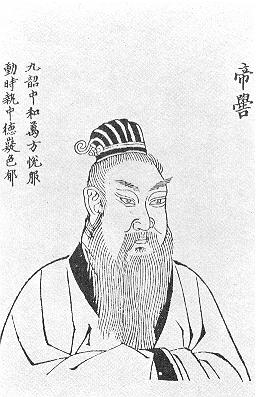
Emperor Wudi (Han Dynasty, 141 BCE) may have made the right choice. Wudi wanted to make sure that peasants could afford salt and iron so his government controlled the prices. The private sector that sold these commodities was upset, because they couldn’t amass the great fortunes they wanted.

Emperor Wudi - Han Dynasty

After Emperor Wudi’s death in 87 BCE, a great debate (similar to the debate over health care in America today) took place.  It was called the “Debate on Salt and Iron”.  It pitted the advocates of a strong central state against those favoring more autonomy for local elites—people who owned businesses in the private sector. In the end, the government program that controlled the prices of essential commodities was abolished.

The results—

1. The imperial court became more concerned with an extravagant social life and stopped doing their job running the country. Greed became rampant.

2. Powerful families manipulated the emperor and his ministers—like corporate and special-interest lobbyists in America today. For a few, fortunes grew while many peasants had to go without.

3. Revenues declined and military affairs were neglected.

4. The Han Dynasty collapsed.

Health is an essential commodity, and Bill Maher makes a good case for this in his piece at the Huffington Post.

To learn more, read “China’s Health Care During Mao’s Time” http://wp.me/pN4pY-br