Bringing the Pollution Home

June 5, 2010

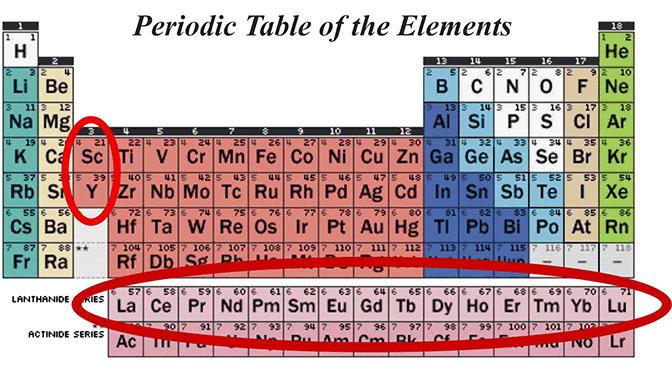
Business Insider reports that China may soon restrict exports for rare-earth minerals that are used in hybrid car batteries, computers, cell phones, flat screen monitors and high tech weapons that the US military depends on to fight wars around the globe.

It’s about time that the United States and other countries that uses these rare earth metals builds their own refining capability.  Until now, they have bought from China, the only supplier on the planet.  However, China has announced plans to curb pollution and greenhouse emissions dramatically. One strategy is to offer huge rebates to Chinese who buy plug-in hybrids or all electric vehicles meaning China will be using what they refine.

Recently, China also expressed concerns about some of the minerals crucial to green technologies since extracting and refining them pollutes and causes serious damage to China’s environment. That means the US and other countries will have to build refining capabilities to extract and refine rare-earth metals at home instead of in China’s back yard.

See Cornering the Plug-In Hybrid all Electric Car

_____________________

Lloyd Lofthouse is the author of the award winning novels My Splendid Concubine and Our Hart. He also Blogs at The Soulful Veteran and Crazy Normal.

Sign up for an RSS Feed for iLook China


Keeping China’s People Working

May 30, 2010

Marginal Revolution (MR) posted his or her “China fact of the day” and just about everyone who left a comment got it wrong—as usual.

“Of the 22 Chinese corporations listed on the Fortune Global 500, 21 are controlled by China’s central government or state-run banks.” Source of quote: New York Times

I read the The New York Times piece that was quoted by MR and the gist was that China is going through something similar to what Japan did for the four decades after World War II, and that China cannot depend on manufacturing and exporting goods to the rest of the world to maintain a healthy economy indefinitely.  China “needs” to grow a domestic economy that supports itself and that is what the Chinese are trying to do. If they get it wrong, they will pay a steep price.

The first comment to MR’s “China fact of the day” said, “So much for the triumph of capitalism.”

True, so much for capitalism. After all, it was the Republican, Reagan, Bush, Wild West, capitalist system in the US that caused China to start pumping money back into state-run businesses.

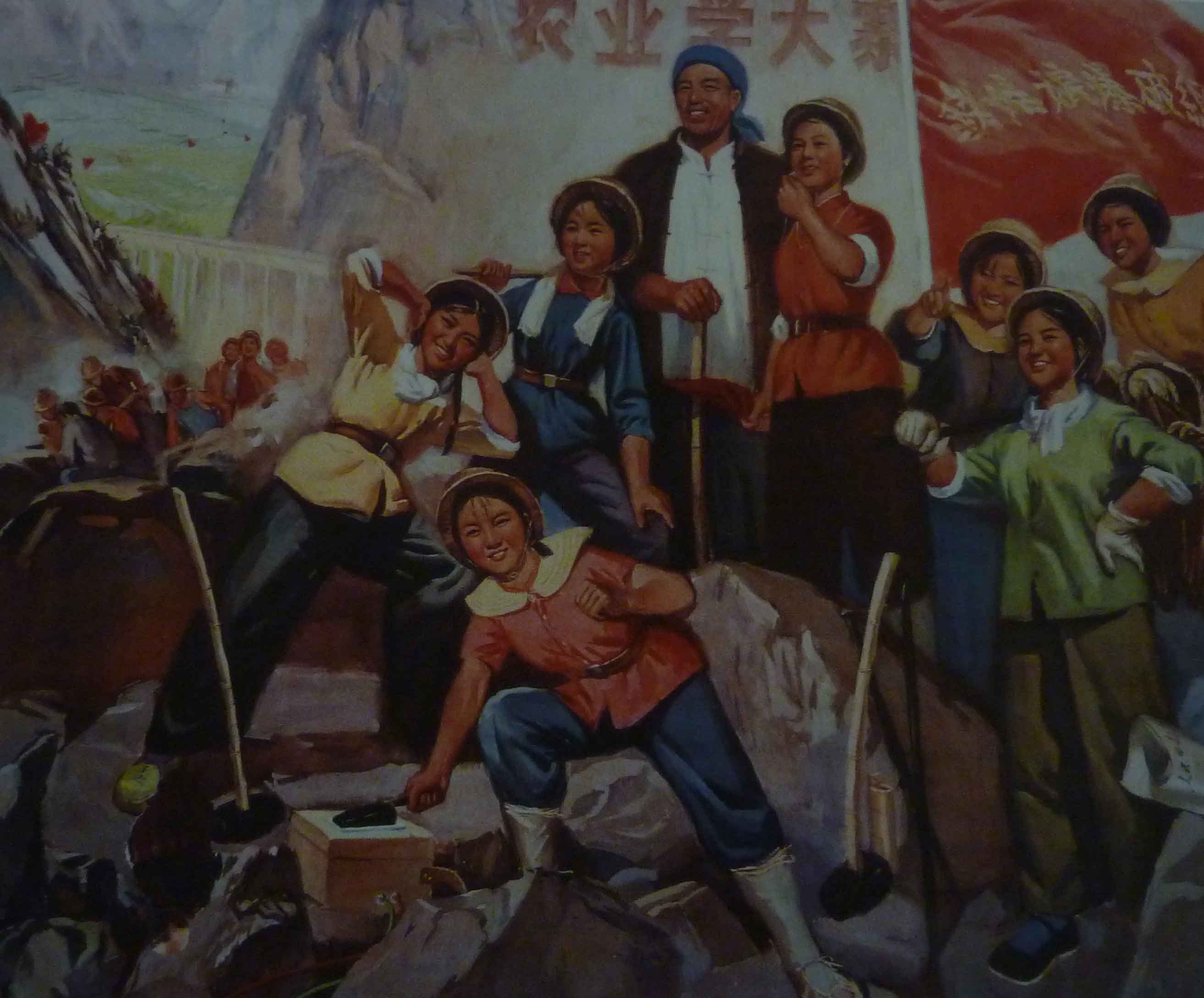
Creating Jobs for China's People

In April 2009, Time did a good job explaining why China’s state owned companies are making a comeback.  When the world’s conomy burst and deflated in 2008 thanks to Wall Street greed, exports from China fell by almost 20% and an estimated 300,000 small and medium-sized private sector companies in China collapsed. “The Crisis hits China’s private sector really hard because China’s private sector accounts for a larger share of China’s manufactured exports, says Yasheng Huang, an MIT professor.

What did China do?  China started to put the people who had lost their jobs in the private sector to work in State Run Companies.  Duh! All anyone has to do is see what happened in the United States during the Great Depression when Herbert Hoover was president to understand why China is acting this way to keep people working and earning money.

See Jobless in America and Angry at China

____________________________

Lloyd Lofthouse is the author of the award winning novels My Splendid Concubine and Our Hart. He also Blogs at The Soulful Veteran and Crazy Normal.

Sign up for an RSS Feed for iLook China


Intel in China

May 28, 2010

When you hear Americans complaining about China stealing jobs, here are a few facts to know.

Chinese consumers buy computers. In fact, there are more Chinese using the Internet than the entire population of the United States. That’s a lot of Internet surfing. Source: Internet World Stats.com

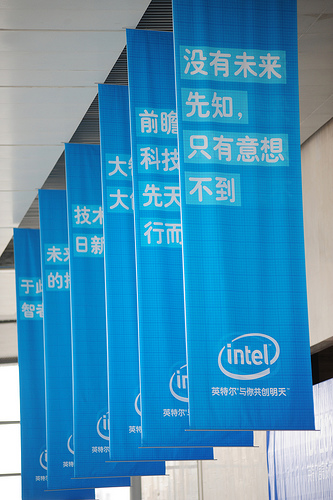
For that reason, Intel’s President and CEO, Paul Otellini said, “China is our fastest-growing major market and we believe it’s critical that we invest in markets that will provide for future growth to better serve our customers.”

Intel is one of the largest foreign investors in China and is opening a wafer fabrication facility in Dalian, Liaoning Province.  This added investment in China will cost $2.5 billion bringing Intel’s total investment to $4 billion. The last new fabrication plant Intel built was in Ireland in 1992.

Intel now has over 6,000 employees on assembly and test research and developing in 16 cities in Mainland China. Intel also has a facility in Bangalore, India. Source: Intel

In the United States, Intel has over 20 different locations. In Oregon alone, Intel has invested $22 billion and employs 15,500 Americans with an annual payroll of $1.5 billion. Source: Intel

Learn more about Chinese Stereotype Alive and Rotten in America

____________________________

Lloyd Lofthouse is the author of the award winning novels My Splendid Concubine and Our Hart. He also Blogs at The Soulful Veteran and Crazy Normal.

Sign up for an RSS Feed for iLook China


Exports and Imports Equals Jobs

May 28, 2010

When rumors say that China is going to sell Euros or cash in on US Treasurys, stock markets tend to panic. Then China denies the rumors as they did recently. “Europe has been and will be one of the major markets for investing China’s exchange reserves,” China’s State Administration of Foreign Exchange says. Source: 24/7 Wall St

It would not serve China’s interests to hurt Europe or America’s economies since China exports more than 200 billion Euros worth of mainly industrial good to Europe, which means jobs in China. Europe also exports more than 80 billion Euros in goods to China, which translated into European jobs.

Overall, China imported $922 billion  dollars worth of products from the rest of the world last year while exports declined to an estimated 1.19 trillion.

Although exports to the U.S. fell in 2009 by 12.2% to 296.4 billion, China’s imports only went down to 69.6 from 69.7 billion dollars from the prior year so America improved its trade deficit with the PRC by 15.4% in 2009. This means jobs were lost in China but not as many jobs were lost in America from what America sells and exports to China.  Source: China Trade Statistics 2009

See Jobless in America and Angry at China

____________________________

Lloyd Lofthouse is the author of the award winning novels My Splendid Concubine and Our Hart. He also Blogs at The Soulful Veteran and Crazy Normal.

Sign up for an RSS Feed for iLook China


American Grasshoppers and Chinese Ants

May 26, 2010

In The Ant and the Grasshopper, as retold from Aesop’s fable and illustrated by Amy Lowry Poole, the grasshopper plays, while the ants work and save diligently gathering grain for winter. The ants urge the grasshopper to prepare for hard times, but the grasshopper will not be bothered.

After all, under Confucianism, absolute obedience to authority, a strict family structure and hard work have been valued for more than two millennia so the ants keep working while grasshoppers play.
In Time to Defriend China, Elizabeth Economy (Is that really Liz’s last name—Economy?) and Adam Segal say we should stop negotiating with China. This post at the “Foreign Policy” Blog, like the grasshopper in Aesop’s fable, is self-centered and out of touch.

Liz and Adam say China isn’t cooperating globally as if China has an obligation. They say, “The sticking points in U.S.-China relations are mirrored in China’s relations with much of the rest world. The European Union and Japan, for example, find it no easier to negotiate with China on issues such as trade, climate change, cyber conflict and the Dalai Lama.”

Really— climate change and cyber conflict? Didn’t China recently announce they were going to cut carbon emissions by 40% or more in the next few years while President Obama thought the US might reach 17%? As for cyber conflict, that’s a two-way street, and the Dalai Lama’s claims are a mix of big lies and small truth.

Meanwhile, China has its hands full with a greater challenge—the 1.2 billion Chinese outside the Communist Party who expect a better life.

In 1950, China was generating 0.005 kilowatts of electricity and much of the country was without.  Under Mao, there was the tragedy of The Great Leap Forward and The Cultural Revolution costing tens of millions of lives. It wasn’t until Mao was gone that China started modernizing and improving the lifestyles of hundreds of millions of people.

Today, China is breaking records building modern cities and growing the second largest economy in the world and with a savings account. However, China still has 750 million people without proper medical care, electricity or modern connivances. In addition, they have problems with Tibet and with the Uyghurs in Xinjiang Province, who want to break free with support from Hollywood and maybe the CIA.

Then there is the Taiwan issue. If the US had not interfered in 1949, that issue would not exist. Taiwan would be part of China today and America would have a larger Chinese population.  Don’t forget that the Kuomintang until the 1980s, was a dictatorship that America supported and the Taiwanese were burdened with martial law for more than thirty years.

When China meets its goals at home, then “maybe,” China will be willing to help the West.
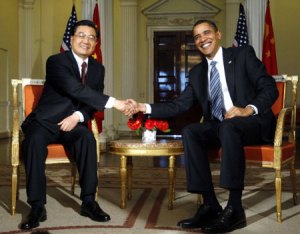
Hu Jintao and Obama shaking hands

Instead of walking away from negotiations as Liz and Adam suggest, the US and the rest of the developed world should find ways to offer a win-win situation that helps China meet its internal goals. How will China do that if they allow the global exchange rate for their currency to fluctuate putting millions of Chinese out of work? If America wants to grow jobs, the US must find ways to do so without hurting the Chinese worker any more than these people have already been hurt. Since the 2008 global economic crises caused by American greed, more than 20 million Chinese workers lost their jobs and 70,000 factories went out of business.

Like those ants in the fable, don’t expect the Chinese to come running to rescue nations that squandered their future while China is still building one. A better opinion on this topic might be this one from Martin Wolf in the Financial Times.

____________________________

Lloyd Lofthouse is the author of the award winning novels My Splendid Concubine and Our Hart. He also Blogs at The Soulful Veteran and Crazy Normal.

Sign up for an RSS Feed for iLook China