All About Murder and so-called Land Grabs in Rural China

February 7, 2011

A friend and expatriate living in China sent me a link to a recent piece written by Gillian Wong of New Witness accounts renew suspicions over Chinese village leader’s gruesome death.

Gillian Wong writes, “The persisting suspicions about Qian’s death reflect a growing lack of trust in China’s government as rampant corruption and official abuse erode public confidence.”

The language Wong uses to place blame bothers me. What she writes assumes that China’s central government has total control over everything that happens in China, which it doesn’t. China is about the size of the United States with five times the population and most police work and governing takes place at the local level as in the US.

In fact, China couldn’t join the World Trade Organization in December 2001 without having a legal system similar to most Western democracies, which means this issue of a rural village leader being murdered over a land grab has to be dealt with by China’s infant legal system guided by the laws of China as such a crime would be dealt with in America under US laws.

This means criminals often go free as in the US. If the evidence and witnesses do not exist, no one is punished. The old days of Chinese officials rounding up the accused and executing them without evidence and a proper trial are supposed to be over.

For example, in 1973, Al Pacino played the part of an honest New York cop, Frank Serpico, who blew the whistle on corruption in the city police force only to have his comrades in police uniforms turn against him. Pacino’s movie was based on a true story.

The US even has a witness protection program to protect the lives of innocent people from criminals that want to erase all evidence against them even if it means murdering witnesses

I’ve written about corruption in China before and what is being done about it. What the West considers corruption in China and all of Asia was a way of life for several thousand years. The old ways of doing things do not change instantly just because a foreign legal system and new laws are created.

To allow this new legal system to work, the slow wheels of justice must be allowed to turn and that doesn’t guarantee that justice will be served. If you believe China is doing nothing about crime and corruption, learn from Bo Xilai’s 32 Million.

Another American movie, Walking Tall, was also based on the true story of honest Tennessee sheriff Buford Pusser, who almost single-handily cleaned up his small town of crime and corruption, but at a horrible price, and he nearly lost his life as Serpico did.

No, I cannot blame that rural village leader’s death on China’s central government, and I cannot expect Beijing to send in the teenage Red Guard goon squad, which doesn’t exist anymore, as Mao would have done during the Cultural Revolution to punish everyone accused of a crime, even innocent people, without evidence as defined by China’s new legal system.

Gillian Wong also says, “Qian’s death is the latest violent incident to touch a nerve among the Chinese public, angry over official corruption and abuse of power, including unfair seizure of farmers’ land for development…”

Wong’s statements make it sound as if the land belongs to the farmers. It doesn’t.

 After all, the land the farmers worked belongs to the collective and the government but not individuals. In fact, even the title to urban homes individuals buy in cities clearly says that all the land belongs to the government. It’s more of a long-term lease than owning land.

How do you measure fair compensation of land that never legally belonged to the farmers in the first place?

Before 1949, most rural land belonged to wealthy landowners. In fact, the ancestors of the peasant farmers working the land today were tenant farmers that paid a rent of some sort to the real landowners, who often abused the peasants.

After winning the Chinese civil war, Mao had many of the original landowners executed for supposed crimes against those peasants. There were no fair trials. The peasants complained and the Communists executed the accused.

Correct me if you have other “facts”, but most of China’s farmers have worked the land free for about sixty years with no rent, no mortgage and no property tax.

As for murder, with a Western style legal system and no witnesses willing to step forward, there is no case. The main character of My Splendid Concubine wrote in one of his journals that in China the innocent were often punished along with the guilty while in England the criminals often went free and there was no justice for the victims.

If what Robert Hart wrote in the 19th century was true, then it seems Western justice has arrived in China. Maybe China’s central government needs to start a Western style witness protection program if they don’t have one yet.

______________

Lloyd Lofthouse is the award-winning author of the concubine saga, My Splendid Concubine & Our Hart. When you love a Chinese woman, you marry her family and culture too.

If you want to subscribe to iLook China, there is a “Subscribe” button at the top of the screen in the menu bar.


Tiger Mother Invades China

February 3, 2011

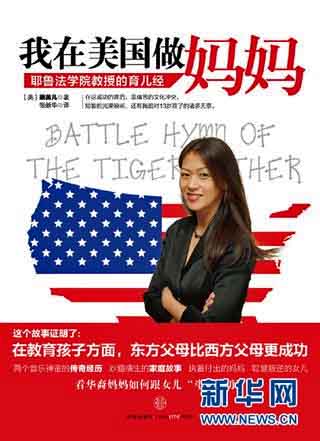
Amy Chua, the Chinese-American Tiger Mother has invaded China with her memoir.  Early results look promising in a market of 1.2 billion readers.

According to the Los Angeles Times, the book has been available online since mid-January and ranked No. 80 in sales as of Thursday on Joyo.com, a Chinese version of Amazon (its rank was 43 as I wrote this post).

The paper version of the book will be out after the Chinese New Year holiday.

However, keeping track of sales of the paper version may be difficult since the Chinese have a tradition of borrowing what someone else wrote, printing it without a contract and not paying the author for it while charging a more competitive price than the contracted publisher charges.

To many in the Middle Kingdom, printing a book you don’t have the rights to is not theft.

After all, Confucius considered all information and entertainment in the public domain even if it is against today’s Chinese law.

The Huffington Post was correct when it said the Chinese edition has a new title and a new cover, which I find more colorful than the drab US version.

The China Daily, which is China’s state owned English language newspaper/Website, quoted a Middle Kingdom mother saying, “I can’t imagine a mother in China so frankly revealing the embarrassment and brutal confrontation she went through while trying to tap her kids’ potential to succeed.”

This matches what my wife said about Chua’s memoir being very non-Chinese. It isn’t acceptable in China to talk publicly about White Elephants in the family and this story, to most mainland Chinese, is a White Elephant better kept as a family secret.

China Daily said, “Many Chinese parents see themselves in Chua, not only in terms of the strict parenting, but the desire to help their children excel. But few hope to be the next Tiger Mother.”

The best quote of the China Daily piece was from Zhang Yiwu, A Chinese literature professor and deputy director of the Cultural Research Center of Peking University: “If anything is worth introspection, I think the Tiger Mother has reminded both Chinese and American parents of the necessity to ditch stereotypical thinking and unrealistic fantasies about ideal parenting models.”

I wonder how many SAP parents (Self-esteem arm of Political Correctness in the US) will read those words and take them seriously–to question fantasy parenting models.

Discover Amy Chua Debates Former White House “Court Jester” Larry Summers

______________

Lloyd Lofthouse is the award-winning author of the concubine saga, My Splendid Concubine & Our Hart. When you love a Chinese woman, you marry her family and culture too.

If you want to subscribe to iLook China, there is a “Subscribe” button at the top of the screen in the menu bar.


Changing China through its Youth – Part 5/5

February 3, 2011

As PBS’s Frontline started its fourth year of filming in China, the subjects of their documentary were still restless rethinking their lives, their ambitions and values.

One Chinese woman (not identified) talks about a survey called the “Happiness Index”, which is practical.  It has nothing to do with the individual and society. She says, “When Chinese talk about happiness, it’s about affording the things they want to buy, the housing they want, and if they like the work they do…”

Lu Dong, who started an Internet tailoring business, says, “China is a country with no beliefs and there are no role models. All the models are materialistic.”

Although Lu Dong’s opinion may be true for many Chinese in the rising middle class, I disagree that it means everyone in China. There are role models in China’s history, and even today, there are others who will look to them as an example.

He says, “Chinese are very hungry now and hard to satisfy,” which may be a better way of stating the situation today and goes a long way to explain why rural Chinese are willing to sacrifice so much to migrate to cities and work long hours in factories for low pay.

Lu Dong says, “The water is still dirty. What I can do is make the water in my company clean… Although when I deal with the outside world I still have to deal with business the way others do. That’s another reason why I became a Christian.”

Then Ben Wu, who launched the Internet cafe, says he won’t be in the Internet cafe business for the rest of his life. His real passion is renewable energy. His father’s expertise in is solar cells. He wants to start a factory to build this product.

Dr. Zhang Yao works in a large hospital and feels an obligation to do public health work. He thinks residents in large urban hospitals could provide training in rural ones.

Zhang Jingjing is a public interest lawyer. She represented more than a 1,000 families over a power line built for the (2008) Olympics. She wants to protect China’s environment and natural resources. However, she wants to meet the right man too.

Meanwhile, the rapper, Wang Xiaolei, is achieving his dream of becoming a star. He says he has 20,000 fans. He wants to be the head of a record company. He says he firmly believes that if you work hard your dream will come true.

Wow! That sounds like many of the American children I taught during my thirty years in the classroom. How many do you believe actually achieve their dreams?

In conclusion, this PBS Frontline documentary shows us that there are no stereotypes in China. Even in a collective culture such as China, there are individuals.

Return to Changing China through its Youth – Part 4

______________

Lloyd Lofthouse is the award-winning author of the concubine saga, My Splendid Concubine & Our Hart. When you love a Chinese woman, you marry her family and culture too.

If you want to subscribe to iLook China, there is a “Subscribe” button at the top of the screen in the menu bar.


Changing China through its Youth – Part 4/5

February 2, 2011

Back to Wang Xiaolei, the Chinese rapper, who at the end of Part 3 shared a story where he met a Chinese girl on-line and sent her all his money so she could come live with him.  His money vanished and she never arrived but he keeps a poster-sized picture of the girl he never met in person on his wall.

Then Wang Xiaolei says there is a social problem in China. “Many girls only believe in money. They think they have to marry someone rich.”

Well, yea! In the US, we call such girls “gold diggers”. Women like this exist the world over. He just isn’t meeting the right girls.  After all, where does he spend most of his time—in bars/nightclubs singing his rap as a DJ.

Yet, opportunities exist for Wang Xiaolei that did not exist before 1980. Today, he works in a nightclub singing his songs and talks of starting his own record label. Prior to 1980, there weren’t any nightclubs in China and there were no private businesses.

The Internet love story he shared with Frontline embarrasses Wang Xiaolei.

In fact, if Wan Xiaolei had done some research he might have discovered what I did in a few second at What It’s Worth at Comcast.net. “Watch out, says the FTC, for any Lothario who wants to get you out of the safety of the dating site and onto your personal e-mail or IM, who was planning to visit you but then can’t because of some tragic (read: costly) event, who needs your financial help to get back on his feet, or who claims to love you much, much too quickly. And note: Do not wire money. It’s not like a credit card where you have the backing of a big corporation. It’s like cash. Once you do it, it’s gone.”

If you say that maybe Wang Xiaolei couldn’t find this information because of Chinese censors, consider that China has a very active Internet with hundreds of millions of people on-line.

In fact, China has its Google and Baidu, search engines that find topics on Websites and Blogs in China that I’m sure discuss this same topic since the Chinese have more active Bloggers than any other nation.

Since this Internet love scam is alive and working in China (as it is in the US for the naive and gullible), there must have been others who were burned and then Blogged about it.

Return to Changing China through its Youth – Part 3

______________

Lloyd Lofthouse is the award-winning author of the concubine saga, My Splendid Concubine & Our Hart. When you love a Chinese woman, you marry her family and culture too.

If you want to subscribe to iLook China, there is a “Subscribe” button at the top of the screen in the menu bar.


Changing China through its Youth – Part 3/5

February 1, 2011

The PBS Frontline narrator mentions how entrepreneurs that have been away from China must get used to doing business in China, which may include bribes.

In fact, to Chinese there is no clear definition of what is bribery — what the West calls corruption is deeply rooted in China’s culture (and has nothing to do with Communism) and is not seen the same way.

Lu Dong, going into the business of Internet tailoring, says, “If we use Western values to judge a Chinese company’s behavior, I think it is very hard to do business with them.”

Ben Wu, the Internet Cafe owner, says they (Chinese businessmen) have no interest in helping or not helping him, and he cannot figure out how to influence them.

To get help in China, one must make friends and since China is an eating culture that takes money. To learn more, discover the meaning of Guanxi in China.

Ben Wu, who was born in China but educated in the US, says he will not bribe anyone. However, he doesn’t think he can stop his Chinese partner.

One wise quote explains the choices. “There is nothing you can do. A fish has to live in water and if the water isn’t clean you must get used to it.”

Now, for a corruption reality check. Here is a comparison with the US. We know an engineer who stopped working in construction because of the difficulty in finding contractors that are honest.

We also had a bad experience with a contractor we signed on to build an addition to our house. Twenty-eight thousand dollars later without any construction starting, he was still asking for money.

An investigation on my part revealed he hadn’t taken out the construction permit even though he had collected the money months earlier to do so. We cancelled the contract and he filed a lien on our property for about $200,000 US.

Months later, we managed to get about half the 28 thousand back and California forced him to cancel the lien. However, we had to see and pay for a lawyer, file a complaint with a state agency in California and the process was stressful and frustrating.

The fact is that there is corruption in every culture and country. It just wears different clothing.

Return to Changing China through its Youth – Part 2

______________

Lloyd Lofthouse is the award-winning author of the concubine saga, My Splendid Concubine & Our Hart. When you love a Chinese woman, you marry her family and culture too.

If you want to subscribe to iLook China, there is a “Subscribe” button at the top of the screen in the menu bar.