Have the Tea Baggers in the United States been learning from China, or is it the other way around?
“Another strategy is manipulation. In recent years, local and provincial officials have hired armies of low-paid commentators to monitor blogs and chat rooms for sensitive issues, then spin online comment in the government’s (China’s) favor.
“Mr. Xiao of Berkeley cites one example: Jiaozuo, a city southwest of Beijing, deployed 35 Internet commentators and 120 police officers to defuse online attacks on the local police after a traffic dispute. By flooding chat rooms with pro-police comments, the team turned the tone of online comment from negative to positive in just 20 minutes.” Source:New York Times
Isn’t this what Fox Network’sGlenn Beck, thenRush Limbaugh—who is heard on more than 600 radio stations—have been doing for years. Filling the airwaves with their opinions controlling what people hear and think. The AmericanTea Baggersare doing the same thing with the same results—behavior control.
For an example of how the media twists facts to influence public opinion one only need look closer at the George Zimmerman-Trayvon Martin incident. What does the public really know about these two individuals?
Is America really that different from China and is there anyone we can believe?
Lloyd Lofthouse is the award-winning author of My Splendid Concubine [3rd edition]. When you love a Chinese woman, you marry her family and culture too. This is the love story Sir Robert Hart did not want the world to discover.
Subscribe to “iLook China”!
Sign up for an E-mail Subscription at the top of this page, or click on the “Following” tab in the WordPress toolbar at the top of the screen.
I was reading A Different Turning Point for Mankind by G. W. Bowersock in the May 9, 2013 issue of The New York Review of Books, and I had one of those Aha! moments when I read about the history of several different cultural philosophies and ideologies.
For millennia, the major cultures on the planet have been: Greek, Roman, Jewish, Christian, Chinese, Hindu, Islamic and Buddhist.
But the concept of human rights that dominates the planet today has its roots from ancient Greece and Rome—not China, Africa, India, or the Middle East.
This Western, Greek-Roman concept of human rights that evolved over a period of centuries to dominate the planet today came about due to the fire and brimstone of the colonial era of the 18th and 19th centuries where European countries such as Spain, England, France, Germany, Portugal and Italy ruled, often brutally, over most of the planet. Then later the United States joined in building a global empire—again on a Greek-Roman, Christian foundation.
When Western citizens criticize China—or Asia, the Middle East or Africa for that matter—for human rights violations, these cultures are not being judged by their own perception of what human rights might mean. Instead, the West may be forcing its beliefs on those cultures.
In the West, human rights are based on the ideology of the self that emphasizes autonomy, but this is not relevant to a Confucian based society that stresses the primacy of community and the person’s obligation to others. Source: University of Illinois Press
And for the Islamic Middle East, Professor Abdullahi Ahmed An-Na’im says, “Shari’ah, which is the historical foundations of Islamic law, directly affects the millions of Muslims around the world. Because of its moral and religious authority, it has great influence on the status of human rights for Muslim countries.”
For example: Are human rights claims based on status as an individual human being or status as a member of some community or group of people? Because traditional cultures do not always view the individual as an autonomous being possessed of rights above society. Source: Asia-Pacific Human Rights Information Center
Also, world hunger and poverty influence the concept of human rights—that may be only a momentary luxury because of developed countries where citizens have time to debate human rights instead of worry where the next meal or drink of water will come from. It may be a challenge to want democracy and human rights when you are starving.
“The United Nations Food and Agriculture Organization estimates that nearly 870 million people, or one in eight people in the world, were suffering from chronic undernourishment in 2010-2012. Almost all the hungry people, 852 million, live in developing countries, representing 15 percent of the population of developing counties.” Source: World Hunger.org
If you were one of the hungry billion suffering from chronic undernourishment, would you be sitting around worrying about freedom of expression/religion, democracy [If you have never tasted democracy, how can you be expected to understand it?] and equal pay for men and women?
Lloyd Lofthouse is the award-winning author of My Splendid Concubine [3rd edition]. When you love a Chinese woman, you marry her family and culture too. This is the love story Sir Robert Hart did not want the world to discover.
Subscribe to “iLook China”! Sign up for an E-mail Subscription at the top of this page, or click on the “Following” tab in the WordPress toolbar at the top of the screen.
“An individual should not have too much freedom. A nation should have absolute freedom.” – Dr. Sun Yat-Sen (1866 – 1925)
He is referred to as the father of modern China. If there were no Sun Yat-Sen and his revolution, there might not be a modern China as it is known today.
While attending a Christian school in Hawaii (1882), he converted to Christianity, which shaped his revolutionary future. It was obvious that his writing was influenced by American thought. With the support he received from the Hawaiian Chinese community, he networked with Chinese people all over the world.
He went on to publish revolutionary ideas seeking to overthrow the Manchu Dynasty and create the Republic of China. In 1904, he wrote that he wanted to model China’s government after America but by combining Western thought with Chinese tradition.
Yet, he was considered an idealistic dreamer—that his ideas were impractical. He said, “The whole world is one family.” (1910)
In 1882, when Sun Yat-Sen was exposed to American politics, the United States was a republic—not the democracy we know today—and women did not have the right to vote yet. What type of republic do you think he wanted for China—one closer to the America of 1882 or today?
Lloyd Lofthouse is the award-winning author of My Splendid Concubine [3rd edition]. When you love a Chinese woman, you marry her family and culture too. This is the love story Sir Robert Hart did not want the world to discover.
Subscribe to “iLook China”! Sign up for an E-mail Subscription at the top of this page, or click on the “Following” tab in the WordPress toolbar at the top of the screen.
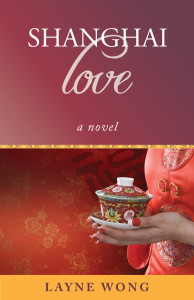
From the title, we already know the story is about love in Shanghai, and it doesn’t take long to discover who the two main characters are that are destined to meet.
It is 1938, and in chapter one, we are introduced to Peilin in China. In chapter two we meet Henri in Nazi Germany.
But the love story isn’t what made this novel worth reading. It was the journey the two characters must take to find each other. They are both doctors. Henri is Jewish and trained in western medicine. He has to leave his family behind in Germany and flee to China to avoid Hitler’s Nazis who are hunting for him because he dared to love a woman who was not Jewish.
Peilin was trained by her grandfather in Chinese herbal medicine, and by the time Henri meets her, she has already been married to a ghost for some time.
As a young girl, a marriage was arranged to a boy almost twice Peilin’s age, but when he was a young man—before the marriage—he was killed in combat fighting the Japanese who invaded China in July of 1937. By the time Pearl Harbor is bombed by the Japanese in December 1941, China has already been fighting Japan for more than four years. To give you an idea of how horrible it was, by the end of World War II, China lost ten to twenty million people to the war compared to 418,500 for the United States.
One would think with her fiancé dead, Peilin would be free to move on with her life, but no—because in China it is expected that Peilin must still marry the man’s ghost, stay a virgin for life and live with her in-laws who will buy a baby for her to raise as if she were its biological mother and the dead man its father.
The story is set in an era when both the Chinese and Europeans disapproved of interracial relationships. In Germany, there was racism against the Jews. But in China, there is prejudice from some Chinese because Henri is white. In addition, many of the Jewish refugees look down on the Chinese culture and disapprove of Henri spending time with Peilin. It seems that these two are fated to be star-crossed lovers.
I recommend reading this story because it offers a reminder of the horrors of war and racism. During World War II, 20,000 European Jews fled to Shanghai, one of the few places in the world that put no limits on the number of Jews it would accept.
Another plot thread that runs through the novel is the focus on Chinese herbal medicine and how different it is from the western concept of medical care. The Chinese were studying advanced medical care long before the West. In fact, Chinese medical tradition is more than 5,000 years old including herbal medicine, acupuncture, massage, exercise and dietary therapy—concepts that the West didn’t pay serious attention to until near the end of the 20th century.
I’m not going to tell you how the love story turns out between Henri and Peilin. You will have to buy and read the novel to discover that.
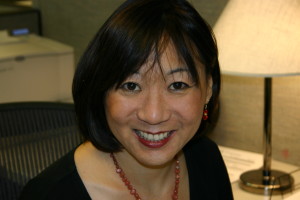
Layne Wong, the author of Shanghai Love
I bought my copy of “Shanghai Love” by Layne Wongat an author event held at the Bancroft Hotel in Berkeley, California earlier in 2013.
_______________
Lloyd Lofthouse is the award-winning author of My Splendid Concubine [3rd edition]. When you love a Chinese woman, you marry her family and culture too. This is the love story Sir Robert Hart did not want the world to discover.
Subscribe to “iLook China”!
Sign up for an E-mail Subscription at the top of this page, or click on the “Following” tab in the WordPress toolbar at the top of the screen.
The Chinese and Jews have a common bond—Sinophobia and Anti-Semitism. Archaeological evidence suggests that Jews were in China as early as the 8th century having arrived from Persia along the Silk Road.
And in China, Jews found a home without Anti-Semitism, which suggests that Anti-Semitism only exists in Christian and Muslim dominated countries.
In Shanghai, there is the Jewish Refugees Museum located in the former Ohel Moishe Synagogue, which offers a history of refugees who were sheltered in the city during World War II.
There is also a graduate program at Nanjing University, the China/Judaic Studies Association, which furthers the study of Judaism in China at the Glazer Institute for Jewish Studies. The chair for this graduate program, Professor Xu Xin, is the leading Judaic Scholar in China.
Professor Xu said, “Not to understand the contribution of the Jews to world history is not to understand the world … not to understand another people is a failed opportunity to counteract hatred and bigotry.”
Lloyd Lofthouse is the award-winning author of My Splendid Concubine [3rd edition]. When you love a Chinese woman, you marry her family and culture too. This is the love story Sir Robert Hart did not want the world to discover.
Subscribe to “iLook China”! Sign up for an E-mail Subscription at the top of this page, or click on the “Following” tab in the WordPress toolbar at the top of the screen.


 Posted by Lloyd Lofthouse