To understand the Chinese mind, it’s a good idea to start with Confucius (552 – 479 BC), who is arguably the most influential person in Chinese history, and by extension the rest of East Asia: Korea, Japan, the Philippines, and Southeast Asia. The reason for this is because China was a regional super power for more than fifteen hundred years, and its merchants helped spread Chinese cultural influence and values through trade.
An important Confucian influence on Chinese society and the rest of East Asia was the focus on education and scholarship, and it’s no secret that Chinese (and other Asians) students put in more hours in classroom study than their Western counterparts; even in the United States.
In fact, we can measure the influence of Confucius on even Asian-American students in the United States. For instance, in 2015, the U.S. Department of Education reported that (high school) graduation rates vary by race; with 89.4 percent of Asia/Pacific Islander students graduating on time compared to 87.2 percent of whites, 76.3 percent of Hispanics, and 72.5 percent of blacks.
In China, the hallmark of Confucius’ thought was his emphasis on education and study. He disparaged those who had faith in natural understanding or intuition and argued that the only real understanding of a subject comes from long and careful study.
Confucius goal was to create gentlemen who carried themselves with grace, spoke correctly, and demonstrated integrity in all things. He had a strong dislike of the sycophantic “petty men,” whose clever talk and pretentious manner easily won them an audience of easy-to-fool people. In fact, it’s safe to say that Confucius would have despised Donald Trump.
Confucius political/educational philosophy was also rooted in his belief that a ruler should learn self-discipline, should govern his subjects by his own example, and should treat them with love and concern. Donald Trump fails this test too.
To understand the importance of education in Western culture, we first look at what Plato (about 423 – 346 BC), Socrates (about 469 – 399 BC), and Aristotle (384 – 322 BC) thought.
When Plato talked about the education of the body, he said we had to take Spartan military gymnastics as a model, because it was based on physical exercises and prescribed severe control over all pleasures. Plato also argued for the public character of education and that it had to be given in buildings especially built for that purpose. In these schools, boys and girls should receive the same teaching and that the educational process should start as soon as possible, as young as three-to-six-years old.
Socrates believed that there were different kinds of knowledge, important and trivial. He acknowledges that most of us know many “trivial” things, and he said that the craftsman possesses important knowledge, the practice of his craft, but that this is important only to the craftsman. But Socrates thought that the most important of all knowledge was “how best to live.” He concluded that this was not easily answered, and most people lived in shameful ignorance regarding matters of ethics and morals. Socrates devoted much thought to the concept of belief, through the use of logic.
Aristotle, however, said that the purpose of the state was to educate the people; to make them virtuous. He said virtue was the life principle of the state. The goal of the state was to educate with a view toward its own institutions (to preserve them); through the political education of all citizens.
It’s also safe to say that Donald Trump doesn’t fit what Plato, Socrates, and Aristotle thought about the proper educated citizen.
It is also arguable that the Bible probably has a larger impact on what many Westerners think about the value of an education, but the focus of the Bible is mostly on fear of the Lord when it comes to learning—a mixed message at best when compared to what Confucius, Plato, Socrates and Aristotle thought.
Proverbs 9:9-10 says, “Give instruction to a wise man, and he will be still wiser; teach a righteous man, and he will increase in learning. The fear of the Lord is the beginning of wisdom, and the knowledge of the Holy One is insight.
Proverbs 1:7 – The fear of the Lord is the beginning of knowledge; fools despise wisdom and instruction.
2 Timothy 3:16 – All Scripture is breathed out by God and profitable for teaching, for reproof, for correction, and for training in righteousness,
2 John 1:9 – Everyone who goes on ahead and does not abide in the teaching of Christ, does not have God. Whoever abides in the teaching has both the Father and the Son.
Donald Trump also fails the Bible’s test too, because he prefers people to fear Donald Trump and not the Lord.
Watch the video to discover that the agenda of the Common Core State Standards and the autocratic Corporate Charter School reform movement in the United States is similar to the agenda of the Prussian Model of Obedience.
In conclusion, the value of an education is clearly defined by Confucius providing a solid foundation for East Asia, while in the West, the message is murky and confusing at best, because the Bible focuses on fear of the Lord, and that Scripture is profitable for teaching and training the righteous compared to Plato’s focus on harsh Spartan physical training in addition to severe self-control over all pleasures starting at an early age, and Aristotle focused on preserving government through political education of the people. In other words, brainwashing them.
Socrates may have been closer to the way Confucius thought about the value of an education, but not as clearly defined as Confucius was.
Out of this muddle of Western thought eventually emerged the 18th century, Prussian Industrial Model of education more aligned with what Aristotle thought, and this system was adopted by most of Western Culture during the industrial revolution, including the United States.
The Prussian system instituted compulsory attendance, specific training for teachers, national testing for all students (used to classify children for potential job training), national curriculum set for each grade and mandatory kindergarten.
The Prussian public education model attempted to instill social obedience in the citizens through indoctrination. Every individual had to become convinced, in the core of his being, that the King was just, his decisions always right, and the need for obedience paramount. There was no room for individual thought or questioning authority that would develop in the United States and other Western countries after World War II.
Maybe the blind obedience that gave power to dictators like Hitler had something to do with that change in Western thought about public education, but today, with the emphasis on the Common Core State Standards and harsh punishment of children and teachers that attend publicly funded, autocratic corporate charter schools, it’s clear that the United States may be returning to the harsher Aristotelian, Prussian Model of education to brainwash children so they grow up and give blind obedience to their leaders; something, for sure, Donald Trump will agree with.
Discover The Return of Confucious
中
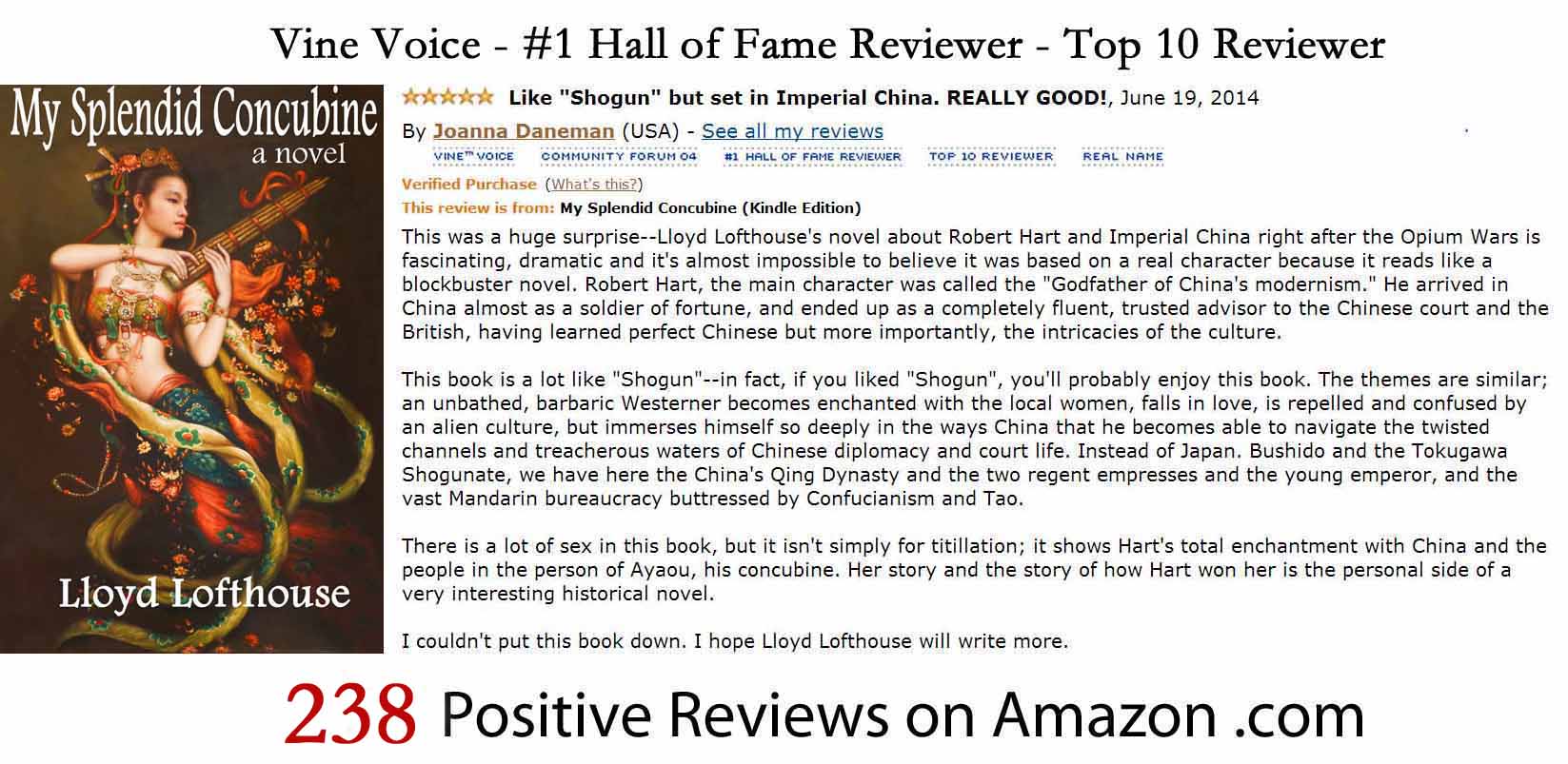
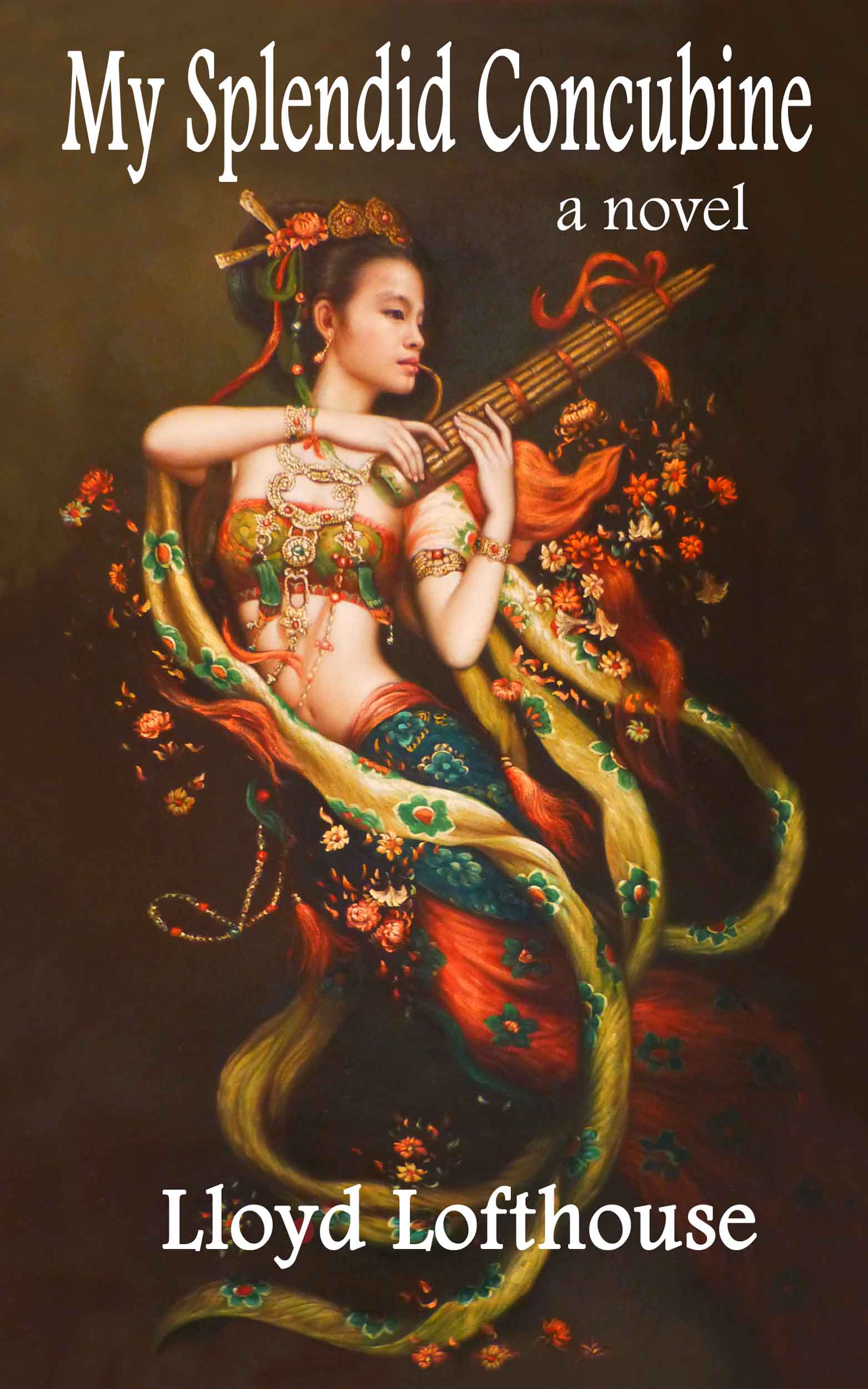
Lloyd Lofthouse is the award-winning author of My Splendid Concubine [3rd edition]. When you love a Chinese woman, you marry her family and culture too. This is the unique love story Sir Robert Hart did not want the world to discover.
Subscribe to “iLook China”!
Sign up for an E-mail Subscription at the top of this page, or click on the “Following” tab in the WordPress toolbar at the top of the screen.


 Posted by Lloyd Lofthouse
 iLook China