Mao’s Motives

June 24, 2010

Why did Mao cause so much suffering with his failed Great Leap Forward and The Cultural Revolution? Yes, the power Mao held was a corrupting factor in the decisions he made, but  fear of repeating history was also a factor.

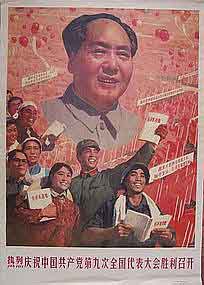
Mao's Little Red Book of Quotations

How many millions of Chinese were addicted to Western opium forced on China by Great Britain and France during two Opium Wars?

Historians say that 20 to 30 million were killed due to the Taiping Rebellion. If Christian missionaries had not been forced on China because of the Opium Wars, would that rebellion have taken place?

Another 115,000 Chinese were killed during the Boxer Rebellion, which was a popular peasant uprising against Christian missionaries, foreign meddling and exploitation.

After 1911 when the Qing Dynasty collapsed, chaos and anarchy ruled China, while foreigners—Americans included— lived in luxury in the treaty ports protected by modern foreign military forces. A Century of Madness chronicles this time.
Mao survived Chiang Kai-shek‘s crack down on the labor movement led by the Communist Party. During World War II, Mao’s army not only fought Chiang Kai-shek’s troops but also the Japanese, who killed between 10 to 20 million Chinese in their attempt to conquer China. The peasants trusted Mao’s troops but did not trust Chiang Kai-shek’s army. Why?

Mao believed that socialism would create a better life for the Chinese. His failures were attempts to make China strong enough to defend the country against foreign meddling and invasions. He failed, but Deng Xiaoping didn’t. What happened in Tiananmen Square in 1989—where a few hundred demonstrators were killed—was nothing compared to what China suffered starting with the First Opium War.

______________

Lloyd Lofthouse is the award-winning author of the concubine saga, My Splendid Concubine & Our Hart. When you love a Chinese woman, you marry her family and culture too.

To subscribe to “iLook China”, look for the “Subscribe” button at the top of the screen in the menu bar, click on it then follow directions.


China’s Great Leap Forward ends to be replaced with Mao’s Cultural Revolution (Part 5 of 6)

June 24, 2010

In 1966,  Mao’s Red Book of quotations was used as a textbook in the schools. Shao Ailing, a head teacher in Shanghai said, “The pupils began to realize that all the changes taking place in their families, in school, in Shanghai and China were brought about by Chairman Mao.”

Mao encouraged students to attack authority and the leadership of the Communist Party. This advice came from the “George Washington” of China, the man who had delivered on his promises to the peasants and brought them medicine and land reforms—something the emperors and Chiang Kai-shek had never done.

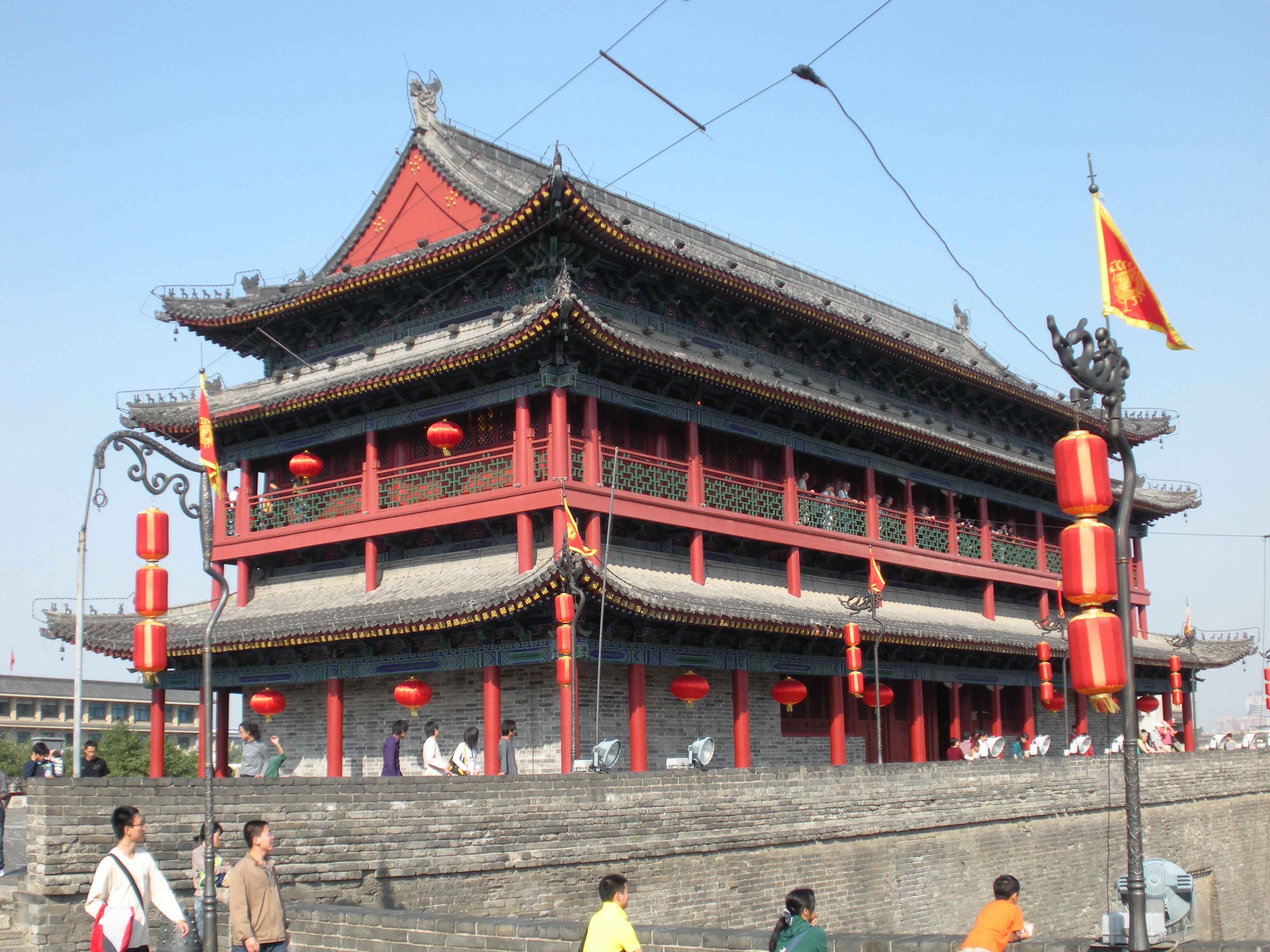
Tourist Attraction in Today's China

Zhang Baoqing, an early Red Guard member in Beijing, said, “Chairman Mao started the Cultural Revolution to keep up the momentum for change. We thought if we followed Mao, we could not go wrong.”

Mao motivated millions of students from speeches in Tiananmen Square. This time it wasn’t the rural peasants. It was China’s urban youth, who were too young to remember Mao’s mistakes from the Great Leap Forward.

Student anger focused on Mao’s rivals, President Liu Shaoqi and Deng Xiaoping. Even small children were taught to denounce Liu. Then anyone in power was denounced. The structure of the Communist Party collapsed. Schoolteachers were attacked and tortured by their students. Up to a million were killed or driven to suicide.

Return to Part 4, China’s Great Leap Forward or go to Part 6

______________

Lloyd Lofthouse is the award-winning author of the concubine saga, My Splendid Concubine & Our Hart. When you love a Chinese woman, you marry her family and culture too.

If you want to subscribe to iLook China, there is a “Subscribe” button at the top of the screen in the menu bar.


China’s Great Leap Forward (1958 to 1961) – Part 2 of 6

June 22, 2010

Mao has more power than anyone since the emperors, and he wants China to be a purer, fairer more progressive state than the Soviet Union, so the peasants were the first to benefit.

As promised during the revolution, there were land reforms. Luo Shifa, a party official in Sichuan, tells his story about what happened in 1950.  Rural landlords were judged enemies of the people and hundreds of thousands were executed.

Changes in urban areas were not as violent. The owners and managers of factories were needed to keep things running but all property was signed over to the state.  Factory and business owners  who resisted were executed.

Women were given new rights at work and in marriage and foot binding was abolished. Literacy was also important. Before 1949, illiteracy in Mainland China was 80% and life expectancy was 35.  When May died, only 7% were illiterate and the average life expectancy had increased to 55—today it is 76.

To deal with disease, the Communists launched programs to improve health care that had never existed before. Millions were inoculated against the most common diseases.

Return to Part 1, China’s Great Leap Forward or go to Part 3

______________

Lloyd Lofthouse is the award-winning author of the concubine saga, My Splendid Concubine & Our Hart. When you love a Chinese woman, you marry her family and culture too.

If you want to subscribe to iLook China, there is a “Subscribe” button at the top of the screen in the menu bar.


Tibet Inside China – 5/5

April 13, 2010

Regardless of the evidence that proves the Tibetan government in exile is not telling the truth about Tibet being part of China for centuries before declaring independence in 1913 (when the Ch’ing Dynasty was collapsing and the British Empire urged Tibet to break free for political reasons), the Dalai Lama and his Prime Minister represents less than 100,000 Tibetans outside China.

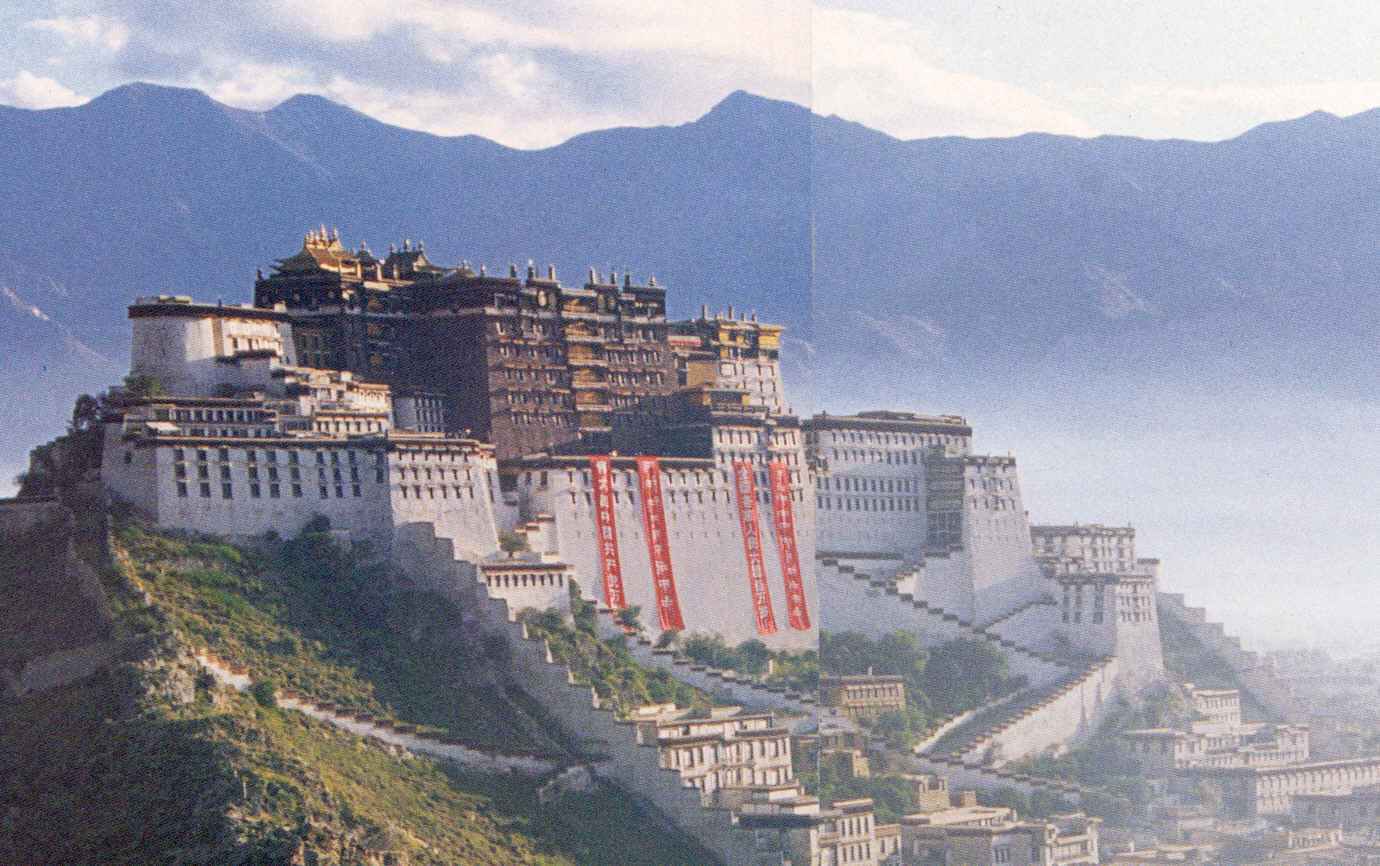
Tibet Monastery

If Rinpoche’s figure of six million is correct, that means the Tibetan government in exile represents about 1% of the Tibetan population.  If China’s 2.5 million is correct, the percentage goes up to 3.2%.  Not much of a base to wage a violent rebellion. There are more troops in the PRC’s army than the entire Tibetan population inside and outside of China.

I also wonder if that 1% in exile were the Tibetan landowners. Did they leave most of the serfs/slaves behind when they fled?

Maybe the Tibetan separatists/rebels (whatever term you like), with help from the CIA, should join the American Tea Bagger movement and gain the support of Glenn Beck and Rush Limbaugh. They could sit around the campfire during protests and sing hymns about marching into battle to take back the wealth.

Start with Tibet Inside China – Part 1 or discover how Power Corrupts

View as Single Page

_______________

Lloyd Lofthouse is the award-winning author of My Splendid Concubine [3rd edition]. When you love a Chinese woman, you marry her family and culture too. This is the love story Sir Robert Hart did not want the world to discover.

Subscribe to “iLook China”!
Sign up for an E-mail Subscription at the top of this page, or click on the “Following” tab in the WordPress toolbar at the top of the screen.

About iLook China


Tibet Inside China – 4/5

April 12, 2010

From recent news, it appears that rough times may be ahead for the People’s Republic of China (PRC). In China sees US as hedge for Taiwan, Tibet (Asia Times) by Peter Lee, the author says, “After the Dalai Lama is gone, there is a strong possibility that motivated and organized pro-independence activists (militants) will be able to win power in the Tibetan government in exile.”

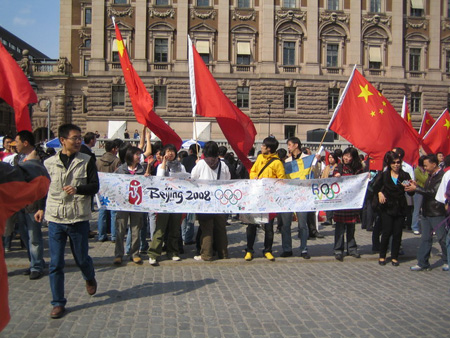
Chinese Protesting Against Tibetan Supporters

Militant Tibetan separatist groups have not been happy with the Dalai Lama’s call for autonomy talks with China instead of calling for a fight to gain independence. Tibetan militant groups want Tibet to break from China even if it means taking a violent path—one the Dalai Lama does not advocate.

What would Tibet be like if the separatists had their way and broke free from China?

Would they return to the system of landowners and serfs (slaves)?

Would the Tibetan Buddhists require that every family send at least one son to become a Buddhist monk as before?

Would mandatory schooling (as we have in the United States) be shut down so the literacy rate would plummet from the high 90% back to a single digit like it was prior to 1950?

Would the wealth and the land be returned to the one percent that had it all before Mao’s troops occupied Tibet?

Learn about the Media Slugfest Using Taiwan or go to Tibet Inside China – Part 5

View as Single Page

_______________

Lloyd Lofthouse is the award-winning author of My Splendid Concubine [3rd edition]. When you love a Chinese woman, you marry her family and culture too. This is the love story Sir Robert Hart did not want the world to discover.

Subscribe to “iLook China”!
Sign up for an E-mail Subscription at the top of this page, or click on the “Following” tab in the WordPress toolbar at the top of the screen.

About iLook China