China’s Capitalist Revolution (Part 2 of 9)

July 1, 2010

In 1978, Deng was elected leader of the Communist Party beating the Maoists.  His goal was to have China’s economy catch up with the West within 20 years. “In this new age we will focus our efforts on modernizing industry, agriculture, technology and national defense to transform the country by the end of the century in a Chinese way.”

The first challenge was to grow food for China’s starving peasants. During Mao’s failed programs, millions had died. At the end of 1979, peasants in Anhui had started a private farming system. In one year, food production had increased three fold.

Deng was happy to support whatever worked, but local party bosses resisted change after 30 years of Maoism. There was a saying, “We’d rather have the weeds of socialism than the fruits of capitalism.”

Deng surprised the Maoists by giving his blessing to the farmers of Anhui, and by 1981, Anhui was feeding itself. They said, “We’ve been liberated. It’s not like in the past when peasants were rounded up like an army.”

The next step was to modernize China’s industry and that meant China had to work with the United States. Deng also wanted and ally because of threats from the Soviet Union.

Return to China’s Capitalist Revolution Part 1 or go to Part 3

_________________________

 Lloyd Lofthouse is the award-winning author of The Concubine Saga. When you love a Chinese woman, you marry her family and culture too. This is the love story Sir Robert Hart did not want the world to discover.

To subscribe to “iLook China”, look for the “Subscribe” button at the top of the screen in the menu bar, click on it then follow directions.


Sinophobia and the Nation With the Soul of a Church

July 1, 2010

An old friend of mine once wrote in an e-mail that Communism was evil and if China didn’t do what America wanted, the US would spank them. That and his endless born-again preaching bruised about five decades of friendship. Now, we don’t communicate much.

The definition for Sinophobia is one who fears or dislikes China, its people or its culture—in other words, an ignorant, brainwashed bigot (my opinion).

This morning, I finished reading  An Exceptional Obsession by John Lee, which was published in The American Interest. On page 42, Lee wrote, “Above all, Chinese leaders are anxious about having to deal with a society so different from their own, and by different we don’t mean a superficial contrast between communism and capitalism.  China’s is a communal culture; America’s is individualist. China is rooted in its land longer and more deeply than any society on earth. America is an immigrant society and an unprecedentedly mobile one at that. China has never institutionalized the rule of law; America is fundamentally based on it. China has never experienced deistic religions; America, as Chesterton once said is “a nation with the soul of a church.”

Lee’s comparison reminded me of the few shallow Communist haters and Sinophobic people I’ve run into on the Internet, who live in this nation with the soul of a church. Occasionally, one crawls out of the woodpile on a thousand legs.

Discover Power Corrupts

______________

Lloyd Lofthouse is the award-winning author of The Concubine Saga. When you love a Chinese woman, you marry her family and culture too. This is the love story Sir Robert Hart did not want the world to discover.

To subscribe to “iLook China”, look for the “Subscribe” button at the top of the screen in the menu bar, click on it then follow directions.


China’s Capitalist Revolution (Part 1 of 9)

June 30, 2010

When Chairman Mao died in 1976, he left China in chaos due to the Cultural Revolution. Under Mao, who led the revolution and built the People’s Republic, millions had starved and died (due to poor decisions, droughts, floods, crop losses and a complete embargo by the United States). Deng Xiaoping, who overturned Maoism and taught the Chinese to love capitalism, succeeded him but not without a struggle.

Today, China has transformed the lives of many of its citizens and is challenging the world.  This BBC series is the story of how Communist China learned to love capitalism.  It is also the story of Deng Xiaoping—a survivor often punished by Mao, who refused to quit.

Unfortunately, for all the success Deng had in transforming China into a modern nation, his reputation was stained by what happened during the Tiananmen Square incident. During the demonstrations, Deng, who had been a military man most of his life, was faced with a choice between his modernizing instincts and his commitment to national stability to the party he had served for seventy years since 16.

By bringing wealth and stability to China, Deng defied those who said capitalism could not succeed without Western style politics.  He often said, “Our system has its advantages. We can make decisions quickly.”

If you enjoyed this, see The Roots of Madness or go to Part 2 of China’s Capitalist Revolution.

_________________________

 Lloyd Lofthouse is the award-winning author of The Concubine Saga. When you love a Chinese woman, you marry her family and culture too. This is the love story Sir Robert Hart did not want the world to discover.

To subscribe to “iLook China”, look for the “Subscribe” button at the top of the screen in the menu bar, click on it then follow directions.


The Falun Gong Machine

June 25, 2010

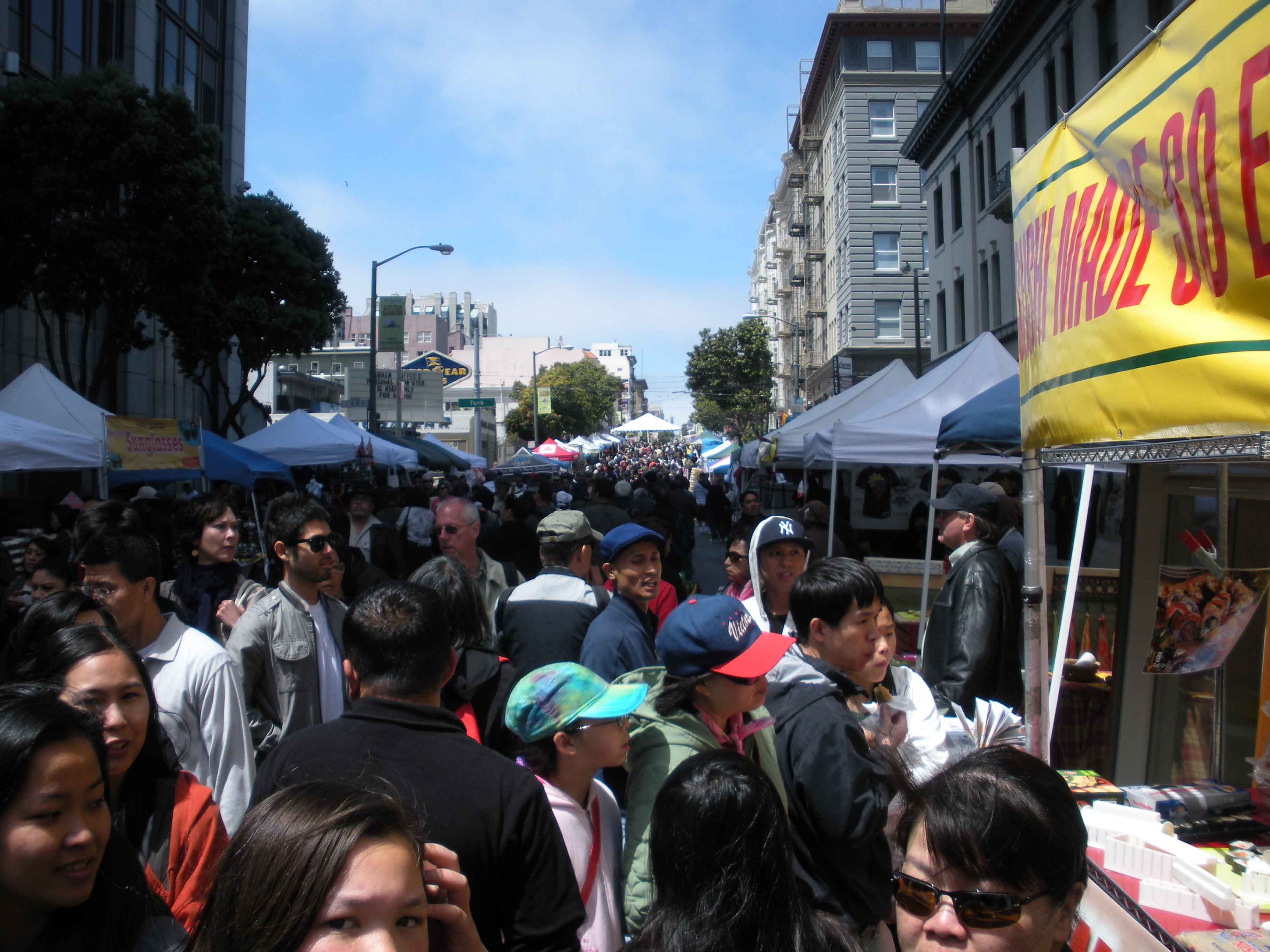
When I attended the 6th Asian Heritage Street Celebration in San Francisco, I stopped at a booth for Shen Yun Performing Arts staffed with attractive, college age girls. My wife loves dance, and I thought she might be interested. I asked if this dance troop was part of a local college or university. The girl who handed me the brochure said yes. She lied to me.

6th Annual Asian Heritage Street Celebration

That evening, when I arrived home, I handed the brochure to my wife, who said, “That is Falun Gong.” I’ve written about The Falun Gong and Costco, about A Visit from the Falun Gong, and the more I learn about this group, the more sinister they become.

Turning to the Internet and using Google, I learned that New Tang Dynasty Television, Shen Yun Performing Arts and The Epoch Times all appear to be part of Falun Gong. I also discovered that Falun Gong must buy lots of Internet AD words so Google searches lead to one of the gears in the Falun Gong machine.  In fact, I had trouble finding anything but Falun Gong propaganda and had to keep altering my search terms to get beyond the Falun Gong firewall.

In time, I discovered a piece published in the Buffalo News saying, “the promoters and creators of “Shen Yun,” who have picked up a reputation for misrepresentation and deception over the years, have adopted the questionable propagandist tactics of the very government they criticize in their productions.”

Digging further, the New York Times reported, “China’s decision to ban Falun Gong was made after 10,000 adherents staged a silent protest outside the gates of Zhongnanhai, the Communist Party’s leadership compound in Beijing, to complain about reports in the state-run media that the group said were defamatory. Security forces apparently had no advance knowledge of the demonstration, which took place on April 25, 1999. The Chinese government began treating the group as a threat to national security.”

How about visiting Belching About China

______________

Lloyd Lofthouse is the award-winning author of the concubine saga, My Splendid Concubine & Our Hart. When you love a Chinese woman, you marry her family and culture too. 

If you want to subscribe to iLook China, there is a “Subscribe” button at the top of the screen in the menu bar.


China’s Great Leap Forward and the Cultural Revolution Ends in 1976 (Part 6)

June 24, 2010

In Part 6, the anarchy led by Mao spread. Schools and hospitals closed.  Offices and factories were in chaos. Qi Youyi, who was a factory worker in Beijing, describes how bad it was. Production stopped. No one knew when he or she might be denounced and arrested. Many workers committed suicide.

After two years, the army was called to restore order and reestablish the Communist Party. The Red Guards were sent to the countryside to learn from the peasants. However, the Cultural Revolution did not really end until 1976 when Mao died.

Deng Xiaoping's China where Getting Rich is Glorious

After his death, Mao’s closest supporters, the Gang of Four, were arrested and Mao’s revolutionary activities were abandoned. In an attempt to hold the country together, the Communist Party used propaganda and the Red Army to maintain control so the country would not fall apart.

Deng Xiaoping replaced ideological fervor with economic activity so the people would be motivated not by dreams of equality but by money. In the 1980s, the new message was “to get rich is glorious”.

Return to Part 5, China’s Great Leap Forward or start with Part 1

______________

Lloyd Lofthouse is the award-winning author of the concubine saga, My Splendid Concubine & Our Hart. When you love a Chinese woman, you marry her family and culture too.

If you want to subscribe to iLook China, there is a “Subscribe” button at the top of the screen in the menu bar.