As one of the older performing arts in China, Quyi is rooted in China’s history and culture, which developed during the Tang Dynasty and flourished in the Song Dynasty.
Chinese Quyi focuses on how the “Body Talks”.
During a performance, the actors pay attention to the use of the hands, eyes, body and step. The focus of this performing art consists of narrative storytelling using staged monologues and dialogues.
It is mostly a spoken performance from one to four people. Do not confuse it with Chinese opera.
Hand gestures are used to present the story’s plot while the eyes are the most important part of a Quyi performance. The eyes show anger, sorrow and joy. Using the eyes in this way is an art in itself.
Since there are different schools of Quyi, the hand, eyes, body and steps are used differently from school to school.
There are fifty-six minorities in China and minority produced Quyi varies and is different from the Han majority.
In fact, since Quyi is a vital part of China’s minority culture, soon after the People’s Republic of China was founded in 1949, the Chinese Quyi Association was organized. Today, more than 3,500 members belong and the association publishes a Quyi magazine.
Lloyd Lofthouse is the award-winning author of the concubine saga, My Splendid Concubine & Our Hart. When you love a Chinese woman, you marry her family and culture too.
If you want to subscribe to iLook China, there is a “Subscribe” button at the top of the screen in the menu bar.
I was surprised that evidence like this slipped past the Western media censors—sorry, in the West they are called editors.
The TIME piece was about an exhibit traveling to the United States with treasures from the Forbidden City that have not been seen since 1924.
I read, “Many of the 18th century objects that will be displayed are symbols of the emperor’s devout Buddhism. They include a hanging panel filed with niches that hold intricate figurines of Buddhas, deities and historical teachers from the Tibetan Buddhist sect to which [Emperor] Qianlong belonged.” See Buddhism in China
I didn’t know the powerful Qianlong Emperor followed the teachings of Buddhists from Tibet. There are four Buddhist sects in Tibet. The Dalai Lama is the spiritual leader of one of the four, the Yellow Hat sect.
Why would the Qianlong Emperor belong to a Tibetan sect of Buddhism if Tibet were not considered part of China at the time? There is even evidence that Tibetan Buddhist monks traveled to the capital of China to serve the emperors.
I saw this as more evidence that proves China considered Tibet a vassal state or tributary. In fact, Yuan, Ming and Qing Dynasty troops are known to have occupied Lhasa over the centuries.
I’ve written about primary evidence from the October 1912 National Geographic Magazine that described how the Imperial government in Beijing managed a difficult Tibet, and I’ve mentioned letters Sir Robert Hart wrote in the 19th century that also mention Tibet as part of China.
Yes, Tibet did declare freedom from China in 1913 soon after the Qing Dynasty collapsed and China fell into chaos and anarchy while warlords fought over the spoils.
The British Empire convinced Tibet to break from China.
It is also a fact that in 1950, after World War II and the end of the rebellion between Chiang Kai-shek’s Nationalists and Chinese Communists that Mao invaded Tibet and reoccupied what the Chinese considered a breakaway province as mainland China still considers Taiwan.
_______________
Lloyd Lofthouse is the award-winning author of the concubine saga, My Splendid Concubine & Our Hart. When you love a Chinese woman, you marry her family and culture too.
If you want to subscribe to this Blog, there is a “Subscribe” button at the top of the screen in the menu bar.
China is the oldest, continuous civilization on the earth. Ancient records date back to about 2500 B.C. and coincides with the Biblical timeline, which shows that the great flood took place around 2344 B.C. Source: Bible Study – Flood
Ancient Chinese myth has their first king, Fu-hi or Fohi (Chinese Noah) making his appearance on the Mountain of Chin surrounded by a rainbow after the world had been covered with water. Myth says this Chinese Noah also sacrificed animals to God.
The Miao tribe of Southwest China has a similar myth. According to the Miao, God destroyed the world by flood because of the wickedness of man. The myth also says Nuah (Noah) had three sons: Lo Han (Ham), Lo Shen (Shem), and Jah-hu (Japheth). Source: Silvia Videler
“ShangDi, the Creator-God of the Chinese, surely appears to be one and the same as the Creator-God of the Hebrews.” Source: Answer in Genesis
“One of the earliest accounts of the Border Sacrifice is found in the Shu Jing (Book of History), compiled by Confucius (551 to 479 B.C.), where it is recorded that Emperor Shun (2256 to 2205 B.C.) sacrificed to ShangDi.” Source: Answer in Genesis
ShangDi is the High God of the ancient Chinese. He was worshiped as the Creator God for thousands of years. ShangDi was known as the Heavenly Ruler and the Chinese emperors were known as the Sons of Heaven. No other god was higher or more powerful.
Evidence says that the ancient Chinese understood the nature of God as the ancient Hebrews did after Abraham (1812 B.C. to 1637 B.C.), who is considered the father of the Jews (about 3,000 years old), Christians (about 2,000 years old) and Muslims (about 1,400 years old).
While the ancient Egyptians, Greeks and Romans worshiped many gods, the Chinese worshiped one God above all others, ShangDi. If true, that would mean the Chinese might have believed in God longer than the Jews, Christians or Muslims.
In fact, it appears that the Chinese believed in God (ShangDi) without an organized religion for more than four thousand years.
Lloyd Lofthouse is the award-winning author ofMy Splendid Concubine[3rd edition].When you love a Chinese woman, you marry her family and culture too. This is the love story Sir Robert Hart did not want the world to discover.
Subscribe to “iLook China”! Sign up for an E-mail Subscription at the top of this page, or click on the “Following” tab in the WordPress toolbar at the top of the screen.
While visiting China in September/November of 2008, we went to Guilin, went underground to the Reed Flute Cave, hiked the Dragon’s Back, cruised the Li River and spent two days in Yanghsuo.
A brief tour from Guilin to Yanghsuo
Then we saw Zhang Yimou’s breathtaking staged production, the Impressions of Liu Sanjie, which I recommend to anyone visiting Southeast China.
One of the lightshow scenes from “Impressions of Liu Sanjie”
Zhang Yimou, the director,is an internationally acclaimed Chinese filmmaker. He made his directorial debut in 1987 with the film “Red Sorghum”.
In the 1990s, Zhang Yimou directed “Raise the Red Lantern”—nominated for Best Foreign Language Film at the 1991 Academy Awards.
The “Impressions of Liu Sanjie” is performed on the river at night. However, you may be more familiar with Zhang Yimou’s opening and closing ceremonies for the 2008 Beijing Olympics.
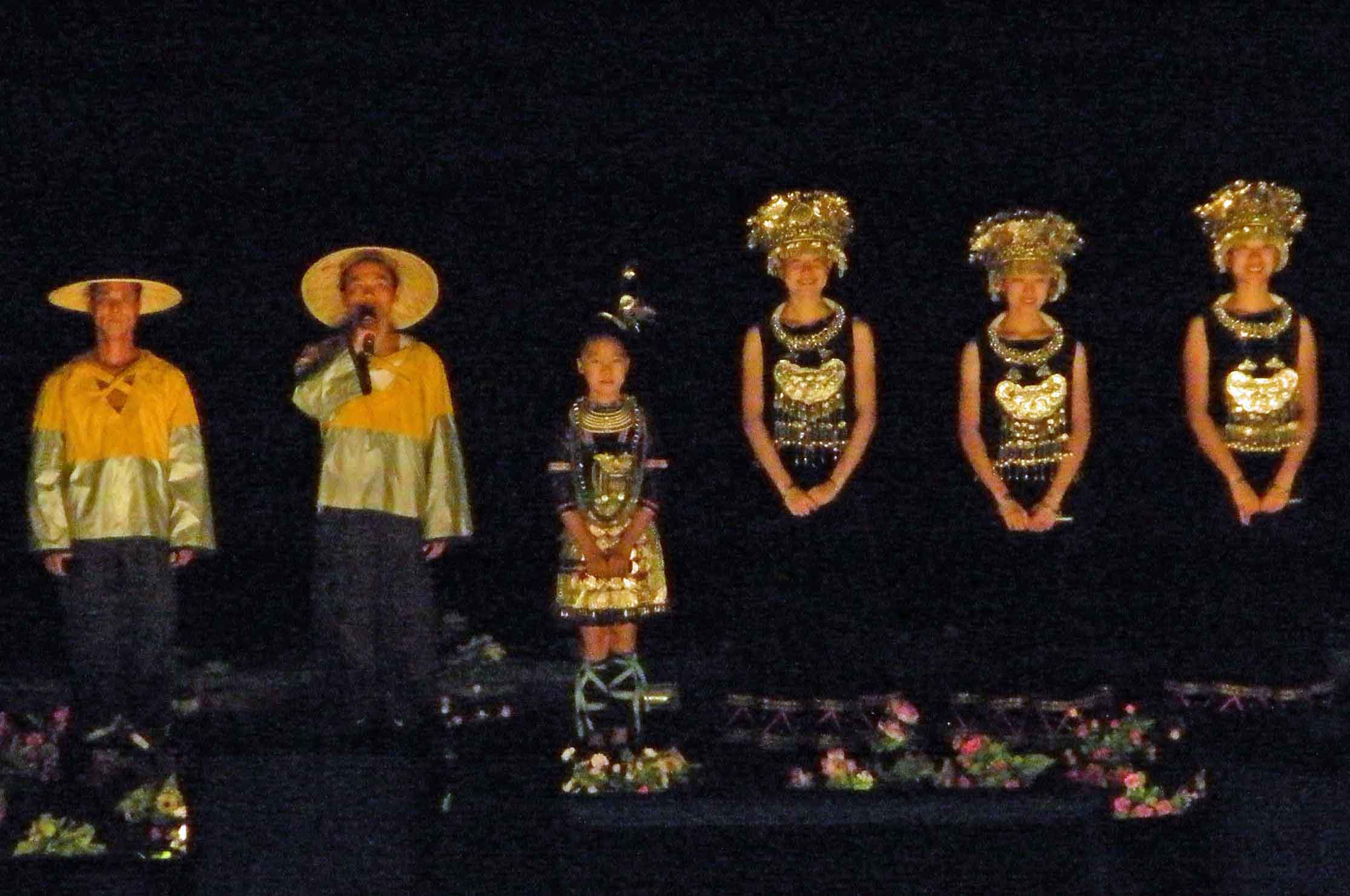
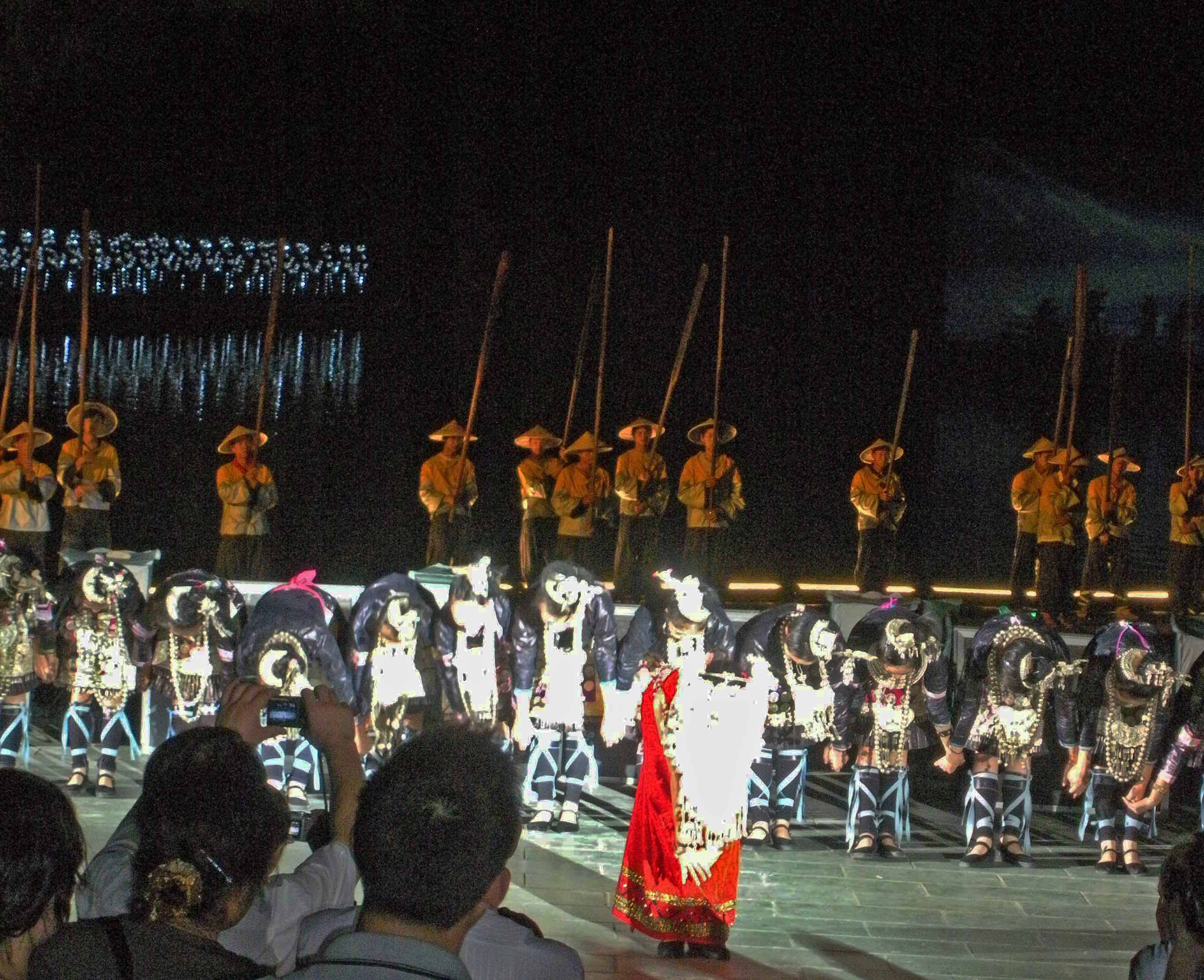
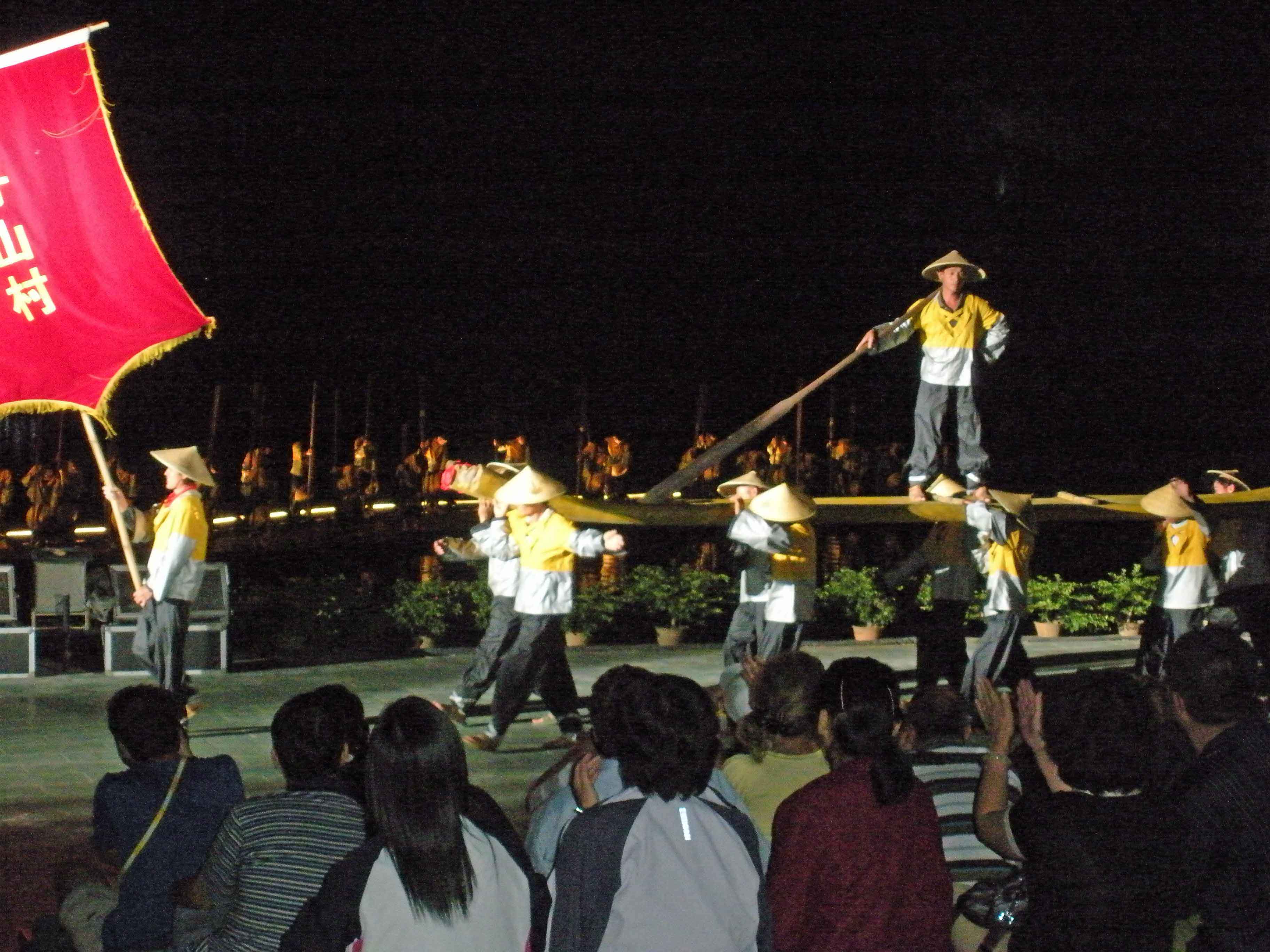
More from the “Impressions of Liu Sanjie”
The “Impressions of Liu Sanjie” is performed with the Karst Mountainsand the Li River as the setting.
The cast comes from the local Guangzi Zhuan Autonomous Region and many may be fishermen by day and actors at night and are from the Zhuang and Yao minority groups, who live in that region.
_______________
Lloyd Lofthouse is the award-winning author of the concubine saga, My Splendid Concubine & Our Hart. When you love a Chinese woman, you marry her family and culture too.
Andrew Clark contributed a post to Politics Daily about China’s minorities and the autonomous regions they call home. As Andrew clearly pointed out, “Han Chinese make up 92 percent of the People’s Republic of China. The remaining 8 percent is made up of minority groups, mainly Tibetan, Zhuang, Uyghur, Mongolian, Miao, Manchu, and Hui (these are the major ethnic groups — China officially recognizes 55 minority populations).”
Clark concludes with, “It remains to be seen whether the Chinese government can successfully assimilate these groups, or if consistent suppression of uprisings can force social tranquility.”
The Chinese map has inflated and deflated for more than two-thousand years. Some of these minorities have been in China longer than others. The Mongolians Clark visited, like the Tibetans and the Uyghur, are three who haven’t been inside China as long since they were conquered by the Qing Dynasty (the Manchu minority), who ruled China from 1644 – 1911.
One other minority ruled China for a brief time and that was the Mongols as the Yuan Dynasty (1277 – 1367). Both the rulers of the Qing and the Yuan were assimilated into the Han culture while they ruled China. That’s was primarily because they were surrounded by Han Chinese in the capital.
Tibet broke from China in 1913 and stayed out until 1950 when Mao sent an army into Tibet, which has always been a difficult place for China to rule since sending armies there to enforce control was difficult. But today, a highway and a railroad make that journey easy. If those transportation routes are cut, there’s still air transportation. The travel distance between Tibet and Beijing is shorter than it was a century ago.
Currently, China is adding about 40 thousand more kilometers of rail throughout China and building another grid of high-speed rail. This improved transportation system is also bringing about change and causing a Han migration that would have been unthinkable more than a century ago when most of China didn’t have electricity or roads.
For centuries, China ruled over these minorities without moving Han Chinese into their territories, but times have changed and the Han Chinese, like the Americans Europeans moving West, have been migrating into the autonomous regions for years, which may have more of an impact keeping these territories part of China than armies ever have. And if that doesn’t work, China still has the largest standing army in the world.
Clark also claimed, “the United States has seemingly countless ethnic and cultural minorities that are proud to call themselves American…” While somewhat true, many of almost 2,500 American native tribes still hold to their old ways and live on reservations proud to be Navaho or Sioux, Black Foot or Apache, maybe more so than being American.
Lloyd Lofthouse is the award-winning author of the concubine saga, My Splendid Concubine & Our Hart. When you love a Chinese woman, you marry her family and culture too.


 Posted by Lloyd Lofthouse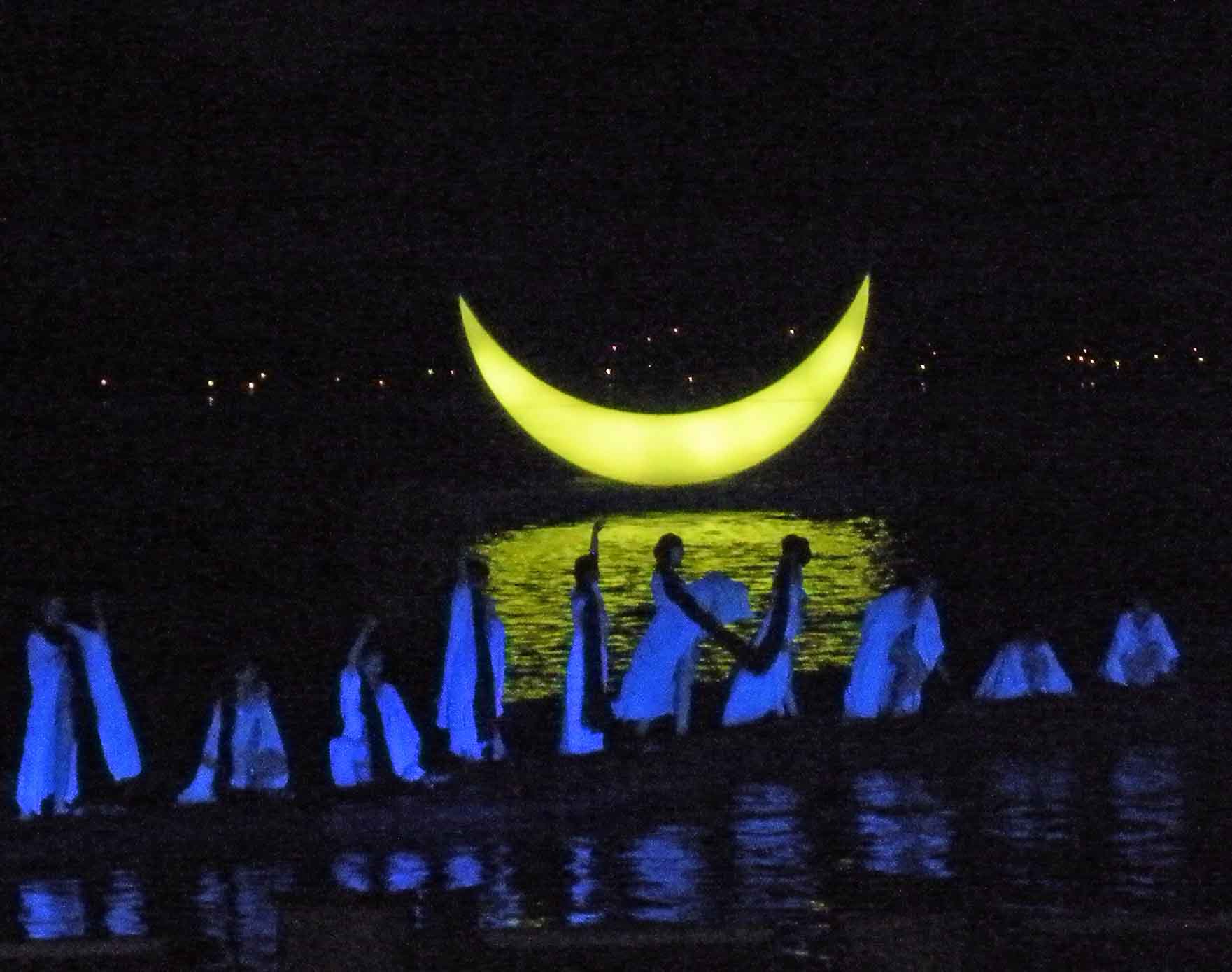

 iLook China