Everything about this Buddha is BIG. More than a thousand years old, it took almost a century to carve the Leshan Buddha from the solid rock cliff. The Buddha looks out over a river and legend says the rugged, unpredictable river sunk many boats drowning people until the Buddha was carved from the cliff.
It is thought that the rocks cut from the cliff while the Buddha was being constructed tumbled into the river and calmed the currents. However, today, air pollution as in acid rain from industry is threatening the Buddha. Maintaining the Buddha has become a challenge. About two million people visit each year.
To the Chinese, Mt. Wudang is the first mountain under heaven. Ornate palaces may be found on the mountains slopes. Temples, pavilions and bridges are all designed to harmonize with the landscape. This mountain is also the home of Wudang Kung Fu. A martial art that is still active today after seven hundred years. In Chinese terms, Wudang is a small town of 20,000 people that is a fascinating mix of tradition and modernity.
Lloyd Lofthouse is the award-winning author of The Concubine Saga. When you love a Chinese woman, you marry her family and culture too. This is the love story Sir Robert Hart did not want the world to discover.
Subscribe to “iLook China”!
Sign up for an E-mail Subscription at the top of this page, or click on the “Following” tab in the WordPress toolbar at the top of the screen.
Another popular tourist site is the fifteen-hundred year old wooden Hanging Monastery. The monastery is suspended fifteen stories above the valley floor on the side of a sheer cliff. It is a mystery why the monastery was built there and why.
One reason might be the floods that once plagued the valley. Today, a dam controls the water. The monastery was built in an indentation in the cliff below an overhand.
What cannot be seen from the valley floor is the Hanging Monastery was built into the cliff’s face. More than forty caves and rooms were dug into the rock. This process allowed supports to be built into the cliff. The thin wooden pillars are only there for decoration and were added in the last century.
3. The Great Wall
One of the world’s greatest treasures is the almost four-thousand mile Great Wall that took two-thousand years to complete.
The early great wall was made of layers of pressed earth and straw. The Qin Dynasty completed the first wall. The Han Dynasty extended the wall toward Mongolia. The Ming Dynasty built the wall stronger of stone and mortar. The Chinese used smoke and fire to send messages over long distances to warn of enemy attacks.
Lloyd Lofthouse is the award-winning author of The Concubine Saga. When you love a Chinese woman, you marry her family and culture too. This is the love story Sir Robert Hart did not want the world to discover.
Subscribe to “iLook China”!
Sign up for an E-mail Subscription at the top of this page, or click on the “Following” tab in the WordPress toolbar at the top of the screen.
1. Xian, the first emperor and the Terra Cotta Warriors
From this Discovery Channel program on the Seven Wonders of China, we learn that there are 55 ethnic groups and 235 living languages. The first of the seven wonders is near Xian, which was the capital of thirteen of China’s Dynasties.
In 1974, Chinese farmers digging a well near Xian discovered the first of the terra cotta warriors guarding China’s first emperor, Shi Huangdi, of the Qin Dynasty (221 – 207 BC).
The terra cotta warriors are one of China’s most popular tourist attractions. About 10 million tourists visit annually. No two terra cotta soldiers look alike.
The first emperor centralized the government, standardized the written language, currency, and weights and measures. With these changes, he created China’s national identity. Forcing hundreds of thousands of workers, he also had The Great Wall completed.
Most Chinese believe in the immortality of the spirit and life after death.
It is tradition that the Chinese believe there is continuity between life and death, and people may take things with them for comfort in the spiritual world, which explains why the first emperor had such an elaborate tomb built.
Lloyd Lofthouse is the award-winning author of The Concubine Saga. When you love a Chinese woman, you marry her family and culture too. This is the love story Sir Robert Hart did not want the world to discover.
Subscribe to “iLook China”!
Sign up for an E-mail Subscription at the top of this page, or click on the “Following” tab in the WordPress toolbar at the top of the screen.
An Indian prince, Siddartha Guatama, became the Buddha in the 6th Century BC, and recorded history says Buddhism first arrived in China about four hundred years later—more than two centuries before the birth of Jesus Christ.
After the Buddha died, tradition says that Buddhism split—Christianity and Islam also split into different sects after the founders died—into two major branches that divided again several times over the centuries. Today, Buddhism has about 379 million followers and is the world’s fifth largest religion.
The Bodhidharma was a Buddhist monk and a teacher who lived during the fifty and/or sixth century AD—about twelve-hundred years after Buddha.
A Sudden Dawn is an epic historical fiction novel that opens with a young man named Sardili born in 507 AD to the Indian warrior caste.
The author of A Sudden Dawn is Goran Powell, 4th dan, GojuRyu Karate. He is an author of two martial arts books, a freelance writer in London and a recipient of numerous advertising awards. Powell is a regular contributor to martial arts magazines and has twice appeared on the cover of Traditional Karate Magazine. This is his first novel. Powell resides in London with his wife and three children.
In A Sudden Dawn, Sardili realizes that he would rather seek enlightenment than follow his family’s military legacy and he sets out on a life-long quest for truth and wisdom that leads him to China where he becomes the Buddhist monk Bodhidharma, known as Da Mo in China.
Da Mo establishes the Shaolin Temple as the birthplace of Zen and the Martial Arts. In ancient China, bandits and thieves were widespread and Buddhist temples were vulnerable to attack. The Da Mo taught a fighting system for the monks to defend themselves, and it proved successful. Over time, the Buddhist Shaolin style of martial arts evolved to what it is today.
The discovery of Bodhidarma’s burial temple in China
What do others say about Goran Powell’s historical fiction novel?
Harriet Klausner, the #1 Amazon Hall of Fame Reviewer, says, “This is an entertaining biographical fiction that enables the reader to understand the life of the founder of the Shaolin movement; in fact the temple Bodhidharma constructed over fifteen centuries ago is still there. Although the romance elements feel forced, the era and the hero come across vividly clear. Readers who appreciate a deep ancient Asian tale will enjoy this super glimpse at a devoted sixth century legendary Buddhist monk.”
L.A. Kane, an Amazon Vine Voice and an Amazon top 1,000 reviewer says, “I’ve read thousands of novels, hundreds of terrific tomes, yet A Sudden Dawn easily makes my top ten. It does not matter if you know of Bodhidharma, care about martial arts, or can even spell the word “Shaolin,” if you have any interest whatsoever in historical fiction you will be captivated by this extraordinary tale. …”
Shawn Kovacich, an Amazon Vine Voice, says, “Being a long time practitioner of the martial arts I tend to be very subjective and quite picky when it comes to fictionalized accounts of the martial arts and martial arts fighting. However, I found that all of my preconceived notions and prejudices were totally unfounded concerning this very well written and totally engrossing novel based upon historical events and people (to a certain extent). … It is that good!”
Lloyd Lofthouse is the award-winning author of The Concubine Saga. When you love a Chinese woman, you marry her family and culture too. This is the love story Sir Robert Hart did not want the world to discover.
Subscribe to “iLook China”!
Sign up for an E-mail Subscription at the top of this page, or click on the “Following” tab in the WordPress toolbar at the top of the screen.
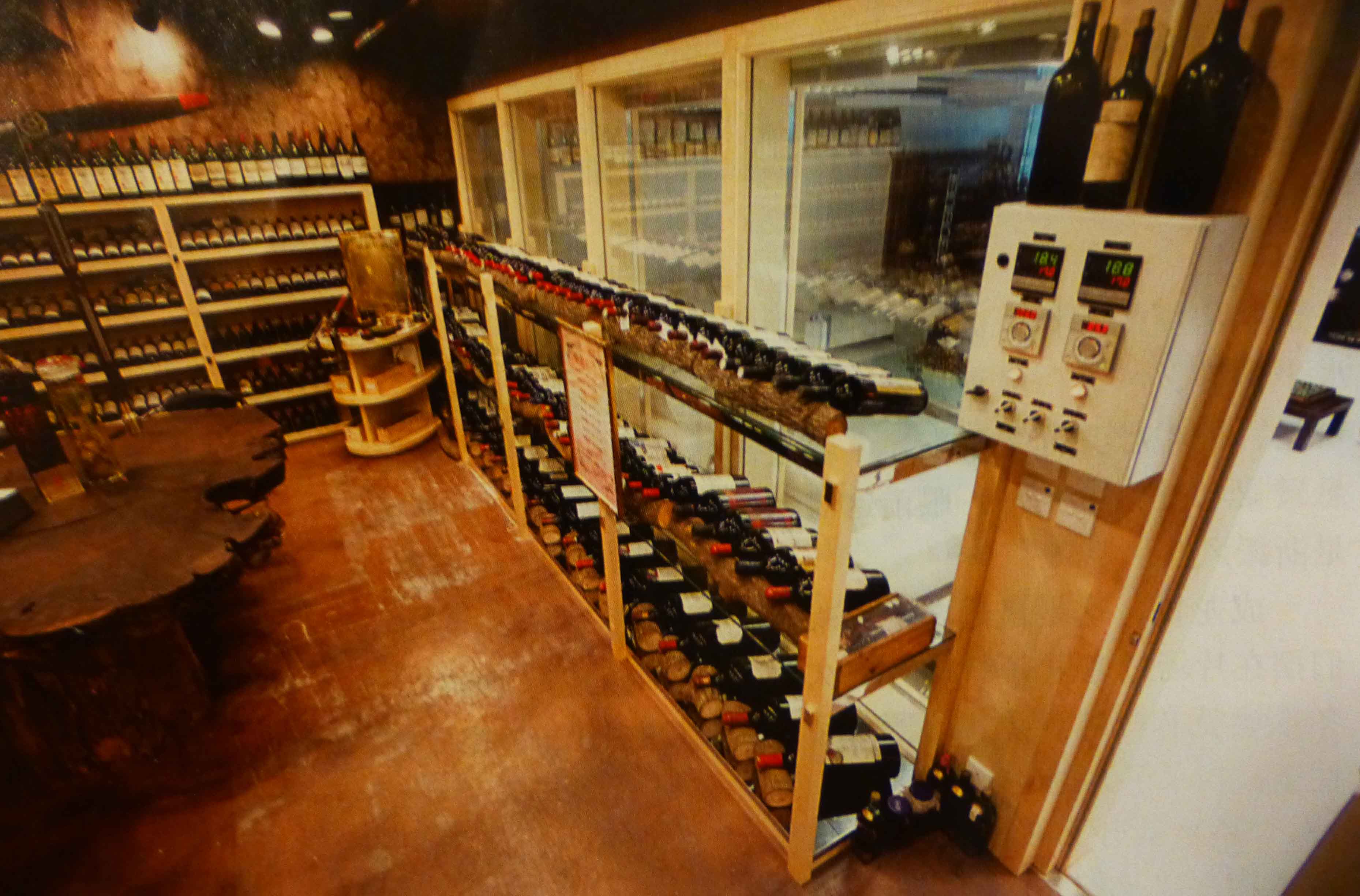
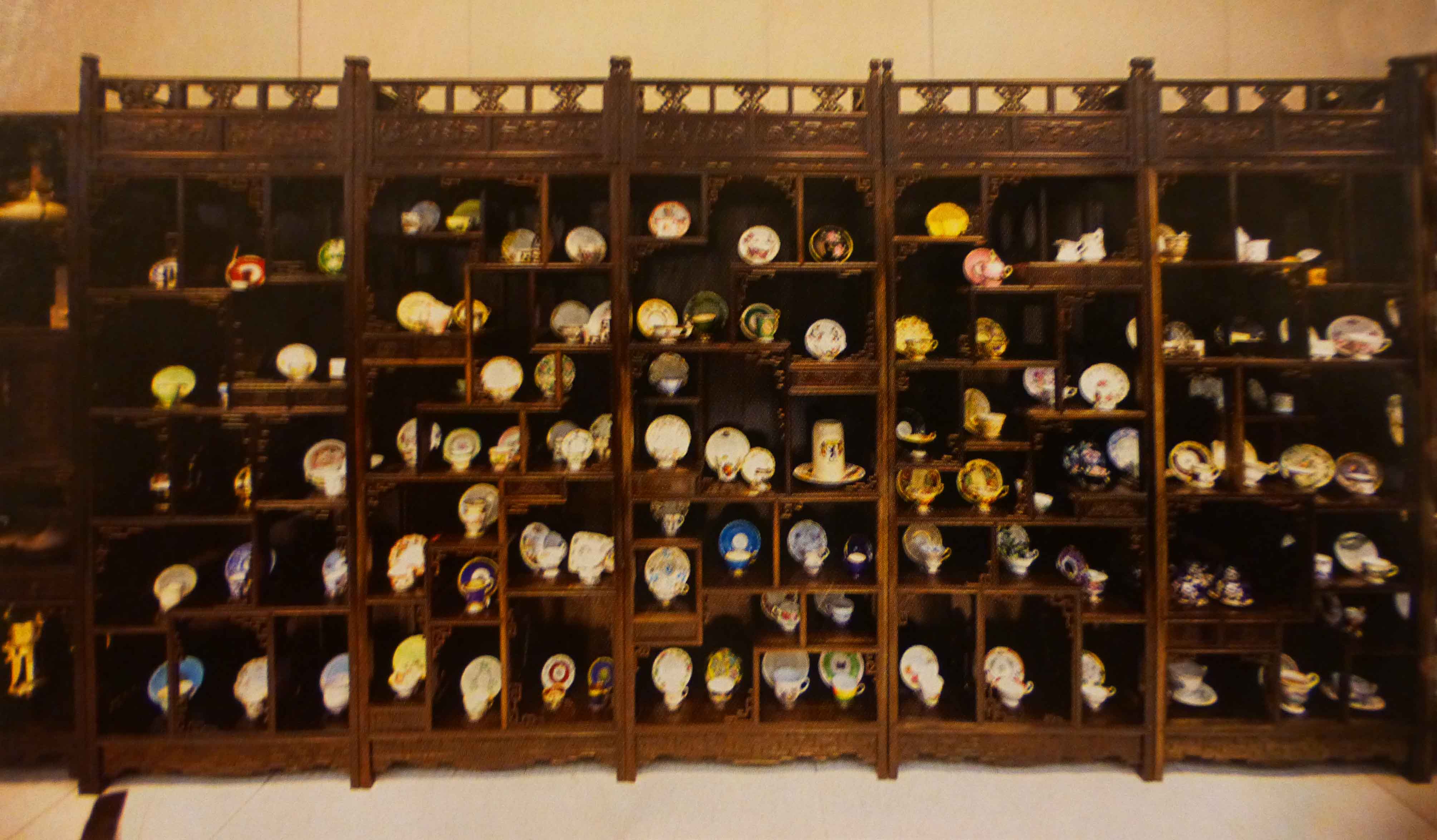
If you enjoy watching films, you probably know who Jackie Chan is. However, outside China, many may not know he is a collector of Chinese cultural things such as rocks, old Chinese wood houses, wine, and ceramic tea cups and saucers.
Chan started acting in movies in 1962 and now has more than 100 films under his acting belt. You may remember Rush Hour 1 to 3 (1998 – 2007); The Karate Kid in 2010, and many others. According to Celebrity Networth.com, Chan’s estimated net worth is $130 million.
What I didn’t know until my wife and daughter returned from China on New Year day 2013 was that Chan also has been building cultural collections for decades.
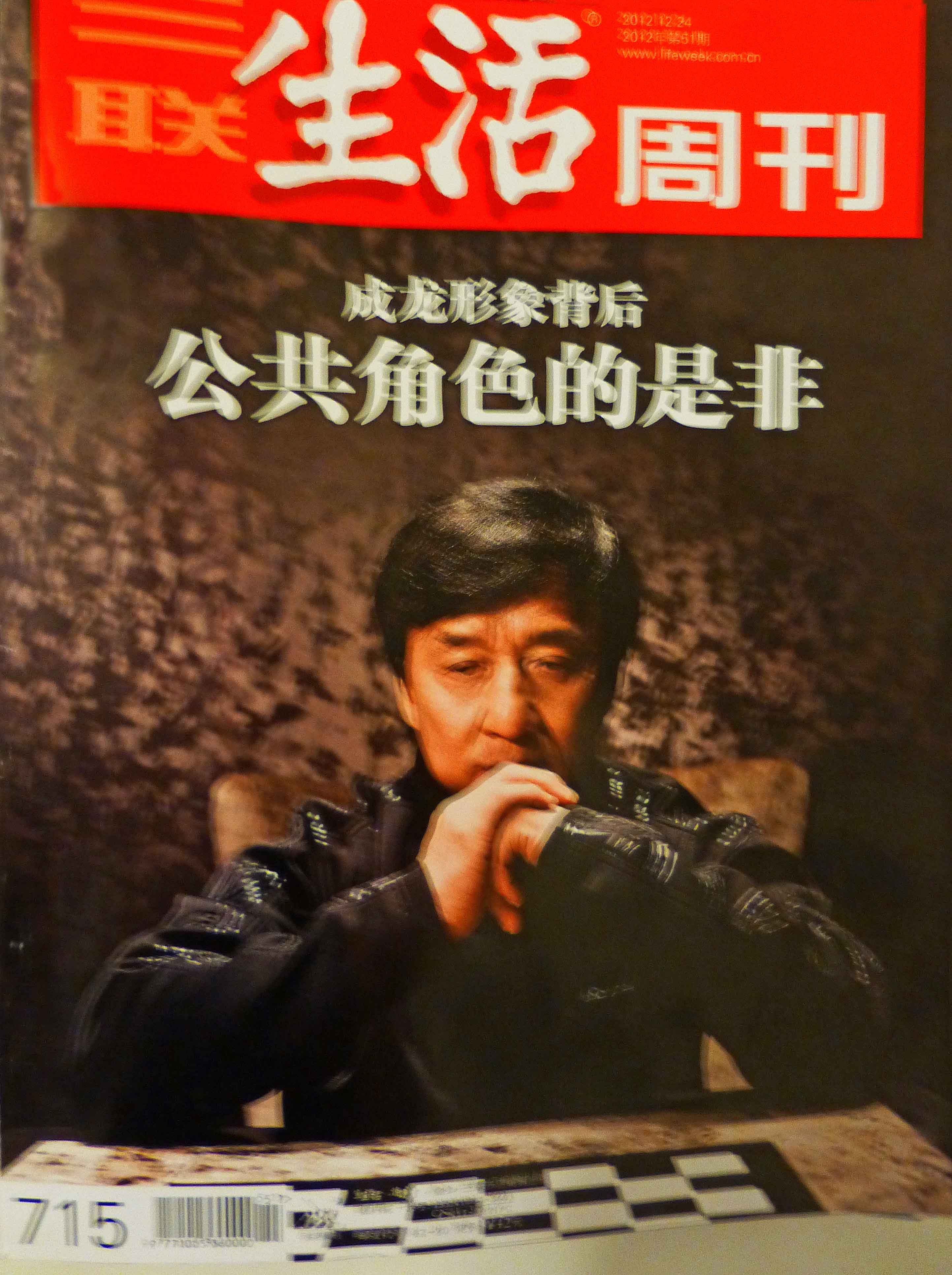
In China, my wife bought a magazine that was exclusively about Jackie Chan’s life, film career, charitable giving and his collections.
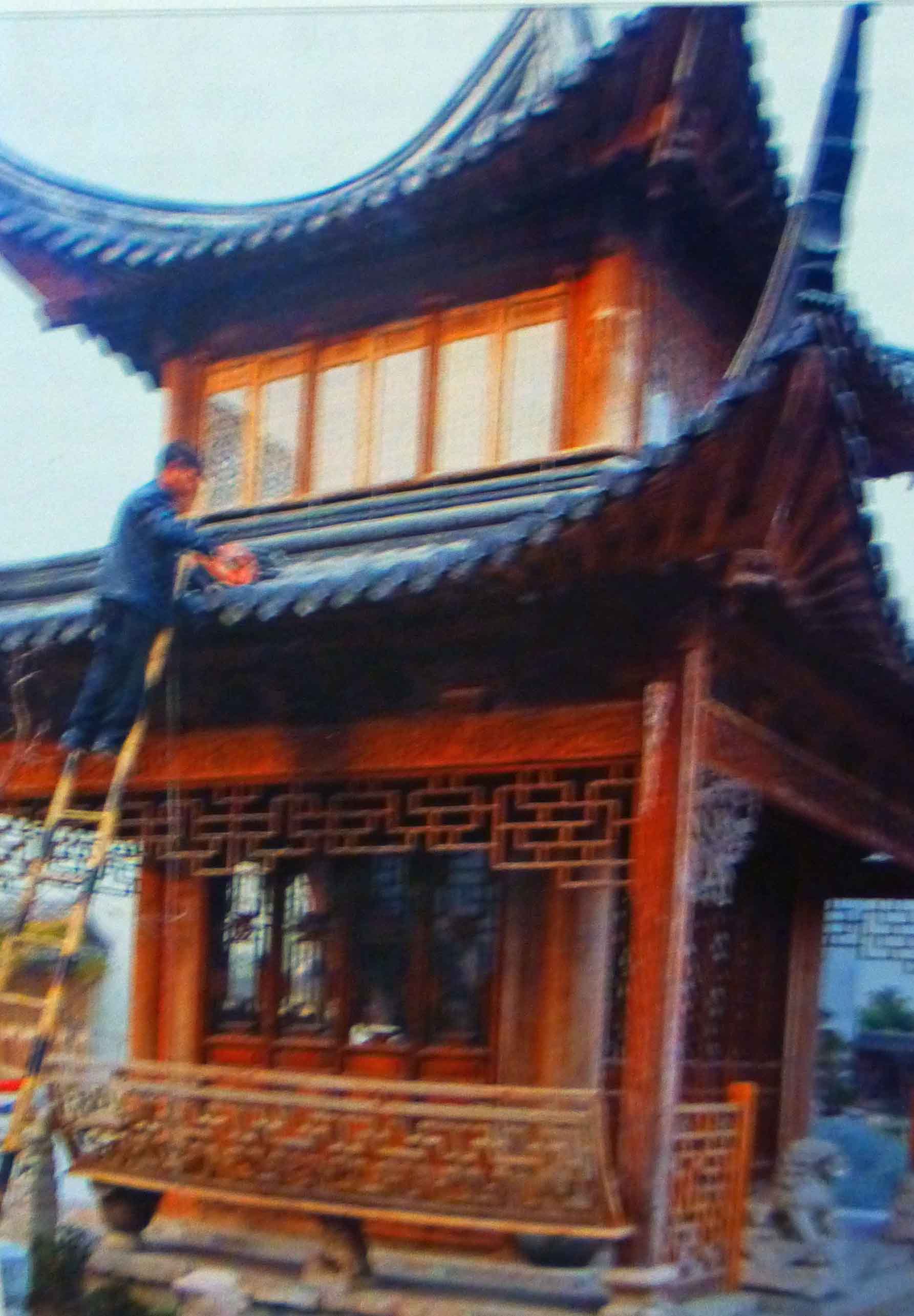
Asia One.com says, “Mr. Chan had started his collection (of older Chinese houses and wood structures) some 20 years ago. His collection currently comprises seven houses and an opera performing stage, dating from the Ming and Qing dynasties.”
Then as Chan aged, he became concerned that his collections survive after he is gone, so he is donating them to Singapore and Beijing.
Zee News.India.com reported, “Kung Fu movie legend Jackie Chan wants to donate historical Chinese houses worth more than 67 million US dollars to a university being set up in Singapore … Chan will give the campus seven wooden houses and a performing stage from his private collection …”
From Asian Fanatics.net we learn that Chan’s “collecting passion was also influenced by his late father, who loved old Chinese wooden houses. Chan’s dad, Charlie, died … at the age of 93 after battling cancer. The star’s love of all things historical can be seen in his property purchases here. He owns the 105-year-old Jinriksha Station at 1 Neil Road, once the central depot for rickshaw drivers in Singapore, and the four-storey The 50s complex. Both are historic buildings within the Neil Road conservation area.”
If you live in the United States or Canada and are interested in this copy of the Jackie Chan magazine, leave a comment for this post letting me know, and I will hold a drawing March 2013, and then mail the magazine to the winner. If no one is interested, the magazine will be recycled.
Lloyd Lofthouse is the award-winning author of The Concubine Saga. When you love a Chinese woman, you marry her family and culture too. This is the love story Sir Robert Hart did not want the world to discover.
Subscribe to “iLook China”!
Sign up for an E-mail Subscription at the top of this page, or click on the “Following” tab in the WordPress toolbar at the top of the screen.


 Posted by Lloyd Lofthouse