More than 3,000 Years of Chinese Porcelain

December 24, 2014

Chinese porcelain originated in the Shang Dynasty (16th century BC), and Jingdezhen in Jiangxi province is a well-known Chinese city where porcelain has been an important production center in China since the early Han Dynasty (206 BC – 220 AD).

From China, caravans carried its famous Chinese porcelains west: ceramic lusterware, lacquerware – snow-white vases, bowls, glasses, and dishes with sophisticated patterns. It was solely the Chinese who knew the secret of making the thinnest and resonant porcelain, making it very expensive in European markets. Silk Road Encyclopedia.com and Gotheborg.com

Chinese porcelain was also available in the American colonies as early as the seventeenth century, but it did not become commonplace until after 1730. Before the U.S. Revolution, porcelain was exported to the colonies mainly by English and Dutch traders. European traders sailed to Canton (Guangzhou) in southern China, exchanged their goods for Chinese products, and then returned to sell porcelain and other Chinese imports on the European and colonial markets. In addition to porcelain, teas and silks were also exported from China in large quantities. Mount Vernon.org

“The demand for Chinese products—tea, porcelain, silk, and nankeen (a coarse, strong cotton cloth)—continued after the Revolution. Having seen the British make great profits from the trade when the colonies were prevented from direct trade with China, Americans were eager to secure these profits for themselves.” Source: Early American Trade With China

This hunger for Chinese products, while the Chinese found little in the West to buy, led to the Opium Wars, which Britain and France started and won to force China to even the trade imbalance. Then China sold the West silk, porcelain and tea while the West sold China opium.

_______________

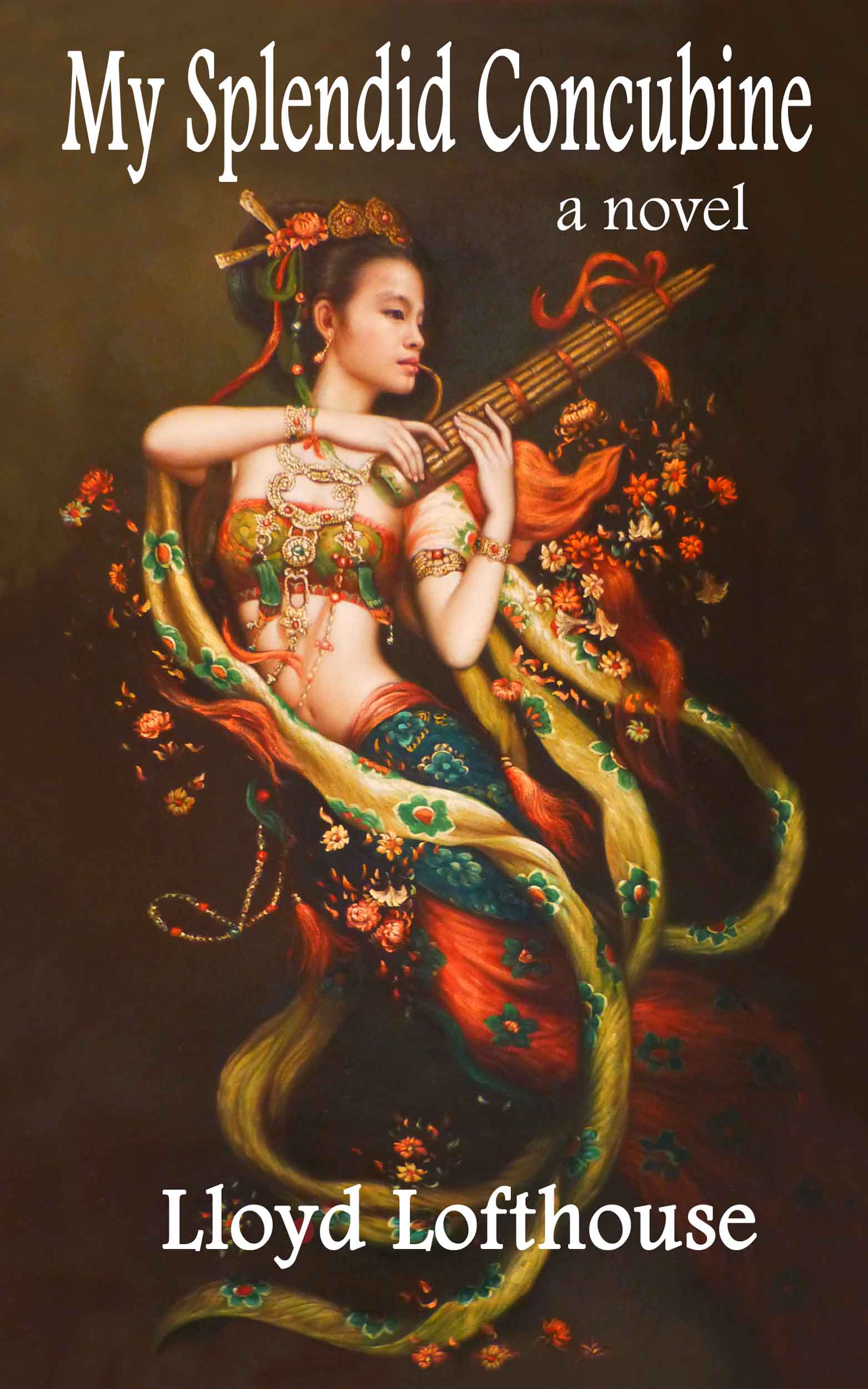
Lloyd Lofthouse is the award-winning author of My Splendid Concubine [3rd edition]. When you love a Chinese woman, you marry her family and culture too. This is the love story Sir Robert Hart did not want the world to discover.

Low-Res_E-book_cover_MSC_July_24_2013

Subscribe to “iLook China”!
Sign up for an E-mail Subscription at the top of this page, or click on the “Following” tab in the WordPress toolbar at the top of the screen.

About iLook China

China’s Holistic Historical Timeline


If China government isn’t a Monarchy or a Dictatorship, what is it? Part 4 of 4

December 13, 2014

Deng Xiaoping was China’s George Washington. What he did was what Dr. Sun Yat-sen wanted. China is a republic that combines Western thought with Chinese tradition.

However, the task to create China’s Republic fell to the Communist Party so China is a Socialist Republic with capitalist tendencies.

In China, Piety is important and advice from elders is often followed as if it is the law. Due to this, elder statesmen such as Jiang Zemin have great power in the government even after he no longer has a political title. After all, this is a Chinese tradition.

The Economist mentioned disagreements within the CCP among China’s leaders over what the country’s priorities should be—both on the economy and on political reform.

Whatever the final decisions will be, the consensus of the CCP will be guided by Chinese tradition and not Western thought.

The changes that “some” want to see take place in China will probably not arrive in a hurry if the wisdom of the I-Ching, The Book of Changes, is followed, which says change should come slowly.

In fact, China has proven it is a republic because none of China’s first four presidents are the sons of previous presidents and eventually death removes the elders. China’s presidents did not inherit that title due to heredity as kings do or the leader of North Korea did.

Return to Part 3 or start with  Part 1

View as Single Page

 _______________

Lloyd Lofthouse is the award-winning author of My Splendid Concubine [3rd edition]. When you love a Chinese woman, you marry her family and culture too. This is the love story Sir Robert Hart did not want the world to discover.

Low-Res_E-book_cover_MSC_July_24_2013

Subscribe to “iLook China”!
Sign up for an E-mail Subscription at the top of this page, or click on the “Following” tab in the WordPress toolbar at the top of the screen.

About iLook China

China’s Holistic Historical Timeline


If China government isn’t a Monarchy or a Dictatorship, what is it? Part 3 of 4

December 12, 2014

Before we move on, let’s take a brief look at the Athenian democracy that was developed around the 5th century B.C. in the Greek city-state of Athens. Even though there is evidence that democratic forms of government existed before the 5th century, ancient Athens is generally believed to be the first democracy.

What did that democracy look like? Athens had a system of direct democracy, in which participating citizens voted directly on legislation and executive bills. But participation was not open to all residents: to vote, one had to be an adult, male citizen, and the number varied between 30,000 and 50,000 out of a total population of around 250,000 to 300,000—about 150,000 were slaves.

In comparison, the membership of the Chinese Communist Party (CCP) is now 86.7 million—men make-up 77 percent of CP’s membership, while woman make up 23 percent—making the CCP the world’s largest political party representing more than 6 percent of China’s population, and slavery is illegal just like it is in the U.S.

In Part 2, I explained why China was not a monarchy or a dictatorship. In this post and in Part 4, I will show why China is becoming more like the republic Dr. Sun Yat-sen may have imagined by combining Western thought with Chinese traditions.

After Mao died, The Communist Party worked for several years to draft the 1982 Constitution, which included term limits of two five-year terms for elected government officials.

If you have read the Chinese Constitution carefully, it is obvious that the U.S. Constitution was used as a model. However, these two documents are not the same.

If the Party leadership is not happy with China’s president, he can be removed after one five-year term. There is even an article of impeachment in China’s Constitution.

China’s first president was Li Xiannian (1983 to 1988). He served one, five-year term, and then he stepped down.

From 1988 to 1993, Yang Shangkun would be China’s president for one five-year term. Deng Xiaoping (born 1904 – died 1997) was the Chairman of the Communist Party from 1983 to 1993, which was ten years—what China’s 1982 Constitution calls for, but Deng never served as the country’s president.

Due to how the Tiananmen Square incident in 1989 was handled, President Yang had to step down at the end of his first, five-year term. The only other way to remove him would have been through impeachment.

In 1993, Jiang Zemin became President and Chairman of the Communist Party. Then in 2003, Hu Jintao became President and Chairman of the Party. His term ended in 2012 when Xi Jinping became president of China.

Continued in Part 4 on December 13, 2014 or return to Part 2

View as Single Page

_______________

Lloyd Lofthouse is the award-winning author of My Splendid Concubine [3rd edition]. When you love a Chinese woman, you marry her family and culture too. This is the love story Sir Robert Hart did not want the world to discover.

Kindle_LR_e-book_cover_MSC_July_25_2013

Subscribe to “iLook China”!
Sign up for an E-mail Subscription at the top of this page, or click on the “Following” tab in the WordPress toolbar at the top of the screen.

About iLook China

China’s Holistic Historical Timeline


The last days of Sun Yat-sen: Part 3 of 3

December 4, 2014

Later, it was discovered that the medical report of Sun’s condition was incomplete. Some of the samples and part of the report had been stolen and no one knows why.

During World War II, after the Japanese invaded China, Japanese troops occupied the hospital where Sun Yat-sen’s liver samples were kept.

Chinese representative requested the liver samples and the report be turned over to them.

Some of the liver samples were given to Dr. Tang Qiping, who worked at the Sino-Belgian Radium Institute in Shanghai.

Another man, Chu Minyi, forced Dr. Tang to give him those samples.

In 1946, Chu Minyi would go to prison as a traitor to China. He tried to use Sun Yat-sen’s liver samples to save himself. However, Chu was still executed by Chiang Kai-shek’s Nationalists.

Sun’s liver samples would be lost during the revolution between the Communists and Nationalists. Later, it would be discovered that the samples had been stolen again.

When the Nationalists launched their Northern Expedition to take China from the warlords, the warlord in Beijing, who met with Sun before his death, was their only ally.

When Sun died, his political advisor wrote, “If Dr. Sun Yat-sen had lived for a few years or even a few months longer, China’s situation would have changed completely.”

Soon after Sun’s death in 1925, the democratic government created by him after the 1911 revolution failed.

After a struggle, Chiang Kai-shek gained control of the Nationalists, and because he controlled the army. Chiang then gave orders to his troops to execute all the Communists starting the civil war that led to Mao’s famous Long March.

Return to Part 2  or start with  Part 1

View as Single Page


This film is in Mandarin with no English subtitles.

_______________

Lloyd Lofthouse is the award-winning author of My Splendid Concubine [3rd edition]. When you love a Chinese woman, you marry her family and culture too. This is the love story Sir Robert Hart did not want the world to discover.

Low-Res_E-book_cover_MSC_July_24_2013

Subscribe to “iLook China”!
Sign up for an E-mail Subscription at the top of this page, or click on the “Following” tab in the WordPress toolbar at the top of the screen.

About iLook China

China’s Holistic Historical Timeline


The last days of Sun Yat-sen: Part 2 of 3

December 3, 2014

After arriving in Beijing, Sun Yat-sen saw a French doctor who gave him injections to help with his illness.

With his health getting worse, a nurse that worked at a German hospital was sent to his Beijing hotel to care for him.

His condition was so bad that at times he could not talk.

Since the Western medicine wasn’t improving his health, he was convinced by advisors to talk to an herbalist doctor, Ge Lianfu.

Sun Yat-sen told Ge Lianfu that he would give the Chinese medicine to the Western doctors to see if they could copy it.

Ge said he wasn’t sure if Chinese and Western medicine were interchangeable.

Since Sun was a trained Western doctor, he didn’t believe that Ge’s treatment was going to work. Ge Lianfu concluded that Sun had liver disease, but Sun didn’t trust the diagnosis.

While staying in the Beijing hotel, Sun was treated by doctors from the US, Germany, Russia and the Peking Union Medical College Hospital.  However, the treatments didn’t help, and his condition worsened.

The western doctors concluded that he needed exploratory surgery. After they cut him open, they discovered liver disease as Ge Lianfu had diagnosed without surgery.

In fact, Sun was in the final stages of liver cancer. At the time, Western medicine had no treatment to deal with a disease that he must have had for years.

In 1916, Sun had often suffered from abdominal pain and the Western doctors treated him as if he had stomach trouble.

Continued in Part 3 on December 4, 2014 or start with Part 1

View as Single Page

_______________

Lloyd Lofthouse is the award-winning author of My Splendid Concubine [3rd edition]. When you love a Chinese woman, you marry her family and culture too. This is the love story Sir Robert Hart did not want the world to discover.

Low-Res_E-book_cover_MSC_July_24_2013

Subscribe to “iLook China”!
Sign up for an E-mail Subscription at the top of this page, or click on the “Following” tab in the WordPress toolbar at the top of the screen.

About iLook China

China’s Holistic Historical Timeline