Sun Yat-sen’s Republic in China: Part 2 of 4

April 13, 2016

The answer to the question I asked in Part 1 has nothing to do with the government of the United States as it exists today, but it does have everything to do with the politics of Hawaii when Sun Yat-sen lived there for four years of his young life, the structure of the United States government, and who could vote at that time.

Sun Yat-sen attended a Christian British Bishop’s school in Hawaii for four years. His model on a Chinese republic may have been based on the beliefs of America’s Founding Fathers, who despised democracy as mob rule. Since Sun attended a British school, we may assume safely that he also learned about the British parliamentary system where the prime minister is not elected to office but is the leader of the majority party and there is no term limit. In fact, there was no term limit for the president of the U.S. until 1947, long after Sun’s death.

According to Sun Yat-Sen Hawaii Foundation, he arrived in Hawaii in 1879 at the age of thirteen. He then spent four of his teenage years being educated in Hawaii. China’s first revolutionary society, the Xing Zhong Hui (Revive China Society) was organized in Hawaii in 1894 more than a decade after Sun left.

Sun Yat-sen would later be involved in the overthrow of the Qing Dynasty in 1911 and a failed attempt to establish a republic in China. He never achieved his goals during his lifetime.

Whatever Sun Yat-sen’s vision of a republic might look like had to be formed during the four years he lived in Hawaii as a teenager.  The Sun Yat-sen Timeline shows that he returned to China in 1883.

To learn what Sun Yat-sen may have believed means learning about the political structure of Hawaii and the United States between 1879 and 1883.

Continued on April 14, 2016 in Part 3 or start with Part 1

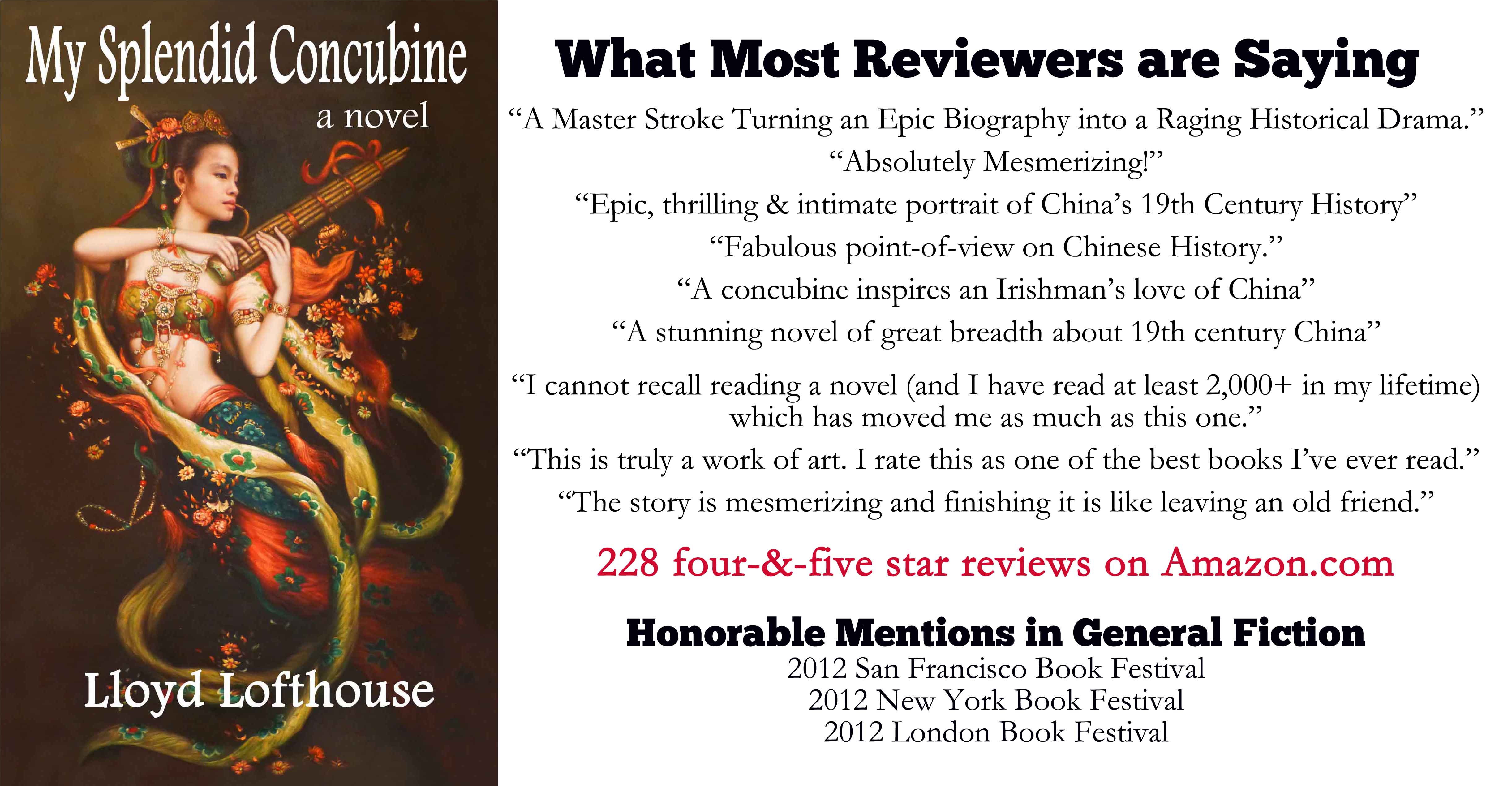
Lloyd Lofthouse is the award-winning author of My Splendid Concubine [3rd edition]. When you love a Chinese woman, you marry her family and culture too. This is the unique love story Sir Robert Hart did not want the world to discover.

#1 - Joanna Daneman review posted June 19 2014

Where to Buy

Subscribe to “iLook China”!
Sign up for an E-mail Subscription at the top of this page, or click on the “Following” tab in the WordPress toolbar at the top of the screen.

About iLook China

China’s Holistic Historical Timeline


Sun Yat-sen’s Republic in China: Part 1 of 4

April 12, 2016

Dictionary.com defines a republic as “a state in which the supreme power rests in the body of citizens entitled to vote and is exercised by representatives chosen directly or indirectly by them.”

Sun Yat-sen remains unique among 20th-century Chinese leaders for having a high reputation both in mainland China and in Taiwan. In Taiwan, he is seen as the Father of the Republic of China. On the mainland, Sun is seen as a Chinese nationalist and proto-socialist, and is highly regarded as the Forerunner of the Revolution (革命先行者). He is even mentioned by name in the preamble to the Constitution of the People’s Republic of China (PRC).

“Sun Yat-sen was born in 1867 and died in 1925. Sun was a nationalist revolutionary who believed that the only way for China to move forward in the early 1900’s was for the country to become a republic and adopt western ways in industry, agriculture etc. Unless China did this, Sun was convinced that she was doomed to remain backward by western standards.” – historylearningsite.co.uk

There you have it.  Sun Yat-sen wanted a republic in China based on the American model. Has his dream been realized?

The easy answer is yes, but what Sun Yat-sen envisioned as a republic for China may have been exceeded by the Chinese Communist Party.

We will never know exactly what Sun Yat-sen wanted for a republic in China.

However, we can gain a better idea of what his vision may have been by discovering what it was like in Hawaii and America at the time Sun Yat-sen lived in Hawaii before it was a territory of the United States.

First, Hawaii was a Republic [1894 -1898] before it became a territory of the United States [1898 – 1959], and before it became a state in 1959.

In fact, a commission during the administration of President Grover Cleveland (1885–1889 and 1893–1897) concluded that the removal of Queen Lili’uokalani was illegal, and the U.S. government demanded that she be re-instated.

Then in 1993, a joint Apology Resolution regarding the overthrow of Hawaii’s Queen was passed by Congress and signed by President Clinton, apologizing for the overthrow of the Hawaiian Kingdom.

In China today, there are more than 80 million voting members in the Chinese Communist Party (CCP) and China’s president—elected by the 2,987 members of National People’s Congress—is limited to two, 5-year terms. In addition, about 600 million rural Chinese are allowed to vote for elected village leaders and the candidates do not have to be a member of the CCP.

Did you know that the President of the United States is elected by the 538 members of the U.S. Electoral College and not by the popular vote? If you don’t know the answer to that question, watch the following video.

Continued on April 13, 2016 in Part 2

Lloyd Lofthouse is the award-winning author of My Splendid Concubine [3rd edition]. When you love a Chinese woman, you marry her family and culture too. This is the unique love story Sir Robert Hart did not want the world to discover.

A1 on March 13 - 2016 Cover Image with BLurbs to promote novel

Where to Buy

Subscribe to “iLook China”!
Sign up for an E-mail Subscription at the top of this page, or click on the “Following” tab in the WordPress toolbar at the top of the screen.

About iLook China

China’s Holistic Historical Timeline


On The Great Wall: Part 3 of 3

April 8, 2016


On our way back to Beijing from The Great Wall at Mutianyu, our driver stopped at a factory-showroom where we learned about the manufacturing techniques for Cloisonné brass vases.

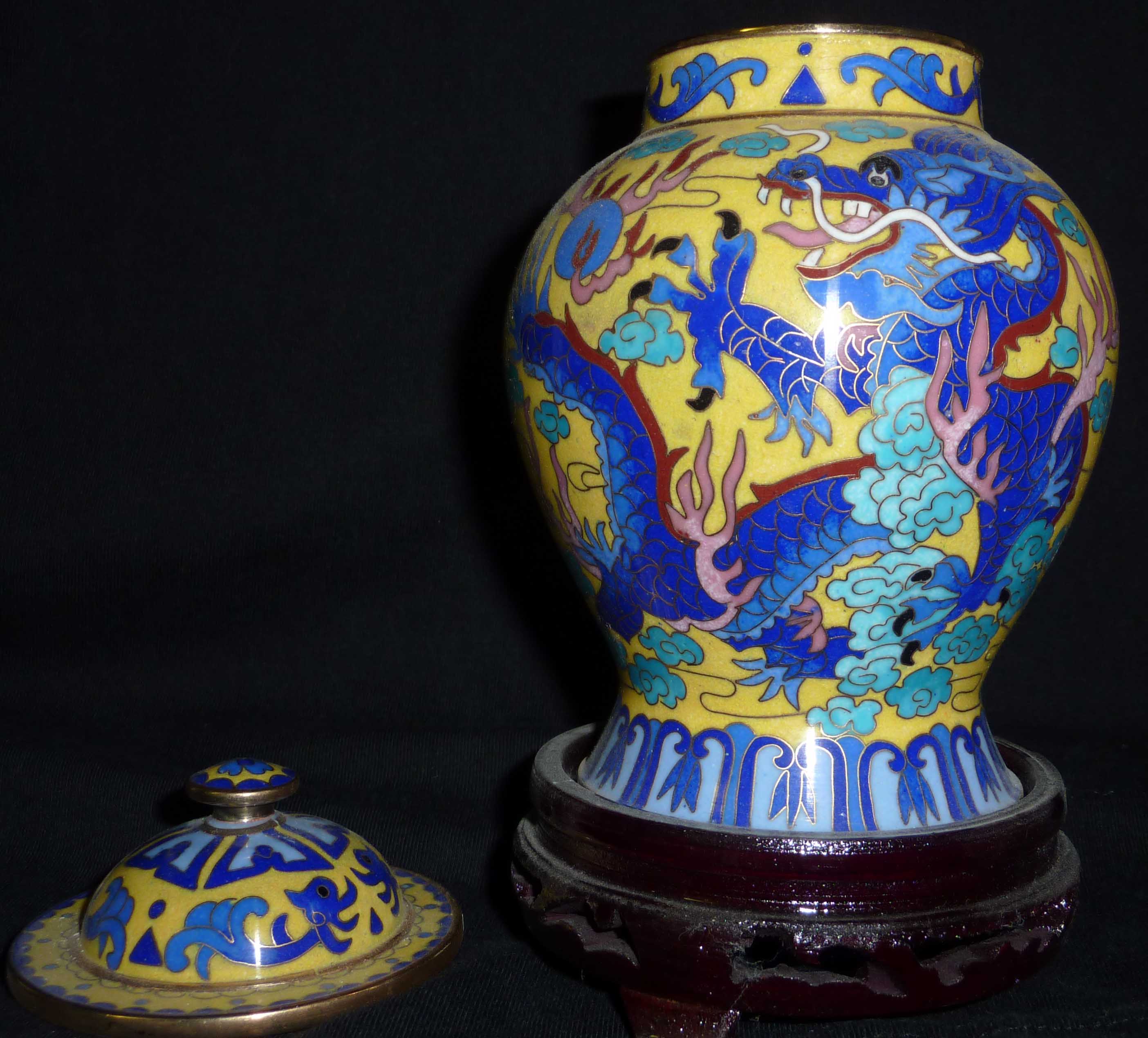
I’ve read some tourists/expatriates complain about these stops, but I enjoy window shopping and this was something new—sometimes I even buy stuff.  In this case, I bought three vases (photos included).

First, we went on a tour where we watched men and women creating these vases. Once the tour was over, we went to the showroom.

The vases I bought (after negotiating the price) are yellow with a blue trim.  One has a blue dragon on it, the second a phoenix beside a chariot, and the third running horses. Each one is about the size of my hand but larger around.

The cloisonné process is enamel on copper craftwork. It first appeared in Beijing in the Yuan Dynasty (1271-1368) and continued during the Ming Dynasty (1368-1644). Cloisonné vases are crafted by using a copper porcelain process. The vase is made from copper with brass wires soldered to the body. Then a porcelain glaze is applied to cells between the brass wires.

After a series of complex procedures, such as burning, burnishing and gilding, the cloisonné vase is done. Chinese name: 景泰蓝(jǐng tài lán)

Return to Part 2 or start with Part 1

Lloyd Lofthouse is the award-winning author of My Splendid Concubine [3rd edition]. When you love a Chinese woman, you marry her family and culture too. This is the unique love story Sir Robert Hart did not want the world to discover.

IMAGE with Blurbs and Awards to use on Twitter

Where to Buy

Subscribe to “iLook China”!
Sign up for an E-mail Subscription at the top of this page, or click on the “Following” tab in the WordPress toolbar at the top of the screen.

About iLook China

China’s Holistic Historical Timeline


On the Great Wall: Part 2 of 3

April 7, 2016

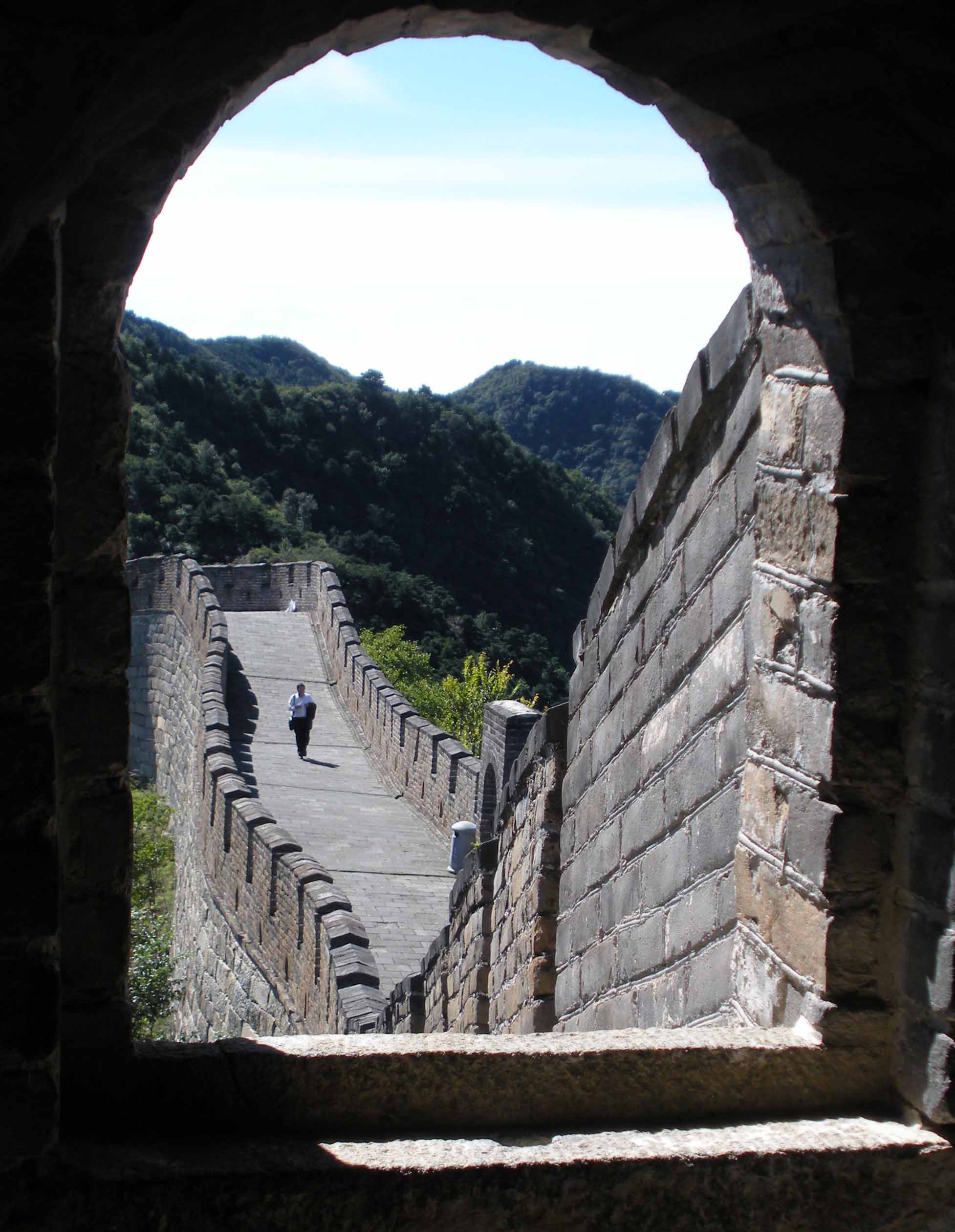
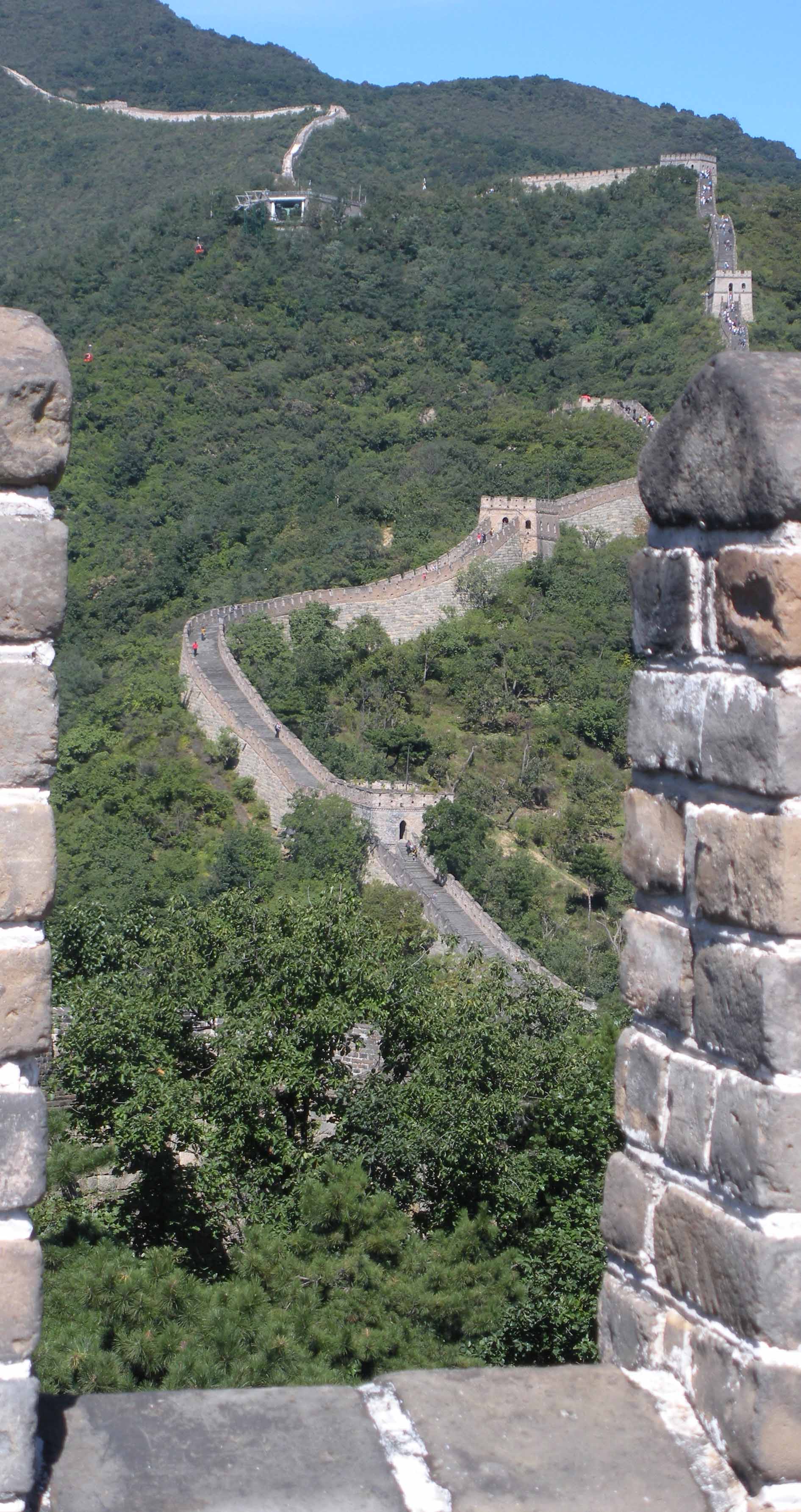
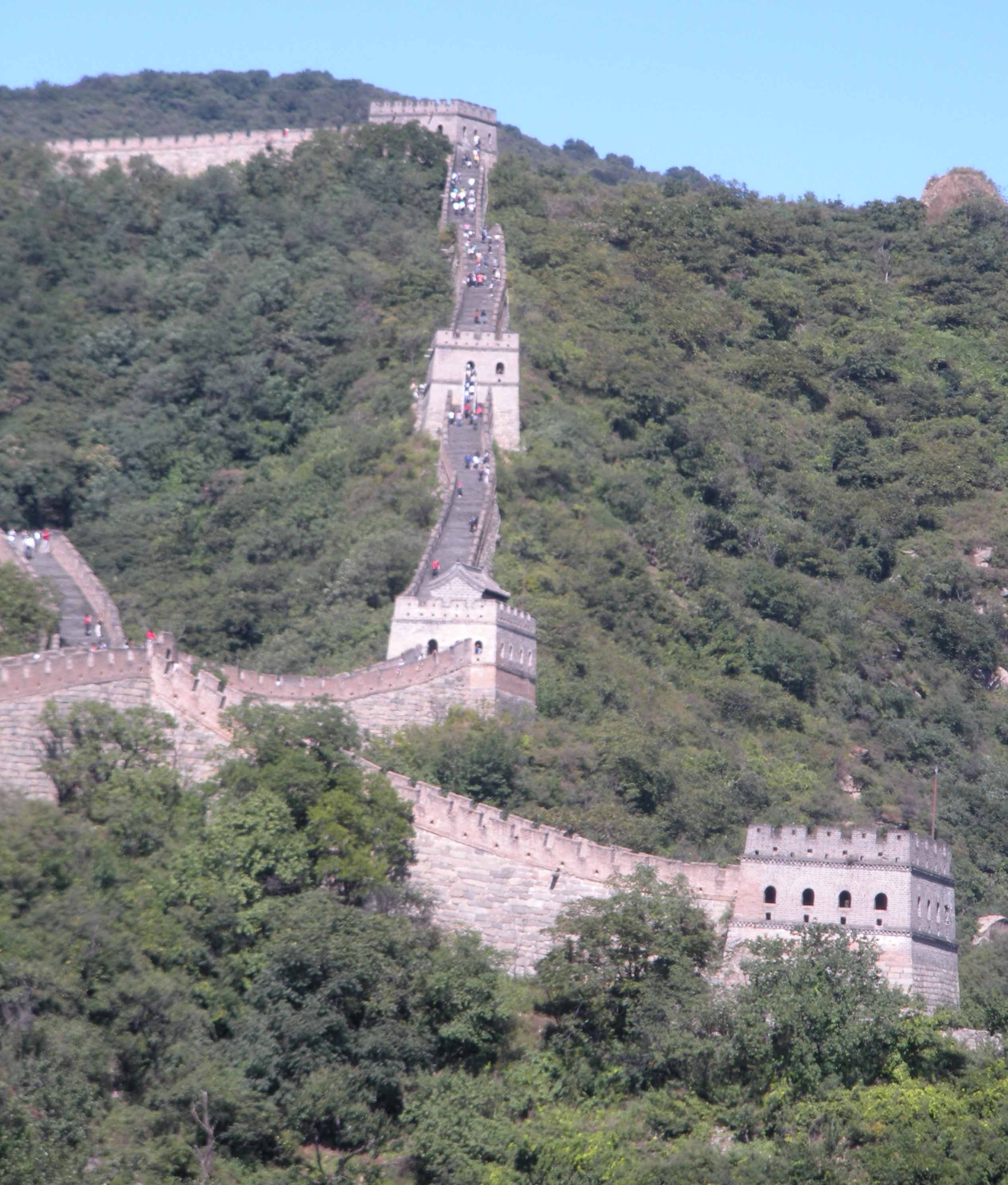
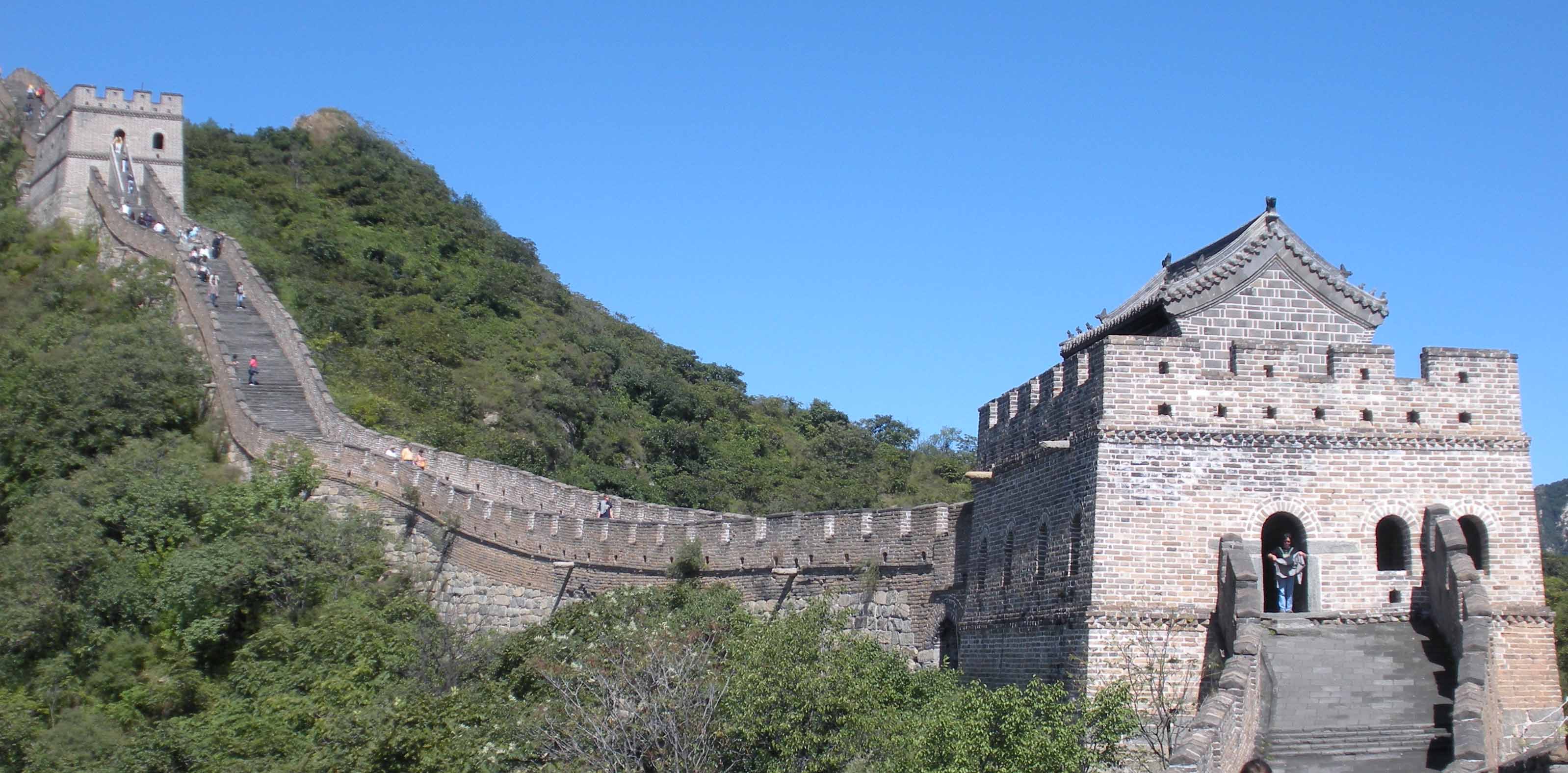
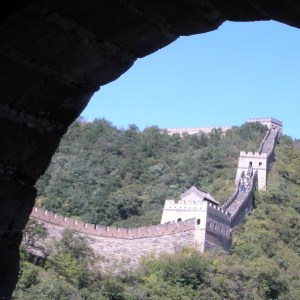
In 1999, we visited The Great Wall at Badaling.  We returned to visit a different section in 2008. The second time, I carried a digital camera (a few of the photos appear with this post).

Smithsonian Magazine reported, “Few cultural landmarks symbolize the sweep of a nation’s history more powerfully than The Great Wall of China. Constructed by a succession of imperial dynasties over 2,000 years, the network of barriers, towers and fortifications expanded over the centuries, defining and defending the outer limits of Chinese civilization. At the height of its importance during the Ming Dynasty (1368-1644), The Great Wall is believed to have extended some 4,000 miles, the distance from New York to Milan.

The sections of The Great Wall we visited are about an hour out of Beijing. The most popular site is at Badaling.  I think the second choice, Mutianyu, is more dramatic. This portion of The Great Wall runs along the ridge of a mountain range. Badaling, meanwhile, starts in a mountain pass fortress.

The best way to reach The Great Wall is by taxi or bus. After you get there, you’ll discover the usual tourist shops. Since I enjoy haggling, I spent time shopping.

At Badaling, there were camels and horses you could pay a fee to sit on while having your photo taken.

Once you reach Mutianyu, you have a choice—take a few hours to climb the mountainside  to The Great Wall or ride a ski lift to the top in fifteen minutes.

China’s Great Wall was not built by one emperor. It was built in segments by the kings of several nations over a period of centuries. Those walls were eventually linked together by China’s first emperor in 221 BC.

When you are on The Wall, if you get thirsty or yearn for a snack, there are vendors that carried their goods up the mountain often using horses.

Once you are ready to leave The Great Wall at Mutianyu, the toboggan ride is worth the price.( see the embedded video with this post)

Continued on April 8, 2016 in Part 3 or start with Part 1

Lloyd Lofthouse is the award-winning author of My Splendid Concubine [3rd edition]. When you love a Chinese woman, you marry her family and culture too. This is the unique love story Sir Robert Hart did not want the world to discover.

#1 - Joanna Daneman review posted June 19 2014

Where to Buy

Subscribe to “iLook China”!
Sign up for an E-mail Subscription at the top of this page, or click on the “Following” tab in the WordPress toolbar at the top of the screen.

About iLook China

China’s Holistic Historical Timeline


On The Great Wall: Part 1 of 3

April 6, 2016

Like so much about China, The Great Wall is also the victim of myths that are not always true. Did you know that the history of the Great Wall of China started when fortifications built by various states during the Spring and Autumn (771 – 476 BC) and Warring States (475 – 221 BC) periods were connected by the first emperor of China, Qin Shi Huangdi? But the best-known and best-preserved section of The Great Wall was built in the 14th through 17th centuries A.D., during the Ming Dynasty—more than two thousand years later.

If you want to know more about The Great Wall, I suggest reading Peter Hessler’s Country Driving. The first part of his book is about the months he spent driving the length of The Great Wall all the way to Tibet.

If you watch the video you will discover that before there was one wall, there were many—all built by different kingdoms before China was unified in 221 BC.

Although I enjoyed reading Country Driving, I think that the hundred and twenty-two pages that focus on The Great Wall are the best part.

Before reading Hessler’s book, I wrongly believed, as so many do, that The Great Wall was a failure as a defense against invaders. However, Hessler proves that myth wrong. For the most part, the wall did keep marauders out.

In fact, on page 116 of the paperback, Hessler quotes David Spindler who found evidence that the Ming Great Wall actually worked as a defensive structure.

The Great Wall failed when the unified Mongols invaded China in the 13th century but it didn’t happen overnight. It took sixty years for the Mongols to conquer all of China.

Before Genghis Khan unified the Mongols, there was no unified Mongolia—only nomadic tribes that fought amongst each other and raided into China whenever one or more tribes decided on a whim to go raiding. That is if they could fight their way past The Great Wall guarding China’s heartland.

Hessler points out that no archeologists or historians have studied the history of The Great Wall but there are amateurs that have, both Western and Chinese, and these Great Wall amateur (experts) have discovered original documents written by Ming Dynasty military officers and troops detailing the defense of the wall against nomads intent on raiding into China to loot, rape and steal. According to this information, the wall succeeded more than it failed.

Continued on April 7, 2016 in Part 2

Lloyd Lofthouse is the award-winning author of My Splendid Concubine [3rd edition]. When you love a Chinese woman, you marry her family and culture too. This is the unique love story Sir Robert Hart did not want the world to discover.

A1 on March 13 - 2016 Cover Image with BLurbs to promote novel

Where to Buy

Subscribe to “iLook China”!
Sign up for an E-mail Subscription at the top of this page, or click on the “Following” tab in the WordPress toolbar at the top of the screen.

About iLook China

China’s Holistic Historical Timeline