Is China a Destination for UFOs?

November 16, 2016

Compelling historical evidence suggests that China had been visited by UFOs for thousands of years, and the visits continue to this day. If true, this helps explain China’s rush to colonize the Moon and Mars first. Business Insider reported that China plans to reach Mars by 2020 and eventually build a moon base, while Elon Musk, the CEO of SpaceX and Tesla, says he plans to put people on Mars in 2025, five years after the goal set by the Chinese.

Are the Chinese in a rush to colonize the solar system first because they have alien friends waiting for them out there?

Open Minds says, “It shouldn’t come as a surprise that many fascinating accounts of flying machines, unexplained celestial observations and close encounters with strange beings can be found quite extensively in historical and literary works from China.”

For instance, ancient Chinese texts tell of long-lived rulers from the heavens, who flew in fire-breathing dragons. I wrote about descriptions from Chinese history that sounded like UFOs in God, Ancient Astronauts and China’s Yellow Emperor.

A partner of the Huffington Post also reported UFO sightings in China, “four lantern-like objects forming a diamond shape … hovered over the city’s Shaping Park for over an hour … flights were diverted in Hangzhou, also in eastern China, after a mysterious object was seen hovering in the sky.”

In addition, there’s a Tibetan book called the Kantyua, which means “the translated word of Buddha”. It tells of flying “pearls in the sky” and of transparent spheres carrying gods to visit man.

There’s also “The Chinese Roswell” by Hartwig Hausdorf, an author who spent years in China uncovering tell-tale traces of an alien mind which may have passed that way millennia ago.

Conservative state-run newspapers and television media often report UFO sightings, and China has a bimonthly UFO magazine devoted to UFO research, The Journal of UFO Research.

Discover China’s First Emperor Qin Shi Huangdi, the man that unified China more than 2,000 years ago.

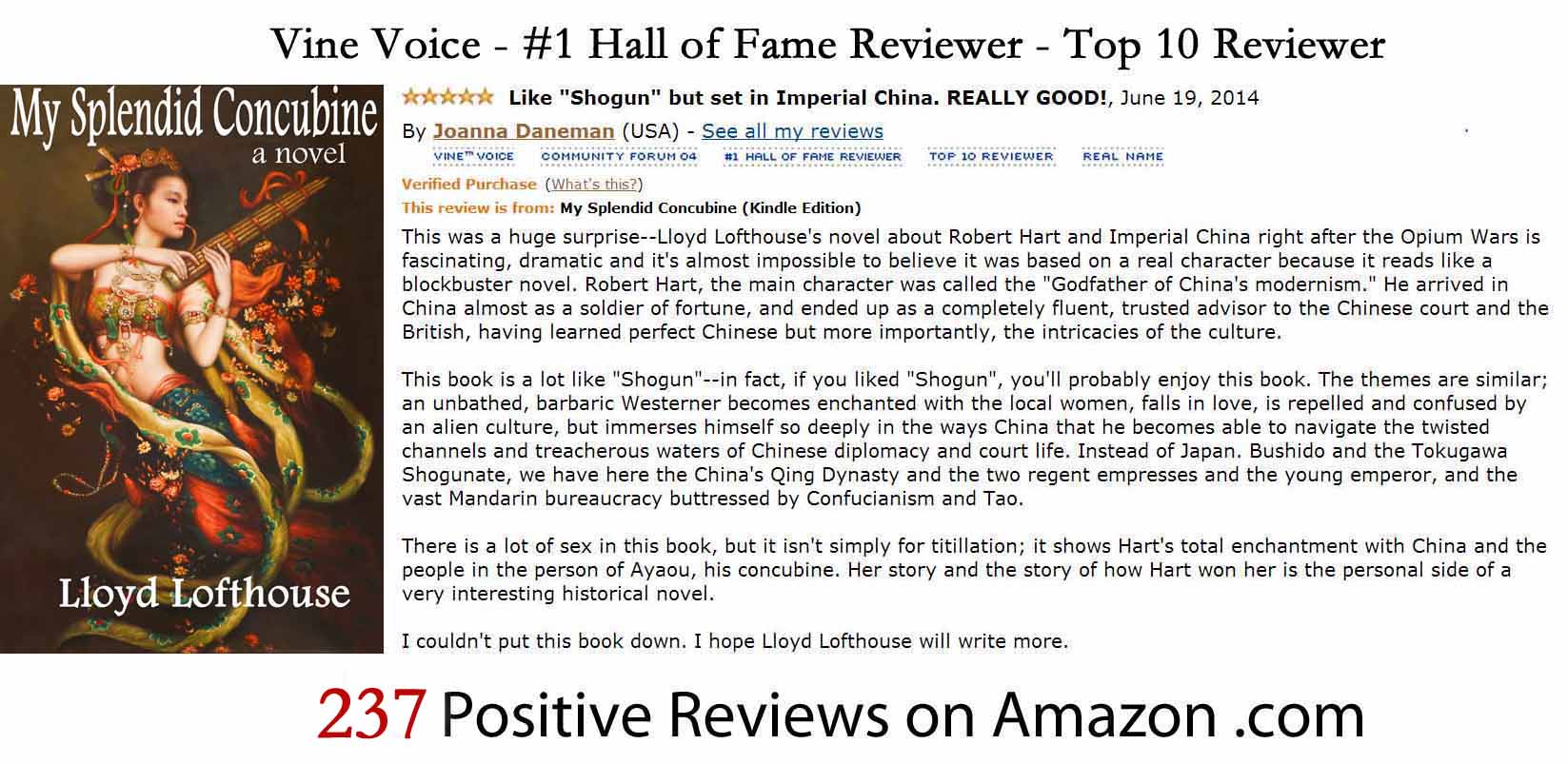
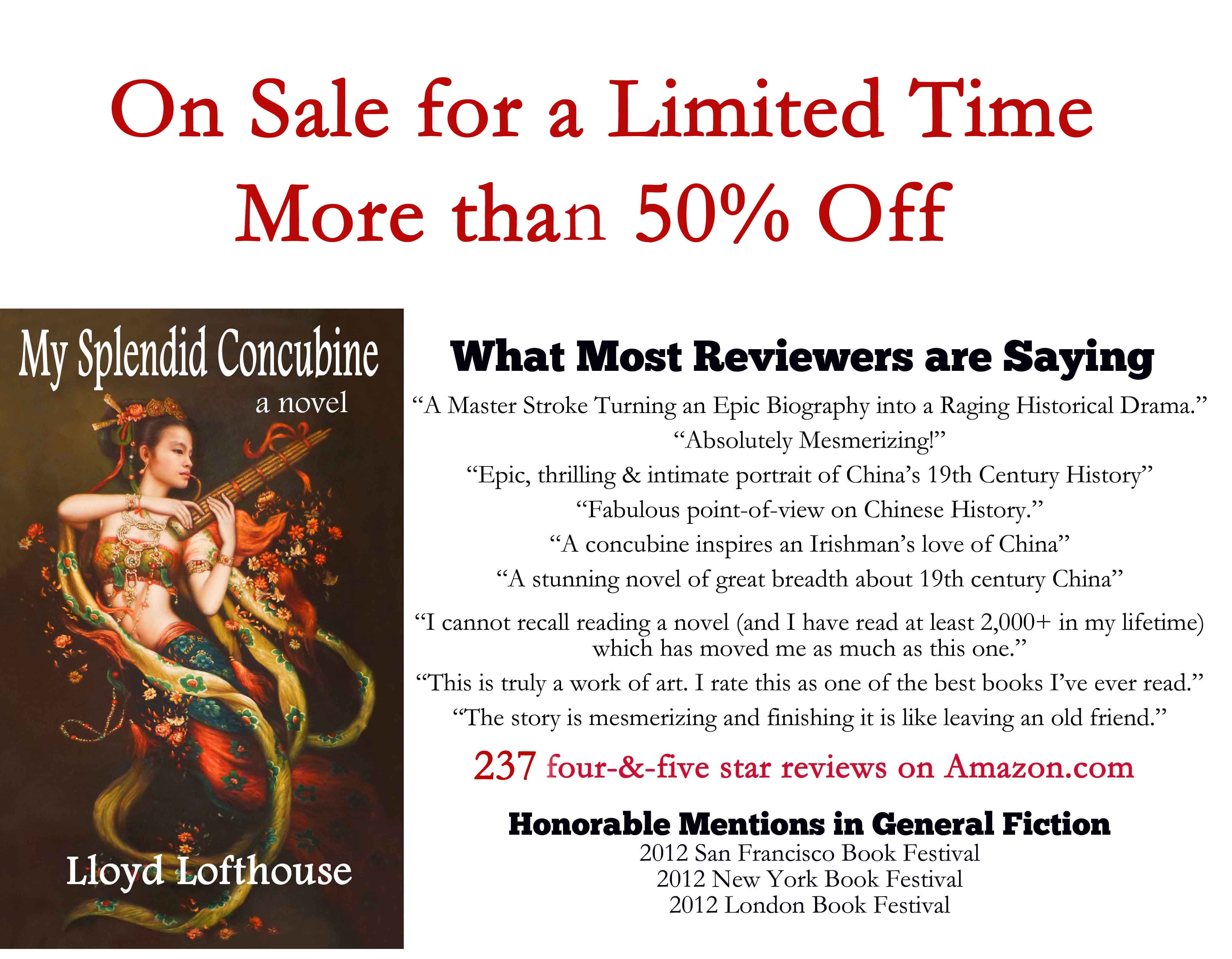
Lloyd Lofthouse is the award-winning author of My Splendid Concubine [3rd edition]. When you love a Chinese woman, you marry her family and culture too. This is the unique love story Sir Robert Hart did not want the world to discover.
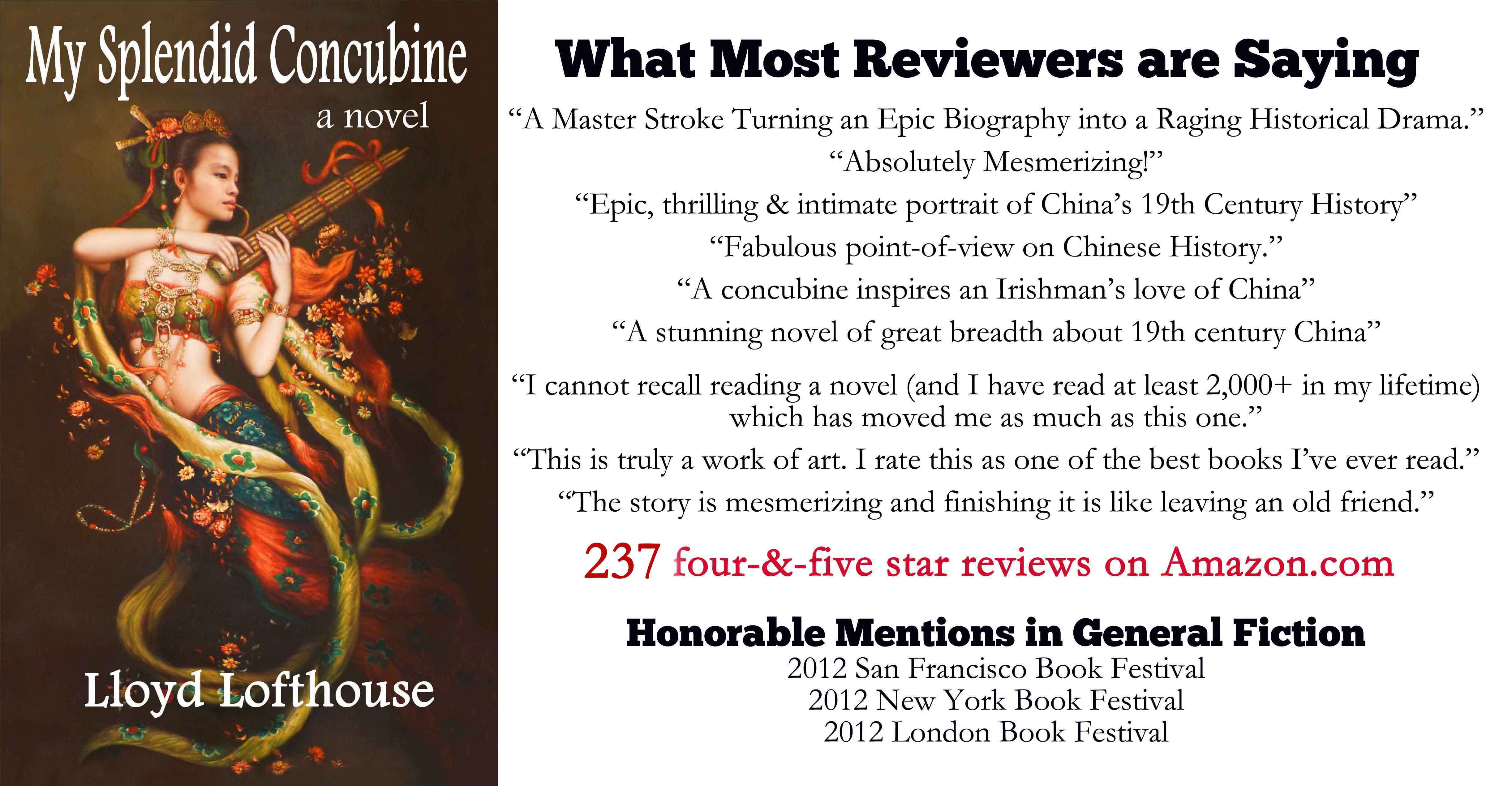
a1-237-promo-cover-on-october-8-2016_edited-1

Where to Buy

Subscribe to “iLook China”!
Sign up for an E-mail Subscription at the top of this page, or click on the “Following” tab in the WordPress toolbar at the top of the screen.

About iLook China

China’s Holistic Historical Timeline


The Caverns of Southeast China

November 15, 2016

National Geographic reports on the Empire or Rock and says, “Beneath southern China’s cone-shaped peaks, arches, and spires lie some of the largest caverns in the world.


China’s Miao Cave

Back in 2008, after checking into a Guilin hotel in Southeast China, we hired a taxi and visited Reed Flute Cave (Ludi Cave) in Northwest Guilin.

Reed Flute Cave was named during the Tang Dynasty (618 – 907 AD) due to reeds (Ludi Cao) growing near the cave’s entrance  still used to make flutes.

There are historical stone ink inscriptions inside the cave dated to 792 AD.


Lucky Turtle Photo taken by Lloyd Lofthouse

Millions have walked these paved pathways. Reed Flute Cave has been an attraction for over a thousand years, and the tour lasts about an hour.

During Times of war, the local people would hide in the cave. One grotto, the Crystal Palace of the Dragon King, has room for a thousand people.

Crown Cave and Seven-Star Cave were other underground attractions, but it was late and the next day we were on our way to cruise the Li River.

Discover Wu Zetian, China’s only female emperor

Lloyd Lofthouse is the award-winning author of My Splendid Concubine [3rd edition]. When you love a Chinese woman, you marry her family and culture too. This is the unique love story Sir Robert Hart did not want the world to discover.

a1-237-postive-reviews-october-8-2016_edited-5

Where to Buy

Subscribe to “iLook China”!
Sign up for an E-mail Subscription at the top of this page, or click on the “Following” tab in the WordPress toolbar at the top of the screen.

About iLook China

China’s Holistic Historical Timeline


A Brief Political History of Hong Kong

November 9, 2016

The history of democracy in Hong Kong is so short it doesn’t exist.

China never willingly gave Hong Kong to the British Empire in 1842. Instead, China lost Hong Kong during the Opium Wars, and later leased adjacent terrorists to the British under pressure in 1860 at the end of the Second Opium War when the UK gained a perpetual lease over the Kowloon Peninsula that’s across the strait from Hong Kong Island. This agreement was part of the Convention of Beijing that ended that war, a war started by England and France.  In each case the British Empire, France, and the United States, were victorious and gained commercial privileges and legal and territorial concessions in China. The conflicts over the opium trade marked the start of the era of unequal treaties.

Then in 1898, the British and Chinese governments signed the Second Convention of Peking, which included a ninety-nine year lease agreement for the islands surrounding Hong Kong, called the New Territories.

Fast forward ninety-nine years; on December 19, 1984, British Prime Minister Margaret Thatcher and Chinese Premier Zhao Ziyang signed the Sino-British Joint Declaration, and Britain agreed to return not only the New Territories but also Kowloon and Hong Kong itself when the lease term expired on July 1, 1997. China promised to implement a One Country, Two Systems policy, so for fifty years Hong Kong citizens could continue to practice capitalism and political freedoms forbidden on the mainland.

However, for most of its history under British rule, executive power in Hong Kong was concentrated in the hands of the colony governor, a position appointed by the British crown without any democratic input from Hong Kong citizens. The introduction of elected representatives determined by local elections was limited to the role of advisory councils, and that didn’t start until after the 1984 agreement by the British to hand Hong Kong over to China.

Discover China’s First Emperor Qin Shi Huangdi, the man that unified China more than 2,000 years ago.

Lloyd Lofthouse is the award-winning author of My Splendid Concubine [3rd edition]. When you love a Chinese woman, you marry her family and culture too. This is the unique love story Sir Robert Hart did not want the world to discover.

on-sale-for-limited-time-oct-nov-2016

Where to Buy

Subscribe to “iLook China”!
Sign up for an E-mail Subscription at the top of this page, or click on the “Following” tab in the WordPress toolbar at the top of the screen.

About iLook China

China’s Holistic Historical Timeline


The Complex History of Buddhism

November 1, 2016

Siddhartha Gautama, the historical Buddha, lived in the 5th or 6th Century B.C. He was born in Nepal and his father was the king of the Sakya people.  After he attained enlightenment at the age of thirty-five, Buddha preached the Dharma in an effort to help others reach enlightenment too.

Unlike the other major religions, Buddhism does not have a god like the Christian, Jewish or Islamic God.  Buddha is not a deity or supreme being. The Buddha believed that religious ideas and especially the god concept have their origin in fear.

Several centuries later during the Han Dynasty in the first century B.C., trade with Central Asia introduced Buddhism to China.  Over the centuries, interest in Buddhism grew.  However, due to Confucianism and Taoism, the Chinese adapted Buddhist scripture to fit the Chinese culture creating the Mahayana sect that spread to Korea and Japan.

Like most major religions, there are subdivisions within Buddhism but most may be classified into three. This is why Southeast Asian Buddhists differ from the Chinese.  The Theravada form of Buddhism is found in Southeast Asia in countries like Burma, Thailand, Cambodia and Laos.

Tibetan Buddhism incorporates other beliefs, and there are four principal schools or types of Tibetan Buddhism. The Dalai Lama is the spiritual leader of one of the four, the Yellow Hat sect.

Buddhism in China reached its high point during the Tang Dynasty, 618 to 907. However, in 845 AD, the Tang emperor suppressed Buddhism and destroyed thousands of monasteries, temples and shrines.

Soon after Mao and the Communists won China’s Civil War with the Nationalists under Chiang Kai-shek, Buddhism flourished for a time but was repressed during the Cultural Revolution (1966 – ‘76) along with all other religions. Many monasteries and Buddhist texts were destroyed. After Mao died in 1976, many of the major monasteries were rebuilt under the leadership of Deng Xiaoping.

In 2012, the Pew Research Center reported there were about 488 million Buddhists worldwide, and about 244 million, half, are in China.

Discover Wu Zetian, China’s only female emperor

Lloyd Lofthouse is the award-winning author of My Splendid Concubine [3rd edition]. When you love a Chinese woman, you marry her family and culture too. This is the unique love story Sir Robert Hart did not want the world to discover.

on-sale-october-november-2016

Where to Buy

Subscribe to “iLook China”!
Sign up for an E-mail Subscription at the top of this page, or click on the “Following” tab in the WordPress toolbar at the top of the screen.

About iLook China

China’s Holistic Historical Timeline


Does China have its own version of Halloween?

October 31, 2016

The closest celebration in China to Halloween in the United States is The Hungry Ghost Festival celebrated the 14th or 15th night of the 7th lunar month in July or August. This year that day fell on August 17th.

The Ghost Festival, also known as The Hungry Ghost Festival, is a traditional Chinese festival and holiday celebrated by Chinese in many countries, in which ghosts and/or spirits of deceased ancestors come from the lower realm and/or hell to visit the living.

Buddhists and Taoists in China claim that the Ghost Festival originated with the canonical scriptures of Buddhism, but many of the visible aspects of the ceremonies originate from Chinese folk religion, and other local folk traditions (The Ghost Festival in Medieval China by Stephen Teiser).

In America, most children wear costumes and go door to door collecting free candy.  In China, the opposite takes place; food is offered to dead ancestors, joss paper is burned, and scriptures are chanted.

Chinese Culture.net says the Hungry Ghost Festival is “Celebrated mostly in South China, Hong Kong, Taiwan and especially in Singapore and Malaysia.” It is believed by many Chinese that during this month, the gates of hell are opened to let out the hungry ghosts who want food.

By comparison, History.com says, “Halloween’s origins date back to the ancient Celtic festival of Samhain (pronounced sow-in). The Celts, who lived 2,000 years ago in the area that is now Ireland, the United Kingdom and northern France, celebrated their new year on November 1. This day marked the end of summer and the harvest and the beginning of the dark, cold winter, a time of year that was often associated with human death. Celts believed that on the night before the New Year, the boundary between the worlds of the living and the dead became blurred.”

I think it’s interesting that the dead linked both America’s Halloween and China’s Hungry Ghost Festival, at least historically.

As a child, I loved wearing a costume on Halloween and going out “trick-or-treating” at night to return home with a heavy bag (usually a pillowcase) filled with candy.

I still remember how much my stomach hurt and how terrible I felt after gorging myself on all that free processed sugar.

Today, due to the epidemic of diabetes and overweight or obese children in the United States (also in China mostly among its new middle class), I stopped celebrating Halloween years ago, and do not give candy to children. The last time I gave treats to children on Halloween, I handed out small boxes of raisins (sweet dried grapes) instead of candy, and one mother called me cheap.

But Science Daily.com comes to my defense with: “Teenagers who consume a lot of added sugars in soft drinks and foods may have poor cholesterol profiles—which may possibly lead to heart disease in adulthood, according to first-of-its-kind research reported in Circulation: Journal of the American Heart Association.”

In fact, the Centers for Disease Control and Prevention reports, “Teenagers and young adults consume more sugar drinks than other age groups and have been linked to poor diet quality, weight gain, obesity, and, in adults and children, type 2 diabetes.”

The American Diabetes Association says, “25.8 million children and adults in the US have diabetes while 79 million have prediabetes. Due to excessive sugar consumption, the risk of diabetes may lead to heart disease, stroke, high blood pressure, blindness, kidney disease, nervous system disease, and/or amputation of feet and legs.”

Maybe Americans should learn something from the Chinese Hungry Ghost Festival. Do not feed that sweet addictive candy to children.  Instead, give the sugar to the dead and have your children eat apples, because there’s a lot of truth to the old saying that if you eat an apple a day, it will help keep the doctor away. If you doubt that, read this from Science Daily.

Discover Anna May Wong, the woman that died a thousand times.

Lloyd Lofthouse is the award-winning author of My Splendid Concubine [3rd edition]. When you love a Chinese woman, you marry her family and culture too. This is the unique love story Sir Robert Hart did not want the world to discover.

on-sale-october-november-2016

Where to Buy

Subscribe to “iLook China”!
Sign up for an E-mail Subscription at the top of this page, or click on the “Following” tab in the WordPress toolbar at the top of the screen.

About iLook China

China’s Holistic Historical Timeline