Four Equals One China—Minority China Continued (Part 6 of 7)

May 16, 2010

The Mongol minority and the Manchu both conquered and ruled China for a time. The Mongols were the Yuan Dynasty (1277-1367) and the Manchu were the Qing Dynasty (1644-1911). China’s largest expansion took place under the Yuan and the Qing. The Yuan occupied Tibet followed by the Ming Dynasty (1368-1643) and then the Qing.

If you are one of the skeptics who believe Tibetan separatists whom claim China never ruled Tibet, I direct you to the October 1912 issue of “National Geographic Magazine” or “The I.G. In Peking, Letters of Robert Hart, Chinese Maritime Customs, 1868 – 1907” where Sir Robert Hart mentioned Tibet in more than fifty of his letters in two volumes published by Belknap Press of Harvard University Press, ISBN 0-674-44320-9.

Since I wanted to see the original, I bought a copy of the October 1912 issue of National Geographic Magazine on e-bay, and it cost $20 plus shipping.

Go to Four Equals One China: Part 7 or discover China’s 56 minorities

_______________

Lloyd Lofthouse is the award-winning author of My Splendid Concubine [3rd edition]. When you love a Chinese woman, you marry her family and culture too. This is the love story Sir Robert Hart did not want the world to discover.

Subscribe to “iLook China”!
Sign up for an E-mail Subscription at the top of this page, or click on the “Following” tab in the WordPress toolbar at the top of the screen.

About iLook China

a


Four Equals One China—Minority China (Part 5 of 7)

May 16, 2010

There are 56 ethnic Chinese minorities with about 100 million people among them. These minorities have their own languages and cultures. The majority, the Han Chinese, have seven languages. There is one written language in China.

Learning Mandarin and English are mandatory in the public schools. It is expected and mandatory that “all” students will spend 11 years in school.

Until the 11th, Five-Year Plan, urban schools were much better than China’s rural schools.  It’s too early to see the results yet. After all, it took more than three decades to achieve what China has already accomplished.

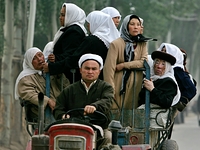
Uighurs in Xinjiang province

The two minorities best known outside China are the Tibetans (4.6 million) and the 8 million Uighurs in China’s northwest Xinjiang province. Few of the province’s Uighurs speak the national language of Mandarin. They are educated in their own tongue in Uighur schools, and they are treated in Uighur hospitals that they claim are sub-par.

The Uighurs have a history of insurrection with the Qing Dynasty (1644-1911). There were several rebellions during the 19th century that were put down ruthlessly by the Manchu.

Go to Four Equals One China: Part 6

_______________

Lloyd Lofthouse is the award-winning author of My Splendid Concubine [3rd edition]. When you love a Chinese woman, you marry her family and culture too. This is the love story Sir Robert Hart did not want the world to discover.

Subscribe to “iLook China”!
Sign up for an E-mail Subscription at the top of this page, or click on the “Following” tab in the WordPress toolbar at the top of the screen.

About iLook China


Four Equals One China—Rural China (Part 4 of 7)

May 16, 2010

It is estimated that 57% (741 million) Chinese still live in rural areas made up primarily of primitive villages that have not changed much from the way things were during the first-half of the 20th century.

Rural village in China

Up until recently, rural China received the least support to modernize during China’s transition from its dark ages into the modern age.

In October 2009, China’s National People’s Congress, the Politburo Standing Committee and Hu Jintao, the president of China, approved the 11th, Five-Year Plan that focuses on bringing modern infrastructure to improve living conditions in rural China.

Historians and experts have written and said that what China has achieved since 1980 is a miracle that no other nation in history has managed to achieve. No nation has modernized as fast. It took more than a century for America to achieve what China has done in thirty years.

Go to Four Equals One China: Part 5 or discover China’s Stick People

_______________

Lloyd Lofthouse is the award-winning author of My Splendid Concubine [3rd edition]. When you love a Chinese woman, you marry her family and culture too. This is the love story Sir Robert Hart did not want the world to discover.

Subscribe to “iLook China”!
Sign up for an E-mail Subscription at the top of this page, or click on the “Following” tab in the WordPress toolbar at the top of the screen.

About iLook China


Four Equals One China—Urban China (Part 3 of 7)

May 15, 2010

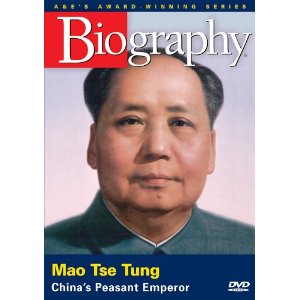
In 1949, when Mao came to power, 0.005 kilowatts of electricity were being generated in China.  Most of China did not have electricity or modern roads. In 1950, most of China was the same as it had been for centuries.

Soon after Mao’s death, China entered a transition that isn’t over. There was a period of planning and then the miraculous modernization of China that the world has seen since 1980 began.

China’s first 10, five-year plans focused on modernization and growth in urban areas. Urban China started with about 250 million people. As China became the world’s factory floor, the largest migration in human history took place and 300 hundred million rural Chinese moved to urban China to work in factories. Today, urban China has about 550 million people with more than a hundred cities with populations over a million. Trillions have been spent developing cities like Shanghai, Beijing and others.

To discover more about this modernization transition taking place in China, read Pop-Up Cities: China Builds a Bright Green Metropolis by Douglas McGray.  By 2020, China plans to build four hundred new, modern cities at a rate of 20 each year.

Go to Four Equals One China: Part 4 or Discover After Mao

_______________

Lloyd Lofthouse is the award-winning author of My Splendid Concubine [3rd edition]. When you love a Chinese woman, you marry her family and culture too. This is the love story Sir Robert Hart did not want the world to discover.

Subscribe to “iLook China”!
Sign up for an E-mail Subscription at the top of this page, or click on the “Following” tab in the WordPress toolbar at the top of the screen.

About iLook China


Four Equals One China—Communist China Continued (Part 2 of 7)

May 15, 2010

The previous president selected the current president of China. After the selection, the candidate must be approved by the Politburo Standing Committee, which usually has between five and nine members, usually men. They are China’s top leadership. This is where major decisions are made and/or approved. They are the most powerful decision making body in China.

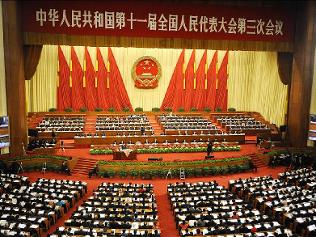
The Great Hall of the People in Beijing

China’s Constitution does not allow anyone to stay a member of the Standing Committee for longer than two, five-year terms and mandatory retirement is sixty-seven. In 2012, all current members will be replaced. Both the national media as well as political watchers abroad closely watch standing Committee members.

Once the candidate for president has been approved, the National People’s Congress votes on the nomination.  The National Congress of China has 2,987 members. Two thousand ninety-nine are members of the Communist party and eight-hundred and eighty-eight do not belong to the Communist Party. They meet in the Great Hall of the People in Beijing.

Go to Four Equals One China: Part 3

Why is China Studying Singapore?

_______________

Lloyd Lofthouse is the award-winning author of My Splendid Concubine [3rd edition]. When you love a Chinese woman, you marry her family and culture too. This is the love story Sir Robert Hart did not want the world to discover.

Subscribe to “iLook China”!
Sign up for an E-mail Subscription at the top of this page, or click on the “Following” tab in the WordPress toolbar at the top of the screen.

About iLook China