ShangDi – China’s God of Creation

August 30, 2010

China is the oldest, continuous civilization on the earth. Ancient records date back to about  2500 B.C. and coincides with the Biblical timeline, which shows that the great flood took place around 2344 B.C. Source: Bible Study – Flood

Ancient Chinese myth has their first king, Fu-hi or Fohi (Chinese Noah) making his appearance on the Mountain of Chin surrounded by a rainbow after the world had been covered with water.  Myth says this Chinese Noah also sacrificed animals to God.

The Miao tribe of Southwest China has a similar myth. According to the Miao, God destroyed the world by flood because of the wickedness of man. The myth also says Nuah (Noah) had three sons: Lo Han (Ham), Lo Shen (Shem), and Jah-hu (Japheth). Source: Silvia Videler

“ShangDi, the Creator-God of the Chinese, surely appears to be one and the same as the Creator-God of the Hebrews.” Source: Answer in Genesis

“One of the earliest accounts of the Border Sacrifice is found in the Shu Jing (Book of History), compiled by Confucius (551 to 479 B.C.), where it is recorded that Emperor Shun (2256 to 2205 B.C.) sacrificed to ShangDi.” Source: Answer in Genesis

ShangDi is the High God of the ancient Chinese.  He was worshiped as the Creator God for thousands of years. ShangDi was known as the Heavenly Ruler and the Chinese emperors were known as the Sons of Heaven.  No other god was higher or more powerful.

Evidence says that the ancient Chinese understood the nature of God as the ancient Hebrews did after Abraham (1812 B.C. to 1637 B.C.), who is considered the father of the Jews (about 3,000 years old), Christians (about 2,000 years old) and Muslims (about 1,400 years old).

While the ancient Egyptians, Greeks and Romans worshiped many gods, the Chinese worshiped one God above all others, ShangDi. If true, that would mean the Chinese might have believed in God longer than the Jews, Christians or Muslims.

In fact, it appears that the Chinese believed in God (ShangDi) without an organized religion for more than four thousand years.

Discover The Question of Religion

_______________

Lloyd Lofthouse is the award-winning author of My Splendid Concubine [3rd edition]. When you love a Chinese woman, you marry her family and culture too. This is the love story Sir Robert Hart did not want the world to discover.

Subscribe to “iLook China”!
Sign up for an E-mail Subscription at the top of this page, or click on the “Following” tab in the WordPress toolbar at the top of the screen.

About iLook China


Hsuan-tsang – From China to India for Enlightenment

August 27, 2010

I mentioned Hsuan-tsang (Xuanzang) when I wrote about China’s Three “Journey’s to the West”. However, in that post I did not go into detail about the real Buddhist monk who made the journey.

While doing some research about his life, I discovered an intellectual discussion at Philosophy and Marxism Today.  If this topic interests you and you want to learn more about Buddhism I recommend reading this conversation between Thomas Riggins and Fred.

Thomas starts with, “I’ll start with background based on Chan’s introductory remarks.

“Hsuan-tsang (596-644) was quite a character. He entered a Buddhist monastery when he was thirteen. Then moved around China studying under different masters. Finally, he went off to India to study Buddhism at its source and with Sanskrit masters.

“He spent over ten years in India, wrote a famous book about his journey, and returned to China with over six hundred original manuscripts.

“He spent the rest of his life with a group of translators rendering seventy five of the most important works into Chinese. All of this work was sponsored by the Emperor of the newly established T’ang Dynasty (618 – 906 AD).”

The book I have on Hsuan-tsang says he lived from 602 to 664 AD.

_______________

Lloyd Lofthouse is the award-winning author of the concubine saga, My Splendid Concubine & Our Hart. When you love a Chinese woman, you marry her family and culture too. 

Sign up for an RSS Feed for iLook China


Train to Tibet

August 26, 2010

Many know Tibet as the Roof of the World. For centuries, Tibet was isolated mostly because it was difficult for anyone to go there—even armies.

In 1903, the British Empire sent an army to Tibet to protect its interests, and it took a year for Sir Francis Younghusband’s invasion force to reach Lhasa in August 1904.

A book was written about that invasion, The British Empire & Tibet 1900-1922. Asian Affairs says, “The great value of Dr. Palace’s study is to highlight the much neglected China angle to the Tibetan issue … [this book is] helping to indicate the very important place of the Tibetan affair in the story of Western imperialism”

Today, the journey to Tibet is not as daunting.  Besides an airport, there is the train to Tibet that leaves Beijing and arrives in Lhasa forty-eight hours later. 

Tourists, both foreign and Chinese, take the train to Tibet to learn more about the people while others stay—changing the demographics.

The train sometimes reaches elevations over 5,000 meters (16,404 feet).

One Western tourist, who had been to Tibet twice, said that the ethnic groups in Tibet are not mixing together. She said there was a Chinese area and another where Tibetans lived.

Makes sense—in American cities emigrants tend to stay close to their kind. In the past, there have been Irish areas, Jewish, German and today there are Vietnamese or Latin or Chinatowns in the U.S.

See Traveling to Tibet

______________

Lloyd Lofthouse is the award-winning author of the concubine saga, My Splendid Concubine & Our Hart. When you love a Chinese woman, you marry her family and culture too.

If you want to subscribe to iLook China, there is a “Subscribe” button at the top of the screen in the menu bar.


Sun Tzu’s “The Art of War” – Part 10/10

August 24, 2010

On the third day of Gettysburg during Picket’s charge up another hill, only 5,000 survived of 12,000 troops.  Sun Tzu would have been horrified.

Sun Tzu says, “When troops flee, are insubordinate, collapse or are routed in battle, it is the fault of the general.”

Sun Tzu sees a commanding general as someone intelligent and cunning and never rash or arrogant, which is the opposite of the commander of the Chu army more than two thousand years ago.

Sun Tzu won the war against Chu, which had an army ten times larger than his. He did this through preparation, deception and indirect attacks.

After winning the war against Chu, Sun Tzu retires and writes The Art of War.

The first line of Sun Tzu’s rules of war says, “War is a matter of vital importance to the State. It is a matter of life and death, survival or ruin.

Continued in Conclusion to Sun Tzu’s The Art of War, return to Sun Tzu’s The Art of War (HQ)- Part 9 or start with Part 1

Lloyd Lofthouse is the award-winning author of My Splendid Concubine [3rd edition]. When you love a Chinese woman, you marry her family and culture too. This is the unique love story Sir Robert Hart did not want the world to discover.

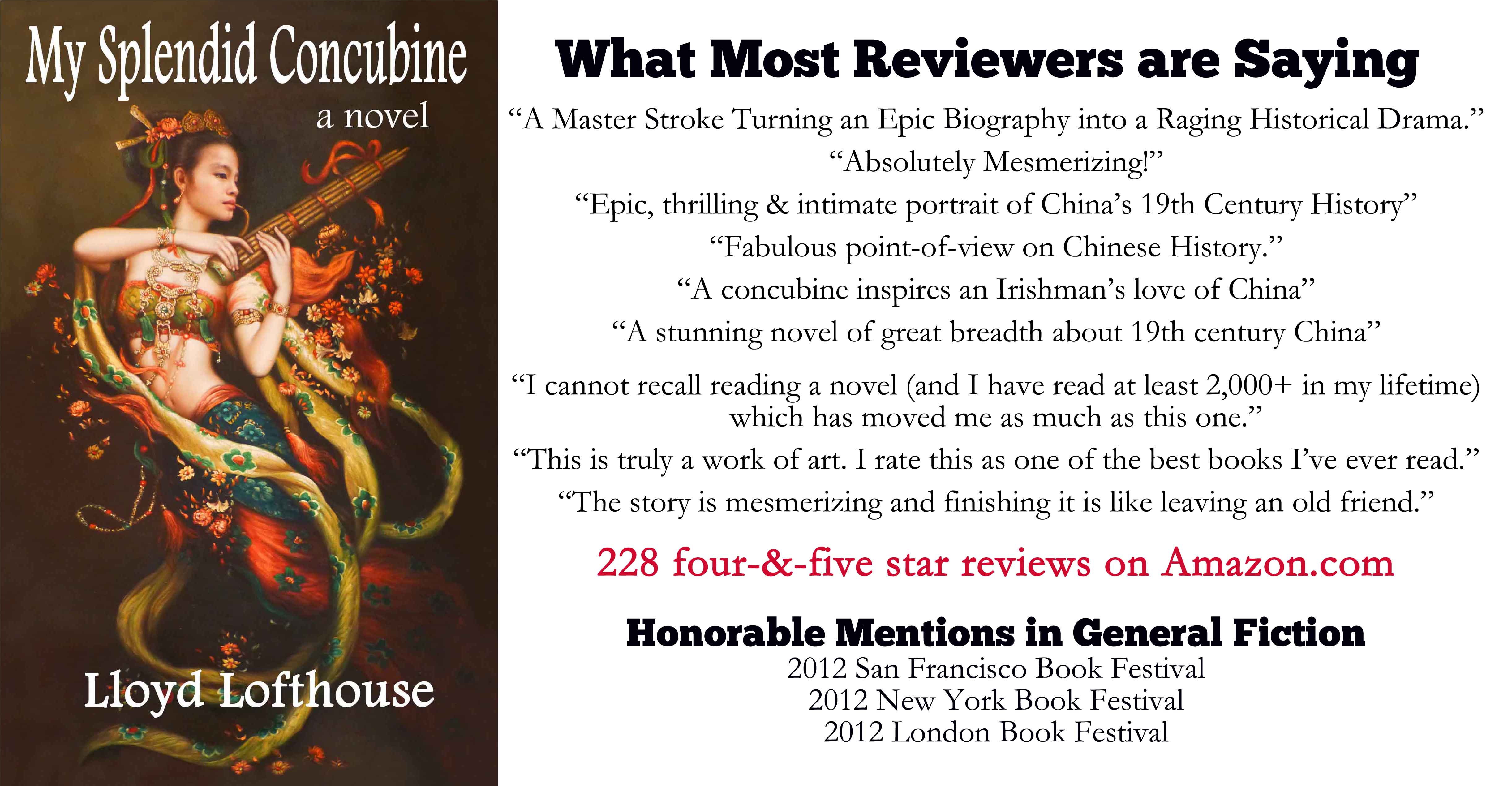
A1 on March 13 - 2016 Cover Image with BLurbs to promote novel

Where to Buy

Subscribe to “iLook China”!
Sign up for an E-mail Subscription at the top of this page, or click on the “Following” tab in the WordPress toolbar at the top of the screen.

About iLook China

China’s Holistic Historical Timeline


Sun Tzu’s “The Art of War” – Part 9/10

August 24, 2010

China’s Sun Tzu says if the orders are unclear, it is the fault of the commanding general.

General Lee told one of his generals to “Attack when you think it is practical.”  That general decides it isn’t practical and does nothing.

At the Battle Gettysburg, Lee did not give clear orders.

Robert E. Lee made a tactical mistake when he did not follow Sun Tzu’s rule to “Move only when you see an advantage and there is something to gain. Only fight if a position is critical.”

Sun Tzu says, “When the enemy occupies high ground, do not confront him.  If he attacks downhill. do not oppose him.”  Robert E. Lee didn’t listen and decides to attack the Union positions on the high ground.

General Longstreet disagrees.  He does not want to attack the high ground.  Instead, he wants to go around the Union Army toward the North’s capital, Washington D.C.

Sun Tzu says, “There are some armies that should not be fought and some ground that should not be contested.”

After two days of horrible losses, Robert E. Lee orders what’s left of his army to attack uphill a third time.  General Longstreet urges Lee not to do this. Lee ignores him.

Go to Sun Tzu’s “The Art of War” – Part 10 or return to Sun Tzu’s “The Art of War” – Part 8

Lloyd Lofthouse is the award-winning author of My Splendid Concubine [3rd edition]. When you love a Chinese woman, you marry her family and culture too. This is the unique love story Sir Robert Hart did not want the world to discover.

A1 on March 13 - 2016 Cover Image with BLurbs to promote novel

Where to Buy

Subscribe to “iLook China”!
Sign up for an E-mail Subscription at the top of this page, or click on the “Following” tab in the WordPress toolbar at the top of the screen.

About iLook China

China’s Holistic Historical Timeline