An Invasion of Tasty Killers

August 7, 2010

Since the launch of China’s “Getting Rich is Glorious” generation, American fast food has become popular in urban China with plans to invade rural areas.

Currently, a study that received a “majority of its support from the Chinese people and Chinese government” called the China Project is being conducted to observe the relationship of disease patterns to diet, particularly the move from the traditional Chinese diet to US fast food. 

Professor T. Colin Campbell, an “outspoken vegan”, has implicated the increased consumption of animal protein in particular as having a strong correlation with cancer, diabetes, heart disease, and other diseases that, while common in Western countries, were once considered rare in China. 

Diabetes Mellitus says that a diet rich in refined carbohydrates is a major factor responsible for diabetes. 

Obesity is also a major factor. Although no one has discovered how sugar contributes to diabetes, it is the most well known sugar related disorder. Source: Innvista

Wellsphere shows that as sugar consumption goes up, fatal diseases increase.

In fact, The processing of sugar follows the same trail as the opium poppy. It has habit-forming sensory pleasures just as heroin, opium, and alcohol, meaning that what opium did to China in the 19th century, Western fast food is doing today.

If you want to learn more about the dangers of sugar, see 76 Reasons Why Sugar Sucks.

See The Opium Wars

_______________

Lloyd Lofthouse is the award-winning author of the concubine saga, My Splendid Concubine & Our Hart. When you love a Chinese woman, you marry her family and culture too. 

Sign up for an RSS Feed for iLook China


The Han Dynasty (3/3)

August 4, 2010

In one king’s tomb, there is a dining room and living room before reaching the inner-most chambers where the king’s casket was discovered. The casket is decorated on the outside with more than one-thousand jade pieces from Xianjiang, which is in the far northwest of China and was part of the Han Empire.

The king’s body was still intact and was dressed in a gold-threaded jade suit. Small pieces of jade were stitched together with solid gold threads/wires.  These suits were made for the highest-ranking Han nobles. The kings even took music with them into the afterlife along with terra-cotta dancers.

A tour of Xuzhou shows that the citizens are proud of their heritage.  It was during the Han Dynasty that the Silk Road and trade with the West was started.

Return to Part 2 of the Han Dynasty

_______________

Lloyd Lofthouse is the award-winning author of the concubine saga, My Splendid Concubine & Our Hart. When you love a Chinese woman, you marry her family and culture too. 

Sign up for an RSS Feed for iLook China


China’s New National Holiday, the Rice Cake Festival

June 20, 2010

My wife mentioned that China had a new national holiday, The Rice Cake Festival. When I learned about The Festival of the Hungry Ghost, I wrote about that as I did The Dragon Boat Festival and the Spring Festival – Year of the Tiger.

I decided to discover more about this new holiday—and Google, which rarely disappoints, had nothing specific. I read that diplomats from 26 countries gathered in Taiwan to celebrate the Lantern Festival by making rice cakes, and Korean and Vietnamese sites mentioned Rice Cake Festivals but nothing about China having one.

Zongzi, Chinese sticky-rice cakes

There were videos on YouTube on making rice cakes. The Chinese version of a sticky rice cake video was similar to the process my wife uses. However, besides the essential sticky rice, the other ingredients are optional. My wife has made sticky rice cakes with only rice, raisins and black beans. She also said that for centuries, Silk Road caravans leaving China carried rice cakes as rations since they have a long shelf life.

When I checked a list of China’s Public Holidays, the only one listed for June was the Dragon Boat Festival. Then I read that “Zongzi”, traditional rice cakes wrapped in bamboo leaves, are eaten during the Dragon Boat Festival, a three-day holiday.

______________

Lloyd Lofthouse is the award-winning author of the concubine saga, My Splendid Concubine & Our Hart. When you love a Chinese woman, you marry her family and culture too. 

If you want to subscribe to iLook China, there is a “Subscribe” button at the top of the screen in the menu bar.


The Magic of Ginseng

June 17, 2010

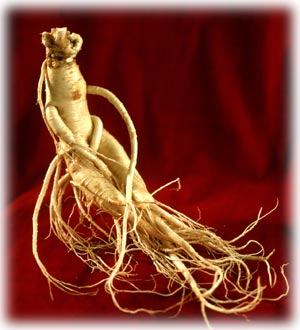
My wife often cooks with ginseng. She slices the ginseng thin and it goes into the wok with what she is cooking—tofu, cabbage, edamame, Bok Choy, etc.  Ginseng is a dried root that the Chinese believed possesses magical powers because it’s shaped sort of like a little person.

ginseng

The Chinese use Ginseng as a powerful herbal medicine too. At one time, modern scientists rejected these claims, but recent research shows it does help the body resist illness and heal damage caused by stress by stimulating the immune system. Since I only eat food my wife cooks with ginseng, I’ve never taken the herb for its healing properties but I love what it does for flavor.

Records in China show that ginseng was used as an herbal medicine over 3,000 years ago and in cooking as far back as 5,000 years. Chinese emperors valued Ginseng enough to pay for the herb with its weight in gold.  In America, ginseng was also used by several North American Indian nations. Source: Ancient Ginseng History

Discover Tofu

_______________________

Lloyd Lofthouse is the author of the award winning My Splendid Concubine and writes The Soulful Veteran and Crazy Normal.

Sign up for an RSS Feed for iLook China


Kombucha Fermented Tea

May 30, 2010

Sometimes I wonder about the sanity of most Americans.  It seems they will drink or eat anything that arrives pretty on a plate or in a fancy bottle. I  read a piece this morning that said Lindsay Lohan and other Hollywood types like Madonna, Kirsten Dunst and Halle Berry are into this new (but old) synergy drink called Kombucha.

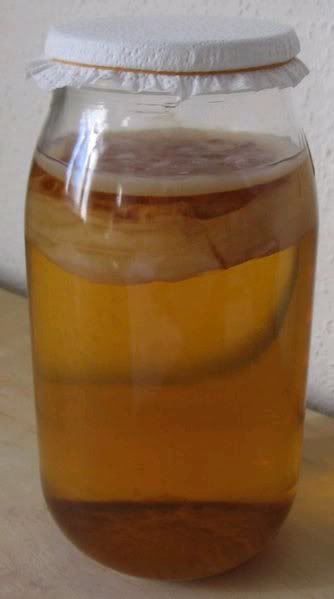
Kombucha Home Brew

No one knows for sure where this fermented tea originated but recorded history says it started in Russia during the late 19th century. Promotional material says the drink comes from ancient China or Japan. In fact, some say that kombucha, known as the Godly Tsche, dates back to the Qin Dynasty (221-206 BC) and was “a beverage with magical powers enabling people to live forever”. Since the first emperor, Qin Shi Huangdi, didn’t live forever, we can discount that claim.

I asked my wife about this tea and she said that as a child she saw it being fermented and that the stuff floating around inside the jar reminded her of dead cockroaches.  Once someone like Pepsi or Coke gets hold of something old like this there is no telling what kind of chemicals will be added. If you want to make this tea, click Kombucha Tea for the home brew recipe.

If you believe the health claims for this tea, you may want to learn about the Chinese “Chong Cao“. Remember, the Food and Drug Adminstration (FDA) hasn’t evaluated any of this stuff yet.

____________________

Lloyd Lofthouse is the author of the award winning novels My Splendid Concubine and Our Hart. He also Blogs at The Soulful Veteran and Crazy Normal.

Sign up for an RSS Feed for iLook China