The Chinese Communist Party (CCP) has 83 million members, more than a quarter of the US population. For a comparison, there are about 63-million Democrats, 47-million Republicans and 32-million independents registered to vote in the United States.
How does a Chinese citizen become a member of the CCP?
One source for CCP members may come from the Communist Youth League of China that has 73-million members. China’s Youth League, although overseen by the CCP, is a separate organization. The two are not necessarily one and the same and not all Youth League members go on to join the CCP.
The China Daily says, “It (the Youth League) is a school where a large number of people learn about socialism with Chinese characteristics and about communism through practice. It is the Party’s assistant and reserve force.”
However, “Many of today’s party members are culled from the top ranks of high schools and colleges: top students are invited to join the party, and it is the sort of invitation that can’t be refused. Others can be nominated by friends who are party members, or apply on their own initiative if they have the support of other party members. During the past two decades, the ranks of the party have been expanded to include businessmen (who were previously not allowed to join) as well as more ethnic minorities, who currently account for 7 per cent of party members.” Source: Beyond Bricks
The conclusion of Leslie Hook’s Beyond Brick’s piece quoted Sidney Rittenberg, who says of the CCP, “Dictatorship gives you more dictatorship, not democracy.”
But, I do not agree with the term “dictatorship” to describe the CCP. China is ruled by an authoritarian, one party political system and decisions are made by the consensus of hundreds of Party members. A dictatorship is a form of government in which absolute power is concentrated in a dictator or a small clique. Source: Merriam-Webster.com
There are also factions within the CCP that have different political opinions and agendas that balance each other. Political theorists have identified two groups within the Communist Party, a structure which has been called “one party, two factions”. The first is the “elitist coalition” or Shanghai clique which is composed mainly of officials who have risen from the more prosperous provinces. The second is the populist coalition, the core of which are the tuanpai, or the Youth League faction which consists mainly of officials who have risen from the rural interior, through the Communist Youth League.
Within his “one party, two factions” model, Li Cheng has noted that one should avoid labeling these two groupings with simplistic ideological labels, and that these two groupings do not act in a zero-sum, winner take all fashion. Neither group has the ability or will to dominate the other completely.
Then there is this study from the China Quarterly that explains why we find so many of China’s wealthy as members/supporters of the CCP.
“This article presents original survey data from 1999 and 2005 to evaluate the Communist Party’s strategy towards the private sector. The CCP is increasingly integrating itself with the private sector both by co-opting entrepreneurs into the Party and encouraging current Party members to go into business. It has opened the political system to private entrepreneurs, but still screens which ones are allowed to play political roles. Because of their close personal and professional ties, and because of their shared interests in promoting economic growth, China’s capitalist and communist officials share similar viewpoints on a range of political, economic and social issues. Rather than promote democratic governance, China’s capitalists have a stake in preserving the political system that has allowed them to prosper, and they are among the Party’s most important bases of support.” Source: The China Quarterly, 192, December 2007, pp.827-854
Discover Rumors of China – Fact or Fiction
_______________
Lloyd Lofthouse is the award-winning author of My Splendid Concubine [3rd edition]. When you love a Chinese woman, you marry her family and culture too. This is the love story Sir Robert Hart did not want the world to discover.
Subscribe to “iLook China”!
Sign up for an E-mail Subscription at the top of this page, or click on the “Following” tab in the WordPress toolbar at the top of the screen.


 Posted by Lloyd Lofthouse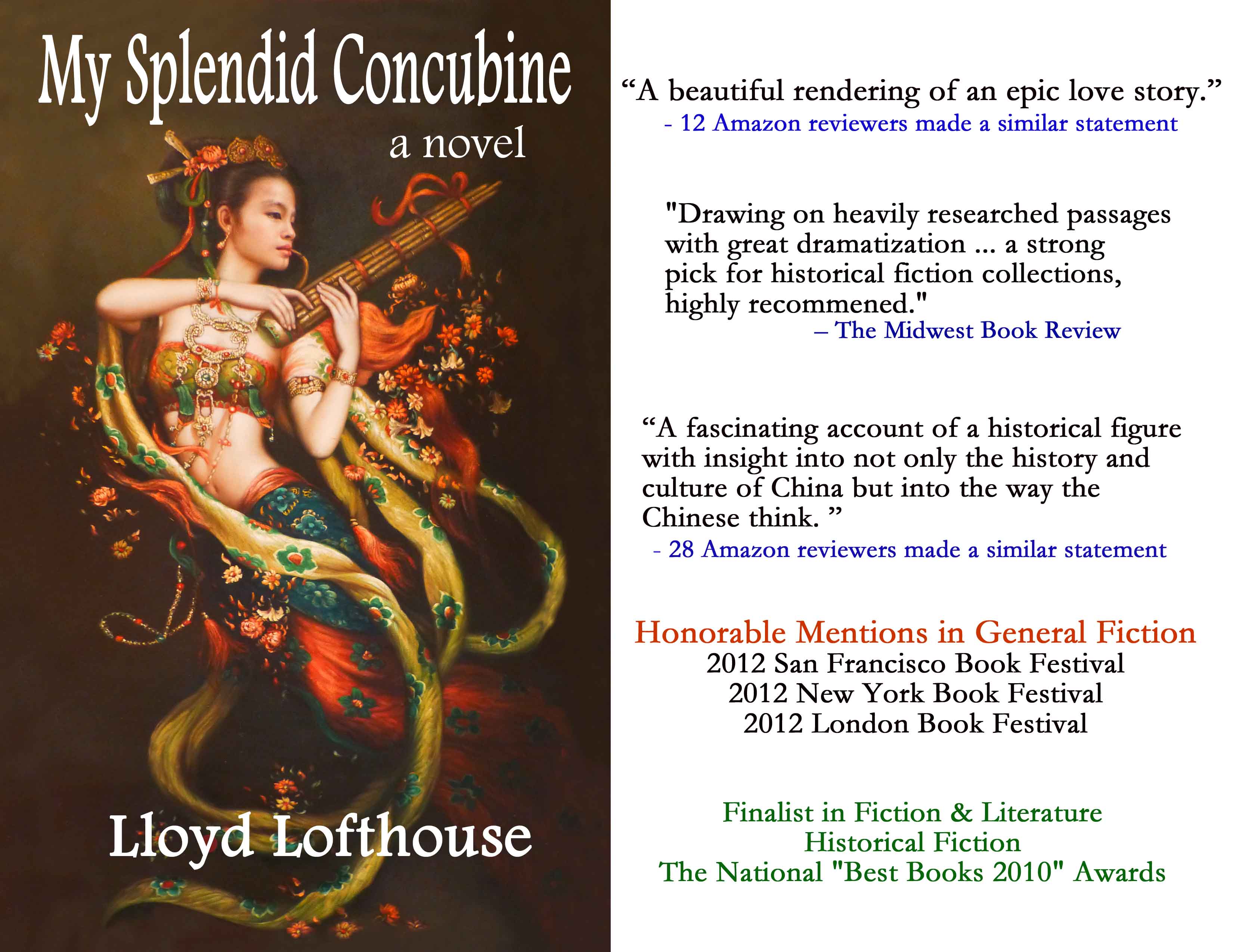
 iLook China