Lloyd Lofthouse is the award-winning author of My Splendid Concubine [3rd edition]. When you love a Chinese woman, you marry her family and culture too. This is the love story Sir Robert Hart did not want the world to discover.
Subscribe to “iLook China”!
Sign up for an E-mail Subscription at the top of this page, or click on the “Following” tab in the WordPress toolbar at the top of the screen.
In 1967, I was stationed at Camp Pendleton, California. Between June 5 – 10, six months after I returned from Vietnam, Israel fought the Six-Day War defeating several Islamic nations that had twice the troops Israel had, more combat aircraft and many more tanks.
It was Egypt, Syria, Jordan, Iraq, Saudi Arabia, Morocco, Algeria, Libya, Kuwait, Tunisia, Sudan and the PLO against Israel.
Israel’s had a total of 264,000 troops with only 100,000 deployed. The Islamic nations had a total of 547,000 troops with 240,000 deployed. Israel had 800 tanks to 2,504, and 300 combat aircraft to 957.
After Israel’s victory, I remember saying, “We should let Israel fight the Vietnam War for us. At least Israel’s leaders know how to fight.”
The Jews and the Chinese have four things in common—loyalty to family, a high respect for education, a willingness to work long hours for low pay, and a canny acumen for business. Because of these similarities, the Chinese have even been called the Jews of Asia.
The Jews have a long history with China. In China: A New Promised Land, by R. E. Prindle, an interview with David Grossman, Israel’s leading novelist talks about the Jews moving to China.
When a father goes to work in China, he works for his family—not himself. After the children grow up, they must care for their parents—not the other way around like in America. In America, many parents tell their children to do whatever they want and be anything they want. Most children follow that advice even if it means getting a degree to become an artist or skipping college to chase dreams of acting, singing or sports fame while attending parties or visiting theme parks like Disneyland because mom and dad said, “We want you to be happy—to have fun.”
It’s different for many Jews and Chinese. Working hard and earning an education are important to both cultures. A close friend of mine and his wife, both Jewish, took out a loan on their home so their son could become a doctor and their daughter a lawyer. They bought a condominium near the university their children attended as a place to live. Both the mother and father were teachers, who did not earn much, which shows that Jewish parents, like the Chinese, are willing to sacrifice for their children in ways many American parents would find unacceptable in the age of credit cards and instant gratification.
This willingness to sacrifice for the family and nation may have been the reason the Jews won the Six-Day War against overwhelming odds. Although the Chinese have the same values and are willing to make the same sacrifices for family, they did not know how to fight like the Jews—something the surviving Jews must have learned due to Nazi atrocities.
Will the changing China also change family values?
After Mao won China, he caused much suffering with the Great Leap Forward and the Cultural Revolution where the goal may have been to root out the weaknesses that caused China to become a victim to Western Imperialism in the 19th century and then Japan during World War II.
I wonder if the Chinese learned the lessons Mao taught them through suffering similar to what the Jews experienced from Hitler. I wonder if China will fight like Israel if threatened again. Before Mao, China was a country of poets and artists who painted watercolors on rice paper. Even Mao and his generals wrote poems. I do not believe the Chinese are a military threat to anyone who does not threaten them.
Like Israel, China may only respond if they feel they are going to be attacked, and if Mao left them ready to defend themselves against aggressors, then the horrors that caused so much suffering and death during the 27 years he ruled China might have been worth the sacrifice for the survival of this family focused culture.
Most America families were like that once before the industrial revolution and the self-esteem movement made the individual more important than the family. Back then, 95% of the population lived on small family farms near towns and hamlets instead of bulging cities dominated by corporate cultures and sexy advertisements. Today, most family roots in the United States do not run deep—not like the Chinese and Jews.
Lloyd Lofthouse is the award-winning author of My Splendid Concubine [3rd edition]. When you love a Chinese woman, you marry her family and culture too. This is the love story Sir Robert Hart did not want the world to discover.
Subscribe to “iLook China”!
Sign up for an E-mail Subscription at the top of this page, or click on the “Following” tab in the WordPress toolbar at the top of the screen.
If you haven’t spent time in China, your opinions about that country are probably wrong. I’ve traveled there often, and I’m married to a woman who was born and lived in China during Mao’s Cultural Revolution.
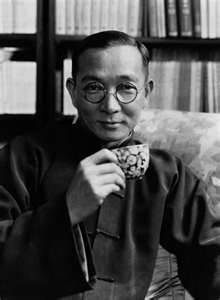
That’s why I found it interesting to read “The Non-Existence Of A Chinese World View” at Two Fish’s Blog, where Lin YuTang was quoted.
While writing “My Splendid Concubine and the sequel, “Our Hart”, about Robert Hart in China, I read “My Country and My People“. Hart is mentioned on page eleven of the 1938 edition. Pearl S. Buck, who wrote the introduction to Lin’s book, felt that someone who knows the Chinese should write a book about the people and culture. She urged Lin YuTang to be that author. Even though YuTang’s book was published years before the Communist Revolution, this book is still relevant in all things Chinese.
YuTang’s style is a mixture of history, philosophy, psychology, sociology with wit and wisdom.
I smiled when he pointed out contradictions about the Chinese way of thinking and helped me discover what motivates many Chinese to act the way they do—even the Chinese in a government often blamed for what they do because they are Communists when in fact, they act that way because they are Chinese.
Lloyd Lofthouse is the award-winning author of My Splendid Concubine [3rd edition]. When you love a Chinese woman, you marry her family and culture too. This is the love story Sir Robert Hart did not want the world to discover.
Subscribe to “iLook China”!
Sign up for an E-mail Subscription at the top of this page, or click on the “Following” tab in the WordPress toolbar at the top of the screen.
She describes herself as a girl from China who came to America with $45 and knowing two words of English, “Merry Christmas.” Source: SFGate
When Zheng Cao burst onto the San Francisco Opera scene in 1995, she played Siebel in “Faust.” Since then, she’s performed in opera houses throughout North America, Europe and Asia.
Today, an inspiration, the Shanghai-born Mezzo-soprano has defied the odds of surviving stage four lung cancer and a diagnoses that said she had six months to live.
When diagnosed, she received a death sentence. Months later, she would learn that the rigorous treatment plan had dramatically reduced the cancer threat.
“This is the most impressive response I’ve seen in my life,” Dr. Rosenbaum said.
Zheng Cao’s tumors either had decreased in size, were no longer visible or no longer considered active.
To learn more about Zhen Cao’s journey, visit her Blog at Caring Bridge.org.
Zheng Cao holds degrees from the Shanghai Conservatory and the Curtis Institute of Music.
While studying, she worked as a singer on the Holland American cruise line where she met Troy Donahue in 1991.
Donahue said, “We were very serious, very committed to each other. It’s the greatest relationship I’ve ever had in my life.” Source: Troy Donahue at encore4.net
Zheng Cao and Troy Donahue were engaged until his death in 2001. She turned 44 on June 9, 2010.
Lloyd Lofthouse is the award-winning author of My Splendid Concubine [3rd edition]. When you love a Chinese woman, you marry her family and culture too. This is the love story Sir Robert Hart did not want the world to discover.
Subscribe to “iLook China”!
Sign up for an E-mail Subscription at the top of this page, or click on the “Following” tab in the WordPress toolbar at the top of the screen.
If not, this is what it means: “Found poems take existing texts and refashion them, reorder them, and present them as poems. The literary equivalent of a collage, found poetry is often made from newspaper articles, street signs, graffiti, speeches, letters, or even other poems.” Source: Poets.org
Well, I found something about consumer related corruption, but it wasn’t linked to China. It took place in the United States, and I’m going to write a “found” post by piecing together a collage of corruption with one example from China compared to similar private sector corruption in the United States where greedy CEOs took short cuts to boost profits.
On “60 Minutes” Sunday night, March 10, 2013, I first heard about the NECC Drug Scandal: Fake names used to bypass regulations (the story first broke September 2012). I then Googled “NECC Drug Scandal” and came up with 786,000 hits.
Then I Googled “Chinese drywall import scandal” (2001) and came up with more than 4.4 million hits.
Since the late 1990’s there has been a conservative political agenda in the United States to take away and/or limit Federal government regulatory and watchdog protection for consumers. One of those exemptions from FDA over-site led to the NECC Drug Scandal. That same conservative political agenda also led to the 2007-08 global financial crises.
Wiki reports that from the NECC scandal (started September 21, 2012 and still ongoing) there have been 48 deaths, 720 injuries and more than 400 lawsuits filed against NECC.
Let’s compare that to the potential for injury from the Chinese drywall scandal: “The Center for Disease Control, in collaboration with The Agency for Toxic Substances and Disease Registry released a guide indicating the residents of affected homes reported irritated and itchy eyes and skin, difficulty breathing, persistent cough, bloody noses, runny noses, recurrent headaches, sinus infection, and asthma attacks.”
Out of curiosity, I Googled, “the Ford Pinto Case (1972) where, due to a cover up at Ford, people died.”The cases involving the explosion of Ford Pintos due to a defective fuel system design led to the debate of many issues, most centering around the use by Ford of a cost-benefit analysis and the ethics surrounding its decision not to upgrade the fuel system based on this analysis.” My Google search came up with 719,000 hits. Twenty-seven deaths were attributed to Ford Pinto fires.
Does this “found” post on corruption and good-old-fashioned universal human greed reveal that a scandal in China will cause more of an uproar than a similar or worse scandal in the United States? If so, why? After all, no one has died yet from that tainted drywall that was made in China and sold in the US.
If the fungus tainted drugs from NECC had been made in China and exported to the United States, how many Google hits do you think would result?
Lloyd Lofthouse is the award-winning author of My Splendid Concubine [3rd edition]. When you love a Chinese woman, you marry her family and culture too. This is the love story Sir Robert Hart did not want the world to discover.
Subscribe to “iLook China”!
Sign up for an E-mail Subscription at the top of this page, or click on the “Following” tab in the WordPress toolbar at the top of the screen.


 Posted by Lloyd Lofthouse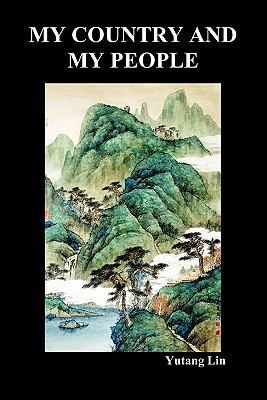
 iLook China