Chinese calligraphy is demonstrated in the videos included with this post. In China, many artists use sidewalks as a canvas and a brush with water to paint the beauty of calligraphy. As the water evaporates, the art vanishes.
In fact, calligraphy is more popular than ever. After the Cultural Revolution (1966 until 1976 when Mao died), many people turned to calligraphy in the hope of finding solace in the calm repetition of its exercises. Then, in 1981, the Chinese government took the lead in setting up a Chinese Calligraphers Association, the first such nationwide body ever to be established in the country.
Both a language and an art, Chinese calligraphy has been traced back more than 4,000 years to the crude form called “Jia Gu Wen” found on turtle shells from the Shang Dynasty.
Calligraphy first bloomed as an art during the Han Dynasty but by the time of the Tang Dynasty, it had declined as an art. > Chinese Calligraphy History
It would be difficult to talk about Chinese art without understanding Chinese calligraphy and its artistic inspiration. A painting has to convey an object, but a well-written character conveys only its beauty through line and structure.
In Shanghai on sidewalks, or Beijing at The Summer Palace, I’ve watched men with long handled brushes, as seen in the first video, using water for ink and concrete for paper. With grace, they exhibit the skills of a Rembrandt breathing life into the characters.
America’s so called street artists should copy the Chinese that practice calligraphy and trade in their cans of spray paint for brushes and water, which would save US taxpayers a lot of money.
Lin Yutang writes in My Country and My People that Western art is more sensual, more passionate, fuller of the artist’s ego, while the Chinese artist and art-lover contemplates a dragonfly, a frog, a grasshopper or a piece of jagged rock—more in harmony with nature.
Owing to the use of writing calligraphy with a brush, which is more subtle and more responsive than the pen, calligraphy as art is equal to Chinese painting.
Through calligraphy, the scholar is trained to appreciate, as regards line, qualities like force, suppleness, reserved strength, exquisite tenderness, swiftness, neatness, massiveness, ruggedness, and restraint or freedom.
Maybe this helps explain why the Chinese are not as warlike as Christian and Islamic cultures.
______________________________
Lloyd Lofthouse is the award-winning author of My Splendid Concubine [3rd edition]. When you love a Chinese woman, you marry her family and culture too. This is the lusty love story Sir Robert Hart did not want the world to discover.
Subscribe to “iLook China”!
Sign up for an E-mail Subscription at the top of this page, or click on the “Following” tab in the WordPress toolbar at the top of the screen.
Mao Wei Tao is considered a living treasure in China—she has an estimated 20 million fans. She imitates men in the opera roles she plays—a reversal from Imperial China when women were not allowed on stage so men played female roles.
“In 1923, the training of female actors for this art form was set up. Since 1928, the Shaoxing opera troupes, consisting of solely female actors, began their performances in Shanghai. In a few years, females impersonating males had become the most important feature of this opera form, and at the same time the Yue opera became well known all over China.”
East China’s Zhejiang province gave China’s Shaoxing Opera Mao Wei Tao, who in her decades long career on the stage is best known as an outstanding male impersonator with a cult following of women.
I was introduced to Yue Opera in Hangzhou, Zhejiang Province more than a decade ago.
Mao Wei Tao and her husband have a theater company near the shores of the famous Westlake. My wife translated while I watched the live-opera performance in fascination.
The costumes were lavish and the acting and opera was dramatic while classical Chinese music played in the background.
The challenge today is to keep this form of Chinese opera alive, because the audience for opera is shrinking dramatically in China while remaining popular with the older generation.
Television, movies and the Internet are claiming the shorter attention spans of younger Chinese.
Mao Wei Tao, considered an innovative genius on stage, adapts and works to keep the art form alive. According to her husband, no two performances are exactly alike.
In November 2010, she performed in Taiwan as a cultural ambassador from the mainland. Today, “the company continues to tour and has staged productions in Paris, Hong Kong, Korea, Macau, Taiwan, the United States, Singapore, Spain, Holland, France, Belgium and Japan.” – bangkokfestivals.com
______________________________
Lloyd Lofthouse is the award-winning author of My Splendid Concubine [3rd edition]. When you love a Chinese woman, you marry her family and culture too. This is the lusty love story Sir Robert Hart did not want the world to discover.
Subscribe to “iLook China”!
Sign up for an E-mail Subscription at the top of this page, or click on the “Following” tab in the WordPress toolbar at the top of the screen.
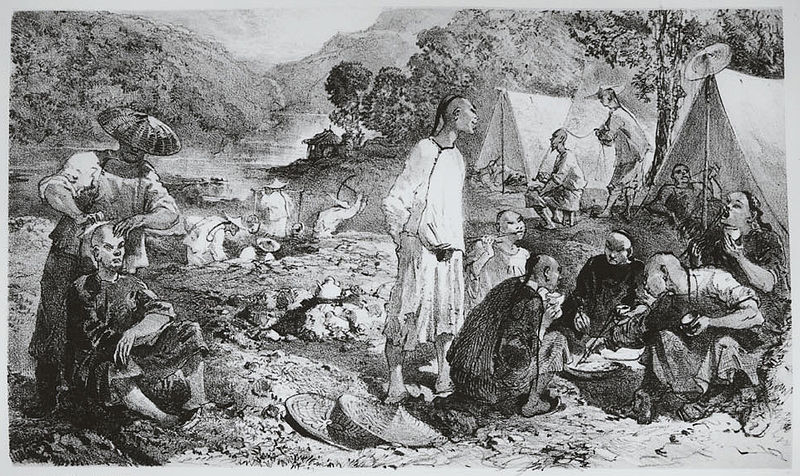
In the mines the Chinese were often forced to work sites that others had abandoned as no longer productive and, by hard work, made these claims pay.
As more men arrived in the gold fields and the amount of surface gold dwindled, tensions increased. Thirty-five Chinese showed up at Camp Salvado in 1849 where men from El Salvador had worked and here they found rich placer deposits.
White miners soon arrived and pushed the Chinese out, but they were taken in at another nearby site called Camp Washington where still more gold was found
Chinese flocked to a place where they were accepted and Tuolumne County’s Chinese Camp survives to this day.
But by 1850, a $20 per month tax on each foreign miner was imposed.
By 1852 Chinese were forced from Mormon Island and Horseshoe Bar along the American River, then from Colombia in the southern mines and Yuba City in the northern.
In 1856 Chinese paid $70,000 for the right to mine in Mokelumne Hill.
By 1868 almost all Chinese had left the mines to work on the transcontinental railroad or in Chinese operated businesses.
In lieu of a Western style legal system for most of China’s history, Guanxi offered an alternative for thousands of years to foster innovation, develop trust and contribute to trade and commerce.
Sir Robert Hart (1835 – 1911), the godfather of China’s modernization and the main character in my historical fiction novel, discovered the importance of Guanxi soon after he left the employ of the British and went to work for the Emperor. He quickly learned that a “supreme value of loyalty glued together China’s structure of personal relationships.” Source: Entering China’s Service
In addition, Hart wrote in a letter in 1891, “These people (referring to the Chinese) never act too soon, and, so far, I have not known of their losing anything by being late. To glide naturally, easily and seasonably into the safe position sequence as circumstances make, is probably a sounder though less heroic policy for a state than to be forever experimenting—”
To translate, it takes time to develop a relationship/friendship/trust (Guanxi) that all involved might benefit from.
Warning: This is a Promotional Video. However, it offers a perspective on Guanxi worth watching.
However, I did not learn about Guanxi from Robert Hart. I first learned of it from the China Law Blog, which quoted the Silicon Hutong Blog.
Then I did more research and watched a few videos on the subject. I learned that Guanxi is one of those complexities of Chinese culture that does not translate easily.
There are several elements and layers to Guanxi. First, Guanxi is based on a Confucian hierarchy of familial relationships, long-term friendships, classmates, and schoolmates and to those no stranger – Chinese or foreign – will ever have access.
Guanxi developed over millennia because China did not have a stable and effective legal system similar to the one that developed in western countries.
In fact, the legal system in China today is relatively new and made its appearance after the 1982 Chinese Constitution became the basis of the law.
Since 1982, there have been several amendments to the Constitution as China adapts its evolving legal system, which was modeled after the German legal system.
In time, this Western influenced legal system may replace Guanxi since business law modeled on Western law with Chinese characteristic has developed faster than civil law.
There are a several opinions about Guanxi. I learned that Guanxi is similar to a gate that opens to a network of human beings, but it isn’t that simple.
Maintaining Guanxi is different than how relationships are maintained in other cultures. The embedded videos with this post offer a more detailed explanation.
The China Law Blog copied the post from the Silicon Hutong Blog. The post on the China Law Blog had more than twenty comments and it was a lively discussion worth reading if you are interested in discovering more.
______________________________
Lloyd Lofthouse is the award-winning author of My Splendid Concubine [3rd edition]. When you love a Chinese woman, you marry her family and culture too. This is the lusty love story Sir Robert Hart did not want the world to discover.
Subscribe to “iLook China”!
Sign up for an E-mail Subscription at the top of this page, or click on the “Following” tab in the WordPress toolbar at the top of the screen.
No, this is not about looks or Botox or face-lifting creams or hairstyles, or tanning salons, or the desire to have a rounder, paler moon face—the standard of beauty to most Chinese.
What I’m writing about is the meaning of “face” to the Chinese
Dr. Martha Lee wrote, “Nobody ever said what you do with those who have ‘disgraced’ the family name by getting divorced.” Dr. Lee was writing of the ‘hongbao’ dilemma.
In China, if you do something that is considered a disgrace, like getting divorced, that may be considered a “loss of face” for everyone in the family.
“The ‘face’ is psychological and not physiological. Interesting as the Chinese physiological face is, the psychological ‘face’ makes a still more fascinating study. It is not a face that can be washed or shaved, but a ‘face’ that can be ‘granted’ and ‘lost’ and ‘fought for’ and ‘presented as a gift’.”
For instance, when our daughter was a pre-teen, we went on weekend hikes as a family in the hills behind our home when we lived in Southern California. The end of the hike was in a large park across the street from the La Puente Mall. On one fateful day, when she was nine or ten, she was the first to discover a dead man, and she came running back with a shocked expression on her face.
It turned out the dead man was an architect from Taiwan and his company had gone bankrupt. His “loss of face” for failing had driven him to take an extension cord from his mother’s house, find a suitable tree in an isolated portion of that park, and hang himself.
He was dead when we reached him.
Do not stereotype. The meaning of “face” may vary between Chinese. It depends on the balance between Confucianism and Daoism along with factors like Buddhism or belief in the Christian, Islamic or Jewish God.
“Face” is why some Chinese mothers ride their children hard to do well in school while telling everyone they know that their kid is stupid and/or lazy and has no chance to succeed.
Chinese mothers may often tell their children the same thing. However, if the child is accepted to a prestigious university, that Chinese mother has now earned bragging rights and “gained much face” for the job she did as a mother
To get a better idea, I recommend reading Amy Tan’s The Joy Luck Club or watch the film. We had a house full of my wife’s Chinese friends and their families over for dinner. After eating, the children gathered in our downstairs TV room to watch a movie. They picked “The Joy Luck Club”, and during one scene, when the Chinese mother was acting very Chinese, all the children looked at each other, nodded ‘yes’ and laughed ironically. Since my wife is Chinese, I knew why they reacted that way. They all had Chinese mothers.
“Face” is why the Chinese businessman will take great risks or take only a few risks and if given a chance may steal another person blind—that is if they believe they can get away with it. If they are caught and it is against the law, that is a “loss of face”—one reason for suicide.
Most Chinese men will wait until they are successful before they let others know. If they fail, it’s possible no one will hear about it beyond the family unit.
“Face” is why Chinese men often work twelve to sixteen hour days, seven days a week earning small but saving large. The Chinese will do without luxuries and save to pay for their child’s university education. Chinese women will work just as hard.
Studies in today’s China show that the average family saves/spends a third of its income for a child’s education.
Regaining “face” may be one reason why Mao reoccupiedTibet for China in 1949. Look closely, and you may discover that even Taiwan claims Tibet for the same reason.
The other reason may have been tactical—to control the high ground as Israel controls the Golan Heights.
Having control over the Tibetan plateau was one of the tactical reasons Britain convinced the Dalai Lama to declare freedom from China in 1912.
“Face” may be why China’s leaders get so angry over Taiwan. As long as Taiwan is not ruled by the mainland, it may be seen as a “loss of face”.
It’s why the Chinese want to walk on the moon and reach the other planets before anyone else. In China, “face” is universal to most of the population and different for each person.
For the Chinese, taking risks is no stranger. It’s probably the reason the Chinese invented paper, the crossbow, the compass, the stirrup, developed a cure for scurvy, the printing press, gunpowder, and built multi-stage rockets using gunpowder as a propellant centuries before anyone in the West did.
China’s list of innovative inventions is longer than this sample. Many of these inventions eventually appeared in the West centuries later where Westerners took credit for them.
Now you know the truth.
In What the Chinese Want Even More than Oil or Gold, the focus was on Chinese gambling and about illegal lotteries going legal and national. Since I married into a Chinese family, I understand what the author of this piece was saying, but the topic is more complex than that.
To learn more, I suggest you read the Investoralist, “Where Curious Minds Meet”. The Investorilist piece says that gambling is China’s Achilles heel.
I disagree.
I believe it is risk taking that brought China to greatness in the past. It’s when most Chinese stopped taking risks in the 15th century that China started to lose its spot as a regional superpower. It’s all about ‘face’. Take a risk and win but make a mistake and get caught, you “lose face” and maybe your life too, which may explain many of the suicides in countries such as China, Japan and Korea.
______________________________
Lloyd Lofthouse is the award-winning author of My Splendid Concubine [3rd edition]. When you love a Chinese woman, you marry her family and culture too. This is the lusty love story Sir Robert Hart did not want the world to discover.
Subscribe to “iLook China”!
Sign up for an E-mail Subscription at the top of this page, or click on the “Following” tab in the WordPress toolbar at the top of the screen.


 Posted by Lloyd Lofthouse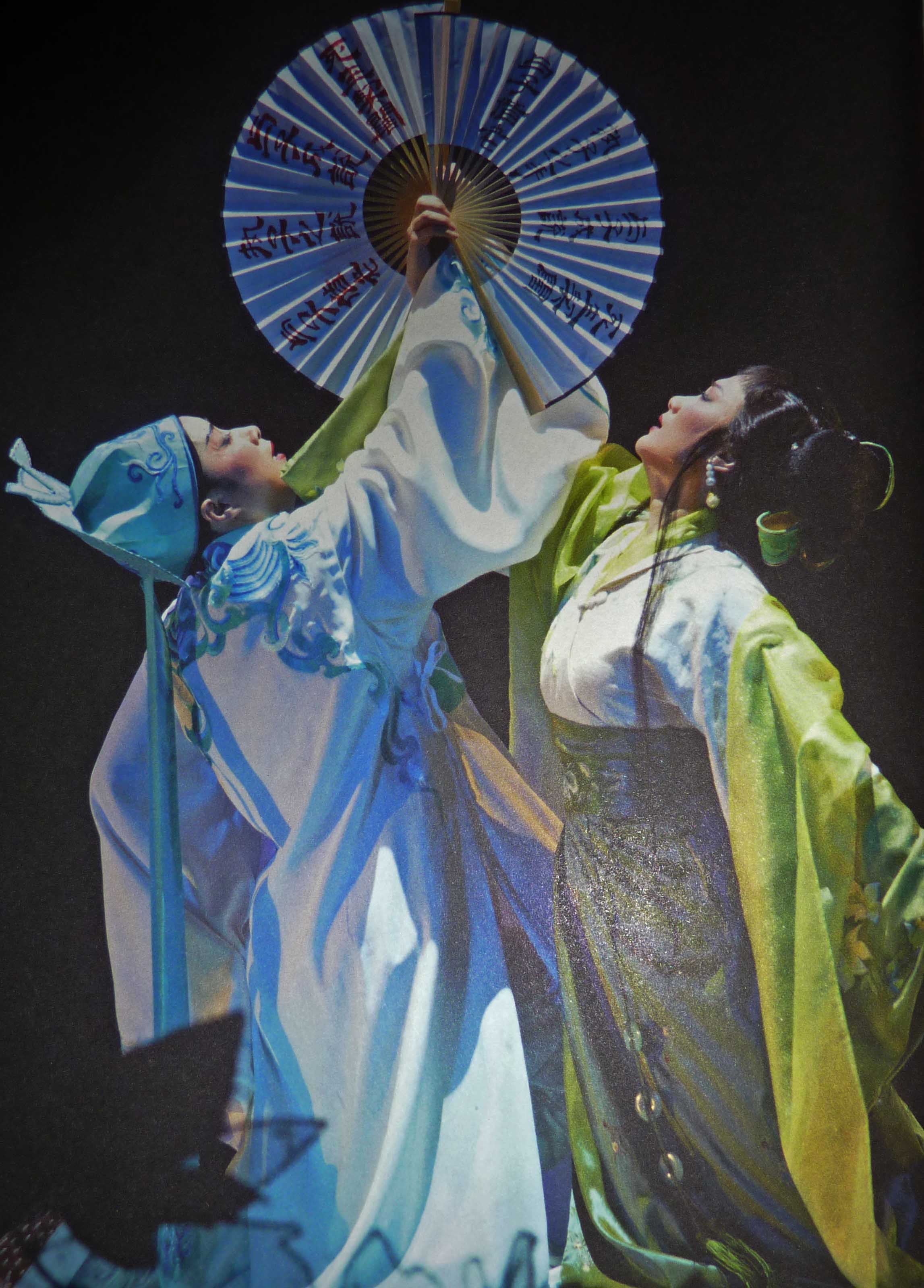




 iLook China