Zhouzhuang, China’s Ancient Water Town

April 27, 2016

We arrived early when the parking lot and the streets were about empty.  That’s the best time to get there.

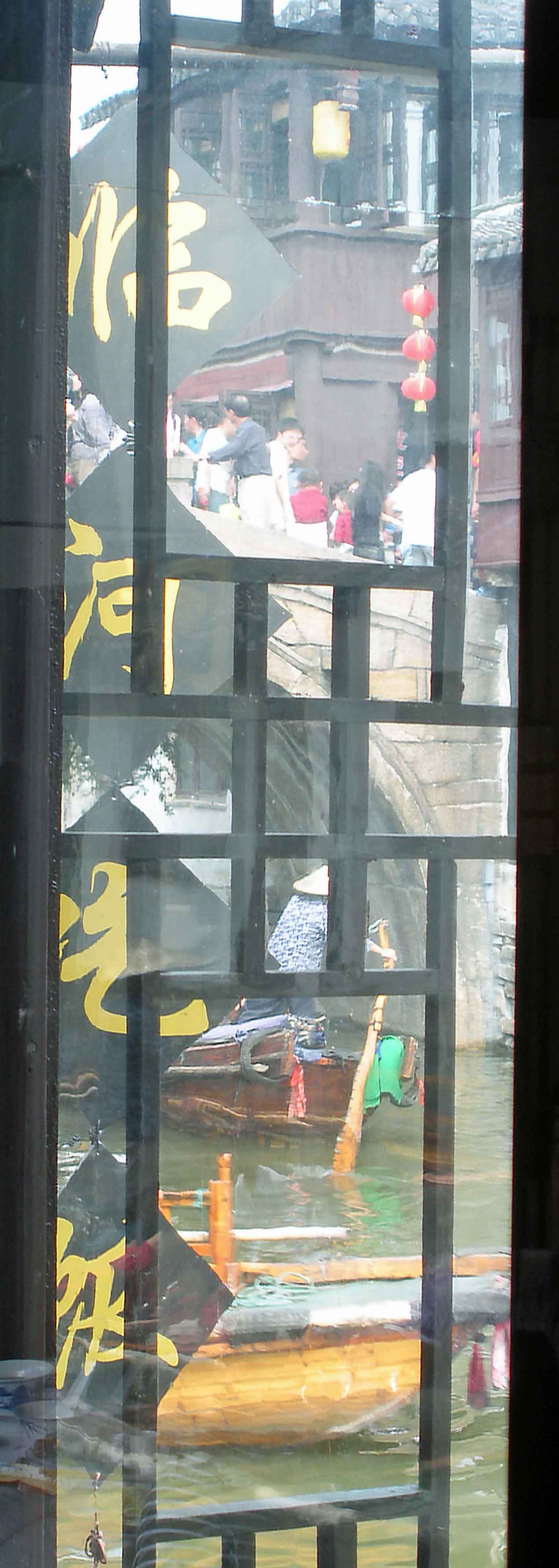
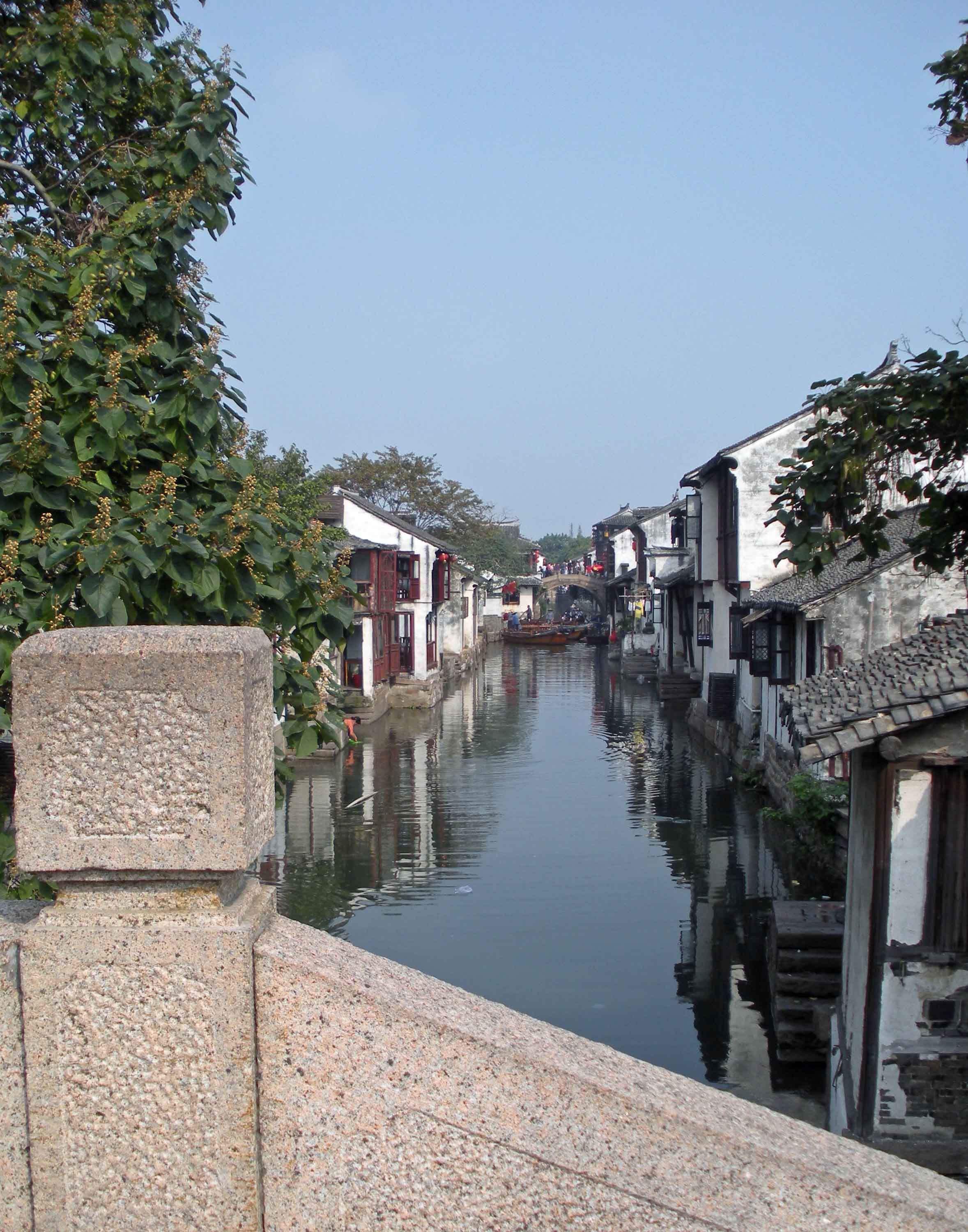
Zhouzhuang is surrounded by water, and boats are needed for most short trips.

Zhouzhuang history is rooted in China’s Spring and Autumn Period (770 BC – 476 BC) more than a thousand years before Venice was established. However, it would not be called Zhouzhuang until 1086 AD .

The town is well known for its preservation of numerous buildings from the Ming and Qing Dynasties.

Zhouzhuang, the Venice of Asia,  is on the United Nations Reserve List for the World Cultural Heritage and the Dubai International Best Practice to Improve the Living Environment.

As you can see, it gets crowded. Most of these tourists were Chinese citizens from the growing middle class.

This is where I was a photo thief. I wanted to take a picture of these captured birds but the owners wouldn’t let me.  He pointed at a sign that said I’d have to pay.

I walked a distance and used my meager telephoto lens to take this shot of the birds tied to the owner’s boat.

For a comparison with Europe’s Venice in Europe, while there are no historical records that deal directly with the founding of Venice, available evidence has led some historians to agree that the original population of Venice were refugees from Roman cities near Venice (420 – 568 AD), and then from the ninth to twelfth centuries Venice became a city state.

Lloyd Lofthouse is the award-winning author of My Splendid Concubine [3rd edition]. When you love a Chinese woman, you marry her family and culture too. This is the unique love story Sir Robert Hart did not want the world to discover.

IMAGE with Blurbs and Awards to use on Twitter

Where to Buy

Subscribe to “iLook China”!
Sign up for an E-mail Subscription at the top of this page, or click on the “Following” tab in the WordPress toolbar at the top of the screen.

About iLook China

China’s Holistic Historical Timeline


A simple drama with song and dance

April 5, 2016

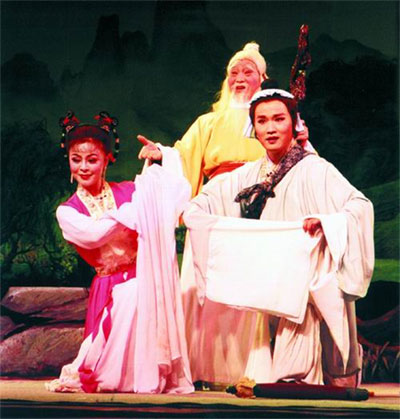
Anqing, in Anhui Province, is regarded as the hometown of Huangmei Opera and Hui Opera. Anqing was first built in 1217 and is almost eight-hundred years old, but Huangmei Opera first appeared about two centuries ago as a simple drama of song and dance.

Huangmei opera does not involve the traditional opera gestures which often-used sleeves and step movements. The music is performed with a pitch that hits high and stays high and does not sound like the typical rhythmic Chinese opera.

The fairy tale of the Cowherd and the Weaving Girl is one of the four most famous folktales of ancient China. It is a classic love story between a fairy and a human being and has a widespread influence. The Qixi Festival is said to have something to do with the fairy tale, and the seventh day of every seventh month of the lunar calendar has become the Chinese Valentine’s Day.


Huangmei Opera Troupe

Chinese opera together with Greek tragic-comedy and Indian Sanskrit Opera are the three oldest dramatic art forms in the world. During the Tang Dynasty (618 – 907 AD), the Emperor Taizong established an opera school with the poetic name Liyuan (Pear Garden). Over more than 800 years, Chinese opera evolved into many different regional varieties based on local traits and accents. Huangmei Opera is one of them.

Lloyd Lofthouse is the award-winning author of My Splendid Concubine [3rd edition]. When you love a Chinese woman, you marry her family and culture too. This is the unique love story Sir Robert Hart did not want the world to discover.

A1 on March 13 - 2016 Cover Image with BLurbs to promote novel

Where to Buy

Subscribe to “iLook China”!
Sign up for an E-mail Subscription at the top of this page, or click on the “Following” tab in the WordPress toolbar at the top of the screen.

About iLook China

China’s Holistic Historical Timeline


Falling in Love with Stinky Tofu

March 29, 2016

China has a unique food culture compared to the West. For instance, my wife loves noodles. I’ve followed her down narrow Shanghai streets to a well-known won-ton and noodle shop on the corner of Chang-le and Shang-yang Road. The front is open and the ceiling low with each narrow table crowded with Chinese sitting on small chairs shoveling noodles in with chopsticks.

My wife orders a small bowl of noodles with peanut sauce for me and a bowl of blood soup and another bowl of noodles with spicy hot Sichuan peppercorn sauce for her.  As she eats, sweat beads her face but there is not one word of complaint—not one sign that she is suffering. Instead, this seriously satisfied look spreads across her face as if she has entered a Chinese noodle heaven.

When visiting Nanjing Road in Shanghai between People Square and the Bund, we always stop at the same food shop where my wife orders steaming hot noodles with the same peppercorn sauce, and I order deep fried, fresh chou dofu (stinky tofu) with the same sauce that causes me to sweat too.

At celebration feasts, a wider variety of food will be served from whole fish, crab, a variety of vegetable dishes and tofu.

Lloyd Lofthouse is the award-winning author of My Splendid Concubine [3rd edition]. When you love a Chinese woman, you marry her family and culture too. This is the unique love story Sir Robert Hart did not want the world to discover.

A1 on March 13 - 2016 Cover Image with BLurbs to promote novel

Where to Buy

Subscribe to “iLook China”!
Sign up for an E-mail Subscription at the top of this page, or click on the “Following” tab in the WordPress toolbar at the top of the screen.

About iLook China

China’s Holistic Historical Timeline


Is the Nap at risk in China?

March 9, 2016

Napping is a custom in much of China. My father-in-law, for instance, who is 84, naps every afternoon, and I thought it was due to his age.

Then after more than a decade of marriage, I asked my wife if her father had always taken afternoon naps. She said yes and that even at work in Shanghai during the Cultural Revolution, the Chinese Communist Party bosses made everyone take a long nap after lunch—about two hours every day.

Deciding to learn more, I turned to Google and found that “The Chinese, particularly those in the southern and south-eastern regions, take what could be called an afternoon siesta that lasts from approximately 12 noon to 2:30 p.m.”

I learned that afternoon naps in China are common, but that doesn’t mean everyone does it.  I also learned that the Internet and the modern-urban lifestyle have cut into the old habit of napping.

In fact, micro-blogging in China has had an impact on this centuries old custom. MSNBC.com reported that the Chinese government “sensitive to public opinion, especially stories of lazy or corrupt bureaucrats carried by massively popular micro-blogging sites,” cracked down on napping at meetings in an attempt to “instill a greater sense of duty into its officials.”

If this trend continues, this might seriously impact public health, creativity and learning in China.

Han Fang, a professor at Peking University People’s Hospital, says, “Lack of sleep can cause a significant lowering of immunity…”

In addition, the New York Times reported, “New research has found that young adults who slept for 90 minutes after lunch raised their learning power, their memory apparently primed to absorb new facts.”

“Other studies have indicated that sleep helps consolidate memories after cramming, but the new study suggests that sleep can actually restore the ability to learn,” and that might explain why “most Chinese schools have a scheduled half-hour nap right after lunch.” – Wiki.answers.com

“According to the advocates, a short 10-20 minute nap in the middle of a working day can increase productivity by over 30 percent and alertness by 100 percent as well as improve memory and concentration. They also claim that it can reduce stress and the risk of heart disease by 34 percent.”

I’m struggling to cultivate the habit of napping, but it’s hard to break old habits when you grew up in the United States where it is customary to make people work long hours for poverty wages even when they are exhausted.

______________________________

Lloyd Lofthouse is the award-winning author of My Splendid Concubine [3rd edition]. When you love a Chinese woman, you marry her family and culture too. This is the unique love story Sir Robert Hart did not want the world to discover.

IMAGE with Blurbs and Awards to use on Twitter

Where to Buy

Subscribe to “iLook China”!
Sign up for an E-mail Subscription at the top of this page, or click on the “Following” tab in the WordPress toolbar at the top of the screen.

About iLook China

China’s Holistic Historical Timeline


The 2,553 year old Chimes of Marquis Yi

March 2, 2016

In 1977, a discovery was made in China—a complete set of chime bells was unearthed from the tomb of Marquis Yi, who lived during the Warring States Period (475 to 221 BC). These chimes were older than the Qin Dynasty’s famous Terra Cotta warriors (221 to 206 B.C.) that guard the tomb of Qin Shi Huangdi, the emperor that unified China.

When the chimes were discovered in Hubei Province (located in Central China), a plot of land was being leveled to build a factory.  The Red Army officer in charge of the work had an interest in archeology.

The officer discovered that the workers were selling the ancient bronze and iron artifacts they were digging up. He convinced local authorities there might be an ancient tomb buried below the site.

When the tomb was unearthed, a set of chime bells was found.  These musical instruments were an important part of ritual and court music dating. An American professor in New York City even called these chimes the eighth wonder of the ancient world.

The sixty-five chime bells weighed about 5 tons.

No other set of chimes like these had been discovered in China before, and this set was in excellent condition.

A project was launched in 1979 to duplicate four sets of these chimes. More than a 100 scientists and technicians were recruited.  In 1998, twenty years after the discovery, the project was completed. One of the sets was sent to Taiwan as a gift.

Lloyd Lofthouse is the award-winning author of My Splendid Concubine [3rd edition]. When you love a Chinese woman, you marry her family and culture too. This is the unique love story Sir Robert Hart did not want the world to discover.

IMAGE with Blurbs and Awards to use on Twitter

Where to Buy

Subscribe to “iLook China”!
Sign up for an E-mail Subscription at the top of this page, or click on the “Following” tab in the WordPress toolbar at the top of the screen.

About iLook China

China’s Holistic Historical Timeline