Peter Hessler, an expatriate, on China

March 30, 2010

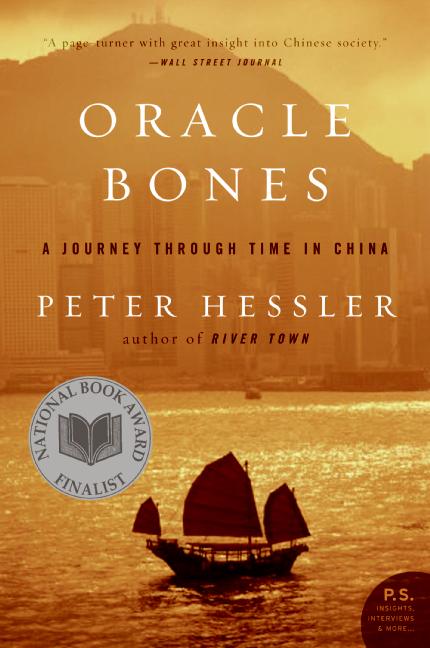
Peter Hessler is a Beijing correspondent for the New Yorker. He has lived in China for fifteen years. After leaving the Peace Corps, Hessler freelanced for Atlantic Monthly and the New York Times before returning to China in 1999 as a Beijing-based freelance writer.

I agree with Hessler when he said in a CNNGo interview, “People in China are not forthcoming like Americans; they don’t like to tell you their personal story. It’s a type of modesty, I think, in a culture where people are not encouraged to see themselves as the center of the universe.”

I have an American born-again Christian friend who has bragged about Christianity being the fastest growing religion in China. I wonder what he’d say if he read what Hessler had to say here, “The Chinese relationship with religion is pragmatic and fluid; people often change their faith very quickly. And I don’t see them following religion to a degree where it’s clearly not in their self-interest….”

On happiness, Hessler says, “At this particular moment I think that Americans…might be less happy than Chinese people. The Chinese can roll with the punches…. Everybody in China has seen ups and downs; if they get laid off from the factory, they just go back to the village and play mah-jong….”

Discover The Influence of Confucius

______________

Lloyd Lofthouse is the award-winning author of the concubine saga, My Splendid Concubine & Our Hart. When you love a Chinese woman, you marry her family and culture too.

If you want to subscribe to iLook China, there is a “Subscribe” button at the top of the screen in the menu bar.


An Insider’s View from Speak Without Interruption

March 30, 2010

In this post, instead of hearing form an outsider who has visited China and studied the culture for a decade while writing two novels about Robert Hart, the Godfather of China’s modernization, let’s see what Will Liu writes about China, his home.

Lunar New Year in China

“This Chinese New Year Season, something did surprise me. As a rule, every year…, I must make the trip to the hometown of my wife, where her father still lives…. What astonished me is that I could not find anybody smoke in the bus! Just last year and before, that was what tortured me most. You cannot avoid smoke, no matter on a bus or in a cab.”

Liu write about the differences he sees between cities.

Then in Part II, Liu writes, “Now, more and more people, especially young people celebrate Christmas Day. Nevertheless, we still take the Chinese New Year as our major … holiday, which we call the Spring Festival. Like the Christmas Season, we have a long Chinese New Year Season, typically the government approves a legal vacation of 3 days from New Year’s Eve till January the 2nd according to the Chinese lunar calendar.”

See another point-of-view from and expatriate, Tom Carter’s Teaching English in the Middle Kingdom http://wp.me/pN4pY-is


Super Power Dawn

March 29, 2010

Alan Caruba writes about Super Power China at “Speak Without Interruption”. “As the sun begins to set on an America whose dollar set the standard and whose capacity for manufacturing was unchallenged, a new superpower is emerging and it is China.”

Two notable individuals from history predicted more than a century ago what is taking place in China—the first was a young Irishman from Belfast who arrived in China in 1854 and left in 1908.  His name was Robert Hart and to historians, he’s known as the Godfather of China’s modernization.

Hart wrote near the end of the 19th century that in a hundred years China would be a superpower again. Jack London, who visited China and wrote about it, made the same prediction.

The way the government has decentralized power in China is not new. Imperial China did the same. The Emperor appointed the governors to the provinces based on who earned the highest scores in the Imperial exams and they ruled like kings. 

As for a market economy, China may have invented this on a national scale more than a millennia ago proving that it doesn’t take a democracy or republic to prosper.

If you spend time in China, you will discover that the Chinese are born entrepreneurs, who find ways to get around government restrictions to make money. Sadly, this has led to the pollution in China today—something the central government is struggling to deal with as they transition to green power.

As for long term planning, consider that the top men in China’s government are engineers or scientists compared to America’s leaders who are mostly lawyers. After Mao, China implemented term and age limits for government positions, something America does not have.

______________

Lloyd Lofthouse is the award-winning author of the concubine saga, My Splendid Concubine & Our Hart. When you love a Chinese woman, you marry her family and culture too.

If you want to subscribe to iLook China, there is a “Subscribe” button at the top of the screen in the menu bar.


Deep Family Roots

March 28, 2010

In 1967, I was stationed at Camp Pendleton, California. Between June 5 to 10, six months after I returned from Vietnam, Israel fought the Six-Day War defeating four Islamic nations that had twice the troops Israel had, three times the combat aircraft and three times as many tanks.

Israel and Syria During the Six Day War

I remember saying, “We should let them fight the Vietnam War for us.  At least Israel’s leaders know how to fight.”

The Jews and the Chinese have four things in common—loyalty to family, a high respect for education, a willingness to work long hours for low pay, and a canny acumen for business. Because of these similarities, the Chinese have even been called the Jews of Asia.

The Jews have a long history with China. In China: A New Promised Land, by R. E. Prindle, an interview with David Grossman, Israel’s leading novelist talks about the Jews moving to China.

When a father goes to work in China, he works for his family—not himself. After the children grow up, they must care for their parents—not the other way around like in America.  In America, many parents tell their children to do whatever they want and be anything they want. Most children follow that advice even if it means getting a degree to become an artist or skipping college to chase dreams of acting, singing or sports fame while attending parties or visiting theme parks like Disneyland because mom and dad said, “We want you to be happy—to have fun.”

It’s different for many Jews and Chinese. Working hard and earning an education are important to both cultures.  A close friend of mine and his wife, both Jewish, took out a loan on their home so their son could become a doctor and their daughter a lawyer. They bought a condominium near the university their children attended as a place to live. Both the mother and father were teachers, who did not earn much, which shows that Jewish parents, like the Chinese, are willing to sacrifice for their children in ways many American parents would find unacceptable in the age of credit cards and instant gratification.
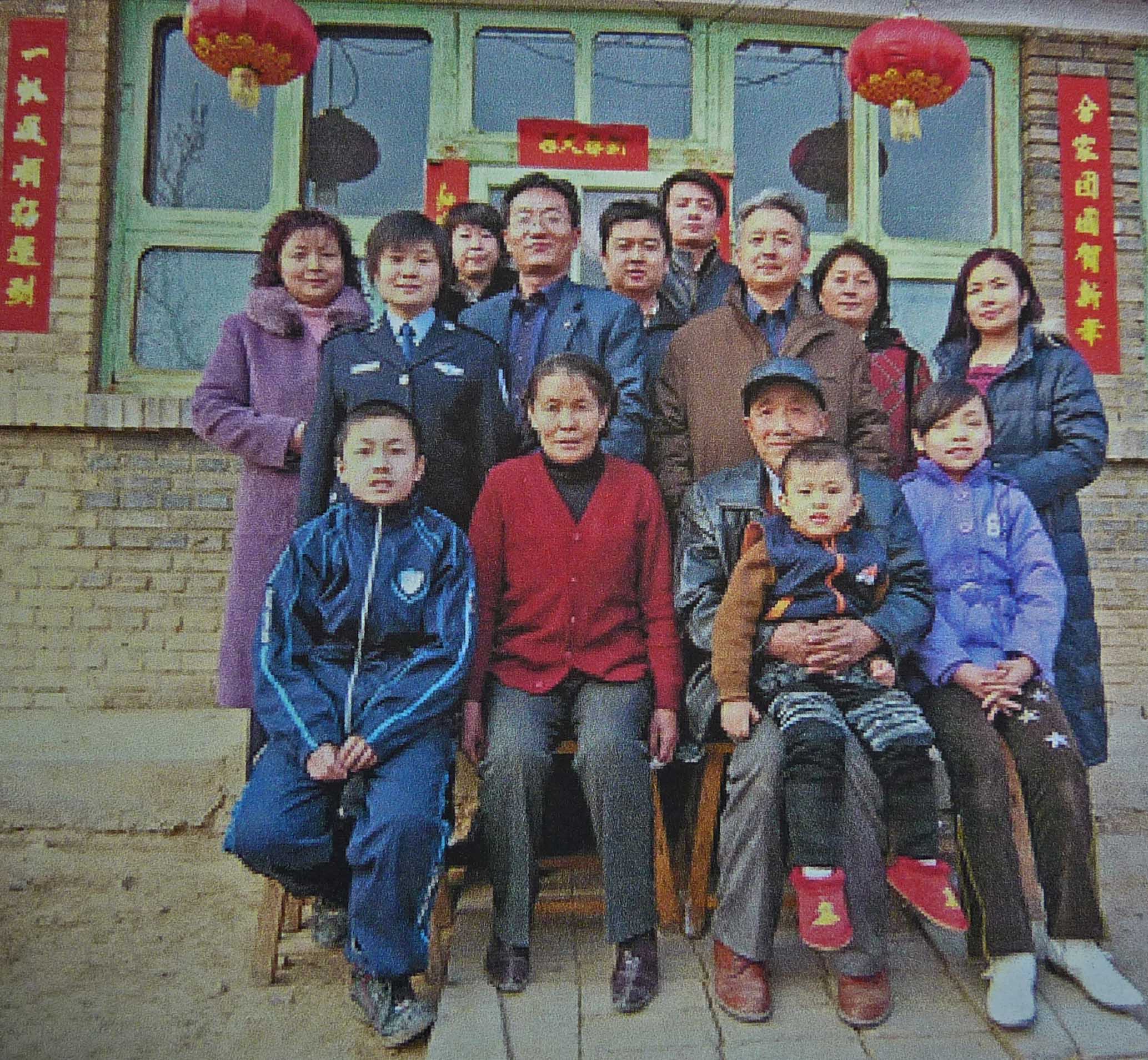
Li Family - Three Generations

Three Generations of the Proud Li Family

This willingness to sacrifice for the family and nation may have been the reason the Jews won the Six-Day War against overwhelming odds. Although the Chinese have the same values and are willing to make the same sacrifices for family, they did not know how to fight like the Jews—something the surviving Jews must have learned due to Nazi atrocities.

After Mao won China, he caused much suffering with the Great Leap Forward and the Cultural Revolution where the goal may have been to root out the weaknesses that caused China to become a victim to Western Imperialism in the 19th century and Japan during World War II.

I wonder if the Chinese learned the lessons Mao taught them through suffering similar to what the Jews experienced from Hitler.  I wonder if China will fight like Israel if threatened again. Before Mao, China was a country of poets and artists who painted watercolors on rice paper.  Even Mao and his generals wrote poems. I do not believe the Chinese are a military threat to anyone who does not threaten them.

Like Israel, China will only respond if they feel they are going to be attacked, and if Mao left them ready to defend themselves against aggressors, then the horrors that caused so much suffering and death during the 27 years he ruled China might have been worth the sacrifice for the survival of this family focused culture.

Most America families were like that once before the industrial revolution and the self-esteem movement made the individual more important than the family. Back then, 90% of the population lived on small family farms near towns and hamlets instead of bulging cities dominated by corporate cultures and sexy advertisements. Today, most family roots in the United States do not run deep—not like the Chinese and Jews.

Discover The First of all Virtues

______________

Lloyd Lofthouse is the award-winning author of My Splendid Concubine [3rd edition]. When you love a Chinese woman, you marry her family and culture too. This is the love story Sir Robert Hart did not want the world to discover.

His latest novel is the multiple-award winning Running with the Enemy.

Subscribe to “iLook China”!
Sign up for an E-mail Subscription at the top of this page, or click on the “Following” tab in the WordPress toolbar at the top of the screen.

About iLook China


Saying Goodbye

March 28, 2010

To the Chinese, the hardest goodbye is when white hair buries dark. This week, a  friend of our daughter’s died a tragic death at 17. The lost daughter’s name was Faith. Her story, like so many, was told in The Lost Daughters of China by Karin Evans, a book about abandoned girls and their journeys to American homes with loving adopted parents.

The phone call arrived at midnight from Faith’s mother. When my wife answered, I could hear and feel the grief like a bullet—my eyes filled with tears and an ache formed where my heart beats. No mother should suffer the loss of a child.

On the way to the airport, I listened to a memory about our daughter and Faith when they were in preschool together and a boy took a toy from our daughter. He refused to give it back. Faith came to the rescue.  She was only four or five. She demanded the toy be returned. The boy refused and Faith attacked biting him on the elbow.

You see, she had learned to survive in an orphanage in China where life can be a challenge. She was loyal to those she loved, who loved her. As long as those memories are shared and kept alive, she will always be with those who knew her.

The rest of Faith’s tragic journey may be discovered at Earth to Earth, Dirt to Dirt, Ashes to Ashes

2a-242-positive-reviews-hall-of-fame-reviewer-jan-16-2017

Where to Buy

Subscribe to “iLook China”!
Sign up for an E-mail Subscription at the top of this page, or click on the “Following” tab in the WordPress toolbar at the top of the screen.

About iLook China
China’s Holistic Historical Timeline