Where are the Parents – Part 2/4

April 14, 2010

When I was still teaching, one of the most common questions parents asked was, “What can we do to get him to read and do his homework? He won’t listen.” I said, “Turn off the television and any computer linked to the Internet. Learn to say no and mean it.” Most never followed that advice and I seldom saw improvement in that child’s study habits or grades.

Teens watching TV, not reading or doing homework

The latest research, published in the April issue of the journal Pediatrics, shows that having a bedroom television not only leads to more TV viewing, but also results in less time spent with the family, less time exercising, lower fruit and vegetable intake, more sweetened beverage consumption, and in lower grades. Source: Onslow/Allison

The scary thing is that many American parents don’t know how bad a job they are doing raising their kids. The average child watches several hours of television daily and spends several more text messaging or camping on Websites like YouTube. That same child goes to bed late and gets up early to go to school. Most American teens aren’t getting the nine hours of sleep necessary for their mental and physical growth and sleep is important.

In addition, more than forty percent of American children are latchkey kids. At the end of the school day, latchkey kids go home to an empty house because both parents are working to pay for that ten thousand dollar credit-card debt the average American family owes.

Continued in Where are the Parents – Part 3 or return to Part 1

_______________

Lloyd Lofthouse is the award-winning author of My Splendid Concubine [3rd edition]. When you love a Chinese woman, you marry her family and culture too. This is the love story Sir Robert Hart did not want the world to discover.

Subscribe to “iLook China”!
Sign up for an E-mail Subscription at the top of this page, or click on the “Following” tab in the WordPress toolbar at the top of the screen.

About iLook China


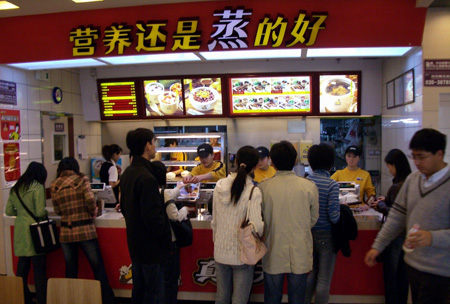
From Fast-Food to Killing – You Decide

April 13, 2010

I read Man Sentenced to death over China school stabbings and thought, “Is this another Columbine Copy Cat—but in China, the Middle Kingdom. where harmony rules?” Then I read in another piece that McDonald’s plans to double the number of fast-food restaurants in China from about 1,100 to 2,000 by the end of 2013.

Fast Food in China

It’s a fact that a fast-food diet has been observed to aggravate asthma, move mood swings, provoke personality changes, muster mental illness, nourish nervous disorders, deliver diabetes, hurry heart disease, grow gallstones, hasten hypertension, and add arthritis. Source: Healing Daily

Without making any claims that fast food might be connected to that man stabbing those children in China, I’m going to point out a few facts and let the reader decide.

America leads the world in violent assaults on school children of all ages. Prior to 1950, when the fast food industry took off and spread like a cancer, there were a total of forty-five recorded school-related attacks in the United States (over a time span of almost two centuries).

After 1950, the number of school-related attacks soared to about two hundred.  In China, recorded school-related attacks didn’t start until May 14, 2000. Since then, there have been more than a dozen. Source: List of school-related attacks

Here are two timelines for the growth of the fast-food industry in American and China. Study the dates. Compare to growth of school-related attacks. Decide.

History timeline of fast food in America

History timeline of fast food in China

See “An Invasion of Fat” http://wp.me/pN4pY-hb


Traditional Chinese Diet

April 11, 2010

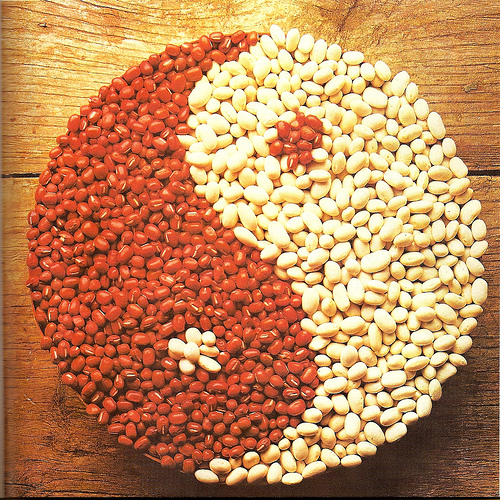
The concept of balance as taught by Confucius and Lao Tzu (Taoism) also plays an important role in diet. In China, yin foods are considered calming. It is believed that traditional Chinese foods come in three categories—yin, yang and neutral.

Yin foods should be eaten in summer and only in moderation in the winter as they are all very cooling. Yin foods are cool or cold in nature, clear away heat and eliminate toxins. Yang is the opposite of yin, and foods in this category are considered warm, dispel cold and treat symptoms from too much yin.

Some yin foods: Bananas, Clams, Crab, Grapefruit, Lettuce, Watercress, Watermelon, Apples, Cucumber, Pears, Mango, Spinach, Strawberries, Tomatoes

The yin and yang of food

Some yang foods: Cherries, Chicken, Dates, Ham, Leeks, Mutton, Peaches, Raspberries, Shrimps, Sunflower Seeds, Wine, Garlic, Ginger, Onion, Pepper

Some neutral foods: Beef, Beets, Carrots, Celery, Corn, Egg, Potatoes

The Chinese philosophy for eating is different from America and the West. Traditional Chinese medicine applies these philosophies to avoid or treat disease through diet. Once a Chinese doctor determines the nature of an imbalance, he or she aims to restore balance through acupuncture, herbs, and changes in diet or lifestyle. It is believed that as balance is restored in the body, so is health.

See “Health Care Without Drugs” http://wp.me/pN4pY-ey

Sign up for an RSS Feed for  iLook China

Lloyd Lofthouse is the author of the award winning My Splendid Concubine and writes The Soulful Veteran and Crazy Normal.


Yin Yang

April 11, 2010

Yin Yang is about balance.

In many ethical systems, the right path is the one that does not stray far from the middle. Aristotle preached that virtue was striking a balance between the vices of excess and of defect. A similar concept was presented by Plato, who was influenced by Pythagorean (570 -495 BC) ideas.

The concept of  balance is also an important aspect of  Confucianism since the philosophy of Yin Yang appeared about the same time as Confucius (551 – 479 BC), who wrote of a harmonious life that avoids excesses and deficiencies where wisdom was learned from both the old and the young, the high and the low.

Since Lao Tzu (the founder of Taoism and the concept of Yin and Yang) and Confucius lived about the same time, they may have met and shared thoughts.

The Doctrine of the Mean was a basis for civil service examinations in China from 1312 to 1905.

Confucius

The concept of Yin and Yang applies to many issues of life. In Taoism heaven is masculine and earth is feminine suggesting the dependence of the entire creation upon the Creator.

A whole series of possible interactions between the Yin and Yang in life is contained in the Chinese Book of Changes, the i Ching.

Discover Learning from China’s History

______________

Lloyd Lofthouse is the award-winning author of the concubine saga, My Splendid Concubine & Our Hart. When you love a Chinese woman, you marry her family and culture too.

If you want to subscribe to iLook China, there is a “Subscribe” button at the top of the screen in the menu bar 


The Yangqin

April 7, 2010

The yangqin, the Chinese Hammered Dulcimer, probably did not originate in China. It came from either Europe or Persia about five centuries ago and was adapted to fit Chinese music.

One theory says that the yangqin came to Chinese on the Silk Road. A second theory says it arrived in China with Portuguese traders in the 1500s.  A third theory says the instrument was developed in China without foreign influence from an ancient stringed instrument called a Zhu.

However, it is a young instrument by Chinese standards, and was first heard during the Ming Dynasty (1368 to 1644).  Later, it was commonly used in Chinese Operas. In Modern China, the yangqin is a major discipline in the College of Music.

A Yangqin or Chinese Hammered Dulcimer

The yangqin has over 100 strings that are struck with thin bamboo sticks that have rubber tips on one end.  When struck with the rubber end, a soft sound is heard.  When the strings are struck with the other end of the stick, without the rubber tip, a crisper sound is heard.

Around the world, there are many versions of the hammered dulcimer all designed and played in a similar fashion, but each country has its own distinct sound influenced by culture.   

If you enjoyed learning about and listening to the yangqin, see The Pipa

_________________________

Lloyd Lofthouse is the award-winning author of the concubine saga, My Splendid Concubine & Our Hart. When you love a Chinese woman, you marry her family and culture too. 

Sign up for an RSS Feed for iLook China