The Four Stringed Liuqin

April 19, 2010

The liuqin is a smaller version of the pipa but with four strings and the sound of a soprano range lute. There are two sound holes on each side of the body. By pressing slightly above any of the frets on the instrument, one can vary the pitch.

Liuqin

The liuqin is commonly played using a plectrum like in the guitar. The liuqin is often used to accompany other instruments for folk songs and local opera. It’s translation into English from Chinese means willow-shaped instrument, and it may come with two to five strings. The earliest four-stringed liuqin was popular during the Tang Dynasty (618 – 906 AD). The modern liuqin has four steel strings. 

If you enjoyed hearing the liuqin, see The Yangqin

_________________________

Lloyd Lofthouse is the award-winning author of the concubine saga, My Splendid Concubine & Our Hart. When you love a Chinese woman, you marry her family and culture too. 

Sign up for an RSS Feed for iLook China 


The First Emperor: The Man Who Made China – Part 2/9

April 18, 2010

Months after becoming king at thirteen, Shi Huangdi overcomes his mother’s desire to rule in his name and leads his nation to war. He is the youngest king to wage war and soon proves he is also the greatest warrior—he becomes known as the Tiger of Qin.  Shi Huangdi wages war against his enemies for ten years. There are seven countries besides Qin. The seven countries in what we know as China today were Zhao, Yen, Wei, Han, Chi, Chu and Qin.

During the war to conquer Zhao, Shi Huangdi’s army takes ten thousand prisoners. The rules of war say these prisoners must be fed and sheltered. However, Shi Huangdi changes the rules.  He shows his troops what to do by beheading an enemy troop and calls on his army to do the same.

He says, “There is only one way to treat weakness and that is to exploit it. There is only one way for Qin to survive, and that is to conquer.”  All 10,000 Zhao prisoners are beheaded.

Go to Part 3 of The Man Who Made China or return to Part 1

View as Single Page

_________________________

Lloyd Lofthouse is the award-winning author of the concubine saga, My Splendid Concubine & Our Hart. When you love a Chinese woman, you marry her family and culture too. 

To subscribe to “iLook China”, look for the “Subscribe” button at the top of the screen in the menu bar, click on it then follow directions.


The First Emperor: The Man Who Made China – Part 1/9

April 18, 2010

Professor Jeffrey Riegel, from the University of California, Berkeley traveled to China to unlock the truth behind one of the earth’s greatest legends, a man larger than life, the first emperor of China, Shi Huangdi. This nine part series on YouTube (each part runs about 10 minutes) is the documentary film about that emperor.

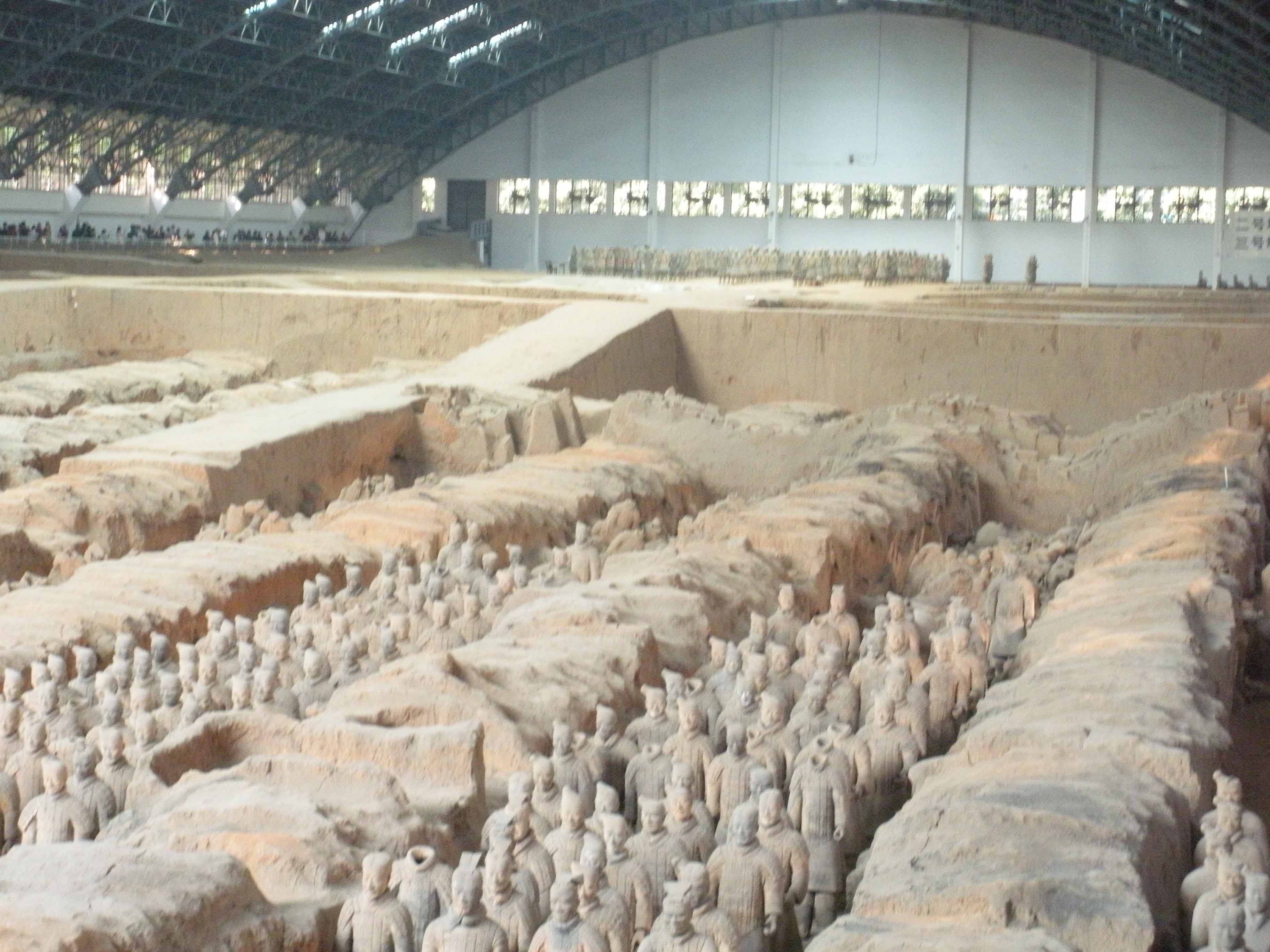
First Emperor’s Warriers

Shi Huangdi was barely thirteen when his father died (246 BC) after being king of Qin for three years. The legends say Shi Huangdi was a tyrant driven mad by power.

He built a tomb the likes of which humanity has never seen. When the first emperor was buried, he was the most powerful man on earth. He unified an empire that outlasted Rome by a thousand years, and he ruled ten times the population of ancient Egypt.

Go to Part 2 of The Man Who Made China or discover Gold from Dead Tibetan Caterpillars

View as Single Page

_______________

Lloyd Lofthouse is the award-winning author of My Splendid Concubine [3rd edition]. When you love a Chinese woman, you marry her family and culture too. This is the love story Sir Robert Hart did not want the world to discover.

Subscribe to “iLook China”!
Sign up for an E-mail Subscription at the top of this page, or click on the “Following” tab in the WordPress toolbar at the top of the screen.

About iLook China


Huangmei Opera

April 17, 2010

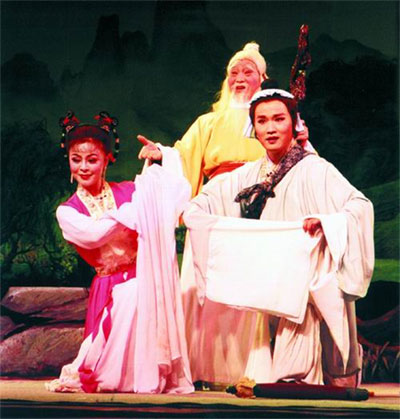
Anqing, in Anhui Province, is regarded as the ‘hometown’ of Huangmei Opera and Hui Opera. Anqing was first built in 1217 and is almost eight-hundred years old, but Huangmei Opera first appeared about two centuries ago as a simple drama of song and dance.

Huangmei opera did not involve the traditional opera gestures which often-used sleeves and step movements. The music is performed with a pitch that hits high and stays high and does not sound like the typical rhythmic Chinese opera.

Huangmei Opera Troupe

Chinese opera together with Greek tragic-comedy and Indian Sanskrit Opera are the three oldest dramatic art forms in the world.  For an example of Huangmei Opera, watch Cowherd and Weaver Girl.

To learn more about Chinese opera, see “Peking Opera” http://wp.me/pN4pY-lf

Sign up for an RSS Feed for  iLook China


Building Virtue

April 16, 2010

Regardless of the fact that the West calls the rulers of China Communists, it is clear that to the Chinese mind, the Mandate of Heaven shifted from Mao to Hua Guofeng and Deng Xiaoping and their predecessors. It will be up to China’s future rulers not to lose that mandate.

Milk and Tea for Chairman Hua

It doesn’t matter if the words ‘The Mandate of Heaven’ are invoked or not. It is obvious that the ‘Five Great Relationships’, as taught by Confucius, and the ‘Mandate of Heaven’ are infused in the Chinese thought process. Most born in China do not take a class to learn what this means, as students have to do in America to learn what the Declaration of Independence and the Bill of Rights mean. In China, one is raised with these philosophies in mind.

Piety, face, The Five Great Relationships, and the Mandate of Heaven are the foundation guide the behavior of the majority of Chinese.

The Western media and the political rulers of Western nations infer that Communism is evil because it is one party, (so-called) socialist political system, but most Chinese don’t see it that way.

To most Chinese, if the current rulers of China do their job and rule with the blessings of Heaven. The Western democratic political process is foreign to Chinese. To them, “Why change something that works? Leave it to Heaven.”

See The Mandate of Heaven http://wp.me/pN4pY-nc

 Sign up for an RSS Feed for  iLook China