China’s Moon Calendars

May 13, 2010

This is the year of the Tiger.  I was born in the year of the Rooster. To discover your year, use the Chinese Zodiac Sign Calculator.  Just feed in your date of birth.

Chinese Zodiac - the twelve animals

China’s ancient calendar is based on a twelve-year lunar cycle. At one time, the Chinese calendar was confusing and complex. Buddhists have been given credit for simplifying it by replacing a complex system of numerical symbols with the twelve animals of the Chinese Zodiac.   

There are several Chinese calendars, which are still in use today. Each has its own purpose. Farmers in rural China use one. There’s even a Chinese gender calendar to help conceive a boy or girl.

In addition to the lunar, numerical, astronomical, gender and agricultural calendars, each day also has a name from one of twenty-eight constellations, with a ruling spirit for the day.

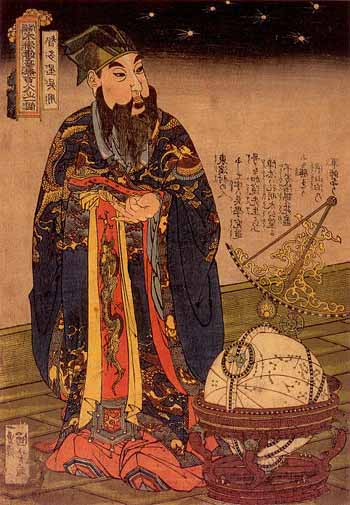
In charting the sky, the Chinese divided the heavens into 28 constellations located along the Equator and the ecliptic, each named after a star in the vicinity.

Learn about adding honor in one lunar leap

____________________________

Lloyd Lofthouse is the author of the award winning novels My Splendid Concubine and Our Hart. He also Blogs at The Soulful Veteran and Crazy Normal.

Sign up for an RSS Feed for iLook China


Honoring the Dead

May 13, 2010

Ancestor worship may well be the oldest, unorganized religion in China. Take Tomb Sweeping Day for example. The practice that honors family ancestors started during the Zhou Dynasty and has been around for more than 2,500 years.

The first emperor Qin Shi Huangdi had not unified China yet. China was divided into several nation states governed by hereditary rulers and worshiping ancestors was important in maintaining a link with the past.

Today, many Chinese homes and businesses have a shrine set up to honor the ancestors. This shrine may have the name of the ancestor carved into wood or rock or there is a photo. Food is often left on the table for the ancestors. 

Honoring the Ancestors

Ancestor respect is also an important part of Confucianism and there is still an ancestor hall for Confucius in Chufu that is maintained by a direct descendant. Next time you are in a Chinese or Southeast Asian restaurant, look around and see if you can spot a shrine to the ancestors.

Confucianism and ancestor worship is not exclusive to China. After all, China was a super power in Asia for more than two thousand years and had a large influence over other cultures in the region.

Learn more about Confucius from this five-part series about the sage’s life.

______________

Lloyd Lofthouse is the award-winning author of the concubine saga, My Splendid Concubine & Our Hart. When you love a Chinese woman, you marry her family and culture too. 

If you want to subscribe to iLook China, there is a “Subscribe” button at the top of the screen in the menu bar.


Silence to Beauty

May 12, 2010

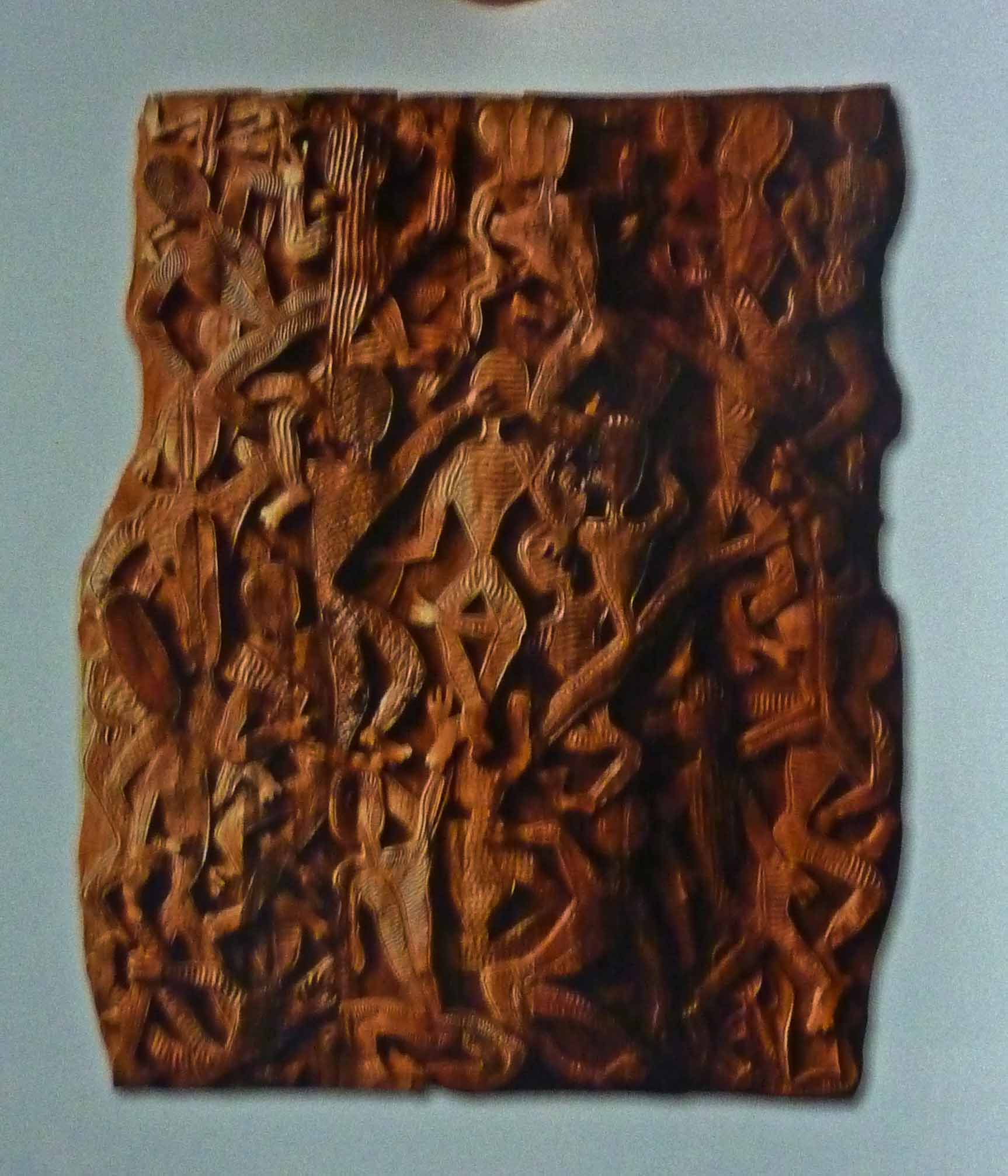
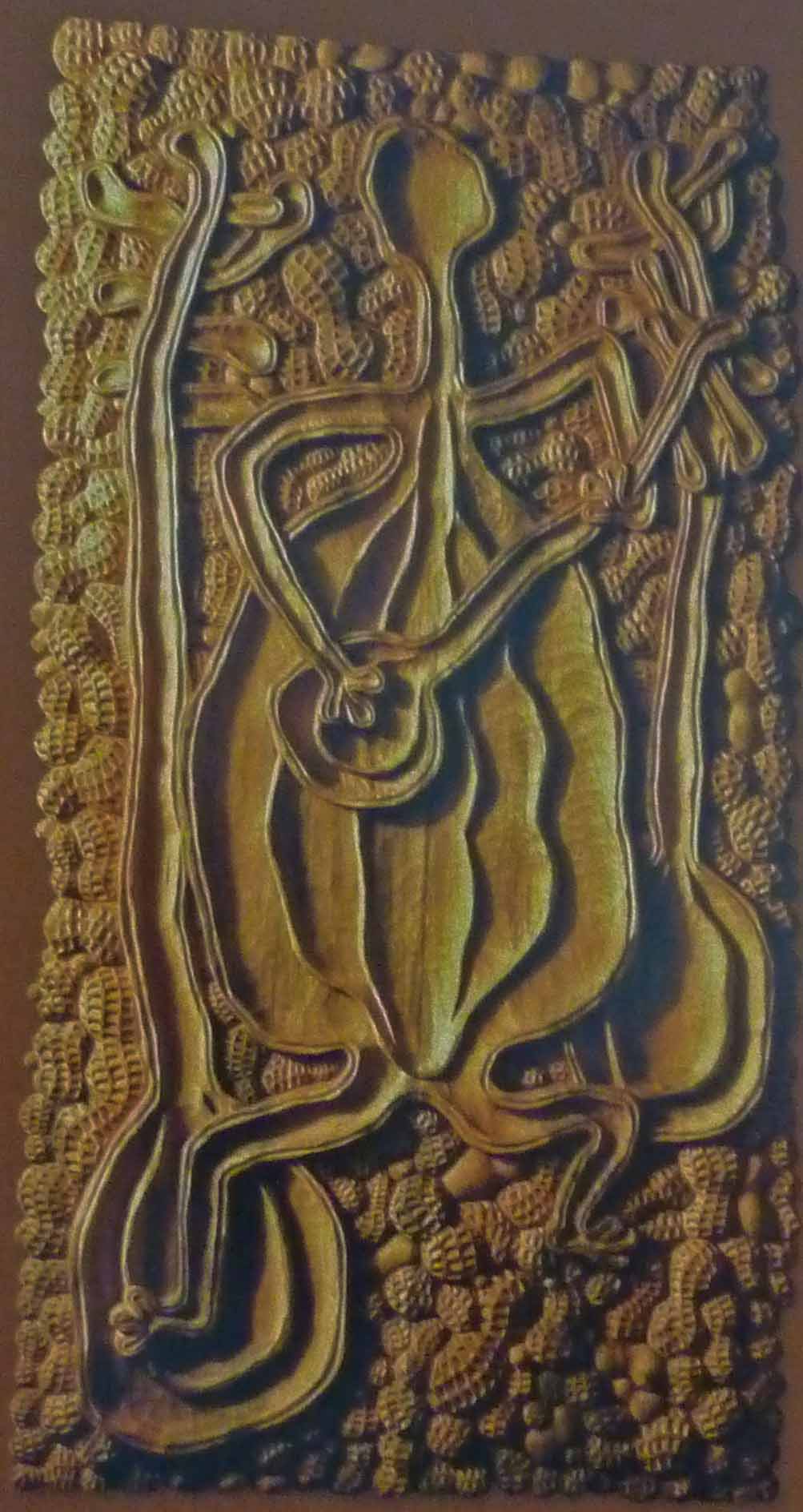
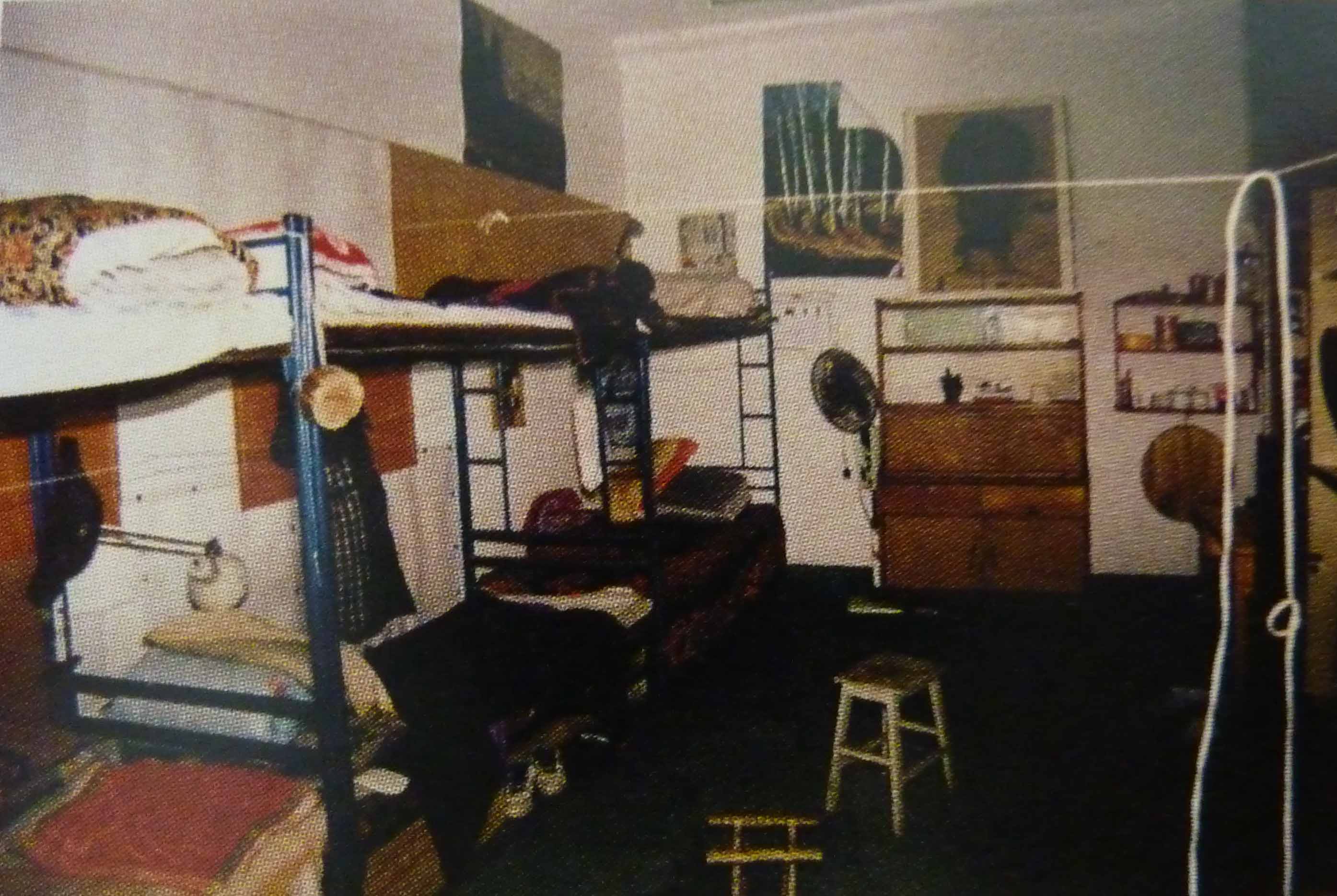
The art displayed in this post comes from artists, who are graduates of the Shandong Provincial Rehabilitation and Career School, an institute in China that trains young Chinese with disabilities. These artists are deaf.

In 1949, Mao Zedong launched the People’s Republic of China and ruled with an iron fist for almost three decades.

During Mao’s time, there was almost no free artistic expression in China unless the art served the propaganda needs of the state.

Zhang Guoli, Sons

After Deng Xiaoping opened China to a global market economy, the post Mao generation was introduced to Western art and theory.

Huang Jinpo, Earth

It wasn’t until the late 1980s and early 1990s that art from China started to emerge.

This is the dormitory where the artists live.

The photos in this post are presented with permission from “Embracing the Uncarved Wood, Sculptural Reliefs from Shandong, China“, which was made possible by a generous grant from the E. Rhodes and Leona B. Carpenter Foundation and with assistance from the Office of the Provost of Franklin & Marshall College. ISBN: 978-0-910626-04-0

Discover Chinese Yu Opera with Mao Wei-tao

______________

Lloyd Lofthouse is the award-winning author of The Concubine Saga. When you love a Chinese woman, you marry her family and culture too. This is the love story Sir Robert Hart did not want the world to discover.

To subscribe to “iLook China”, look for the “Subscribe” button at the top of the screen in the menu bar, click on it then follow directions.


China’s Giant Panda

May 12, 2010

The Panda is popular.  I just Googled the Giant Panda and there were 269,071 hits and that was just for Blogs.  The first post was “Pandas are Precious“.  The second Blog was from the Smithsonian and was about Mei Xiang, a Giant Panda, who wasn’t pregnant.

When we took my sister and her youngest daughter to China in 2008, my forty-year-old niece wanted to see the Pandas and have a picture taken of one sitting on her lap.

The Giant Panda, because it is so cute with its black and white coloring, is considered by many of the bear’s fans as docile, but it has been known to attack humans. It probably isn’t a good idea to have a Giant Panda sit on your lap. An adult male may weigh 330 pounds and a female 275 pounds. That pudgy bear is cute, but it is still a wild animal.

In fact, China’s Giant Pandas are considered a living treasure. Although the dragon has historically served as China’s national emblem, recently the Giant Panda has also served as an emblem for the country. The Chengdu Research Base is working hard to breed the Pandas so the species survives.

The Budget Traveler is a good site to find out about places to see the Giant Panda in China.

______________________________

Lloyd Lofthouse is the award-winning author of My Splendid Concubine [3rd edition]. When you love a Chinese woman, you marry her family and culture too. This is the lusty love story Sir Robert Hart did not want the world to discover.

#1 - Joanna Daneman review posted June 19 2014

Where to Buy

Subscribe to “iLook China”!
Sign up for an E-mail Subscription at the top of this page, or click on the “Following” tab in the WordPress toolbar at the top of the screen.

About iLook China

China’s Holistic Historical Timeline


Anger, Oppression, and Courage

May 12, 2010

In the West, it is common to air public or private corruption so the world sees. In China, it is best not to talk about embarrassing problems publicly. Unfortunately, this practice allows individuals in public office to spend lavishly.

When China considers reforms that go against cultural habits, the government moves cautiously and studies the results. Why experiment with change at all?  Because the people show courage and demand changes and this noise cannot be ignored for long.

In Chongqing, an experiment in rural land reform is taking place designed to lift economic oppression from the backs of the rural poor so they benefit from the growing economy. This is the only province where rural land reforms are being tested on a provincial scale. If this works, these reforms may spread to other provinces calming rural anger.

Baimiao, a Sichuan township, is experimenting with financial transparency that has been termed “Naked Government.” So far, results look promising.  For China to combat political corruption, financial transparency is necessary.

In another test, a Cultural Revolution museum in Shantou (Guangdong district) is a message that history is a warning not to make the same mistakes twice. The museum gets about 1,000 visitors a day.

The size of each experiment may signal the importance of each. One covers a province. Two are only in towns. The first experiment took place soon after Mao died. That test was an open market leading to China’s ever changing, booming economy. Maybe these latest tests, if successful, will lead to similar results.

____________________________

Lloyd Lofthouse is the author of the award winning novels My Splendid Concubine and Our Hart. He also Blogs at The Soulful Veteran and Crazy Normal.

Sign up for an RSS Feed for iLook China