Huangmei Opera

April 17, 2010

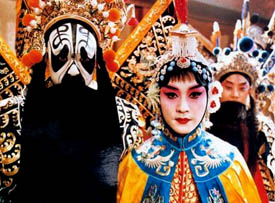
Anqing, in Anhui Province, is regarded as the ‘hometown’ of Huangmei Opera and Hui Opera. Anqing was first built in 1217 and is almost eight-hundred years old, but Huangmei Opera first appeared about two centuries ago as a simple drama of song and dance.

Huangmei opera did not involve the traditional opera gestures which often-used sleeves and step movements. The music is performed with a pitch that hits high and stays high and does not sound like the typical rhythmic Chinese opera.
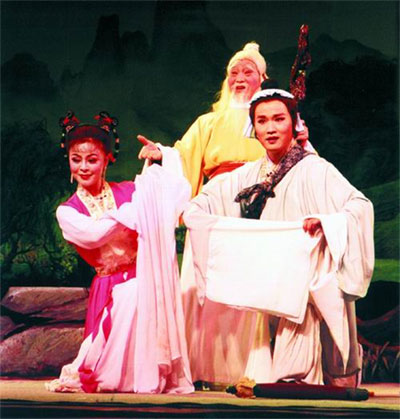
Huangmei Opera Troupe

Chinese opera together with Greek tragic-comedy and Indian Sanskrit Opera are the three oldest dramatic art forms in the world.  For an example of Huangmei Opera, watch Cowherd and Weaver Girl.

To learn more about Chinese opera, see “Peking Opera” http://wp.me/pN4pY-lf

Sign up for an RSS Feed for  iLook China


The Yangqin

April 7, 2010

The yangqin, the Chinese Hammered Dulcimer, probably did not originate in China. It came from either Europe or Persia about five centuries ago and was adapted to fit Chinese music.

One theory says that the yangqin came to Chinese on the Silk Road. A second theory says it arrived in China with Portuguese traders in the 1500s.  A third theory says the instrument was developed in China without foreign influence from an ancient stringed instrument called a Zhu.

However, it is a young instrument by Chinese standards, and was first heard during the Ming Dynasty (1368 to 1644).  Later, it was commonly used in Chinese Operas. In Modern China, the yangqin is a major discipline in the College of Music.

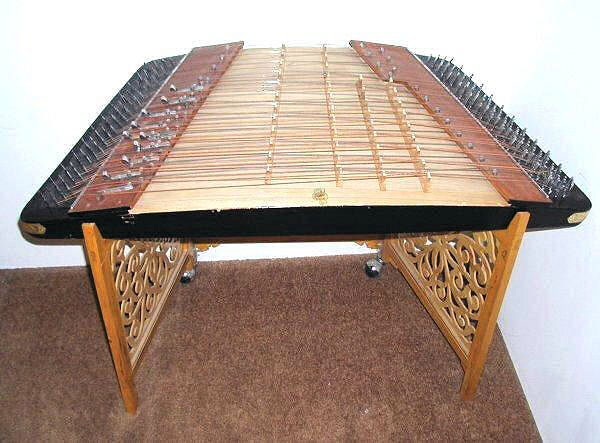
A Yangqin or Chinese Hammered Dulcimer

The yangqin has over 100 strings that are struck with thin bamboo sticks that have rubber tips on one end.  When struck with the rubber end, a soft sound is heard.  When the strings are struck with the other end of the stick, without the rubber tip, a crisper sound is heard.

Around the world, there are many versions of the hammered dulcimer all designed and played in a similar fashion, but each country has its own distinct sound influenced by culture.   

If you enjoyed learning about and listening to the yangqin, see The Pipa

_________________________

Lloyd Lofthouse is the award-winning author of the concubine saga, My Splendid Concubine & Our Hart. When you love a Chinese woman, you marry her family and culture too. 

Sign up for an RSS Feed for iLook China 


Farewell, My Concubine

April 2, 2010

Chen Kaige, self-trained as a filmmaker, was the director for this award winning 1993 film. Prior to “Farewell, My Concubine“, Chen received modest acclaim for the “Yellow Earth” and “The Big Parade”. With “Farewell, My Concubine,” he won the Palme d-or in Cannes.

Farewell, My Concubine

Although the film is in Mandarin with English subtitles, the story captured me from the beginning. If you are interested in Chinese history, this film spans several decades beginning near the end of the Ch’ing Dynasty. On the surface, it is just a story of two boys who happen to become famous, but have their difficulties like most of us lesser mortals do. However, the setting shows the  transformation of a nation from the Ch’ing Dynasty to a warlord dominated republic, the Japanese invasion of World War II and then Mao’s Cultural Revolution.

I saw this movie a decade ago and I remember this powerful, dramatic story of one man’s life from the day his mother took a knife and chopped off an extra finger on each hand so he would have five instead of the six he was born with.

The main character is apparently modeled after an actual person—Peking Opera superstar Mei Lanfang—some may imagine that Lanfang was ‘gay’. However, he only specialized in male roles. He was married at least three times and had children.

Discover Not One Less

______________

Lloyd Lofthouse is the award-winning author of The Concubine Saga. When you love a Chinese woman, you marry her family and culture too.  This is the love story Sir Robert Hart did not want the world to discover.

To subscribe to “iLook China”, look for the “Subscribe” button at the top of the screen in the menu bar, click on it then follow directions.


Peking Opera

April 1, 2010

Peking Opera is a combination of several styles of Chinese opera.

The metamorphosis started during the Qing Dynasty (1644-1911), about two hundred years ago.

Peking Opera focuses on historical events, legends about emperors, ministers, generals, geniuses and great beauties.

Performances are a combination of singing, dialogue, pantomime and acrobatic fighting and dancing.

Today, Peking Opera is considered the highest expression of Chinese culture.

The origins of Peking Opera did not begin in Peking (Beijing).  The opera had its start in the Chinese provinces of Anhui and Hubei.

Experts say the opera was born in 1790 and was originally staged for the royal family and then the public.

There are thousands of these operas that cover the history and literature of China. Peking operas can be divided into two categories.

“Civil” operas focus on singing while “Martial” operas feature acrobatics and stunts.  Some are a combination of both.

If Peking Opera interests you, see Chinese Yu Opera with Mao Wei-tao

______________

Lloyd Lofthouse is the award-winning author of The Concubine Saga. When you love a Chinese woman, you marry her family and culture too. This is the love story Sir Robert Hart did not want the world to discover.

Subscribe to “iLook China”!
Sign up for an E-mail Subscription at the top of this page, or click on the “Following” tab in the WordPress toolbar at the top of the screen.

About iLook China


Xu Xiao-dong’s Gallery and Art Studio

March 31, 2010

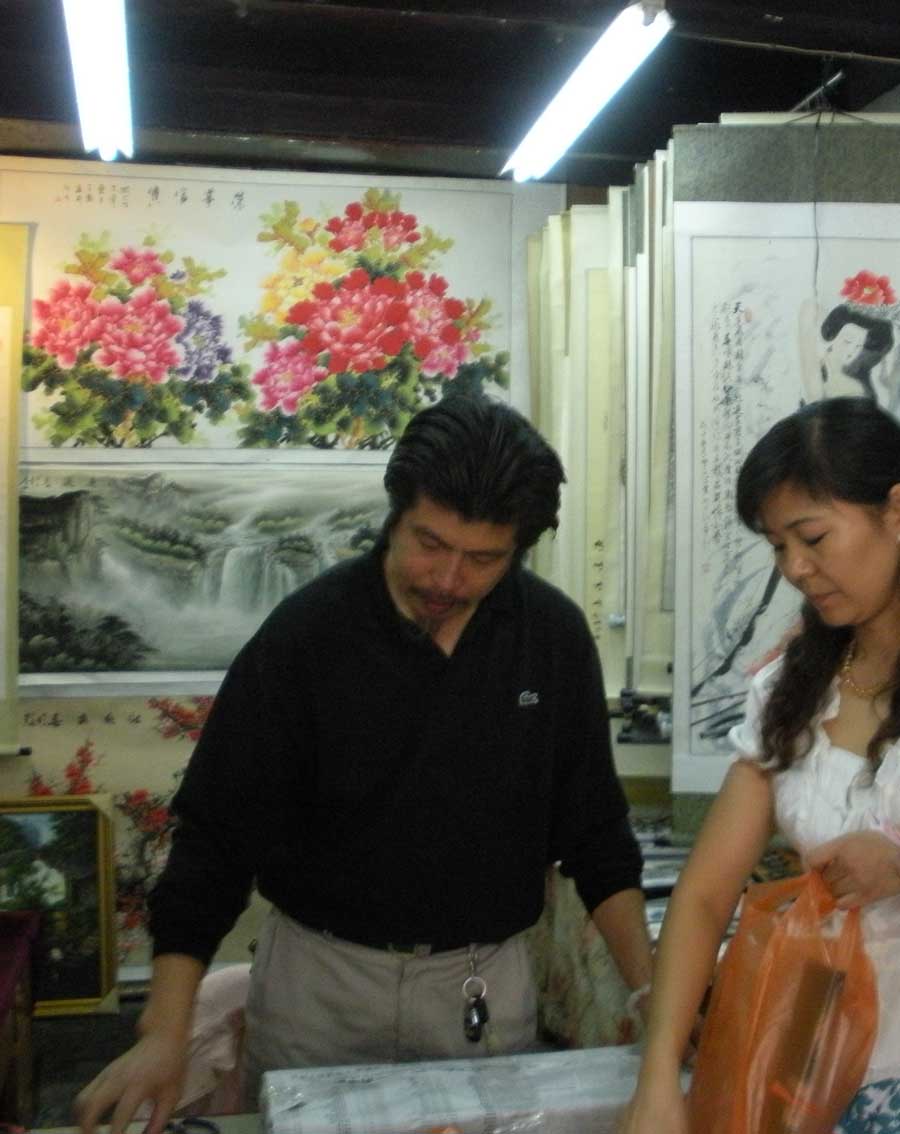
When visiting Zhouzhang, China’s #1 Water Town for Tourists, we stopped at Xu Xiao-dong’s gallery and art studio (e-mail: longyu8@126.com).

Xu-Xiao-dong

 The artist trained under a master and keeps a newspaper clipping that mentions it.


We bought several watercolors from Xu Xiao-dong, and he gave me written permission to use his art for the cover of My Splendid Concubine. I cropped the photo of the original and added the title and my name.

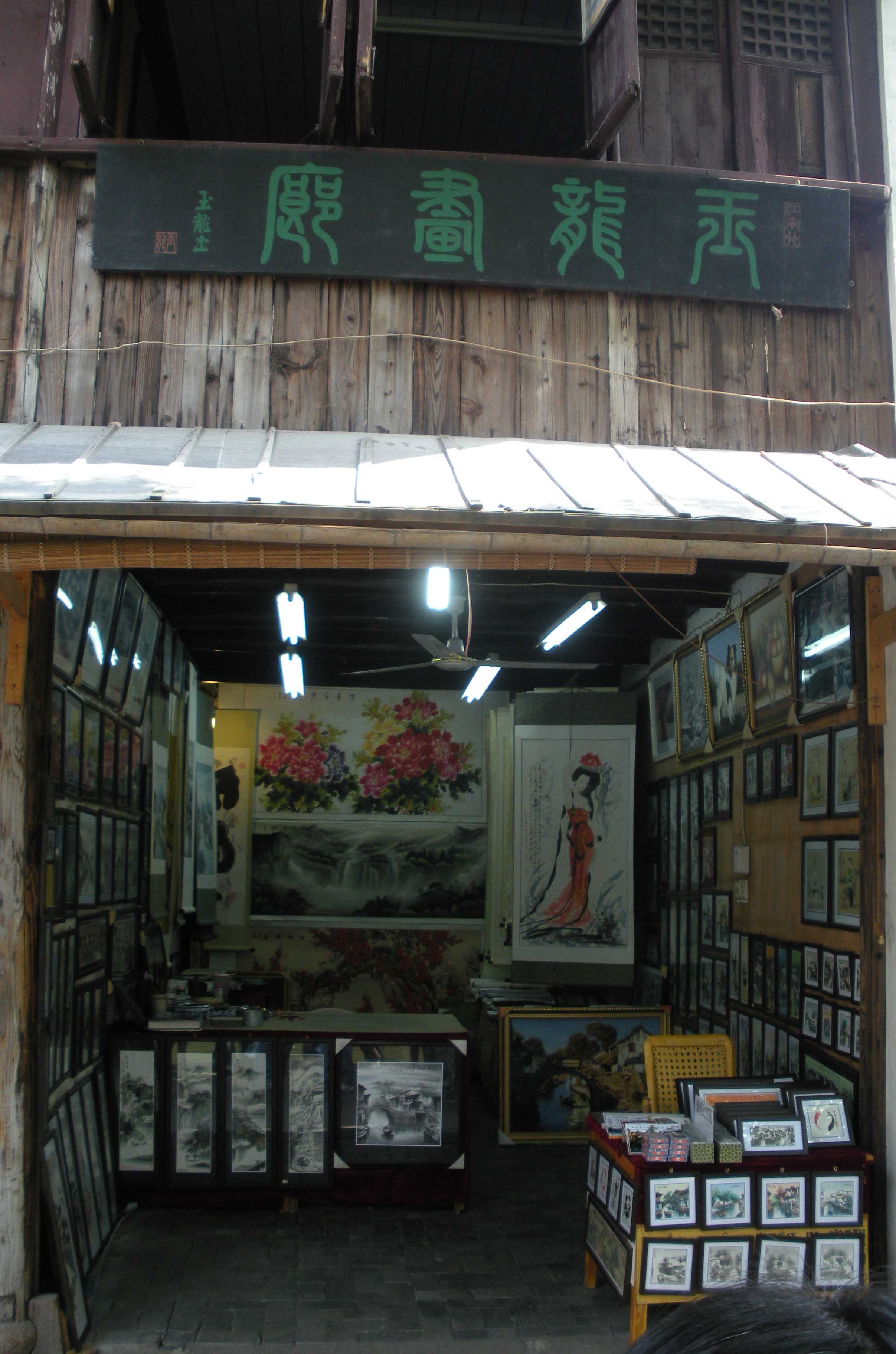
Xu Xiao-dong's gallery

There’s a narrow, steep stairway in the back (left) that goes to another floor and more art. The artist also paints his art on the second floor.

Zhouzhang, near Shanghai, is more than a thousand years old. Unlike most tourist attractions in America, this town is still lived in.  The town’s population makes its living from the tourists who cannot enter unless they pay a fee.

Discover more of Zhouzhuang-China’s Venice

______________

Lloyd Lofthouse is the award-winning author of the concubine saga, My Splendid Concubine & Our Hart. When you love a Chinese woman, you marry her family and culture too.

If you want to subscribe to iLook China, there is a “Subscribe” button at the top of the screen in the menu bar.