Xu Xiao-dong’s Gallery and Art Studio

March 31, 2010

When visiting Zhouzhang, China’s #1 Water Town for Tourists, we stopped at Xu Xiao-dong’s gallery and art studio (e-mail: longyu8@126.com).
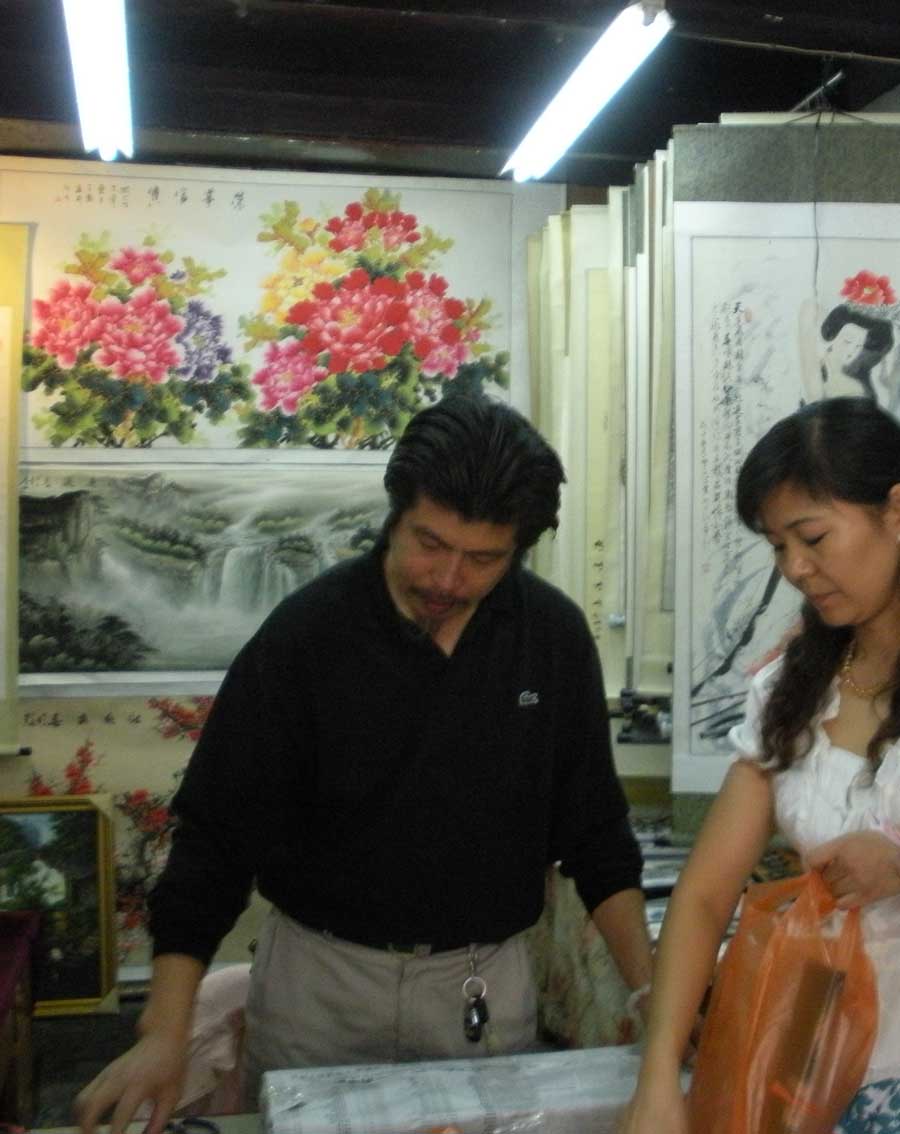
Xu-Xiao-dong

 The artist trained under a master and keeps a newspaper clipping that mentions it.


We bought several watercolors from Xu Xiao-dong, and he gave me written permission to use his art for the cover of My Splendid Concubine. I cropped the photo of the original and added the title and my name.
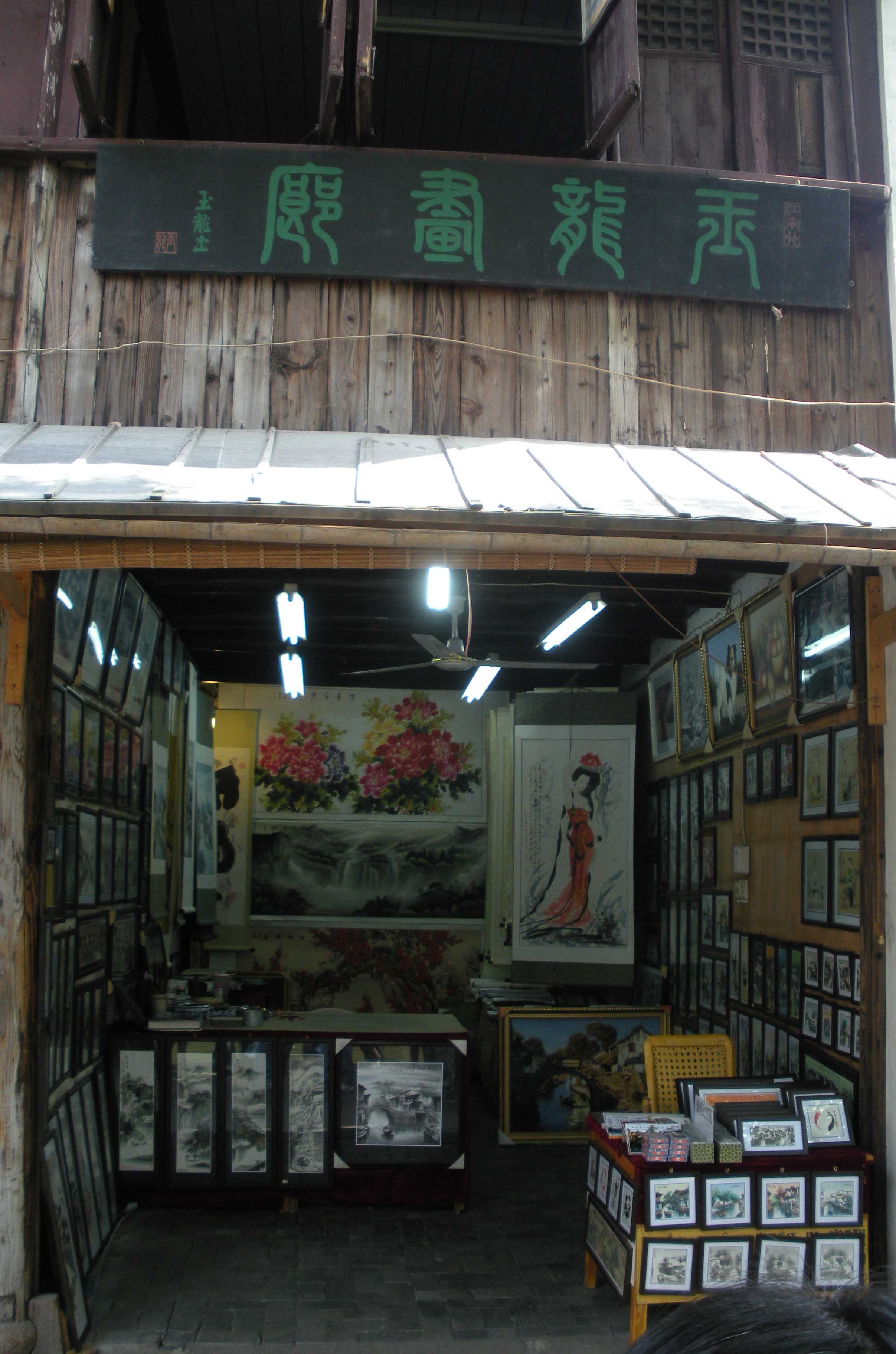
Xu Xiao-dong's gallery

There’s a narrow, steep stairway in the back (left) that goes to another floor and more art. The artist also paints his art on the second floor.

Zhouzhang, near Shanghai, is more than a thousand years old. Unlike most tourist attractions in America, this town is still lived in.  The town’s population makes its living from the tourists who cannot enter unless they pay a fee.

Discover more of Zhouzhuang-China’s Venice

______________

Lloyd Lofthouse is the award-winning author of the concubine saga, My Splendid Concubine & Our Hart. When you love a Chinese woman, you marry her family and culture too.

If you want to subscribe to iLook China, there is a “Subscribe” button at the top of the screen in the menu bar.


Spring Festival – The Year of theTiger

March 31, 2010

The Chinese New Year is important to most Chinese the world over. It is based on the lunar calendar and is known as the Spring Festival, which can be traced back more than 4,000 years, and it lasts for three days—the last day of the last lunar month and the first two days of the first lunar month. This year, the Spring Festival took place between February 14 to 16 (Gregorian Calendar).

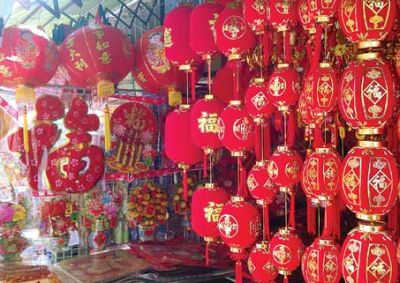
During the Spring Festival, families paste scrolls on doors with the Chinese character ‘Fu’ (福), meaning good fortune and happiness. There are firecrackers and fireworks. All family members gather to eat. It is traditional to eat certain foods like jiaozi, dumplings, fish, spring rolls, and sticky rice balls (tangyuan).

Spring Festival Lanterna

The Chinese lunar New Year is one of eight traditional festivals in addition to several government holidays. 2010 is the year of the tiger—known by its formal name of Geng Yin, year 4707 in the lunar Chinese calendar.

Discover Chinese Yu Opera

______________

Lloyd Lofthouse is the award-winning author of the concubine saga, My Splendid Concubine & Our Hart. When you love a Chinese woman, you marry her family and culture too.

If you want to subscribe to iLook China, there is a “Subscribe” button at the top of the screen in the menu bar.


The Pipa

March 27, 2010

I’m taking a break from serious topics like politics and economics to write about the Chinese pipa, a four stringed lute (or Chinese guitar) with a pear-shaped body. Historical records show that the pipa first appeared during the Qin Dynasty (222 – 206 BCE), and it become one of the most popular stringed instruments in China and has survived more than two-thousand years.

pipa

Traditional Chinese music has been traced back 7,000 to 8,000 years. For centuries this music was heard primarily by the royalty and high government officials. By the Tang Dynasty, records show that this music had spread to the common people.

Traditional Chinese musical instruments can be divided into four categories: stringed instruments, percussion instruments, plucked instruments, and wind instruments.

If you enjoyed this, discover the The Erhu

______________

Lloyd Lofthouse is the award-winning author of The Concubine Saga. When you love a Chinese woman, you marry her family and culture too. This is the love story Sir Robert Hart did not want the world to discover.

Subscribe to “iLook China”!
Sign up for an E-mail Subscription at the top of this page, or click on the “Following” tab in the WordPress toolbar at the top of the screen.

About iLook China


The Erhu

March 22, 2010

An erhu is a Chinese two-stringed instrument similar to a fiddle. The erhu has a thin, slightly reedy sound. Since the erhu is so widely used, foreigners see it as an example of Chinese music.

The erhu

However, once you recognize the sound of an erhu, it can usually be readily picked out from other musical instruments, because it is unique. The history of the erhu spans thousands of years. The first erhus were heard during the Tang Dynasty. Since the traditional Chinese character for “erhu” indicates it has two strings, the erhu has probably changed little over the centuries. Alternate names for the erhu include huqin or hu, and Westerners sometimes call the instrument a “Chinese violin”. 

If you enjoyed learning about and listening to the erhu, you may enjoy Mao Wei-Tao’s Chinese Yu Opera

_________________________

Lloyd Lofthouse is the award-winning author of the concubine saga, My Splendid Concubine & Our Hart. When you love a Chinese woman, you marry her family and culture too. 

Sign up for an RSS Feed for iLook China 


Chinese Cloisonné Vases

March 14, 2010

On our way back from the Great Wall at Mutianyu, we stopped at a factory and showroom where we learned about the manufacturing techniques for Cloisonné brass vases. First, we went on a tour where we watched men and women creating vases. Once the tour was over, we went into the showroom.

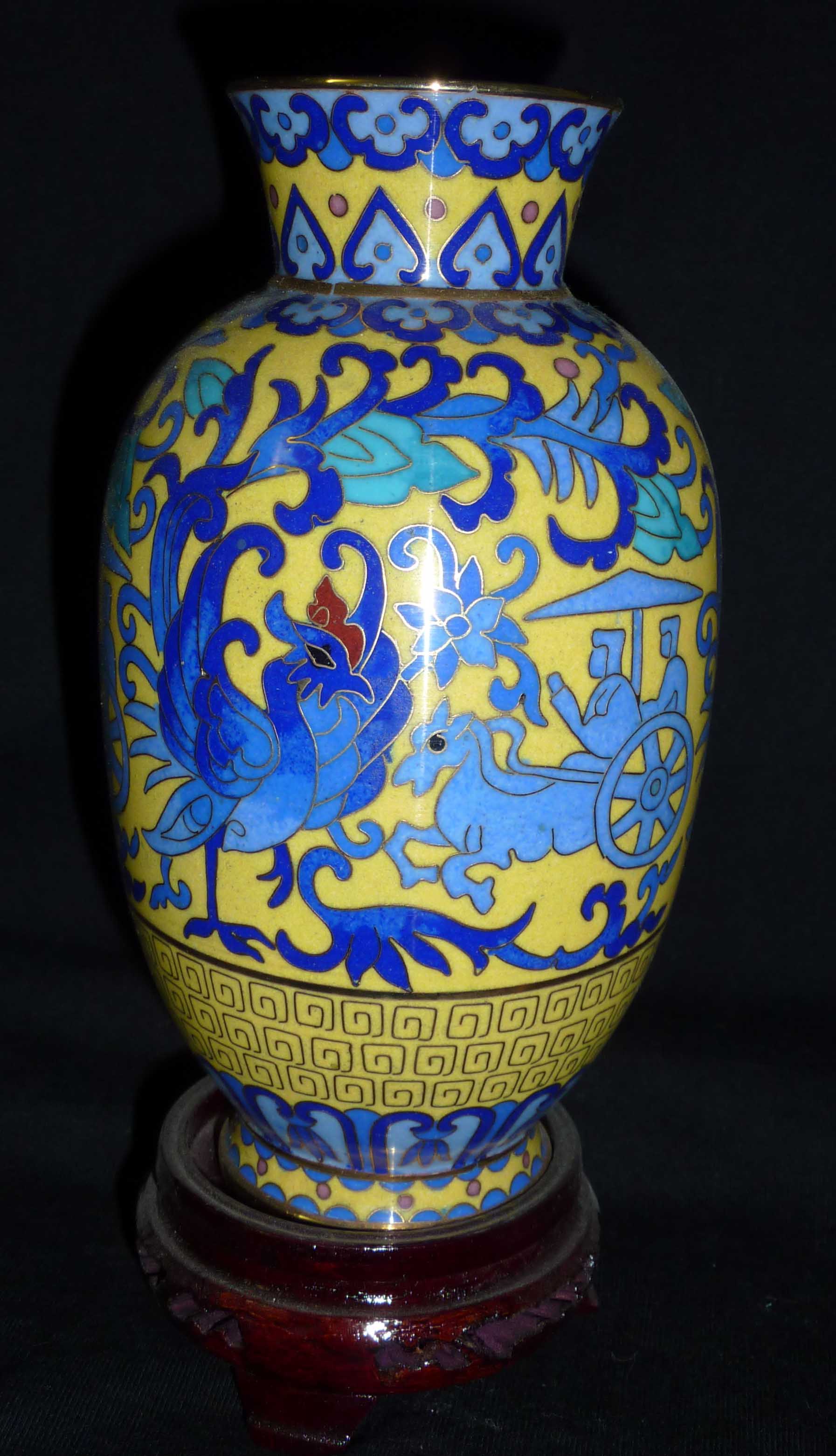
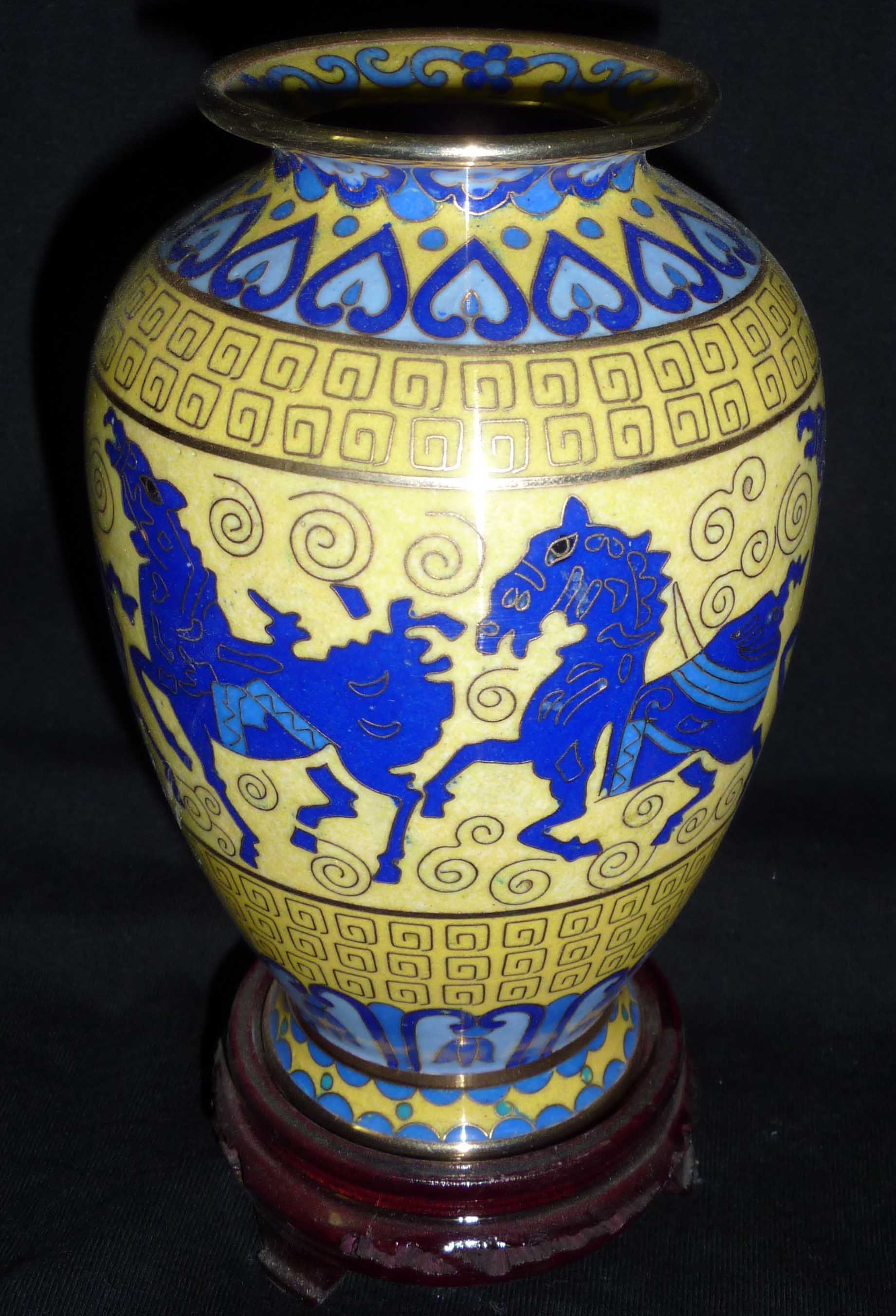
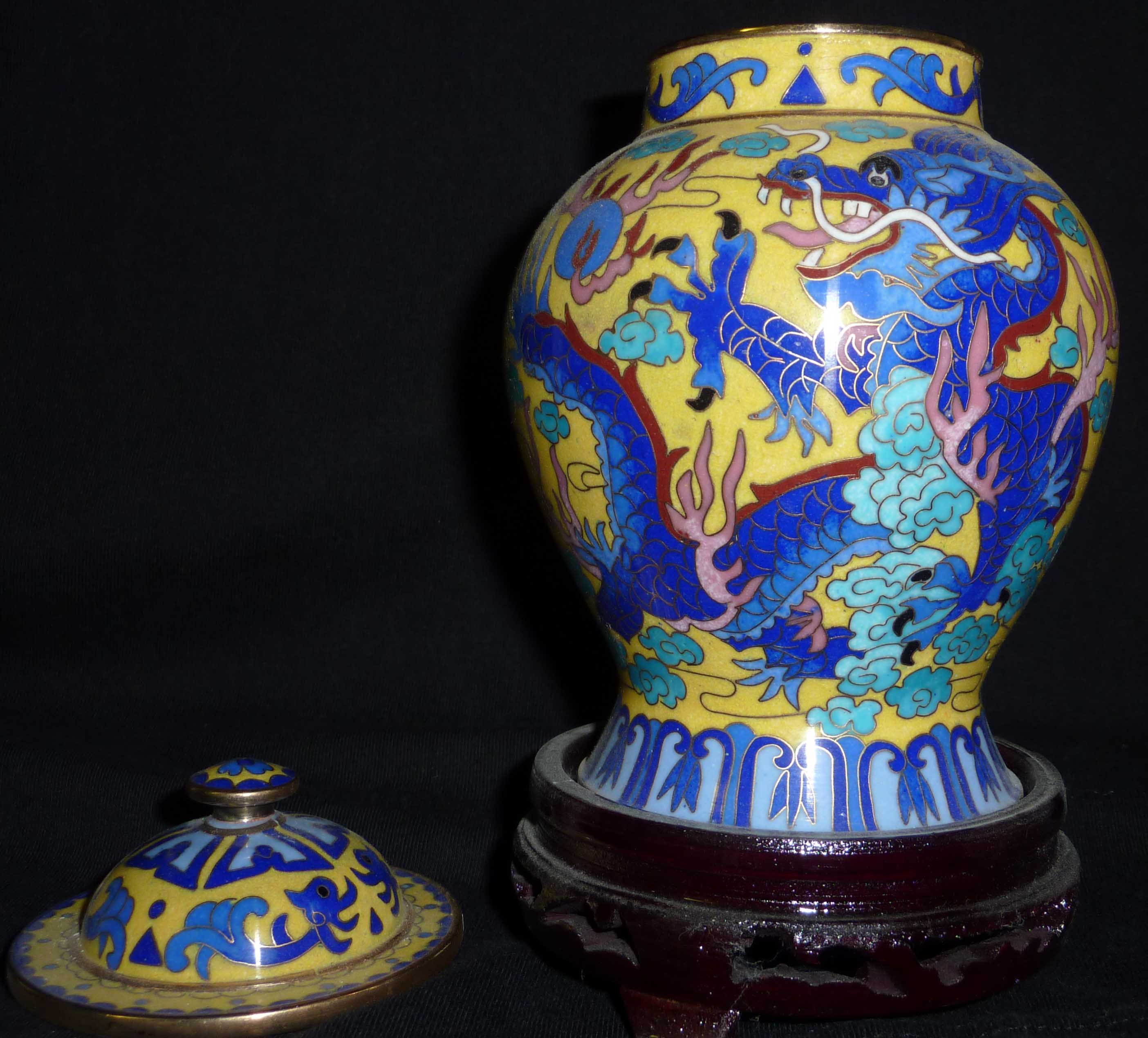
The vases I bought (after negotiating a price) are yellow with a blue trim.  One has a blue dragon on it, the second a phoenix beside a chariot, and the third running horses. Each one is about the size of my hand.

The cloisonné process is enamel on copper craftwork. It first appeared in Beijing in the Yuan Dynasty (1271-1368) and continued during the Ming Dynasty (1368-1644). Cloisonné vases are crafted by using a copper porcelain process. The vase is made from copper with brass wires soldered to the body. Then a porcelain glaze is applied to cells between the brass wires.

After a series of complex procedures, such as burning, burnishing and gilding, the cloisonné vase is done.

Chinese name: 景泰蓝(jǐng tài lán)

If you are interested in the arts, discover Chinese Yu Opera

_______________

Lloyd Lofthouse is the award-winning author of My Splendid Concubine [3rd edition]. When you love a Chinese woman, you marry her family and culture too. This is the love story Sir Robert Hart did not want the world to discover.

Subscribe to “iLook China”!
Sign up for an E-mail Subscription at the top of this page, or click on the “Following” tab in the WordPress toolbar at the top of the screen.

About iLook China