What did it take to turn the lights on in China: Part 1 of 2

December 15, 2015

Access to electricity is the key to developing a modern country with the potential to grow a large, consumer driven middle class.  Poverty reduction is also linked to access of electricity, because without electricity people live in the middle ages.

In fact, to reduce poverty,  over the last 50 years China has introduced electricity access to 100% of it’s people.  – World Bank.org

In 1949 when the People’s Republic (PRC) was founded, there were only 33 small hydropower stations in rural China, with a total installed capacity of 3.63 megawatts, and total electricity consumption in rural areas was 20 million kilowatts. Today, there are thousands of hydro-power stations, and the PRC has more than any country on the earth.

China Racing Ahead with Hydro Power

Of the world’s 65 operational hydropower stations with an installed capacity of at least 2,000 MW, China operates 20 (more than 30%).

In 1979, China’s Xinhua state run news agency reported a serious electric power shortage. The agency said China produced about 150,000 million kilowatts of electricity a year and ranked about seventh among the world’s electric energy producers. In fact, China’s output was about one-eighth that of the U.S. back then.  – History of China’s electricity use

In a previous post, China’s Goals to Go Green, we discovered that China now produces more electricity than the U.S., but the U.S. still produces 17.0 metric tons of CO2 emissions for each person in the United States compared to 6.7 metric tons for each person in China.

Imagine what the CO2 pollution would be like in China if the Chinese eventually match the U.S. per capita. – CO2 emissions World Bank data

Part 2 continued on December 16, 2015

______________________________

Lloyd Lofthouse is the award-winning author of My Splendid Concubine [3rd edition]. When you love a Chinese woman, you marry her family and culture too. This is the lusty love story Sir Robert Hart did not want the world to discover.

#1 - Joanna Daneman review posted June 19 2014

Where to Buy

Subscribe to “iLook China”!
Sign up for an E-mail Subscription at the top of this page, or click on the “Following” tab in the WordPress toolbar at the top of the screen.

About iLook China

China’s Holistic Historical Timeline


What is the Real Cause of Most Riots?

December 9, 2015

When the Western media reports that a riot happened in China don’t mistake this unrest as a demand for a Western style democracy as the media did when the Tiananmen Square protests took place in 1989. Just because a few young people were captured on camera in China saying they want a democracy doesn’t mean the majority of Chinese do.

For example, CNN reported a June 10, 2011 riot in Xintang located in southern China.  Witnesses and media reports said local officials beat up a pregnant migrant worker and her husband, pushing the woman to the ground. Mass protests ensued, quickly spiraling to violent clashes with government forces that spread to other parts of Xintang, a city of 400,000 residents, almost half of them migrant workers.

The result was the arrest of 19 men, which included nine teenagers.

If you read the CNN report, you’ll discover that a slowdown in economic growth (caused by the 2008 global financial crises, which started in the U.S. due to greed and lax laws) in China caused social tensions between rural versus urban, ethnic minority against majority, and haves versus have-nots, which caused several riots in different areas of China.

The same thing happened in 1947 when General (and dictator) Chiang Kai-shek ordered his army to quell a riot in Taiwan. The result was the 2/28 Massacre in Taiwan where 30,000 civilians were killed by the military.

The reasons for riots around the world seldom have to do with a demand for a Western style democracy. Even in the Middle East where there have been riots and calls for democracy, according to the Western media, most of the people involved don’t know what a democracy is or how to set one up. They just want some form of social justice.

In 1992, in Los Angeles, there was the Rodney King riot caused by ethnic strife, which ended with about $1 billion in property damages in addition to 53 people killed and thousands injured. The U.S. Marines and Army had to be called in to regain control and there were shootings between the military and civilians.

In Oakland, California there were several riots caused by the 2009 killing of an unarmed black man that took place at a BART station.  Hundreds took to the streets to protest while looters broke into stores and set cars on fire.

In 2001, England had riots in three cities due to tensions in the South Asian Islamic community. It was estimated that the riot in Bradford, England involved about a thousand youths and eventually it took a thousand police to end it.

A 2011, a riot in Vancouver erupted after the Canucks lost the Stanley Cup.  After the game, many teenagers went on a rampage attempting to shatter windows and loot stores.  When one man tried to stop them, he was jumped by no fewer than 15 people, who beat and kicked him until he was left a bloodied heap on the ground.

Wikipedia lists many of the reasons for riots, which may stem from the unlawful use of force by a group of police against civilians, prison riots, race riots, religious riots, student riots, urban riots, sports riots, and food/bread riots that have taken place all over the world no matter what form of government a country has.

However, when the Western media reports about riots in China, it’s almost always mentioned that China’s central government is challenged to prevent widespread grievances from taking place as if riots in China are different than riots in other countries.

According to the history of riots, this challenge of an unruly civilian population is a problem all governments eventually face and the job of governments the world over is to end the killing and damage as soon as possible by whatever means to restore order.

______________________________

Lloyd Lofthouse is the award-winning author of My Splendid Concubine [3rd edition]. When you love a Chinese woman, you marry her family and culture too. This is the lusty love story Sir Robert Hart did not want the world to discover.

#1 - Joanna Daneman review posted June 19 2014

Where to Buy

Subscribe to “iLook China”!
Sign up for an E-mail Subscription at the top of this page, or click on the “Following” tab in the WordPress toolbar at the top of the screen.

About iLook China

China’s Holistic Historical Timeline


What does it mean to Eat Bitterness and be Asian in the United States?

December 8, 2015

On April 25, 2011, Nadra Kareem Nittle wrote, Are U.S. Universities Discriminating Against Asian Students? The answer to Nittle’s question was and still is YES.

In the US, since the Civil Rights era preferential treatment favored African-Americans and Latinos since Asian-Americans tend to swallow their bitterness instead of protesting violently as the other minorities have done.

For example, the NAACP says it fights for social justice for all Americans. However, facts demonstrate that the NAACP tends to favor legislation that focuses on benefits for African Americans. If this were not true, there would be no need for political organizations to serve Latinos and Asian-Americans.

In fact, Africana Online said, “The National Association for the Advancement of Colored People (NAACP) has been instrumental in improving the legal, educational, and economic lives of African Americans.” There was no mention of the other minorities that suffer from racism in the U.S.

However, Latino Political Clout is growing in the U.S. to challenge the NAACP’s clout. The recent US Census indicated Latinos continue to become a larger ratio of the American population. With growing numbers will come political and social changes to the country.

But we know that the number of votes a minority such as African-Americans, Latinos and Asian-Americans deliver during an election results in political influence, and it’s obvious that blacks are winning when it comes to clout because a higher ratio of blacks vote than whites, Latinos and Asians.

For instance, in 2012, a larger percentage of blacks—66% of eligible black voters—voted than whites (64.1%). In contrast, Latino voters tend to turn out in slightly lower ratios than blacks or whites. Asians, on the other hand, are not voting like they could. According to Pew Research.org, only three in ten Asian American eligible voters cast ballots in midterm elections.

As demonstrated, Asian American political organizations have a long way to go to catch up to African-American and Hispanic or Latino political influence.

Is this because Asian and Chinese Americans are crippled by the influence of their cultures when it comes to increasing political influence in the U.S. since Chinese parents teach their children to eat bitterness?

In China, the tradition to “eat bitter” has been passed down from generation to generation. “Eat bitter” is a literal translation of Chinese "吃苦", which refers to endure hardship including discrimination without complaint or protest.

The 2014 Census 2014 census revealed that minority influence is not equal since there are about 42.1 million African-Americans, 55.5 million Hispanic or Latino Americans and only 17.1 million Asian Americans, who turn out to vote in lower ratios. Numbers count and it helps that Latinos and African-Americans do not eat bitterness like most Asians do.

I think that the Asian cultural aspect of “eating bitterness” has been influenced by Taoism, Buddhism and Confucius while in the West the warlike and often-violent religions of Christianity and Islam did not follow the same path.

______________________________

Lloyd Lofthouse is the award-winning author of My Splendid Concubine [3rd edition]. When you love a Chinese woman, you marry her family and culture too. This is the lusty love story Sir Robert Hart did not want the world to discover.

IMAGE with Blurbs and Awards to use on Twitter

Where to Buy

Subscribe to “iLook China”!
Sign up for an E-mail Subscription at the top of this page, or click on the “Following” tab in the WordPress toolbar at the top of the screen.

About iLook China

China’s Holistic Historical Timeline


The Popular Street Art of Chinese Calligraphy

December 2, 2015

Chinese calligraphy is demonstrated in the videos included with this post. In China, many artists use sidewalks as a canvas and a brush with water to paint the beauty of calligraphy. As the water evaporates, the art vanishes.

In fact, calligraphy is more popular than ever. After the Cultural Revolution (1966 until 1976 when Mao died), many people turned to calligraphy in the hope of finding solace in the calm repetition of its exercises. Then, in 1981, the Chinese government took the lead in setting up a Chinese Calligraphers Association, the first such nationwide body ever to be established in the country.

Both a language and an art, Chinese calligraphy has been traced back more than 4,000 years to the crude form called “Jia Gu Wen” found on turtle shells from the Shang Dynasty.

Calligraphy first bloomed as an art during the Han Dynasty but by the time of the Tang Dynasty, it had declined as an art. > Chinese Calligraphy History

It would be difficult to talk about Chinese art without understanding Chinese calligraphy and its artistic inspiration. A painting has to convey an object, but a well-written character conveys only its beauty through line and structure.

In Shanghai on sidewalks, or Beijing at The Summer Palace, I’ve watched men with long handled brushes, as seen in the first video, using water for ink and concrete for paper. With grace, they exhibit the skills of a Rembrandt breathing life into the characters.

America’s so called street artists should copy the Chinese that practice calligraphy and trade in their cans of spray paint for brushes and water, which would save US taxpayers a lot of money.

Lin Yutang writes in My Country and My People that Western art is more sensual, more passionate, fuller of the artist’s ego, while the Chinese artist and art-lover contemplates a dragonfly, a frog, a grasshopper or a piece of jagged rock—more in harmony with nature.

Owing to the use of writing calligraphy with a brush, which is more subtle and more responsive than the pen, calligraphy as art is equal to Chinese painting.

Through calligraphy, the scholar is trained to appreciate, as regards line, qualities like force, suppleness, reserved strength, exquisite tenderness, swiftness, neatness, massiveness, ruggedness, and restraint or freedom.

Maybe this helps explain why the Chinese are not as warlike as Christian and Islamic cultures.

______________________________

Lloyd Lofthouse is the award-winning author of My Splendid Concubine [3rd edition]. When you love a Chinese woman, you marry her family and culture too. This is the lusty love story Sir Robert Hart did not want the world to discover.

#1 - Joanna Daneman review posted June 19 2014

Where to Buy

Subscribe to “iLook China”!
Sign up for an E-mail Subscription at the top of this page, or click on the “Following” tab in the WordPress toolbar at the top of the screen.

About iLook China

China’s Holistic Historical Timeline


China’s Ancient Opera still Alive with Mao Wei Tao

December 1, 2015

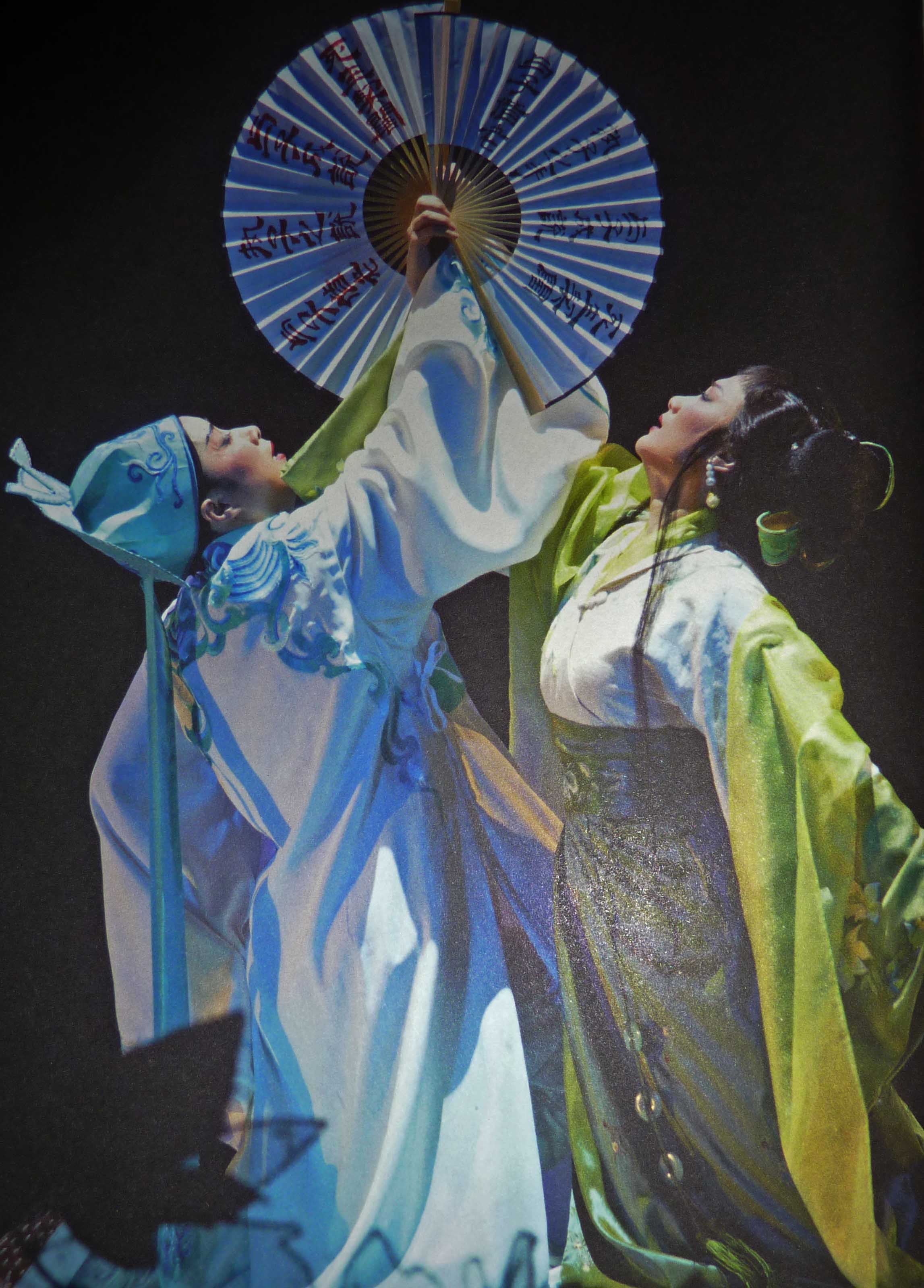
Mao Wei Tao is considered a living treasure in China—she has an estimated 20 million fans. She imitates men in the opera roles she plays—a reversal from Imperial China when women were not allowed on stage so men played female roles.

“In 1923, the training of female actors for this art form was set up. Since 1928, the Shaoxing opera troupes, consisting of solely female actors, began their performances in Shanghai. In a few years, females impersonating males had become the most important feature of this opera form, and at the same time the Yue opera became well known all over China.”

East China’s Zhejiang province gave China’s Shaoxing Opera Mao Wei Tao, who in her decades long career on the stage is best known as an outstanding male impersonator with a cult following of women.

I was introduced to Yue Opera in Hangzhou, Zhejiang Province more than a decade ago.

Mao Wei Tao and her husband have a theater company near the shores of the famous Westlake. My wife translated while I watched the live-opera performance in fascination.

The costumes were lavish and the acting and opera was dramatic while classical Chinese music played in the background.

The challenge today is to keep this form of Chinese opera alive, because the audience for opera is shrinking dramatically in China while remaining popular with the older generation.

Television, movies and the Internet are claiming the shorter attention spans of younger Chinese.

Mao Wei Tao, considered an innovative genius on stage, adapts and works to keep the art form alive. According to her husband, no two performances are exactly alike.

In November 2010, she performed in Taiwan as a cultural ambassador from the mainland. Today, “the company continues to tour and has staged productions in Paris, Hong Kong, Korea, Macau, Taiwan, the United States, Singapore, Spain, Holland, France, Belgium and Japan.”  – bangkokfestivals.com

______________________________

Lloyd Lofthouse is the award-winning author of My Splendid Concubine [3rd edition]. When you love a Chinese woman, you marry her family and culture too. This is the lusty love story Sir Robert Hart did not want the world to discover.

#1 - Joanna Daneman review posted June 19 2014

Where to Buy

Subscribe to “iLook China”!
Sign up for an E-mail Subscription at the top of this page, or click on the “Following” tab in the WordPress toolbar at the top of the screen.

About iLook China

China’s Holistic Historical Timeline