China’s Last Great Famine: Part 2 of 6

March 18, 2015

Before I started researching this series of posts, I believed that Mao’s agricultural reform policies were mostly responsible for the famine, and then I learned that drought and severe weather also played a role in the famine.

The other factors that may have contributed to China’s so-called Great Famine will be listed in order of influence with the most damaging factor listed first and the least damaging last.

In 1959 and 1960, the weather was less favorable due to droughts and floods in some provinces, and the situation grew considerably worse, with several of China’s provinces experiencing a severe famine.

Droughts, floods, and bad weather caught China completely by surprise, and in July 1959, the Yellow River flooded in East China and directly killed—through starvation from crop failure or drowning—an estimated 2 million people.

In 1960, at least some degree of drought and more bad weather affected 55 percent of cultivated land in China where only 10 percent of the land area is arable, while an estimated 60 percent of northern agricultural land received no rain at all. Great Leap Forward – Climate Conditions and famine in China (Wiki)

In addition, it helps to know that droughts and famine are common in China. Between 108 BC and 1911 AD, there were no fewer than 1,828 major famines in China or one nearly every year in one or more province.

Continued in Part 3 on March 19, 2015 or start with Part 1

View as Single Page

_______________

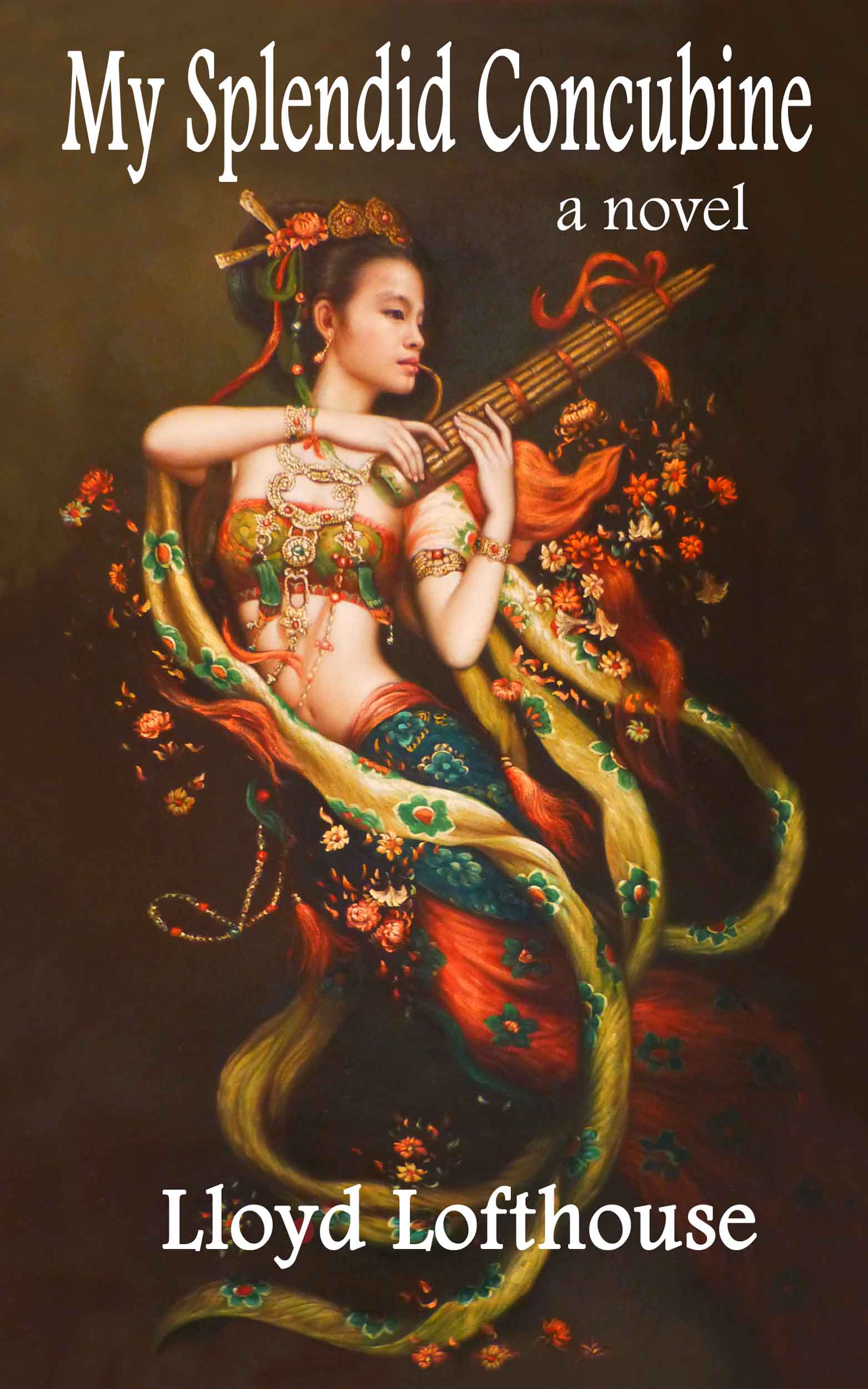
Lloyd Lofthouse is the award-winning author of My Splendid Concubine [3rd edition]. When you love a Chinese woman, you marry her family and culture too. This is the lusty love story Sir Robert Hart did not want the world to discover.

Finalist in Fiction & Literature – Historical Fiction
The National “Best Books 2010” Awards

Low-Res_E-book_cover_MSC_July_24_2013

Honorable Mentions in General Fiction
2012 San Francisco Book Festival
2012 New York Book Festival
2012 London Book Festival
2009 Los Angeles Book Festival
2009 Hollywood Book Festival

Subscribe to “iLook China”!
Sign up for an E-mail Subscription at the top of this page, or click on the “Following” tab in the WordPress toolbar at the top of the screen.

About iLook China

China’s Holistic Historical Timeline


China’s Last Great Famine: Part 1 of 6

March 17, 2015

The loss of life during China’s last Great Famine—in the West and especially the United States—has been blamed on Mao and the Chinese Communist Party, but finding blame on a famine in China isn’t that easy when you know the history of droughts and famines in that country.

It’s no secret that many in the United States think that Mao was a monster worse that Adolf Hitler or Stalin, and that Mao was responsible for killing 30 to 60 million people during what is known as China’s Great Famine.

Until recently, I also believed this because that’s all I have ever heard through the U.S. media—the details that may have caused this famine are not common knowledge, and it appears that no attempt by the Western media has ever been made to reveal them.

However, after discovering what happened in China and the world during Mao’s Great Leap Forward, what was once a certainty—at least to me—is now a mystery and possibly another hoax equal to the hoax that Tibet was never part of China before 1950 and there was a massacre in Tiananmen Square in 1989, which Wiki Leaks recently proved wrong.


There’s no mention of drought, floods and severe weather that cut crop yields, and the number of deaths quoted in the video cannot be supported with evidence. In fact, evidence that does exist supports far fewer deaths. Everything else is based on guessing.

I think discovering why Mao might be a victim of this hoax is worth examining, because in 1949 when Mao came to power, life expectancy in China was age 35, but by 1960 life expectancy had improved to age 60, while the population of China had increased by 19.5% with child mortality rates improving dramatically.

If Mao’s policies were responsible for these improvements in life expectancy and population growth, how could he also be the monster responsible for causing a famine that killed millions?

My research revealed that other factors might have contributed to the deaths and all but one of those factors did not deliberately cause people to die of starvation.

After learning of these other factors and completing the puzzle, it is obvious—at least to me— that Mao and the Communist Party did not order the deaths of 20 to 70 million mostly rural peasant in remote areas of China, and the numbers quoted in the West vary widely because different people have made different claims without valid evidence to support those claims. However, there is evidence that supports the lower number. In fact, the actual number of Chinese who starved is probably much lower than what is commonly believed in the United States.

Continued in Part 2 on March 18, 2015.

View as Single Page

_______________

Lloyd Lofthouse is the award-winning author of My Splendid Concubine [3rd edition]. When you love a Chinese woman, you marry her family and culture too. This is the lusty love story Sir Robert Hart did not want the world to discover.

Finalist in Fiction & Literature – Historical Fiction
The National “Best Books 2010” Awards

Low-Res_E-book_cover_MSC_July_24_2013

Honorable Mentions in General Fiction
2012 San Francisco Book Festival
2012 New York Book Festival
2012 London Book Festival
2009 Los Angeles Book Festival
2009 Hollywood Book Festival

Subscribe to “iLook China”!
Sign up for an E-mail Subscription at the top of this page, or click on the “Following” tab in the WordPress toolbar at the top of the screen.

About iLook China

China’s Holistic Historical Timeline


The Yin and Yang of the Traditional Chinese Diet

March 11, 2015

The concept of balance as taught by Confucius and Lao Tzu (Taoism) also plays an important role in diet. In China, yin foods are considered calming. It is believed that traditional Chinese foods come in three categories—yin, yang and neutral.

Yin foods should be eaten in summer and only in moderation in the winter as they are all very cooling. Yin foods are cool or cold in nature, clear away heat and eliminate toxins. Yang is the opposite of yin, and foods in this category are considered warm, dispel cold and treat symptoms from too much yin.

Some yin foods: Bananas, Clams, Crab, Grapefruit, Lettuce, Watercress, Watermelon, Apples, Cucumber, Pears, Mango, Spinach, Strawberries, Tomatoes

Some yang foods: Cherries, Chicken, Dates, Ham, Leeks, Mutton, Peaches, Raspberries, Shrimps, Sunflower Seeds, Wine, Garlic, Ginger, Onion, Pepper

Some neutral foods: Beef, Beets, Carrots, Celery, Corn, Egg, Potatoes

The Chinese philosophy for eating is different from America and the West. Traditional Chinese medicine applies these philosophies to avoid or treat disease through diet. Once a Chinese doctor determines the nature of an imbalance, he or she aims to restore balance through acupuncture, herbs, and changes in diet or lifestyle. It is believed that as balance is restored in the body, so is health.

_______________

Lloyd Lofthouse is the award-winning author of My Splendid Concubine [3rd edition]. When you love a Chinese woman, you marry her family and culture too. This is the lusty love story Sir Robert Hart did not want the world to discover.

Finalist in Fiction & Literature – Historical Fiction
The National “Best Books 2010” Awards

Kindle_LR_e-book_cover_MSC_July_25_2013

Honorable Mentions in General Fiction
2012 San Francisco Book Festival
2012 New York Book Festival
2012 London Book Festival
2009 Los Angeles Book Festival
2009 Hollywood Book Festival

Subscribe to “iLook China”!
Sign up for an E-mail Subscription at the top of this page, or click on the “Following” tab in the WordPress toolbar at the top of the screen.

About iLook China

China’s Holistic Historical Timeline


Finding Balance through Yin and Yang

March 10, 2015

In many ethical systems, the right path is the one that does not stray far from the middle. Aristotle preached that virtue was striking a balance between the vices of excess and of defect. A similar concept was presented by Plato, who was influenced by Pythagorean (570 -495 BC) ideas.

The concept of  balance is also an important aspect of  Confucianism since the philosophy of Yin Yang appeared about the same time as Confucius (551 – 479 BC), who wrote of a harmonious life that avoids excesses and deficiencies where wisdom was learned from both the old and the young, the high and the low.

Since Lao Tzu (the founder of Taoism and the concept of Yin and Yang) and Confucius lived about the same time, they may have met and shared thoughts.

The Doctrine of the Mean was a basis for civil service examinations in China from 1312 to 1905.

The concept of Yin and Yang applies to many aspects of life. In Taoism heaven is masculine and earth is feminine suggesting the dependence of the entire creation upon the Creator.

A whole series of possible interactions between the Yin and Yang in life is contained in the Chinese Book of Changes, the i Ching.

_______________

Lloyd Lofthouse is the award-winning author of My Splendid Concubine [3rd edition]. When you love a Chinese woman, you marry her family and culture too. This is the lusty love story Sir Robert Hart did not want the world to discover.

Finalist in Fiction & Literature – Historical Fiction
The National “Best Books 2010” Awards

Low-Res_E-book_cover_MSC_July_24_2013

Honorable Mentions in General Fiction
2012 San Francisco Book Festival
2012 New York Book Festival
2012 London Book Festival
2009 Los Angeles Book Festival
2009 Hollywood Book Festival

Subscribe to “iLook China”!
Sign up for an E-mail Subscription at the top of this page, or click on the “Following” tab in the WordPress toolbar at the top of the screen.

About iLook China

China’s Holistic Historical Timeline


An Art Gallery in Zhouzhang, China’s Venice

March 4, 2015

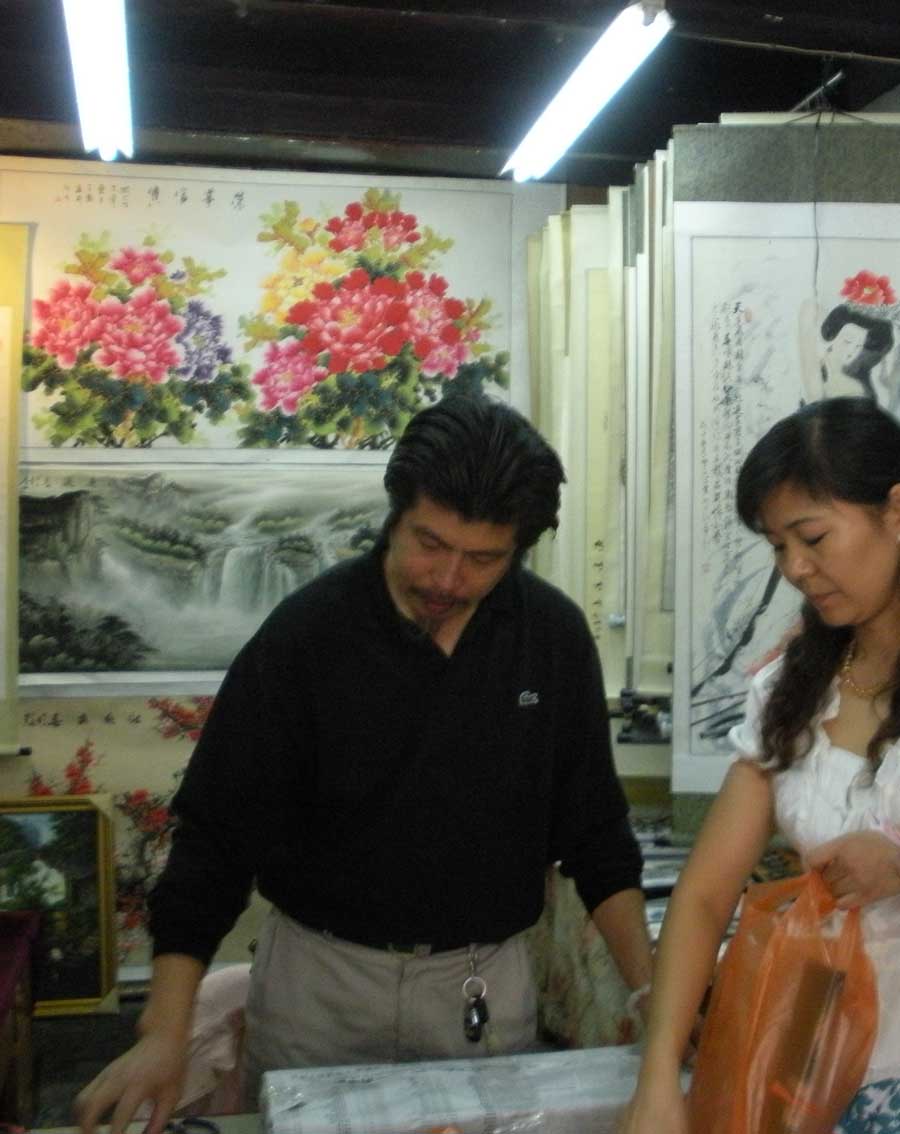
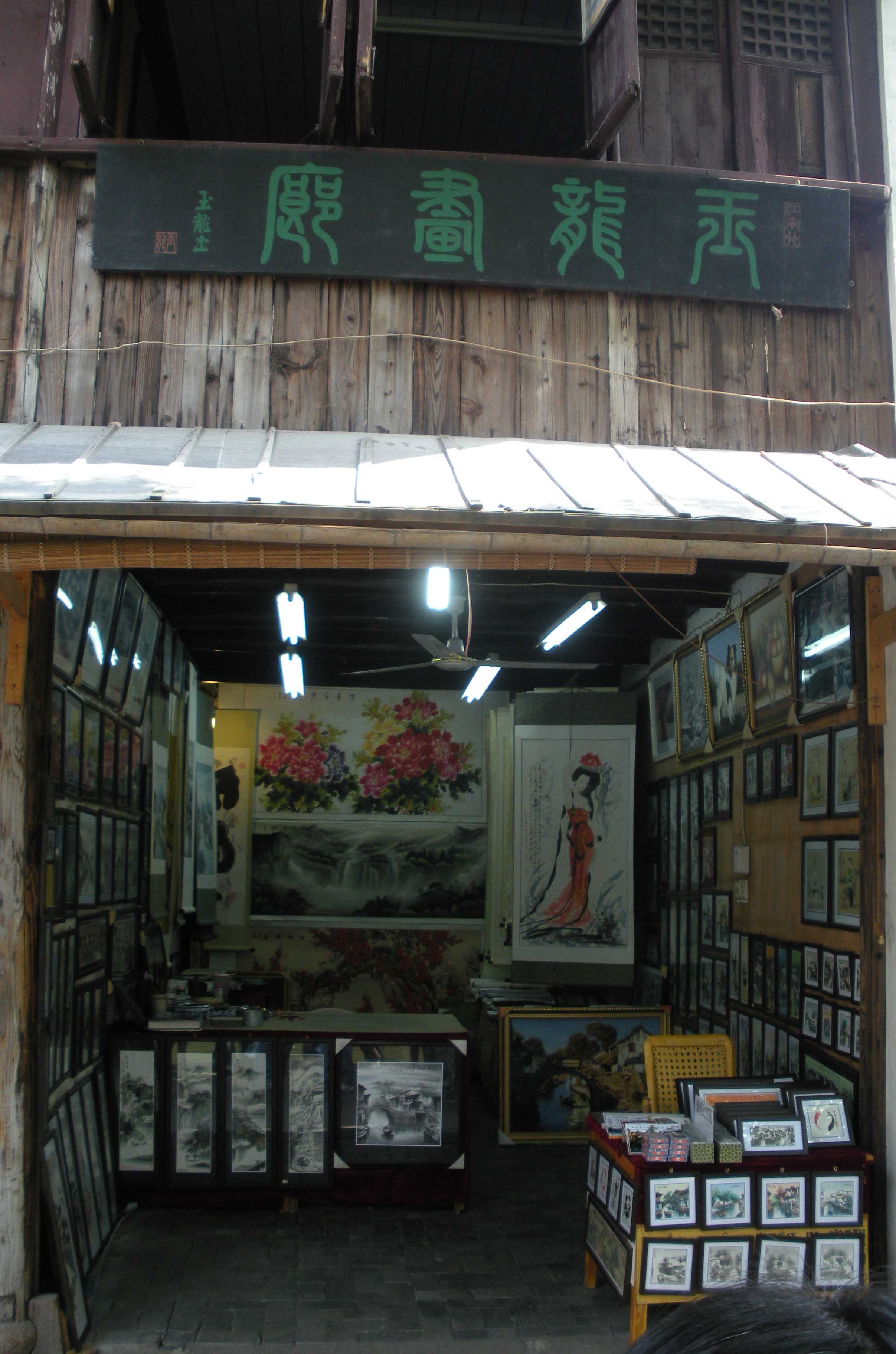
In 2008, while visiting Zhouzhang, China’s #1 Water Town for Tourists, we stopped at Xu Xiao-dong’s gallery and art studio.

 
Xu-Xiao-dong

The artist trained under a master and keeps a newspaper clipping that mentions it.

We bought several watercolors from Xu Xiao-dong, and he gave me written permission to use his art for the cover of My Splendid Concubine’s 2nd edition. The 3rd edition has a dancer on the cover (you can see it below this post).

 Xu Xiao-dong’s gallery

There’s a narrow, steep stairway in the back (left) that goes to another floor and more art. The artist also paints his art on the second floor.

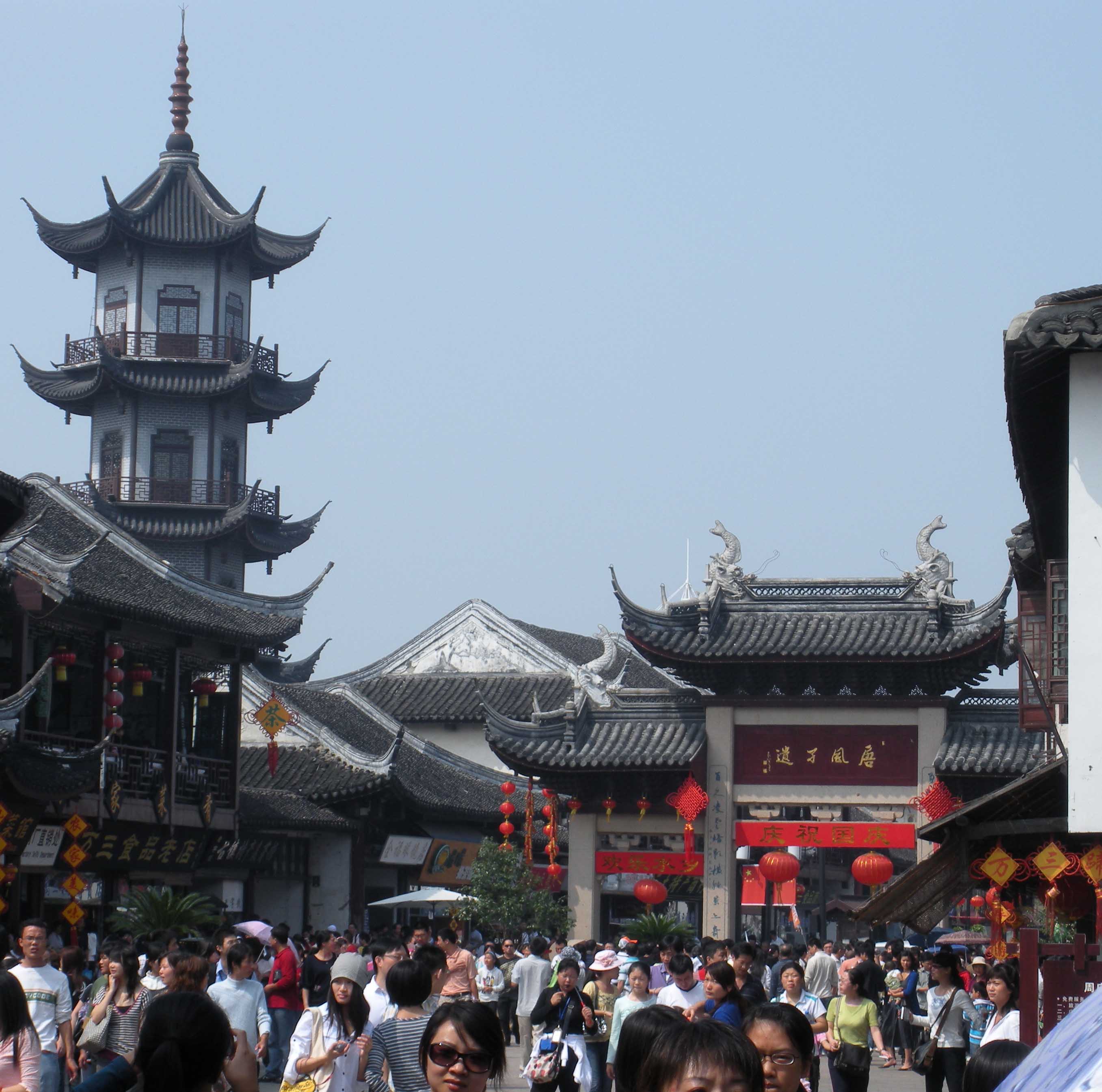
Zhouzhang, near Shanghai, is almost a thousand years old—built in 1086. Unlike most tourist attractions in America, this town is still occupied with 138,000 people, and they make their living from the tourists who cannot enter unless they pay a fee.

A boat ride through the town costs about RMB 100 (US$16). Traditional Chinese folk songs sung by gondoliers are free.
At least they were when we visited.

_______________

Lloyd Lofthouse is the award-winning author of My Splendid Concubine [3rd edition]. When you love a Chinese woman, you marry her family and culture too. This is the lusty love story Sir Robert Hart did not want the world to discover.

Finalist in Fiction & Literature – Historical Fiction
The National “Best Books 2010” Awards

Kindle_LR_e-book_cover_MSC_July_25_2013

Honorable Mentions in General Fiction
2012 San Francisco Book Festival
2012 New York Book Festival
2012 London Book Festival
2009 Los Angeles Book Festival
2009 Hollywood Book Festival

Subscribe to “iLook China”!
Sign up for an E-mail Subscription at the top of this page, or click on the “Following” tab in the WordPress toolbar at the top of the screen.

About iLook China

China’s Holistic Historical Timeline