In 1969, the Soviet Union was planning a nuclear attack on China. The USSR only backed down when President Nixon’s administration warned Moscow that such a move would start World War Three since the US would bomb Russia in retaliation.
The United States, under President Nixon (1969-1974), clearly indicated that China’s interests were closely related to America’s. – Free Republic
At the time, I’m sure President Nixon had no idea how close those relations would become.
More than 43 years ago in February 1972, President Richard Nixon went to China and changed the course of history a second time. His motives may not have been meant to encourage China to become the economic powerhouse it is today.
However, if it weren’t for Nixon, the odds say the Soviet Union would have bombed China with nuclear weapons and China would have retaliated.
While flying to China, President Nixon made notes. Here are a few.
What they (China) want? Build up their world credentials, Taiwan, and get the U.S. out of Asia (In 1968, Nixon ran for President promising to get the U.S. out of Vietnam).
What we (the US and China) both want? Restraint on USSR
The BBC reporter in the embedded video says that Nixon’s trip to Beijing wasn’t to see if China would help get the US out of Vietnam. Instead, the trip was designed to put pressure on the USSR with a goal to make them agree to strategic arms limitations.
Soon after Nixon’s China trip, the Soviets were forced to negotiate and within three months signed two arms control agreements.
What I find interesting is how often US Presidents (and politicians) have been wrong about China.
In 1961, President John F. Kennedy said if China had nuclear bombs, it would swallow Southeast Asia. That never happened and today China has more than three hundred nuclear bombs with the missiles to deliver them to targets thousands of miles distant.
In 1965, China successfully tested its first nuclear bomb. President Lyndon Johnson said it was “the blackest and most tragic day for the free world”.
How was that day the “blackest and most tragic day for the free world”?
After all, China has never used a nuclear weapon on another country as the US did on Japan to end World War II by bombing Hiroshima and Nagasaki killing about a quarter million people.
In fact, about 25 American POWs were also killed in the first blast. Most of the Japanese dead were noncombatants—the elderly, women and children.
Di Text.com reports that the US firebombed (with napalm) 67 Japanese cities in World War II. More than half of Tokyo (one of the 67 cities) was destroyed. Estimates of the number killed in Tokyo range between 80,000 and 200,000.
Robert S. McNamara was reported to have said, “If we’d lost the war, we’d all have been prosecuted as war criminals.”
Has Communist China inflicted that many casualties on another nation’s civilian population? Don’t forget that Japan killed about 30 million Chinese during World War II.
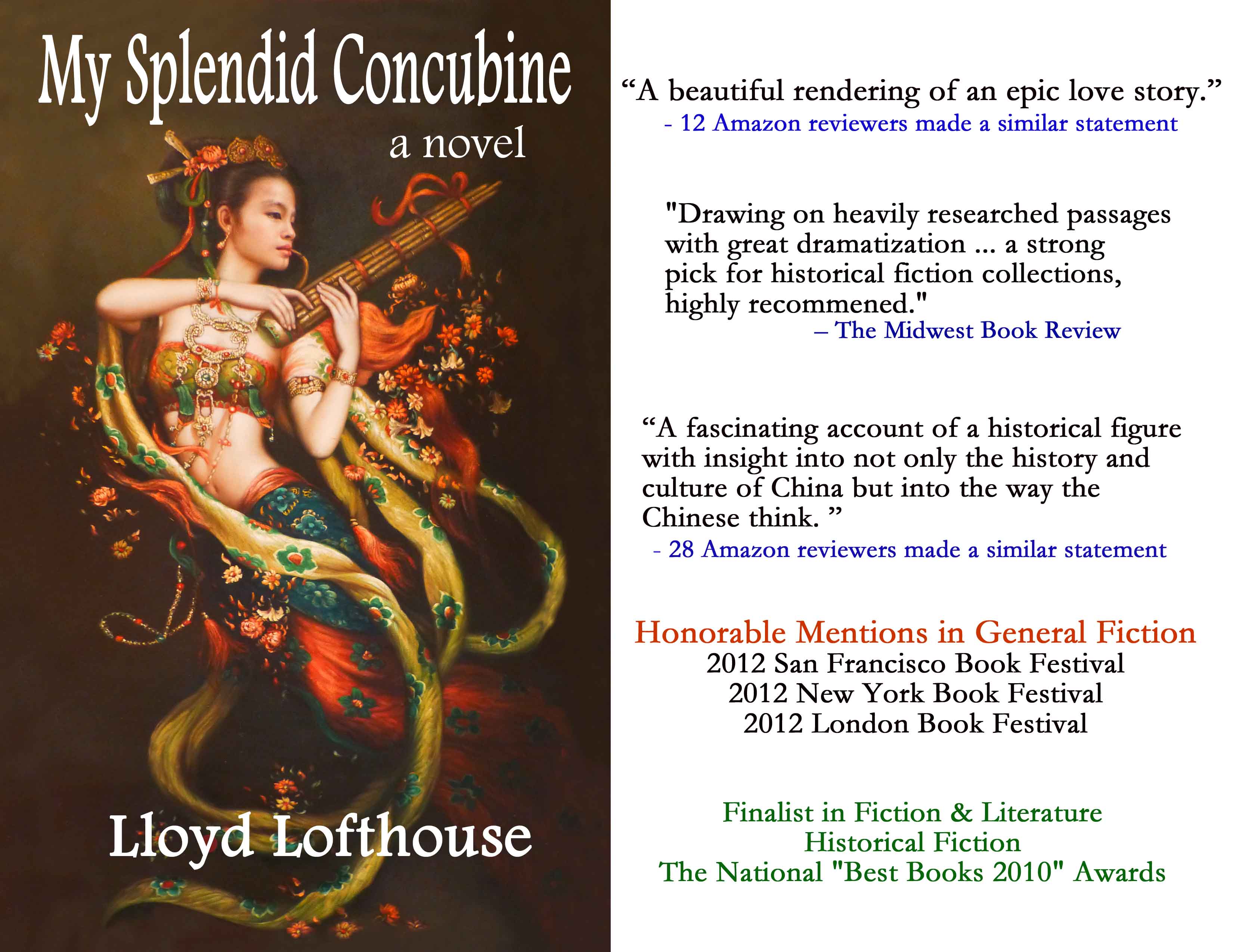
Lloyd Lofthouse is the award-winning author of My Splendid Concubine [3rd edition]. When you love a Chinese woman, you marry her family and culture too. This is the lusty love story Sir Robert Hart did not want the world to discover.
Subscribe to “iLook China”!
Sign up for an E-mail Subscription at the top of this page, or click on the “Following” tab in the WordPress toolbar at the top of the screen.
In 1969, the Soviet Union was planning a nuclear attack on China. The USSR only backed down when President Nixon’s administration warned Moscow that such a move would start World War Three since the US would bomb Russia in retaliation.
The United States, under President Nixon (1969-1974), clearly indicated that China’s interests were closely related to America’s. –Free Republic
At the time, I’m sure President Nixon had no idea how close those relations would become.
More than 43 years ago in February 1972, President Richard Nixon went to China and changed the course of history a second time. His motives may not have been meant to encourage China to become the economic powerhouse it is today.
However, if it weren’t for Nixon, the odds say the Soviet Union would have bombed China with nuclear weapons and China would have retaliated.
While flying to China, President Nixon made notes. Here are a few.
What they (China) want? Build up their world credentials, Taiwan, and get the U.S. out of Asia (In 1968, Nixon ran for President promising to get the U.S. out of Vietnam).
What we (the US and China) both want? Restraint on USSR
The BBC reporter in the embedded video says that Nixon’s trip to Beijing wasn’t to see if China would help get the US out of Vietnam. Instead, the trip was designed to put pressure on the USSR with a goal to make them agree to strategic arms limitations.
Soon after Nixon’s China trip, the Soviets were forced to negotiate and within three months signed two arms control agreements.
What I find interesting is how often US Presidents (and politicians) have been wrong about China.
In 1961, President John F. Kennedy said if China had nuclear bombs, it would swallow Southeast Asia. That never happened and today China has more than three hundred nuclear bombs with the missiles to deliver them to targets thousands of miles distant.
In 1965, China successfully tested its first nuclear bomb. President Lyndon Johnson said it was “the blackest and most tragic day for the free world”.
How was that day the “blackest and most tragic day for the free world”?
After all, China has never used a nuclear weapon on another country as the US did on Japan to end World War II by bombing Hiroshima and Nagasaki killing about a quarter million people.
In fact, about 25 American POWs were also killed in the first blast. Most of the Japanese dead were noncombatants—the elderly, women and children.
Di Text.com reports that the US firebombed (with napalm) 67 Japanese cities in World War II. More than half of Tokyo (one of the 67 cities) was destroyed. Estimates of the number killed in Tokyo range between 80,000 and 200,000.
Robert S. McNamara was reported to have said, “If we’d lost the war, we’d all have been prosecuted as war criminals.”
Has Communist China inflicted that many casualties on another nation’s civilian population? Don’t forget that Japan killed about 30 million Chinese during World War II.
When President Nixon went to China, he met with Chairman Mao, who was suffering from poor health. In four years, he would die, and Nixon would be the only president in US history to resign while in office due to the Watergate Scandal.
After Nixon resigned as the US president, the Chinese offered him a home in China where he would be allowed to live in peace away from his political enemies.
Two months before his meeting with Mao in Beijing, Nixon had approved a bombing operation in North Vietnam.
Many called it the Christmas bombings since it took place over the holidays. It was the first continuous bombing in Vietnam since President Lyndon Johnson had halted bombing in 1968.
Over 20 thousand tons of bombs were dropped during the campaign. That’s forty million pounds of explosives.
Ironically, Nixon ran for election as the “Peace Candidate” in 1968. Can you think of other US politicians that have used similar promises (later broken) to win elections?
Because of Nixon’s record of being an anticommunist, no one would have thought that he would have unexpectedly gone to China to meet with Mao and the CCP’s top leaders.
“Newly released audiotapes and secret documents from the Richard Nixon Presidential Library show a president obsessed with controlling the media and his public persona during the latter stages of his doomed administration.”
I find it ironic that this comes from a former president of a country that often criticized China’s control of its media. Is it possible that US politicians are jealous and want the same control over the US media?
While in China, President Nixon gave a speech in the Great Hall of the People in Beijing.
This was the first time a U.S. president had visited the People’s Republic of China (PRC), and China was considered one of America’s greatest enemies.
While in China, Nixon would meet with Zhou Enlai, who was the first Premier of the PRC. Zhou Enlai (along with Deng Xiaoping) played an important role in the future development of the Chinese economy and restructuring Chinese society leading to the China of today.
In fact, Zhou Enlai not only avoided the purges of high-level Chinese Communist Party officials during the Cultural Revolution, but he also attempted to contain the damage caused by the teenage Red Guard and to protect others from them. This made him very popular with the people near the end of the Cultural Revolution.
Zhou Enlai supported peaceful coexistence with the West. He would die eight months before Mao.
It is ironic that one of the main reasons Richard Nixon became the vice-president of President Eisenhower was due to his strong anti-communist stance.
If you listen to Nixon’s speech in Beijing carefully, you will hear how he managed to slip in a veiled criticism of the fact that the media was free to report what they wanted in the US.
Nixon says of his visit to the Great Wall, “As I walked along the Wall, I saw the sacrifices that went into building it. I saw what is showed about the determination of the Chinese people to retain their independence throughout their long history. I thought about the fact that the Wall tells us that China has a great history and that the people who built this wonder of the world also have a great future.”
I wonder if Nixon realized how true his statement was.
Is it possible that Nixon’s trip to China provided Deng Xiaoping the support needed to reject revolutionary Maoism and launch China’s capitalist revolution a few years later?
______________________________
Lloyd Lofthouse is the award-winning author of My Splendid Concubine [3rd edition]. When you love a Chinese woman, you marry her family and culture too. This is the lusty love story Sir Robert Hart did not want the world to discover.
Subscribe to “iLook China”!
Sign up for an E-mail Subscription at the top of this page, or click on the “Following” tab in the WordPress toolbar at the top of the screen.
I have been aware of cupping for some time, because I married into a Chinese family and one of my wife’s sisters used this method of Chinese medicine.
However, I didn’t pay much attention to cupping until I wrote a post about Gwyneth Paltrow being Popular in China.
Researching the Gwyneth Paltrow post, I discovered that she believes in Chinese medicine and has used cupping. She even told Oprah, “It feels amazing and it’s very relaxing, and it feels terrific. It’s just one of the alternative medicines that I do instead of taking antibiotics.”
The history of Chinese cupping dates from 281 AD. It was an ancient Taoist medical practice and was widely used in the courts of Imperial China at the time. Its administration was first recorded by Ge Hong in an ancient tract called Handbook of Prescriptions for Emergencies.
In fact, medical education in China was elevated to a higher standard in 443 AD when Qin Cheng-zu petitioned Emperor Wen of the North and South Dynasty period to appoint physicians to teach medical students. Almost a thousand years later the first medical schools appeared in the West.
By 493 AD, the Imperial Academy had expanded to include lectureships and chairs for teaching Chinese medicine. – Shen-nong.com
Chinese medicine from the beginning focused on prevention to avoid illness where Western medicine has always focused on cures for illnesses after a life is threatened by diseases such as cancer, diabetes or heart disease.
______________________________
Lloyd Lofthouse is the award-winning author of My Splendid Concubine [3rd edition]. When you love a Chinese woman, you marry her family and culture too. This is the lusty love story Sir Robert Hart did not want the world to discover.
Subscribe to “iLook China”!
Sign up for an E-mail Subscription at the top of this page, or click on the “Following” tab in the WordPress toolbar at the top of the screen.
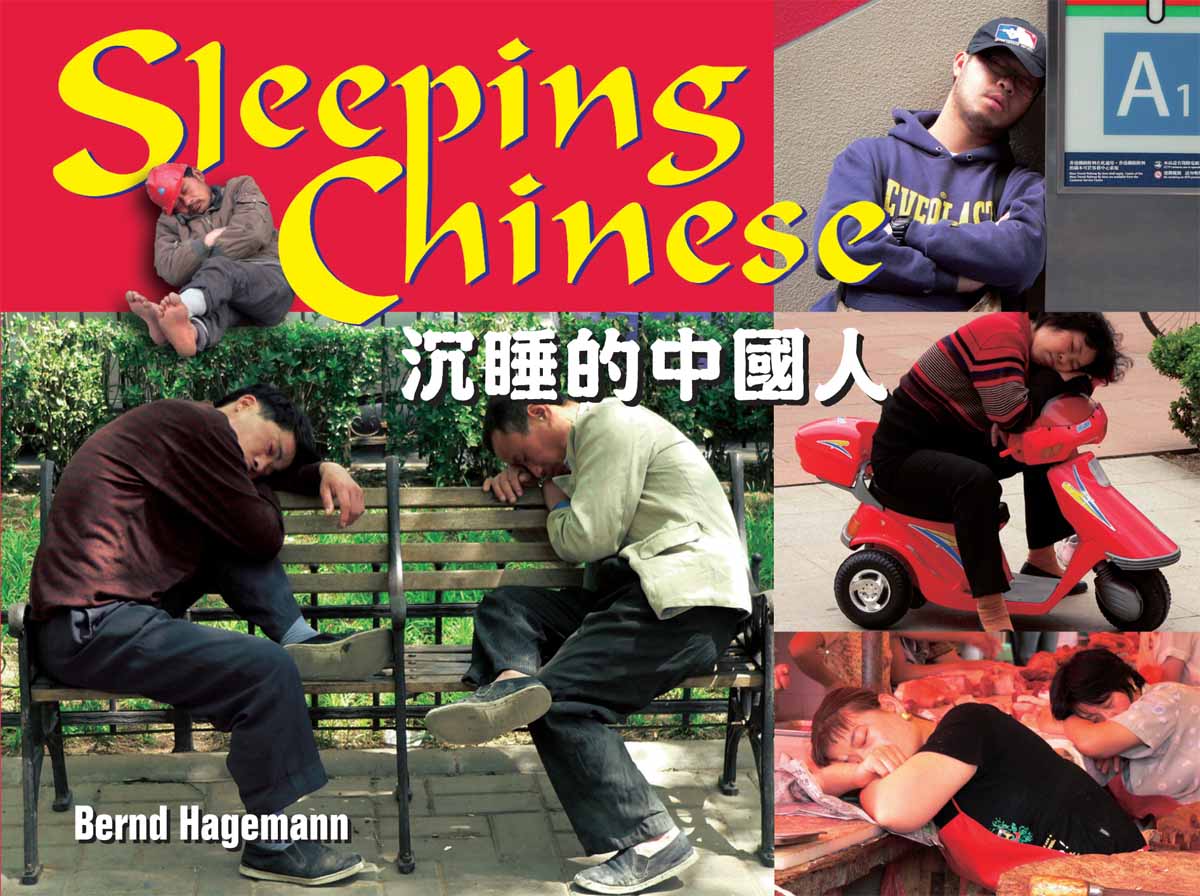
German businessman Bernd Hagemann arrived in China in 2002 amidst media reports of China’s impending rise to global domination. “News outlets around the world,” he writes, “were warning us about… how fast China is developing, how competitive it is, and what a tense life the Chinese people must live.”
Casual strolls down the streets of China in between boardroom meetings and networking, however, soon revealed to Hagemann a far less threatening side of China. So he took out his point-and-shoot camera and documented what he saw all around him. In just 148 pages, Hagemann’s debut photography bookSleeping Chineseswiftly dispels 9 years of chest-pounding by the PRC propaganda machine.
Sleeping Chineseis a fun little novelty item the exact same dimensions as a postcard that will leave you either laughing out loud or scratching your head in perplexity. The pages are divided into 3 parts: Hard Sleepers, Soft Sleepers and Group Sleepers, a clever allusion to China’s train carriage classification system.
Hard Sleepers: “Those who snooze in hard and uncomfortable places can fall asleep anywhere – even on a pile of bricks in a construction site!” Hagemann defines.
Witness, then, the dozens of people who have drifted into deep slumber atop stones, wood, mortar blocks, concrete and even cold slabs of raw meat. The most comical of the chapter being the dozing shoe repair man balancing precariously on a saw horse with an extra 2×4 for a pillow.
Soft Sleepers: “A little more fussy than their hard sleeper comrades,” the chapter intro explains, “fussy” meaning in plastic wash bins, hammocks slung under freight trucks, sleeping lengthwise across a motor scooter and even a laborer using a tape measure to cover his eyes.
Group Sleepers: “A traveling family needs no pillows when they have each other’s knees.” Truly, the photo of the family of five all huddled together like newborn puppies gives greater meaning to ‘jiating,’ China’s family unit.
Some Chinese might take offense to Hagemann’s photographic agenda, but anyone with a sense of humor will see that the book was made out of affection.
“I’d like to express my appreciation of the hard work and effort put in by migrant workers who play a central role in China’s success story but seldom receive the attention they deserve,” writes Hagemann.
Indeed, anyone who has spent quality time in China knows that these laborers, more than anyone else, deserve their rest — anywhere they can get it.
None of the snapshots inSleeping Chinesewere staged. Any foreign tourist in China who bothers to stray from his package tour group or get out of his hotel for a jaunt off the tourist trail will see these exact same sights, and more.
Incidentally, taking and publishing photos of sleeping Chinese people will often land a foreign tourist in hot water if caught by the authorities (the subjects themselves tend not to mind).
People’s Dailynewspaper, the official mouthpiece of the Politburo, even attempted to put a socialist spin on Hagemann’s revealing imagery in an article aboutSleeping Chinese: “If (we) are tired, (we) lie down anywhere and anytime and sleep. This shows (our) society’s accepting attitude.”
Regarding the western media’s scare tactics of China’s “waking dragon,” this reviewer is reminded bySleeping Chineseof a particular song from old-school hip-hop artists Public Enemy (who I had occasion to watch perform during their 2007 tour through Beijing): Don’t Believe the Hype!
The embedded ten-minute video of the China Daily interview with Yao Ming is in Mandarin with English subtitles.
For those who don’t know who Yao Ming is, he was born in Shanghai, China in 1980. When he was twenty-two, Yao Ming came to the US. where he played for the Houston Rockets of the National Basketball Association and, at the time, was the tallest player in the NBA at 2.29 meters or 7 feet 6 inches.
Before Yao Ming came to the US, he played for the Shanghai Sharks as a teen then played on their senior team for five years in the Chinese Basketball Association.
Watching the China Daily interview revealed another side to this gentle giant. A brief abridged transcript of the interview is provided.
The People Daily interview took place in July 2010 shortly before a charity game held in Beijing. The reporter conducting the interview is Yu Yilei
Yu Yilei – Your charity game will be held in Beijing. What idea do you want to convey through it?
Yao Ming – The main purpose of the game is to help kids in Sichuan and other remote areas to rebuild their schools. In addition, we want to tell the public that people like us, who live in big cities, have the responsibility and obligation to help others.
It (the charity) was actually Steve Nash’s idea. Nash had a friend who was an entrepreneur in China, and he’d been concerned about China’s education in its remote areas. It was an early time, the beginning of 2007.
I said I needed to think it over, because I didn’t have any experience in terms of charity (In fact, Charity as we know it in America and/or the West was new to the Chinese).
The man who provided the information about education in remote areas of China shocked “us” deeply.
A foreigner knew more about China than I did. It feels… It makes me blush. (He then mentions that charity is just getting started in China and there hasn’t yet been time to develop regulations to supervise and protect it.)
Yu Yilei – How to you insure the regulation of the Yao Foundation?
Yao Ming – I think information transparency is most important. There is a professional management team and accountants. You can also find out very clearly on our website what each donation has been used for.
Yao Ming goes on to talk about his son and how China and America have influenced him.
Notes: In 2004, Business Week reported that Yao’s four-year contract with the Rockets was worth $18 million, and he earned an estimated $15 million a year in longer-term deals with top-tier brands Pepsi, Reebok, Gatorade, and McDonalds.…Some executives believe Yao has the potential to gross $300 million in his first 10 years in the league. Yao Ming earned 51 million U.S. Dollars (357 million yuan) in 2008 alone.
In July 2011, Yao announced his retirement from professional basketball due to a series of foot and ankle injuries that forced him to miss 250 games in his last six seasons. In eight seasons with the Rockets, Yao ranks sixth among franchise leaders in total points and total rebounds, and second in total blocks.
Yao is married to Ye Li, a women’s basketball player for China. He met her when he was 17 years old. Ye was not fond of Yao at first, but finally accepted him after he gave her the team pins he had collected during the 2000 Summer Olympics. She’s the only woman he has ever dated. Their relationship became public when they appeared together during the 2004 Olympics closing ceremony. On August 6, 2007, Yao married Ye in a ceremony attended by close friends and family and closed to the media.
In August 2012, Yao started filming a documentary about the northern white rhinoceros. He is also an ambassador for elephant conservation. Yao has filmed a number of public service announcements for elephant and rhino conservation for the “Say No” Campaign with partners African Wildlife Foundation and WildAid.
______________________________
Lloyd Lofthouse is the award-winning author of My Splendid Concubine [3rd edition]. When you love a Chinese woman, you marry her family and culture too. This is the lusty love story Sir Robert Hart did not want the world to discover.
Subscribe to “iLook China”!
Sign up for an E-mail Subscription at the top of this page, or click on the “Following” tab in the WordPress toolbar at the top of the screen.


 Posted by Lloyd Lofthouse
 iLook China