Where Does the Money Go?

May 6, 2010

“China doesn’t keep all the money paid for products made in China. Everyone in the supply chain shares.” I heard Zachary Karabell say this at the 2010 Los Angeles Times Festival of Books.

Today, I read a post in Bind Apple that emphasized the fact that Apple products are made in China but didn’t mention that Apple also manufactures in the United States, Malaysia and Indonesia and other countries. The post also emphasized the sixty-hour workweek and low pay as if it were a bad thing.

In fact, Apple says, “Their products and components are manufactured by a wide variety of suppliers around the world.  The final assembly of most products occurs in China.”

Most Chinese do not mind working sixty-hour weeks and the money earned may be low by American standards but is higher than most rural Chinese earn. 

These factory workers also send money home and manage to save, since China’s average saving rate is 40%. China’s culture is based on Confucianism, which focuses on collective rights instead of the individual.  Those workers are not working for themselves. They are working for their family and that includes parents and grandparents, who are contributing too.

Learn more about who Confucius was, or see what was going on at Apple’s Foxconn facility in Guanlan, China.

Lloyd Lofthouse is the author of the award winning novels My Splendid Concubine and Our Hart. He also Blogs at The Soulful Veteran and Crazy Normal.

Sign up for an RSS Feed for iLook China


Getting the Job Done

May 4, 2010

How can America stay competitive in the global marketplace when the infrastructure in America is wearing out, and it’s time consuming and frustrating to get anything done?

John Hockenberry–a former ABC and NBC reporter and now the host for a New York public-radio morning talk show–had the answer. He said on his show that he was yearning for a Chinese dictatorship in America to get things done.

John Hockenberry

What Hockenberry said was true. The Chinese do get things done. He was wrong about one thing. China is not a dictatorship.

A few years into the 21st century, we were in China sleeping on the blanket-covered floor of my father-in-law’s flat in the old French sector of Shanghai. His three rooms were on the second floor of a three-story building that once belonged to a French family prior to World War II. Now seven families lived in that building. What had been a walk-in-closet had been converted into a kitchen/bathroom. The balcony had been closed in—that’s where we were sleeping.

High block walls surrounded the houses in the French sector. When we woke up and left the flat to visit the local farmer’s market, the walls were gone as if they’d never been. 

Later, we learned that the Shanghai city government decided to open the city and the best way to do that was to remove the walls. An army of workers came in the night and removed the walls without waking us up.

That’s what John Hockenberry was talking about. The ability of China’s government to move fast.

Follow this link to learn more about high-speed rail in China.


Innovative Chinese-American Fusion

May 3, 2010

Sitting in Young Hall (CS 50) at the 2010 Los Angeles Times Festival of Books on April 24, I heard Zachary Karabell explain why China and the United States were one economy.  If you want to learn more, I suggest reading Superfusion. Karabell also said China relies on American innovation.

This morning, an example of that American innovation appeared as an advertisement for the CODA, an all-electric car.  Usually, I ignore the Ads, which often are pains slightly below the tip of the spine.

The CODA, an all-electric car

This time, I clicked the Ad and discovered that the CODA was being manufactured mostly by a joint effort between China and a few of those American innovators Karabell mentioned.  To give you an idea of how global the CODA is, check out the following list.

“About 40 percent of the components in the car, when measured by monetary value, come from US manufacturers, such as Borg Warner. The battery inside Coda’s sedan comes from a joint venture owned by Coda and China’s Tianjin Lishen Battery Co. The electronics for thermal and battery management of the pack were designed and will be produced in the US and shipped to Asia. The car will be built on assembly lines in China, with Coda engineers remaining full-time on the manufacturing floor to oversee production. Maybe ten percent of the original [Chinese] design is left.” Source: Matter Network

Also see Holding a Vital Key to Humanity’s Future

Lloyd Lofthouse is the author of the award winning novels My Splendid Concubine and Our Hart. He also Blogs at The Soulful Veteran and Crazy Normal.

Sign up for an RSS Feed for iLook China


China’s Labor Laws

April 29, 2010

The “China Law Blog” compared China’s employment laws to those of the United States. Reading this post was a revelation, because I did not know that Chinese workers had more job protection than U.S. workers did.  I wondered how this came about.

The reason came about due to the transition from state controlled to private owned businesses.  Since 1978, when China implemented its open-door policy, the country went from no privately owned small businesses to more than 10 million small to medium-sized private enterprises that represent about 90 percent of all businesses.

Waiting for a bus after a day’s work.

Prior to this transition, state workers didn’t have to worry about a job. Once the transition began, significant numbers of workers started losing jobs. Since China’s constitution says the government’s role is to serve the people, the government changed the laws to make it more difficult to fire a worker offering better job protection.

“China’s employment law system is quite different from the U.S. The main difference is that the U.S. is an employment at will system, which means you can terminate employees at any time for pretty much any reason. China’s system is the opposite. The Chinese system is a contract employment system. … An employee can only be terminated for cause and cause must be clearly proved. … This whole situation makes the employment relationship and the employment documents much more adversarial than is customary in the U.S.” Source: China Law Blog

Discover China’s Health Care During Mao’s Time

_______________

Lloyd Lofthouse is the award-winning author of My Splendid Concubine [3rd edition]. When you love a Chinese woman, you marry her family and culture too. This is the love story Sir Robert Hart did not want the world to discover.

Subscribe to “iLook China”!
Sign up for an E-mail Subscription at the top of this page, or click on the “Following” tab in the WordPress toolbar at the top of the screen.

About iLook China


Negotiating with the Chinese

April 28, 2010

From what I’ve read so far at “Chinese Negotiation”, the Blog offers sound advice for dealing with the Chinese in business or politics.

China’s historical and cultural foundations come from a different source than America and Europe.  People that come from Western democracies are also different and alien to the Chinese since Western roots grow deep into Judean Christian values, Roman and Greek philosophy and British Common Law, which also has its roots from the Romans and Greeks.

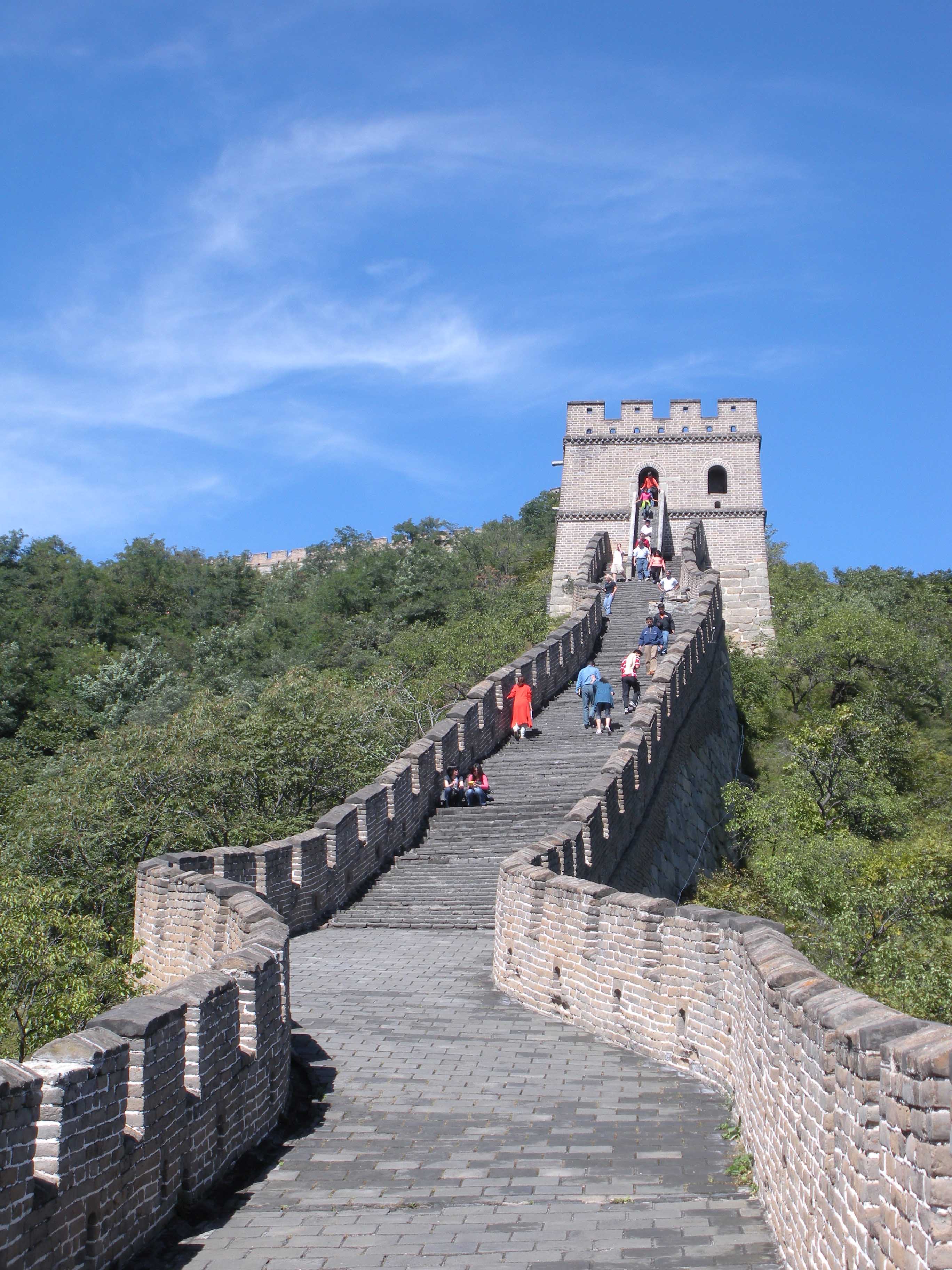
The Great Wall of China

Don’t forget, China’s roots grow deep in different soil and they stem from Confucius and Legalism. The Great Wall did more than attempt to keep out the barbarians. It also protected Chinese civilization from foreign devils and their strange ways.

“When Americans negotiate with Chinese counter-parties, they often run into the ‘Frenemies’ dilemma. US dealmakers in China are sometimes so concerned with building good relations that they don’t perform proper due diligence until it is far too late. They end up losing money, time, IP – and destroy the very friendships that they worked so hard to develop.” To discover more, visit the source at Chinese Negotiation.

Also see “Understanding How to do China Business” http://wp.me/pN4pY-tE

Lloyd Lofthouse is the author of the award winning My Splendid Concubine and writes The Soulful Veteran and Crazy Normal.

Sign up for an RSS Feed for iLook China