Blockbusters from China

June 23, 2010

After China opened its doors to the world in 1980, Chinese entrepreneurs conquered one global manufacturing industry after another except one. In 2009, The Chosun IIbo said there are 875,000 millionaires in China including 55,000 with more than 100 million yuan and almost 2 thousand billionaires. One of those billionaires wants to conquer that last frontier.

The NY Times says that one of China’s richest men, Jon Jiang, wants to equal tinsel town by producing a move that has ancient Greek warriors, pirates, underwater kingdoms and more by using mostly American actors and 3/D technology.  The big difference is ” Empires of the Deep” is being produced in a studio near Beijing.

Jiang is not the only wealthy capitalist in China who wants to build a Chinese Hollywood. I’ve written about Zhang Zhao heading Enlight Pictures and another production company run by the Huayi brothers, who have collaborated with Sony and Disney. Source: Hollywood to Bollywood to a Rising Chinawood

Then there is the new Karate Kid, co-produced between an American Studio and China and was filmed in and around Beijing, which has earned close to 84 million globally as I get ready to schedule this post.

________________________

Lloyd Lofthouse is the author of the award winning My Splendid Concubine and writes The Soulful Veteran and Crazy Normal.

Sign up for an RSS Feed for iLook China


Betting Against China’s Housing Market

June 21, 2010

You may have seen stories or headlines predicting a housing bubble bursting in China as it did in the US. China bashers are probably praying this will happen, but don’t count on it.  Placing a bet that China is going to stop growing its economy soon is throwing money away.

The Market Oracle talks about this in “Will China Housing Market Follow the U.S. In a Mortgage Bust?” Although the Bank of China held $10 billion in US subprime assets when the  US bubble burst, Chinese banks don’t make those loans in China—the risky subprime loans to poor people with bad credit was in US. The only reason the Bank of China held those assets was that they trusted America—then.

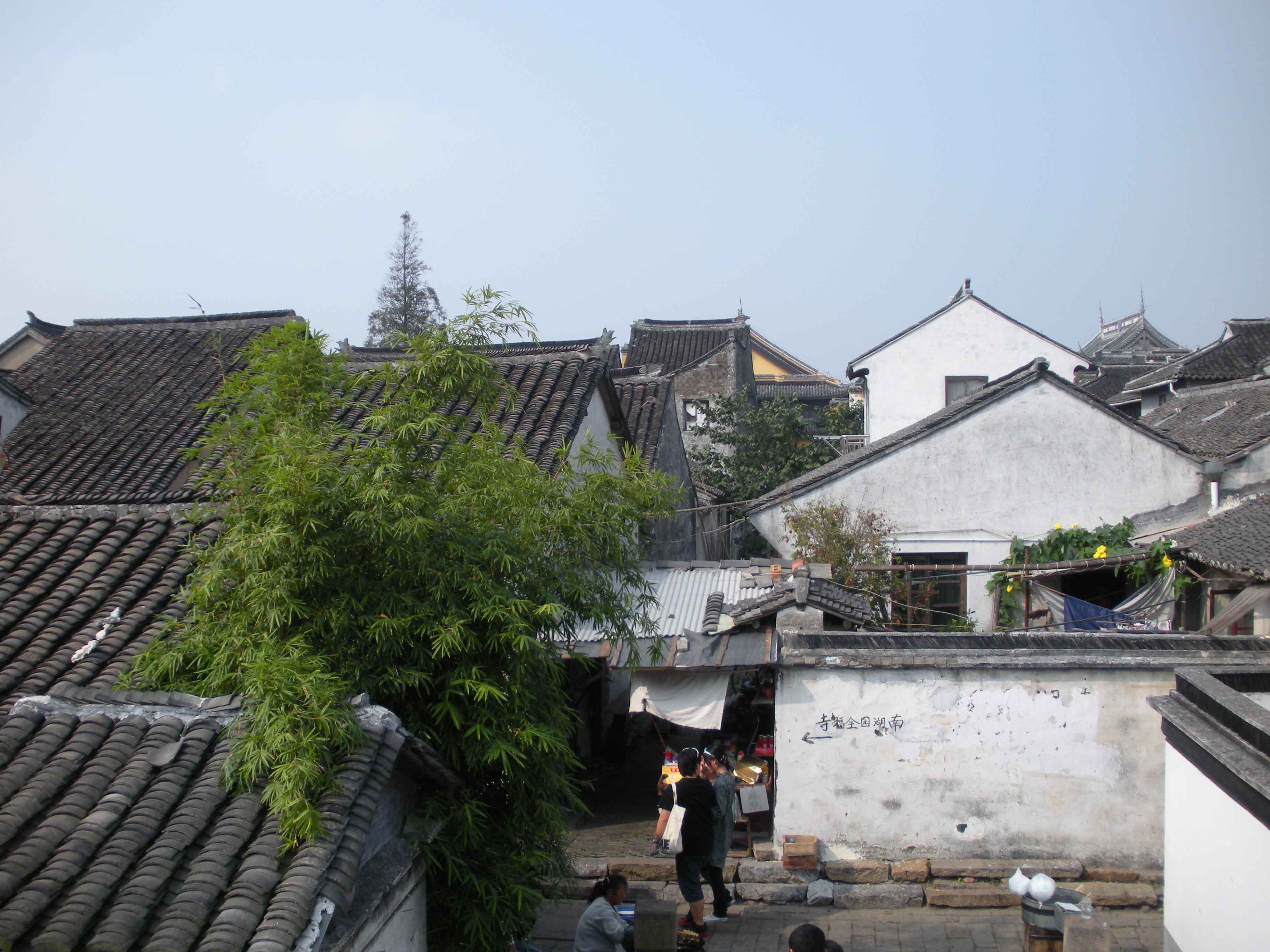
Older Housing in China

The real estate market in China is different. Chinese families contribute and buyers often pay 30 to 50% down. Also, when the bubble burst in the US, housing loans to GDP were 79% but in China that number was 15.3%.

In fact, according to the May 29 – June 4, 2010 The Economist, about 20 – 30% of urban housing is owned by the top income earners. The rest live in free housing provided by employers or in  state owned housing with low or no rent. It also helps that most Chinese save and avoid using credit cards. Then there is rural China where 750 million live and all the housing belongs to collectives and there are no mortgages or rent.

See Greedy Buyers Beware

______________

Lloyd Lofthouse is the award-winning author of The Concubine Saga. When you love a Chinese woman, you marry her family and culture too. This is the love story Sir Robert Hart did not want the world to discover.

To subscribe to “iLook China”, look for the “Subscribe” button at the top of the screen in the menu bar, click on it then follow directions.


Working Conditions in China

June 17, 2010

The Editors in Room for Debate express varied opinions about “What Do China’s Workers Want?”

Worker strikes at Honda plants and suicides at a PRC Foxconn facility, a Taiwan owned company, have made splashes in the global media lately. I read what the five editors had to say and sided with Leslie T. Chang, author of Factory Girls. Her experience speaks for itself and lends weight to her opinion. Chang spent three years following the successes, hardships and heartbreaks of two teenage girls, Min and Chunming, migrants working the assembly lines in Dongguan, one of the new factory cities that have sprung up all over China.

Chang says, “It is important not to interpret the recent spate of worker suicides as protests against factory conditions. In my experience, the greatest pressure on workers comes from interpersonal and emotional concerns rather than conditions inside the factory, which workers tend to take for granted.” 

I recommend clicking on the link for “Room for Debate” and reading what Chang and the others editors say. I agree with Chang’s assessment because of the importance of family in a culture heavily influenced by Confucianism.

See Middle Kingdom Wages Rising

________________________

Lloyd Lofthouse is the author of the award winning My Splendid Concubine and writes The Soulful Veteran and Crazy Normal.

Sign up for an RSS Feed for iLook China


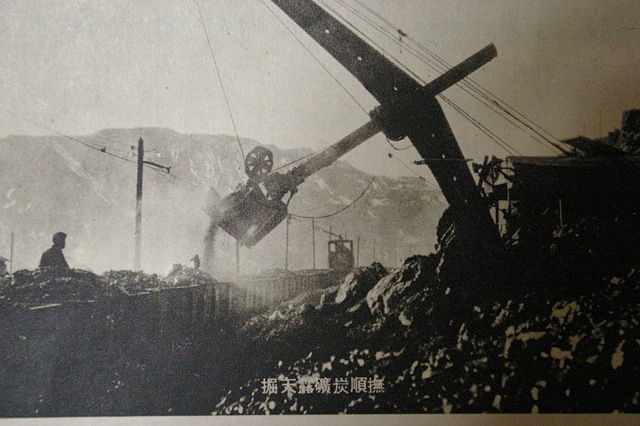
China’s Goal to Clean Dirty Coal

June 15, 2010

Bill Chameides writes in the Huffington Post about China’s efforts to reduce greenhouse gasses by 40 to 45 percent by 2020.  His goes into detail how the Chinese plan to accomplish this.

Since 70% of China’s electricity comes from thousands of coal burning power plants,  Chameides expresses doubts that China will be able to meet these lofty goals.  However, I disagree.  When you discover the downside of China’s coal burning power plants, it is obvious there is no choice but to clean up.

China’s one-party system has demonstrated the ability to get things done quickly and mistakes are made but so are course corrections.  I witnessed China’s ability to get things done in Shanghai. We were staying in what was once the French concession. The stately mansions that had housed wealthy French families and servants had been converted to communal multi-family homes still surrounded by tall walls.  When we went to sleep, the walls were there. In the morning, they were gone. 

An army of workers arrived at night, took down the walls and trucked out the debris without making enough noise to wake people.

Although I disagree with Chameides conclusion, his piece is worth reading.

See Electricity is the Key

_______________________

Lloyd Lofthouse is the author of the award winning My Splendid Concubine and writes The Soulful Veteran and Crazy Normal.

Sign up for an RSS Feed for iLook China


Middle Kingdom Wages Rising

June 14, 2010

William Pesek,  a Bloomberg columnist, writes a piece for the Jakarta Globe about Chinese workers demanding raises.  He mentions the walkout that shut down Honda’s Chinese production lines and the 24% pay raise to get people working again.

more money equals a better quality of life

A flock of suicides at Foxconn, a Taiwan owned company, also demonstrated Chinese worker unrest over low pay and long hours resulting in recent pay increases of 30% with promises of more to come. Since Foxconn turns out Apple, Dell and HP products, this could mean a  jump in high-tech prices around the globe and/or slimmer profits for Wall Street giants.

Pesek says, “Chinese workers demanding higher wages, as they should, must have the folks at Wal-Mart Stores quaking.  It’s hard to exaggerate the effect a big increase in Chinese pay would have on international profit margins and on inflation.”

What choice does China’s government have? Unrest crashed Imperial China in 1911 and changed the country again in 1949. Then after Mao’s death in 1976, China morphed into an open-market economy on steroids under Deng Xiaoping’s management. Recent news signals a possible change from an export-driven economy to one that sprouts from within.

See Deng Xiaoping’s 20/20 Vision or Why China is Studying Singapore

_______________________

Lloyd Lofthouse is the author of the award winning My Splendid Concubine and writes The Soulful Veteran and Crazy Normal.

Sign up for an RSS Feed for iLook China