Interracial love in China during World War II, a book review of “Shanghai Love”

August 13, 2013

From the title, we already know the story is about love in Shanghai, and it doesn’t take long to discover who the two main characters are that are destined to meet.

It is 1938, and in chapter one, we are introduced to Peilin in China. In chapter two we meet Henri in Nazi Germany.

But the love story isn’t what made this novel worth reading. It was the journey the two characters must take to find each other. They are both doctors. Henri is Jewish and trained in western medicine. He has to leave his family behind in Germany and flee to China to avoid Hitler’s Nazis who are hunting for him because he dared to love a woman who was not Jewish.

Peilin was trained by her grandfather in Chinese herbal medicine, and by the time Henri meets her, she has already been married to a ghost for some time.

As a young girl, a marriage was arranged to a boy almost twice Peilin’s age, but when he was a young man—before the marriage—he was killed in combat fighting the Japanese who invaded China in July of 1937. By the time Pearl Harbor is bombed by the Japanese in December 1941, China has already been fighting Japan for more than four years. To give you an idea of how horrible it was, by the end of World War II, China lost ten to twenty million people to the war compared to 418,500 for the United States.

One would think with her fiancé dead, Peilin would be free to move on with her life, but no—because in China it is expected that Peilin must still marry the man’s ghost, stay a virgin for life and live with her in-laws who will buy a baby for her to raise as if she were its biological mother and the dead man its father.
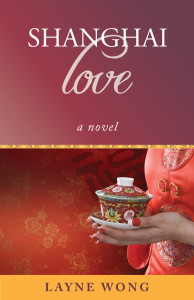
Shanghai-Love-front-cover-194x300

The story is set in an era when both the Chinese and Europeans disapproved of interracial relationships. In Germany, there was racism against the Jews. But in China, there is prejudice from some Chinese because Henri is white. In addition, many of the Jewish refugees look down on the Chinese culture and disapprove of Henri spending time with Peilin. It seems that these two are fated to be star-crossed lovers.

I recommend reading this story because it offers a reminder of the horrors of war and racism. During World War II, 20,000 European Jews fled to Shanghai, one of the few places in the world that put no limits on the number of Jews it would accept.

Another plot thread that runs through the novel is the focus on Chinese herbal medicine and how different it is from the western concept of medical care. The Chinese were studying advanced medical care long before the West. In fact, Chinese medical tradition is more than 5,000 years old including herbal medicine, acupuncture, massage, exercise and dietary therapy—concepts that the West didn’t pay serious attention to until near the end of the 20th century.

I’m not going to tell you how the love story turns out between Henri and Peilin. You will have to buy and read the novel to discover that.

Layne Wong, the author of Shanghai Love

Layne Wong, the author of Shanghai Love

I bought my copy of “Shanghai Love” by Layne Wong at an author event held at the Bancroft Hotel in Berkeley, California earlier in 2013.

_______________

Lloyd Lofthouse is the award-winning author of My Splendid Concubine [3rd edition]. When you love a Chinese woman, you marry her family and culture too. This is the love story Sir Robert Hart did not want the world to discover.

His latest novel is the multiple-award winning Running with the Enemy.

Subscribe to “iLook China”!
Sign up for an E-mail Subscription at the top of this page, or click on the “Following” tab in the WordPress toolbar at the top of the screen.

About iLook China

China’s Holistic Historical Timeline


2013 San Francisco Book Festival Award Winners

May 6, 2013

Running with the Enemy by Lloyd Lofthouse was awarded an honorable mention in general fiction at the 2013 San Francisco Book Festival.


Pageflex Persona [document: PRS0000035_00034]

The winner of the general fiction category went to John Irving’s In One Person published by Simon & Schuster, and the grand prize was awarded to The Power of Starting Something Stupid: How to Crush Fear, Make Dreams Happen & Live Without Regret by Richie Norton with Natalie Norton — Shadow Mountain Publishing.

John Irving won the National Book Award in 1980 for The World According to Garp, and he received an O. Henry Award in 1981 for the short story “Interior Space. In 2000, he won the Oscar for Best Adapted Screenplay for The Cider House Rules.

Richard Norton, the grand prize winner of the 2013 San Francisco Book Festival, is the CEO of Global Consulting Circle. He is a sought after speaker and consultant for the corporate growth and personal development industries. Norton has shared the stage with bestselling authors such as Stephen Covey, author of The 7 Habits of Highly Effective People, and Kevin Rollins, former CEO of Dell Computers.

Lloyd Lofthouse is the author of the award winning My Splendid Concubine and Running with the Enemy. His short story, A Night at the ‘Well of Purity’ was named a finalist in the 2007 Chicago Literary Awards. Anchee Min, Lloyd’s wife, is the author of Red Azalea, a New York Times Notable Book of the Year—in addition to national bestsellers Becoming Madame Mao and Empress Orchid, which was a finalist for the British Book Awards. Min’s memoir, the sequel to Red AzaleaThe Cooked Seed—will be released May 7, 2013.

The award winners for the 2013 San Francisco Book Festival will be honored on May 18, 2013 at a public free festival and a private awards ceremony held at the Sir Francis Drake Hotel in San Francisco.

_______________

Lloyd Lofthouse is the award-winning author of My Splendid Concubine [3rd edition]. When you love a Chinese woman, you marry her family and culture too. This is the love story Sir Robert Hart did not want the world to discover.

Subscribe to “iLook China”!
Sign up for an E-mail Subscription at the top of this page, or click on the “Following” tab in the WordPress toolbar at the top of the screen.

About iLook China


“Peking to Paris” – more than a book review: a journey

May 6, 2013

This is the real life story of Dina and Bernard Bennett driving in a road rally from Beijing to Paris in 2007—starting in Beijing, China to the desert sands of Mongolia, braving the potholes of Russia to reach Eastern Europe and eventually Paris, France with endless break downs and repairs to keep an almost 70-year-old car running.

The closest books I can compare this reading experience with is Paul Theroux’s “The Great Railway Bazaar: By Train Through Asia” and Tom Carter’s “China: Portrait of a People“.

The big difference is that Theroux rode the rails, and Carter walked for most of two years across China. In Peking to Paris, Dina and her husband drove a 1940 Cadillac-LaSalle 52 Coupe that Dina named Roxanne.

On page 79, Dina says, “China is full of surprises.” Then she dives into a description of a café that specializes in Mongolian hotpot. She says, “Behind me is a full wall of shelves and bins stuffed with vegetables, fish, poultry, pork, lamb and beef.  I count four sections, each easily five feet wide, divided by eight shelves reaching the ceiling. Every shelf is crammed with ingredient bins …”

With this description, Bennett shows us that China is an eating culture.  Food is important to the Chinese—very important.

In another chapter, she discovers that the Chinese and Americans have more in common than she had thought when they stay the night at a rustic Chinese dude ranch where urban Chinese come to rough it on vacations spending time with Mongolian herders.

In China, the ride seemed smooth and easy, but once they cross the border into Mongolia, a band of boys exercising their democratic freedoms throw rocks at the car and shatter the driver’s side windshield.

However, when they were still in an undemocratic China ruled by one party, the CCP, no one threw rocks at them. Instead, while driving down remote country roads police officers in fancy dress uniforms wearing white gloves waited at intersections to guide them in the right direction.

A few hundreds yard into Mongolia, the paved roads they had enjoyed in China suddenly end and the rest of the trek across this landlocked country is mostly on dirt and sand taking a heavy toll on the mechanical health of the LaSalle. Then they reach Russia’s paved roads where the challenge becomes avoiding horse-trough sized potholes capable of swallowing cars whole.

Because of this experience from Peking to Paris, Dina and Bernard are bitten by the travel bug and they have now completed more than a dozen road trips all over the world—after you read this memoir, you may want to follow them by visiting  the author’s Blog at Dina Bennett.net

I’m planning to.

Oh, and lest I forget, I was contacted by Dina’s publicist and agreed to accept a complementary uncorrected proof, which I read in record time. I have never met or talked to Dina and her husband online or in person.


The LaSalle in the above video is not the one that Dina and Bernard drove in the 2007 rally from Beijing to Paris, but the video gives you an idea of the car they drove 7,800 miles across China to Mongolia, then Russia to Eastern Europe and eventually Paris, France—thirty-five grueling days.

It has been some time since I read a book that I wanted to wake up early in the morning to read and eagerly waited to read before I slept. For me, reading Peking to Paris was an adventure, and I highly recommend it.

Discover Country Driving with Peter Hessler


Lloyd Lofthouse is the award-winning author of My Splendid Concubine [3rd edition]. When you love a Chinese woman, you marry her family and culture too. This is the love story Sir Robert Hart did not want the world to discover.

Subscribe to “iLook China”!
Sign up for an E-mail Subscription at the top of this page, or click on the “Following” tab in the WordPress toolbar at the top of the screen.

About iLook China


Dissecting the “Moral Duty” of a Reckless and False Review: Part 6/6

March 25, 2013

View as Single Page

Amanda Roberts, most people think for themselves. They don’t need someone on an alleged evangelical crusade willing to claim anything to achieve what she may see as a moral duty.

I’ve also written about this subject in My Mother would have Burned this Book (March 2011), because there have been other reviews similar to yours but much shorter that may have also had a burning “moral duty to spare others the pain of reading it.”

Another word for this is censorship, and there is a long history of censorship linked to a moral duty to censor books dealing with graphic sexual topics.

Maybe the truth is that Amanda Roberts is an alleged throw back to the Victorian era and would rather sweep the truth under the carpet that this historical fiction novel reveals—the same thing that Robert Hart attempted when he burned those journals.

Ms. Amanda Roberts, as valid as your opinon is, there are other opinions of this book that are just as valid.

– PRAISE FOR –

1st edition of My Splendid Concubine:
2007 iUniverse Editor’s Choice
2007 iUniverse Publisher’s Choice
2008 iUniverse Reader’s Choice

Honorable Mention in General Fiction
2008 London Book Festival

“Packed cover to cover with intriguing characters and plot, a must read for history fans and a fine addition to any collection on the genre.” – Midwest Book Review, May 8, 2008

“A stunning work that enmeshes imperialism, modernity, miscegenation and plain old desire in a sweaty matrix of destruction and painful birth.” – City Weekend Magazine, May 8, 2008

“Those who are interested in unconventional romances with an out-of-the ordinary setting will find plenty to enjoy.” – Historical Novel Society, May 2008

2nd edition of My Splendid Concubine

“A powerful novel whose beauty exceeds that of the book’s cover.”
Writer’s Digest judge’s commentary, April 2009 

Honorable Mentions in General Fiction
2009 San Francisco Book Festival
2009 Hollywood Book Festival

Our Hart, Elegy for a Concubine, the sequel to
2nd edition of My Splendid Concubine

Honorable Mentions in General Fiction
2009 Nashville Book Festival
2009 Los Angeles Book Festival
2009 London Book Festival
2009 DIY Book Festival

Our Hart is a unique and entertaining read, recommended.” – Midwest Book Review, April 2010

“Fine and tightly controlled Novel” – Historical Fiction Society, May 2010

“Political intrigue and matters of the heart are both fully explored. … readers who enjoy vicariously experiencing other times and cultures will find Our Hart a fascinating journey.” – Commentary of a Writer’s Digest judge, April 2011

Finalist in Fiction & Literature: Historical Fiction:
The National “Best Books 2010” Awards, December 2010

Pageflex Persona [document: PRS0000039_00034]

 3rd edition of My Splendid Concubine: April 2013
(formerly titled The Concubine Saga)

Honorable Mentions in General Fiction
2012 San Francisco Book Festival
2012 New York Book Festival
2012 London Book Festival

“Drawing on heavily researched passages with great dramatization, The Concubine Saga is a strong pick for historical fiction collections, highly recommended.” – The Midwest Book Review, July 2012

Disclaimer: No money was paid to bribe another person to write a positive review of this novel or to honor it with a literary award of any kind, and I’m sure if we go to court with a judge, lawyers and a jury, that fact would be easy to prove. There was no guarantee of a response from any of these sources or what that response might be.

Return to Dissecting the “Moral Duty” of a Reckless and False Review: Part 5 or start with Part 1

_______________

Lloyd Lofthouse is the award-winning author of My Splendid Concubine [3rd edition]. When you love a Chinese woman, you marry her family and culture too. This is the love story Sir Robert Hart did not want the world to discover.

Subscribe to “iLook China”!
Sign up for an E-mail Subscription at the top of this page, or click on the “Following” tab in the WordPress toolbar at the top of the screen.

About iLook China


Dissecting the “Moral Duty” of a Reckless and False Review: Part 5/6

March 24, 2013

View as Single Page

Amanda Roberts’s says, “There is a sequel, Our Hart: Elegy for a Concubine, but I really can’t take any more of Lofthouse’s writing.”

Too bad, because in the 117,000 word sequel, the word “erection” never appears, and Hart has matured and is a changed man—the same one his journals reveal—from the one who arrived in China struggling with his Wesleyan, Victorian, British guilt because in 1854, he was as horny as a room full of adolescent boys and a few years before his death, he did his best to sweep those years under the rug by burning seven years of his journals that cover his first decade in China.

The reason we know about Ayoau is because they had three children together, and in 1865 Robert arrives unexpectedly in Northern Ireland with Anna, Herbert and Arthur Hart, and without Ayoau.

Some historians believe Ayaou died in child birth (the theory that I prefer), but others claim there is a letter that proves he sold—or gave with a dowry—Ayaou to another man in an attempt to whitewash his reputation.

We know that he took the children to Ireland where he found them a foster home, and Hart never sees those children again.

If it had not been for those three children, I’m sure that Ayaou would have been banished from Hart’s edited and revised history too.

Pageflex Persona [document: PRS0000039_00034]

3rd edition: April 2013

How would you describe a man that may have sold the mother of his first-three children to another man and then takes those children halfway around the world from China to Ireland so their mother never sees them again? If this theory is true, what does that say about Robert Hart?

There is one last reckless and false claim by Roberts that I want to clarify: “I really didn’t know how this book was published until I realized that the forward was written by Anchee Min, Lofthouse’s wife,” Roberts says, “Anchee Min is one of the most important writers of English Chinese literature today. I have several books written by her and have enjoyed her writing. I can only guess that Lofthouse was able to get his book published by riding his wife’s coattails and I can just imagine poor Min having to grit through her teeth as she had to smile and say, ‘yeah, Lloyd, this book is great.’ Poor woman.”

In fact, my wife had nothing to do with the publication of this book, because I am an indie author. She also did not tell me ‘this book is great’. I did not use her agent or her publisher. And my wife had nothing to do with the recognition this book has earned from other reputable unbiased sources. You see, not everyone agrees with Amanda Roberts’s “moral duty to spare others the pain of reading it.”

However, Anchee was my go-to-source about everything Chinese—[her Website, which I maintain], and she was the first person to read and comment on the first rough draft to the point where she made suggestions/criticisms about how Ayaou and Shao-mei would have talked and behaved. Most of the dialogue between Hart and his sister concubines was heavily edited and revised.

If I couldn’t find information on a subject that might enhance the story, I asked her—for example, the Chinese poetry that appears in the novel. My wife has several books on Chinese poetry written centuries ago and she translated a few of those poems into English so I could use them in the story.

In the end, though, the final decisions on all things to do with the plot were mine. I started researching and writing My Splendid Concubine in 1999 and continued to research and work on it for the next eight years. By the time I had a final draft, if I had stacked all the revisions and rough drafts in a pile, it would have stood as tall as I stand—more than six feet.

Continued on March 25, 2013 in Dissecting the “Moral Duty” of a Reckless and False Review: Part 6 or return to Part 4

_______________

Lloyd Lofthouse is the award-winning author of My Splendid Concubine [3rd edition]. When you love a Chinese woman, you marry her family and culture too. This is the love story Sir Robert Hart did not want the world to discover.

Subscribe to “iLook China”!
Sign up for an E-mail Subscription at the top of this page, or click on the “Following” tab in the WordPress toolbar at the top of the screen.

About iLook China