What is it about the Asian Culture?

January 14, 2015

On Tuesday January 13, I briefly mentioned the 6th Annual Asian Heritage Street Celebration that took place in San Francisco on May 15, 2010. This post continues with that event.

There were Chinese, Thai, Tibetans—and even the Falun Gong (using another name to disguise who they were)—a free Burma booth, and booths for Dragon Boat Races, and the Lion Dance.

I was there with President Margie Yee Webb of the Sacramento branch of the California Writers Club (CWC), Frances Kakugawa, and Teresa LeYung Ryan. That year, the CWC’s booth was in front of the San Francisco library.
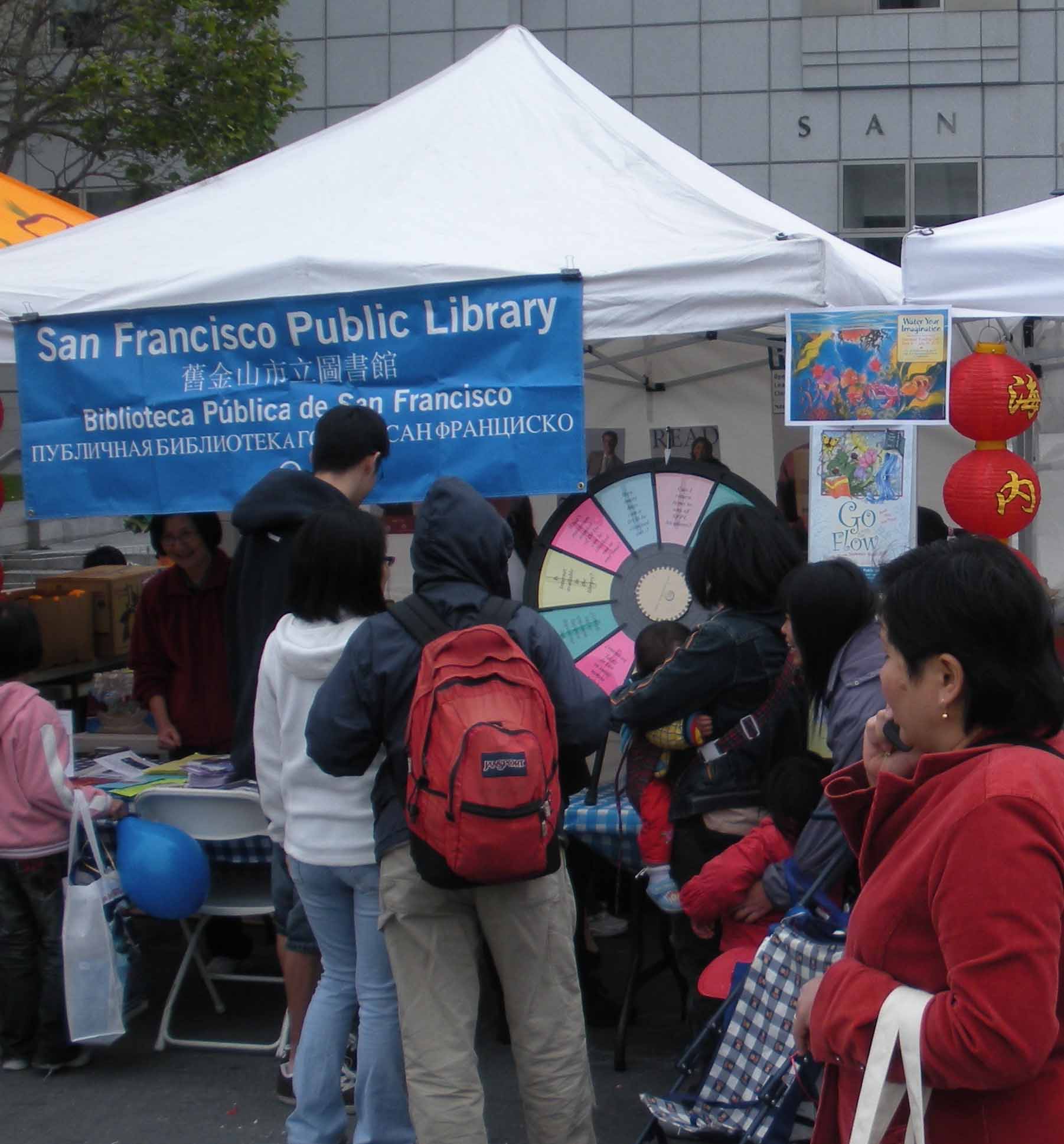
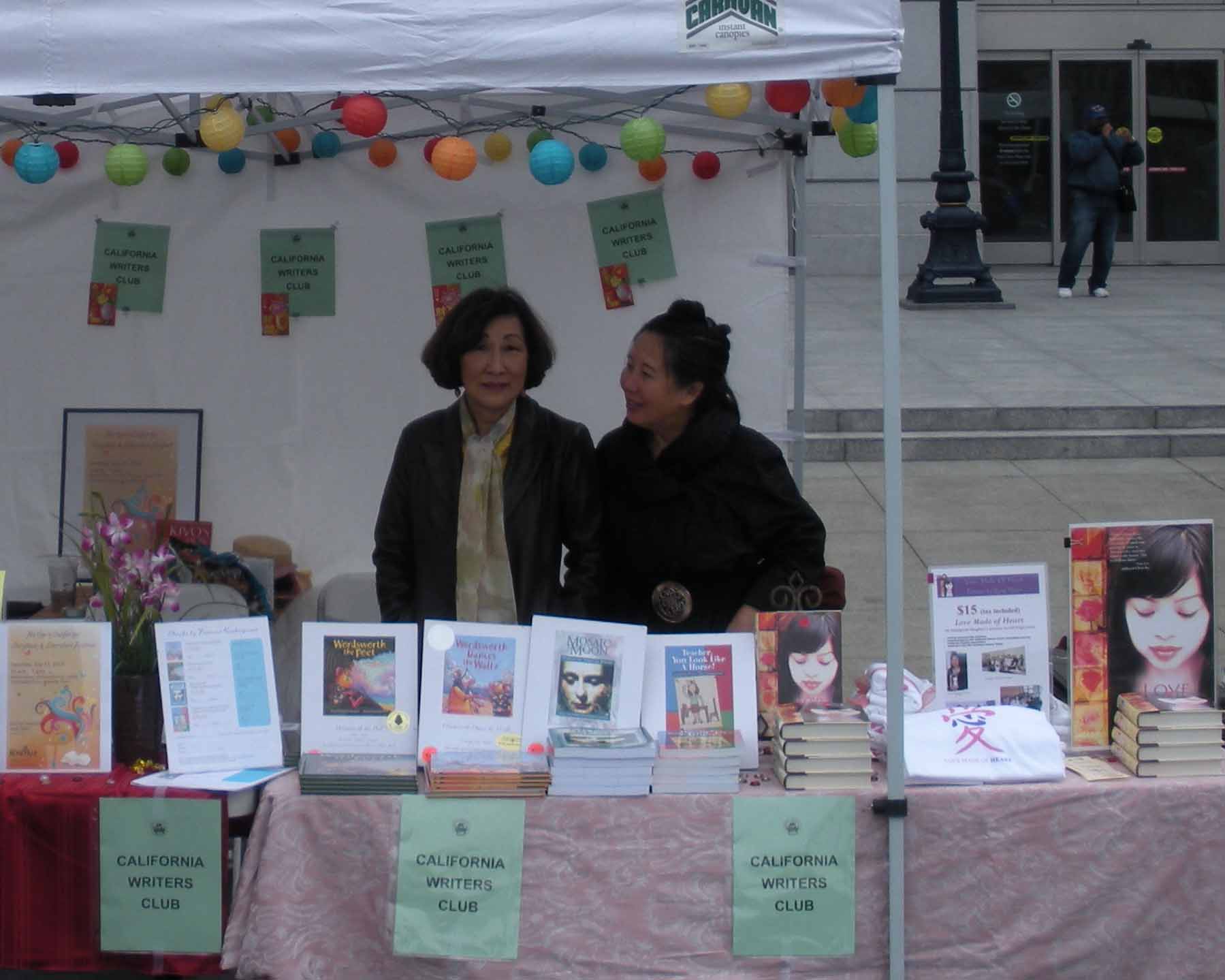
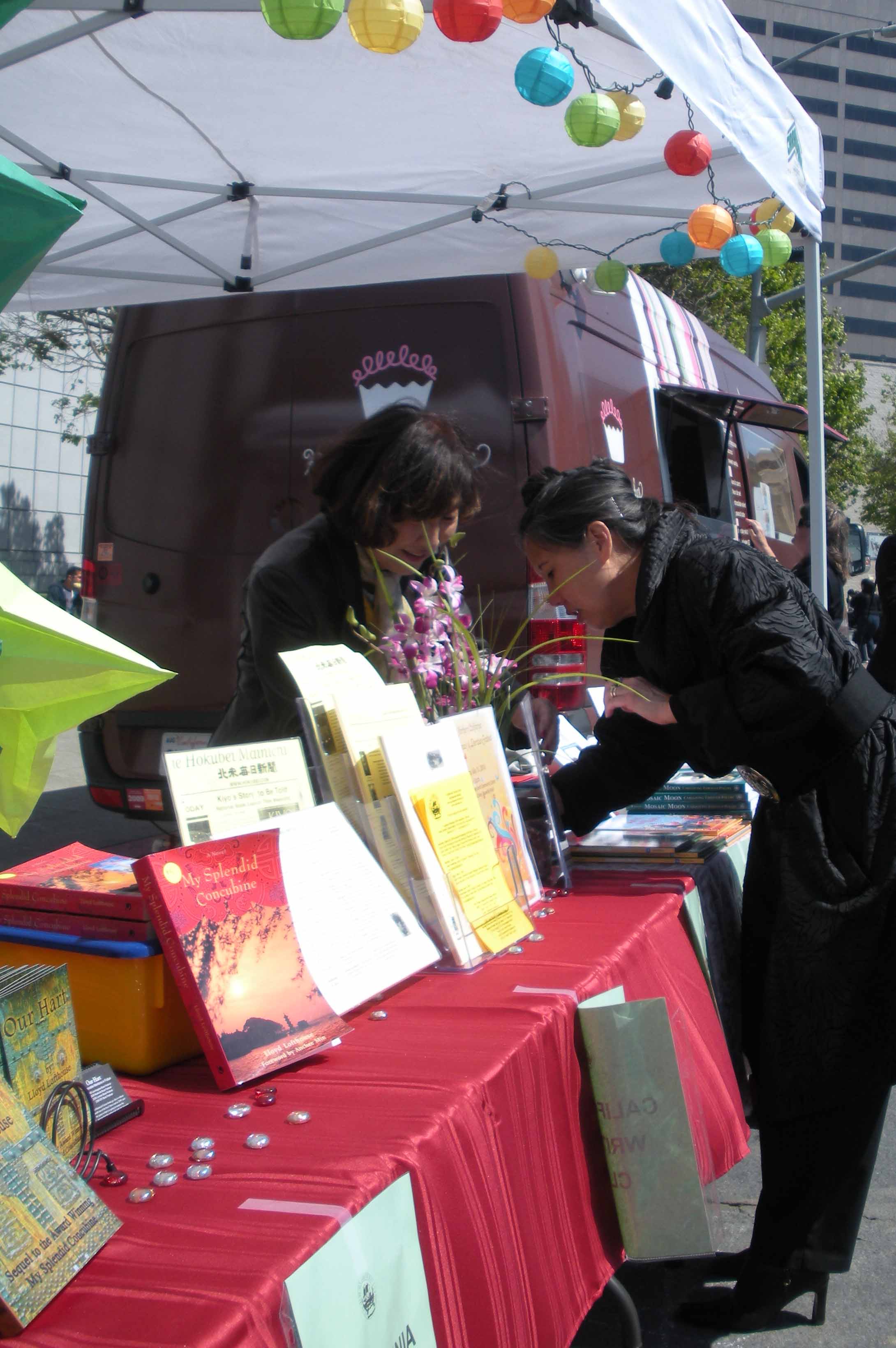
Authors Frances Kakugawa and Teresa LyYung Ryan at the CWC booth
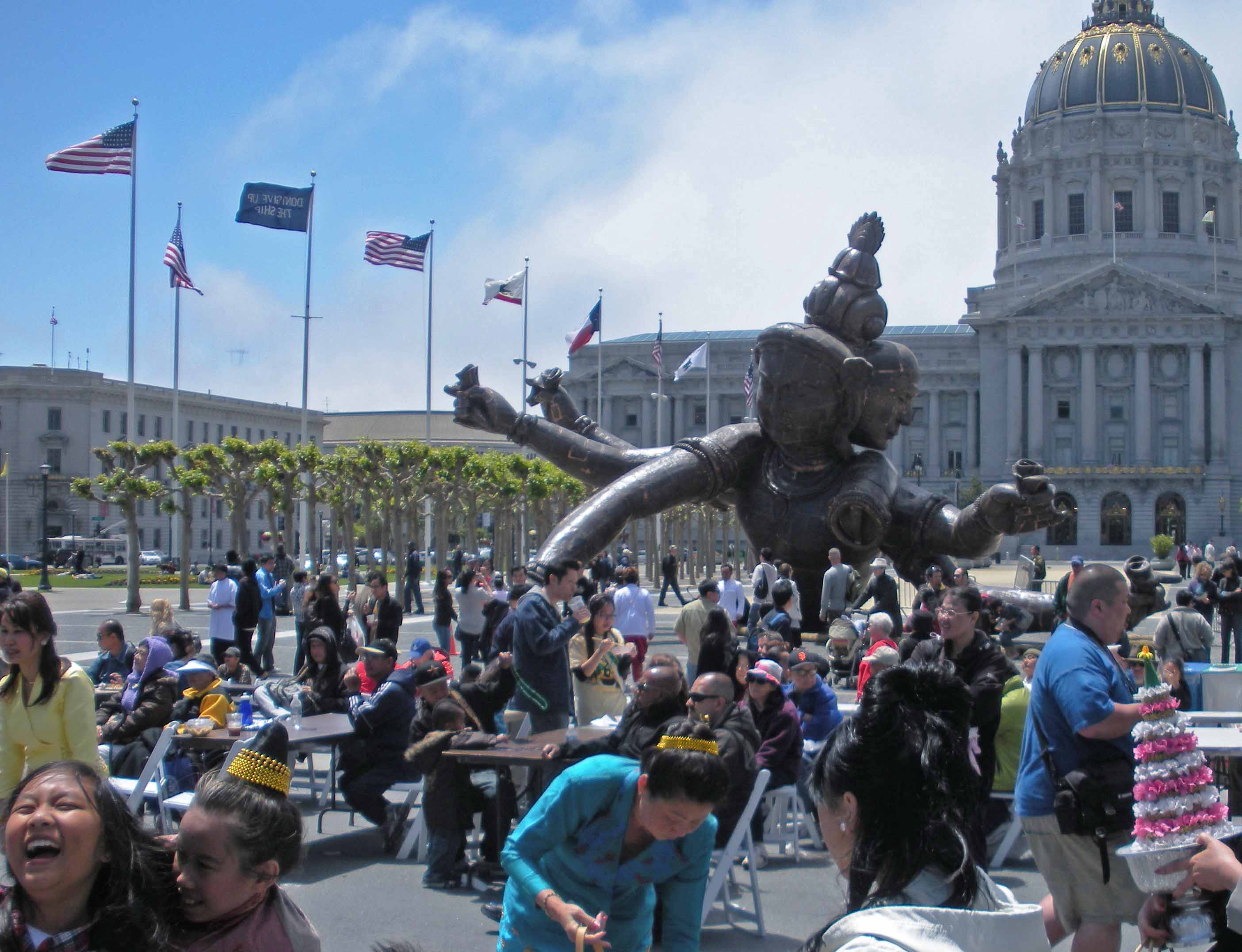
It’s estimated that 100,000 people attends this street celebration each year.

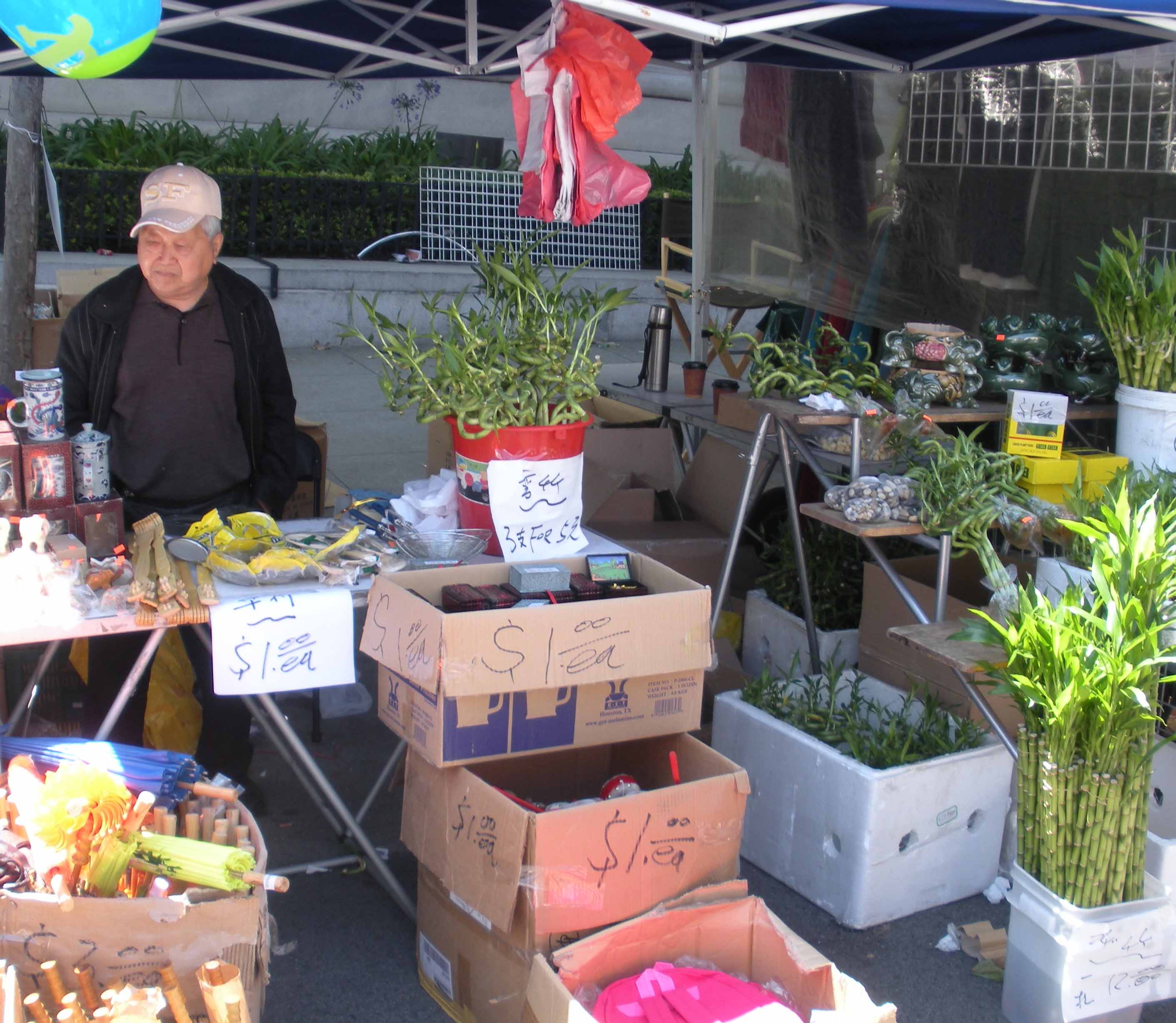
Many people stopped by our booth to talk about China and/or buy books. By noon, I went for a walk toward Little Saigon. Booths lined the street for blocks. It was obvious from what I saw that all of Asia’s cultures have been influenced by China one way or another.
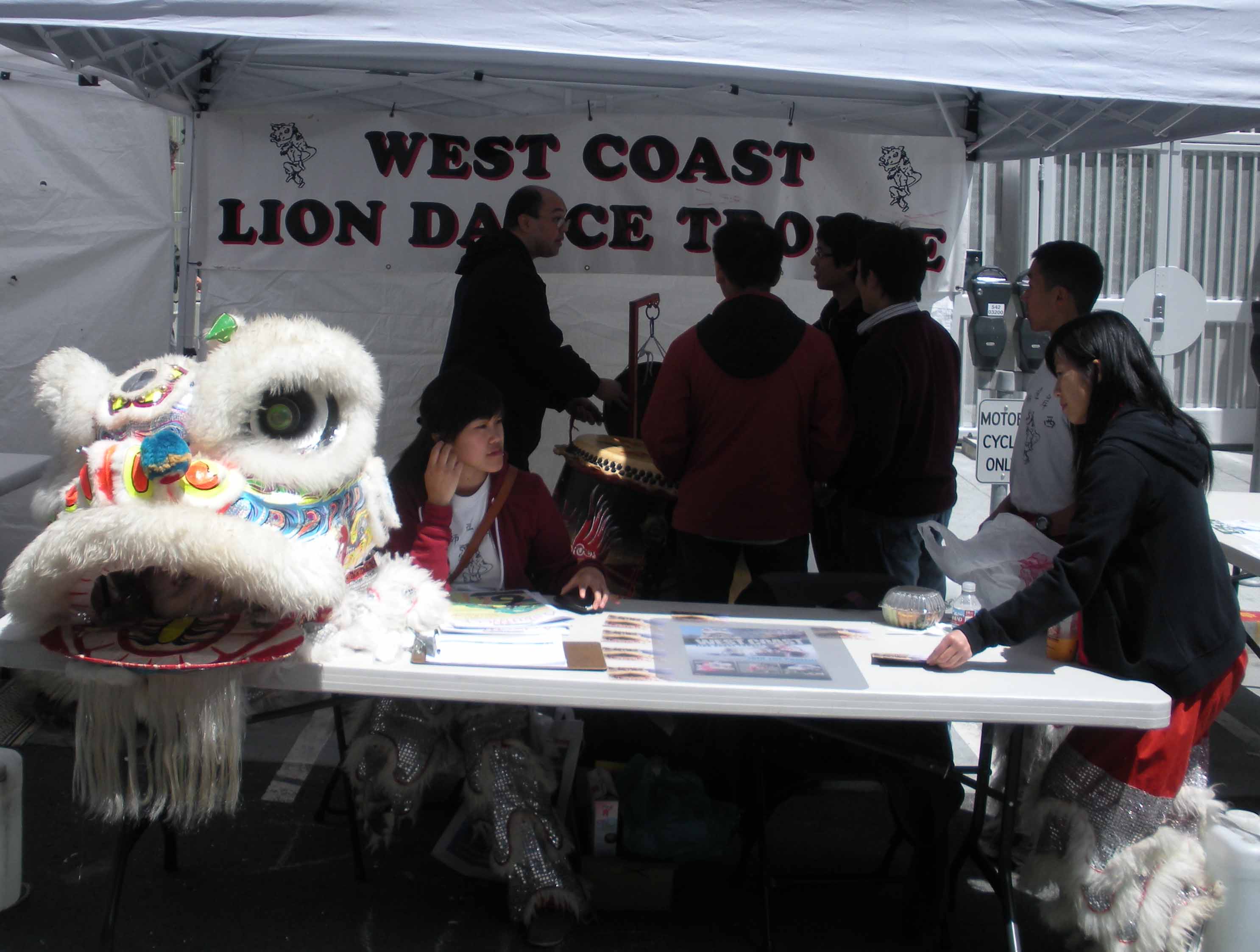
Lion Dance booth
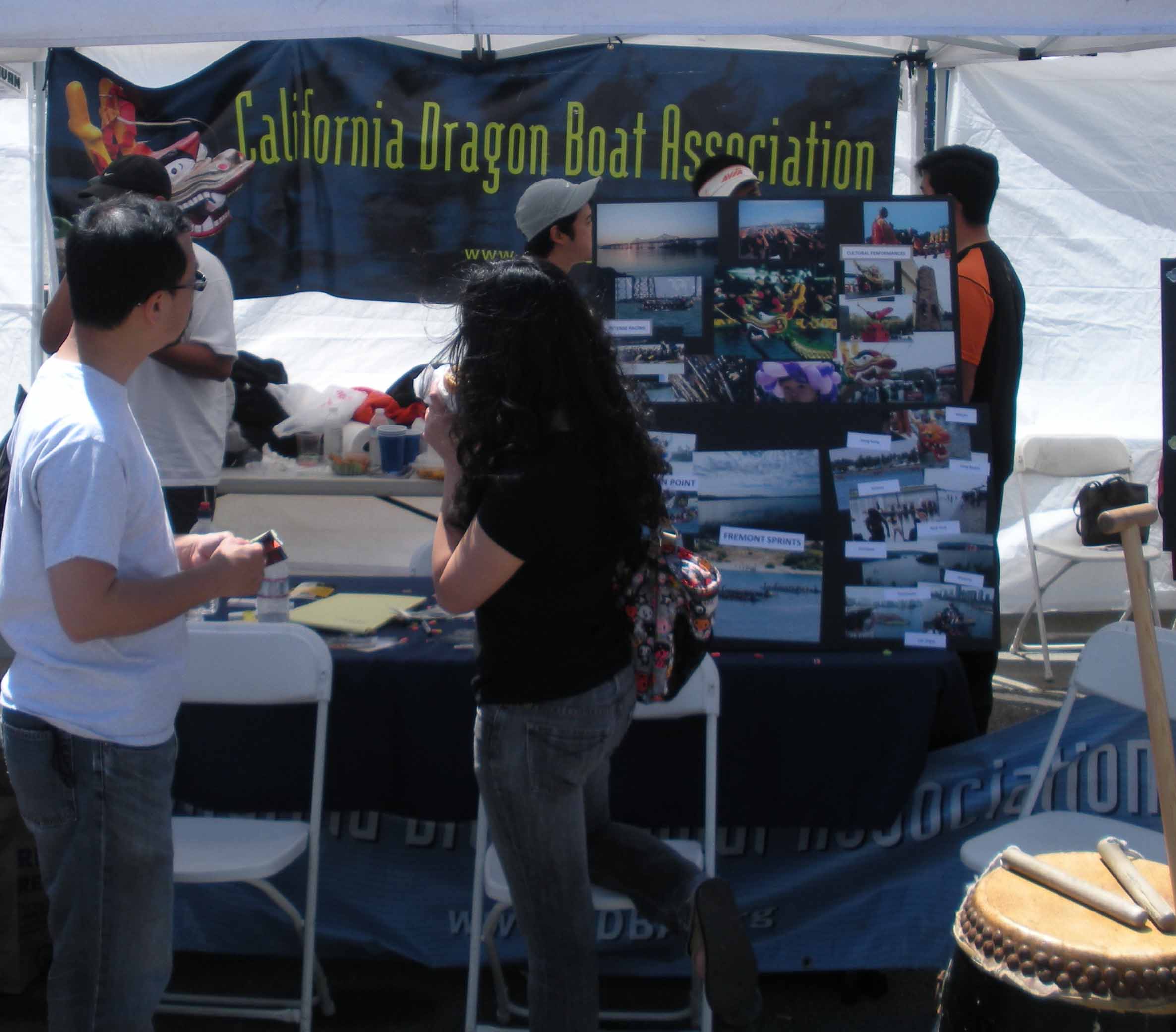
California Dragon Boat Races

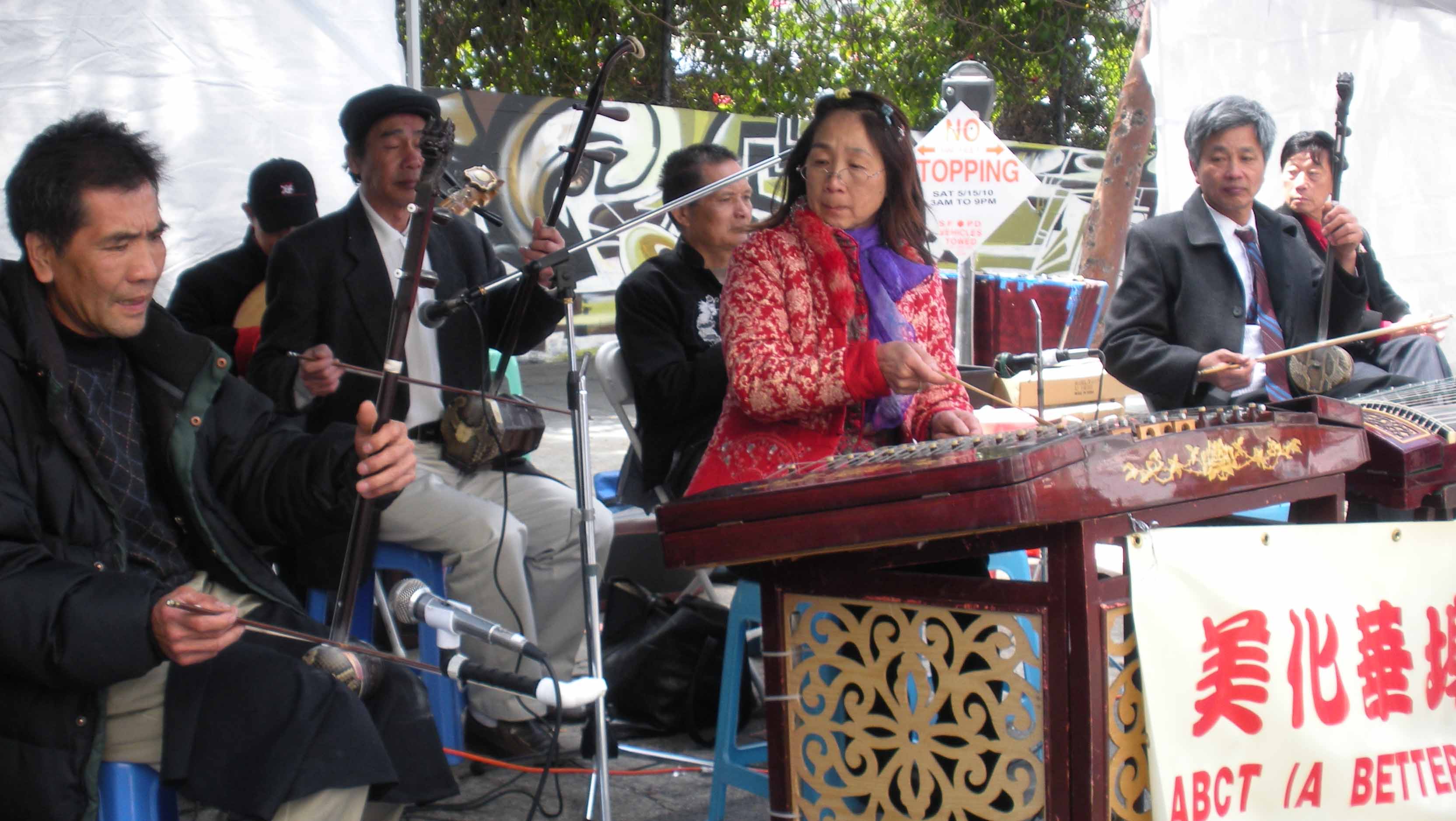
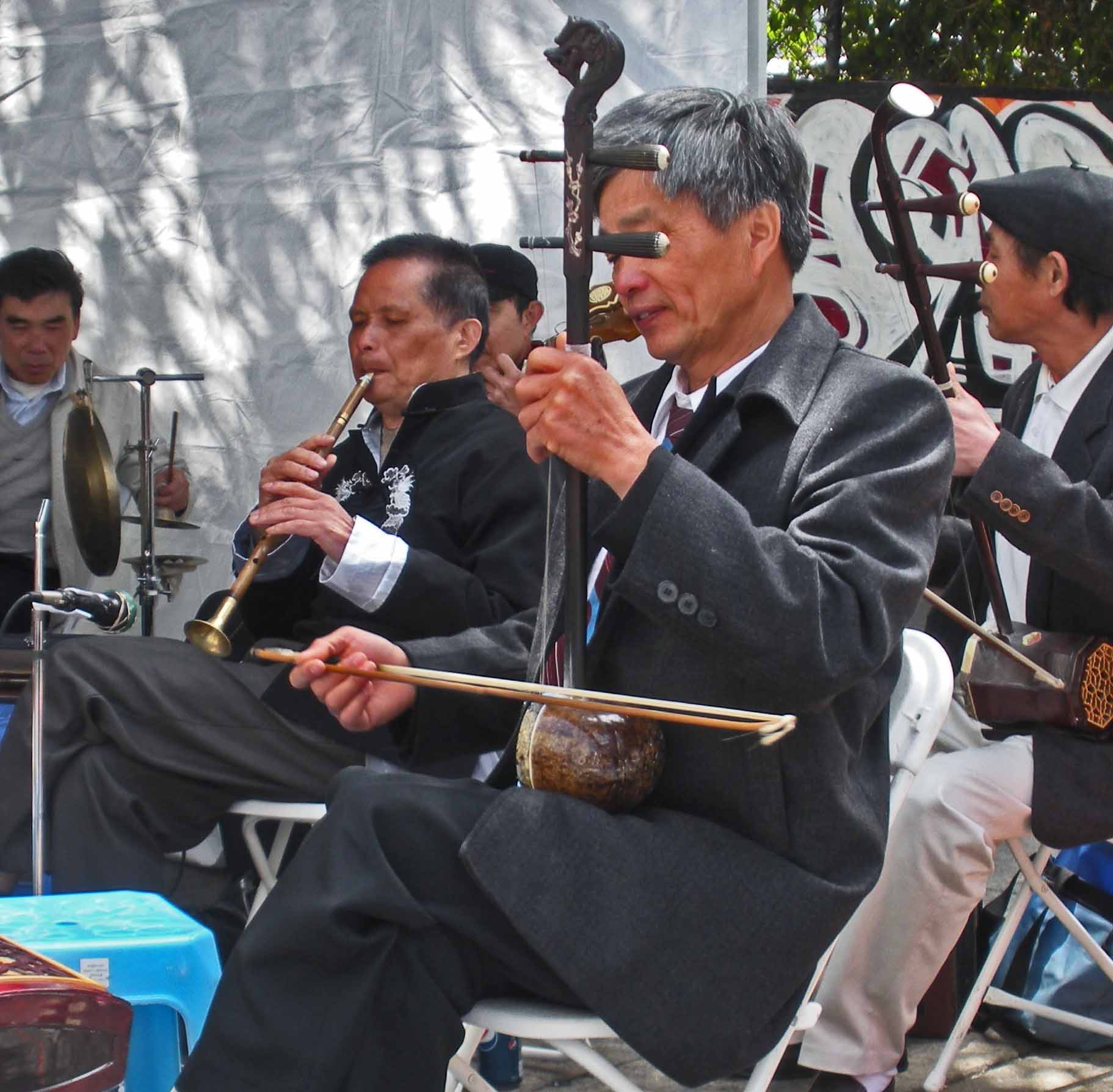
The Chinese believe in lucky symbols and bamboo plays a part in that belief.  China was the super power in Asia for more than two thousand years. At one booth, I stopped to take a few photos of a Chinese band playing traditional Asian music.  All the instruments I’ve written on this Blog about were there.
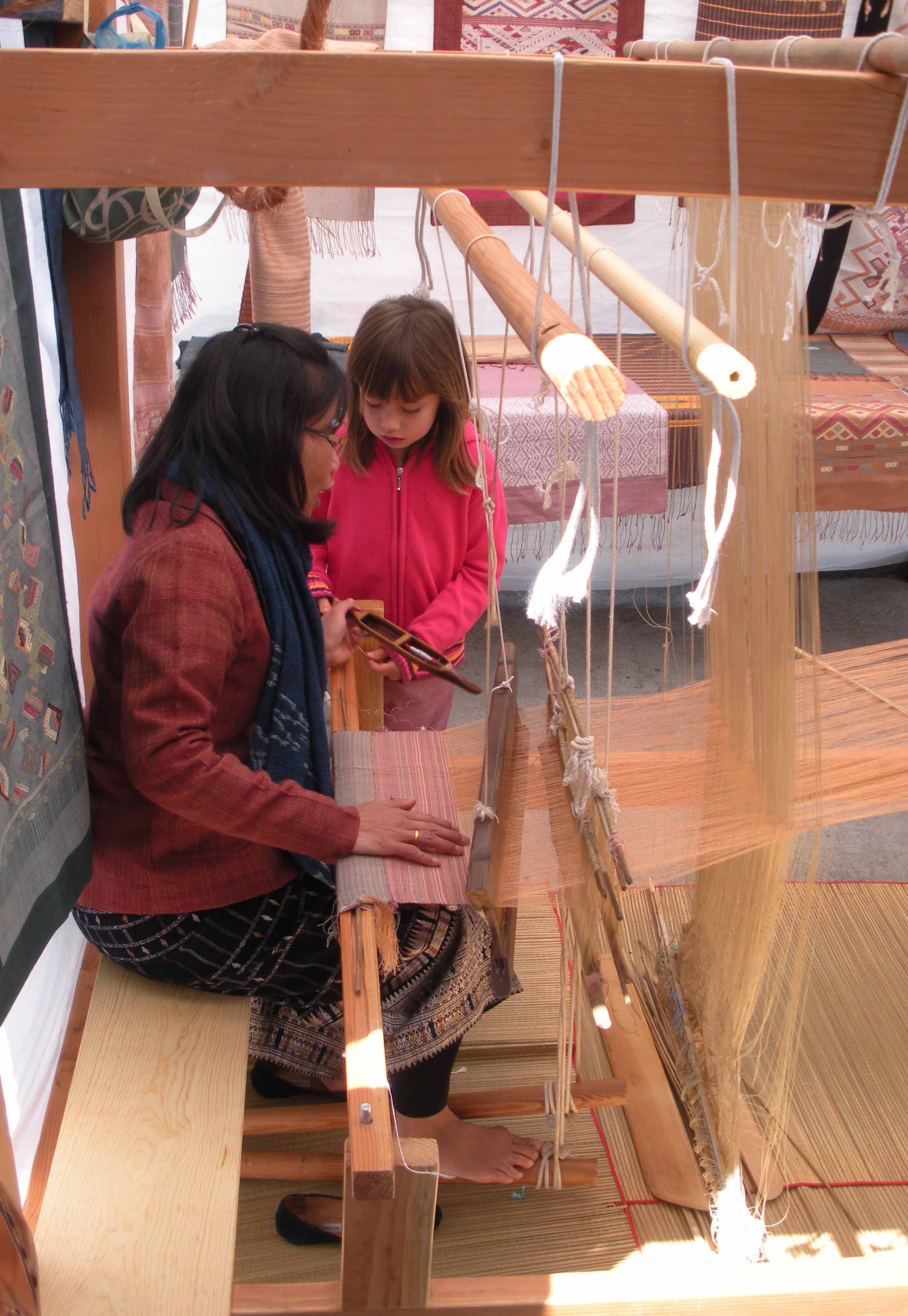
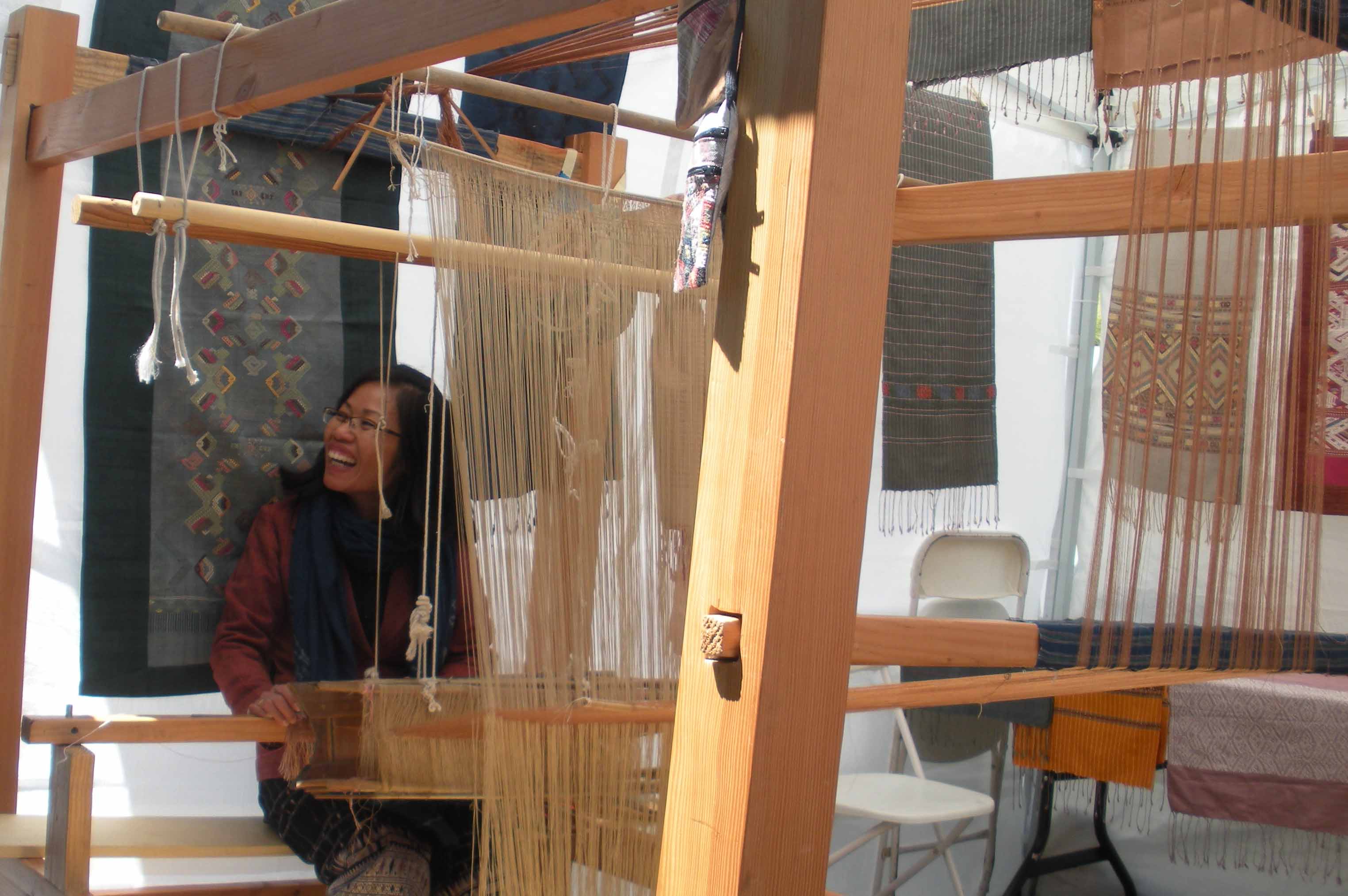
The silk trade started in China and there was a booth with a woman creating tapestries from silk thread.
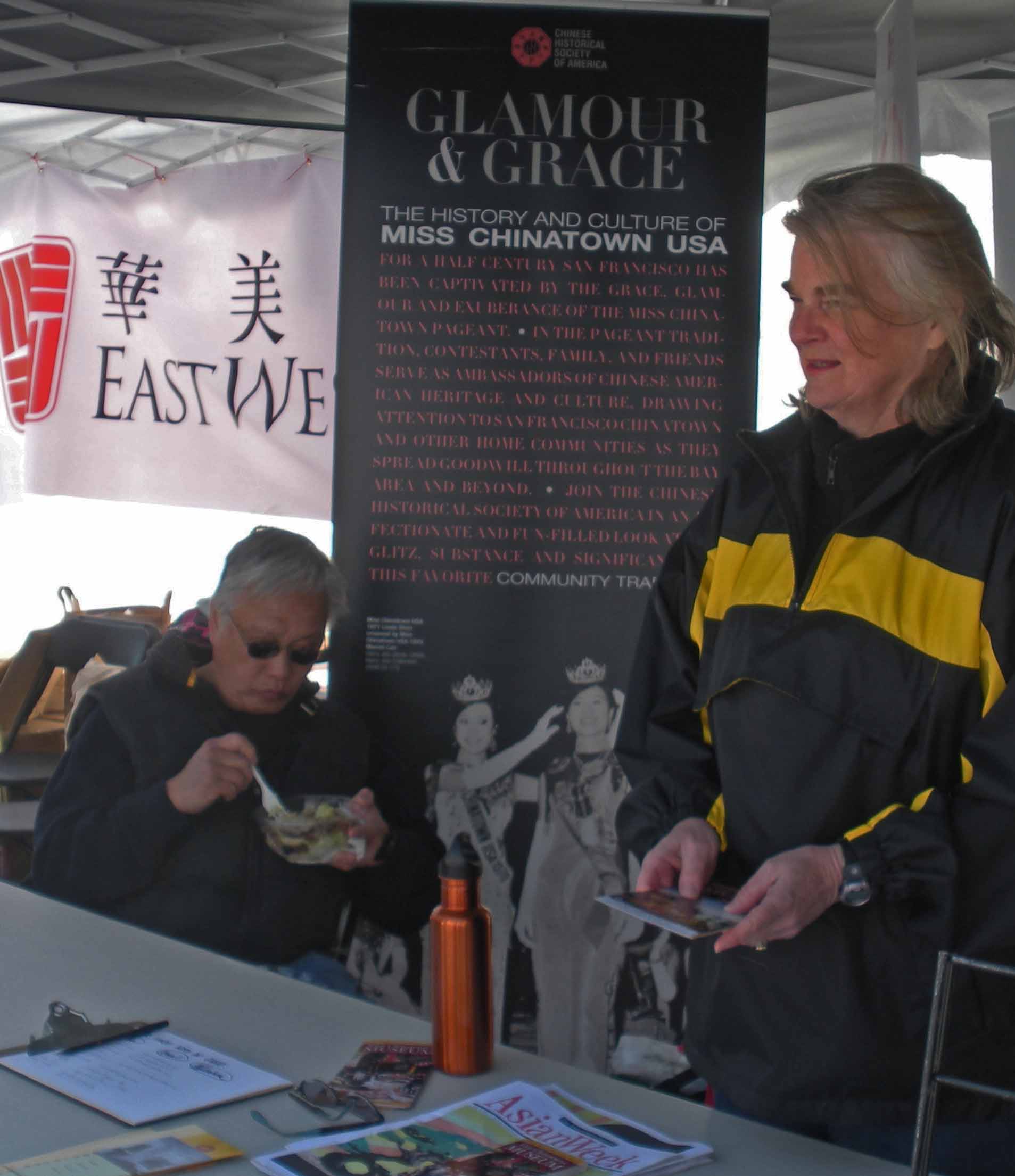
Even the Glamour and Grace of Miss Chinatown USA was represented.

It was a long and rewarding day that went by too fast, but it was a harmonious day.
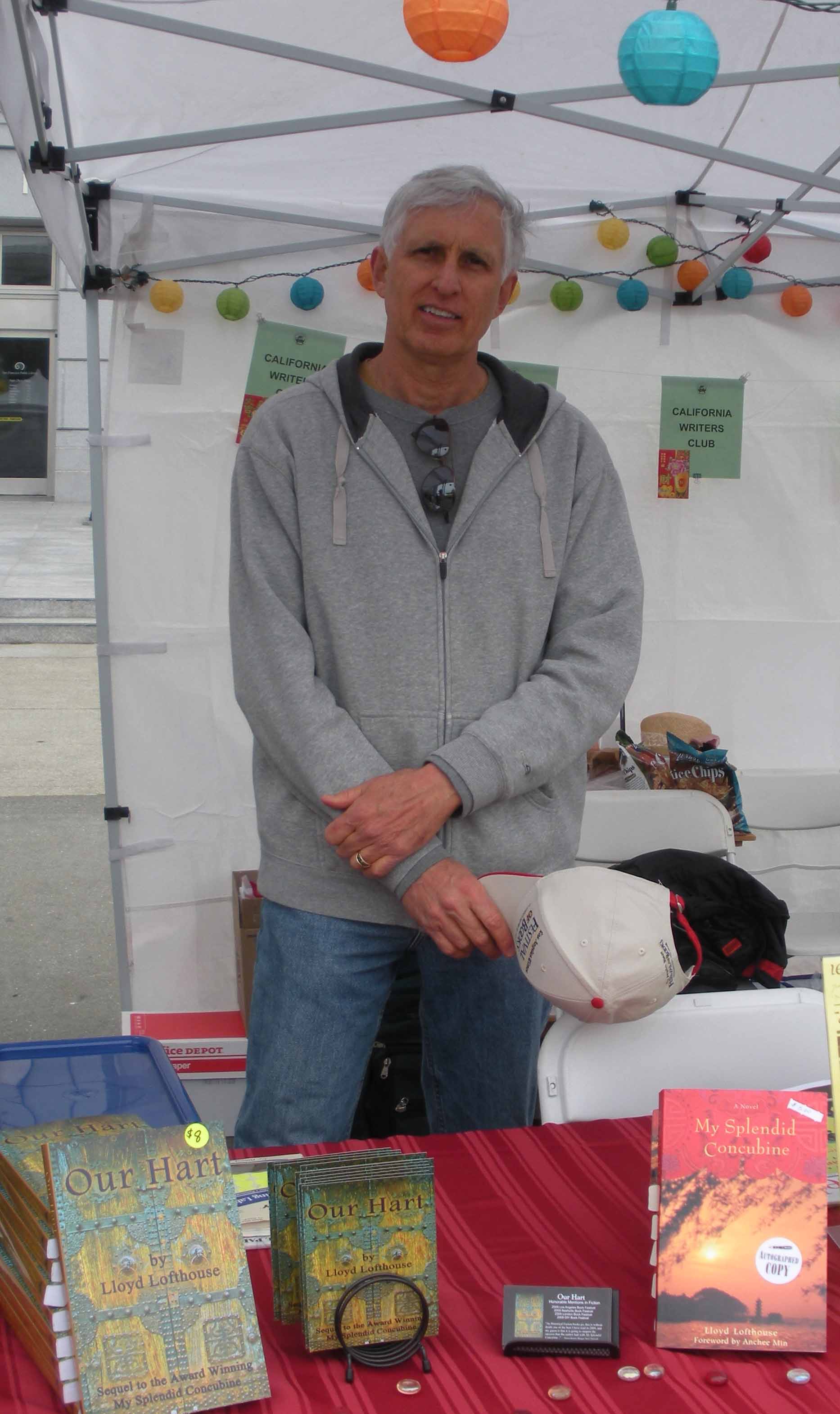
Lloyd Lofthouse (me)

When I was still teaching (1975-2005), I learned that by the third generation, the children of most immigrants are assimilated by American culture.

If that is true, why is it that Asians—as an ethnic group—have the lowest incidence of STDs, the lowest unemployment rate, the lowest incidence of drug use and the lowest incidence of teen pregnancy?

In fact, American Asians, including Chinese, tend to graduate from high school with higher GPAs and complete college at rates more than any ethnic group—including White—in the United States. For instance, the Institute of Education Sciences reports that in 2011-12, 93% of Asian/Pacific Islanders; 85% of Whites; 76% of Hispanics and 68% of Blacks, graduated from high school on time.

In addition. The U.S. Census reports that 48.3% of Asian-Americans have earned a Bachelor’s degree or higher compared to 29.7% for Whites, 16.3% for Blacks and 13.5% of Latinos.
Why is education more important to Asian Americans than the other ethnic groups? When I say important, I support that claim by the graduation rates and not by what someone might say. Saying an education is important to you and then you don’t graduate, reveals the truth.

I think the answer is simple, and I’ve talked about this before in other posts—the collective family culture with a strong belief in the importance of education and respect for teachers and elders, and the public schools where I taught for thirty years had a small percentage of Asian students. Most of them always earned higher grades and were concerned about any grade lower than an A. Even an A- minus might worry some Asian-American students. I also seldom had behavior problems from the Asian-American students I taught in the same classes where every racial group was represented.


Opening Ceremony of the 2014 San Francisco Asian Heritage Street Celebration

_______________

Lloyd Lofthouse is the award-winning author of My Splendid Concubine [3rd edition]. When you love a Chinese woman, you marry her family and culture too. This is the lusty love story Sir Robert Hart did not want the world to discover.

Honorable Mentions in General Fiction
2012 San Francisco Book Festival
2012 New York Book Festival
2012 London Book Festival
2009 Los Angeles Book Festival
2009 Hollywood Book Festival

Finalist in Fiction & Literature – Historical Fiction
The National “Best Books 2010” Awards
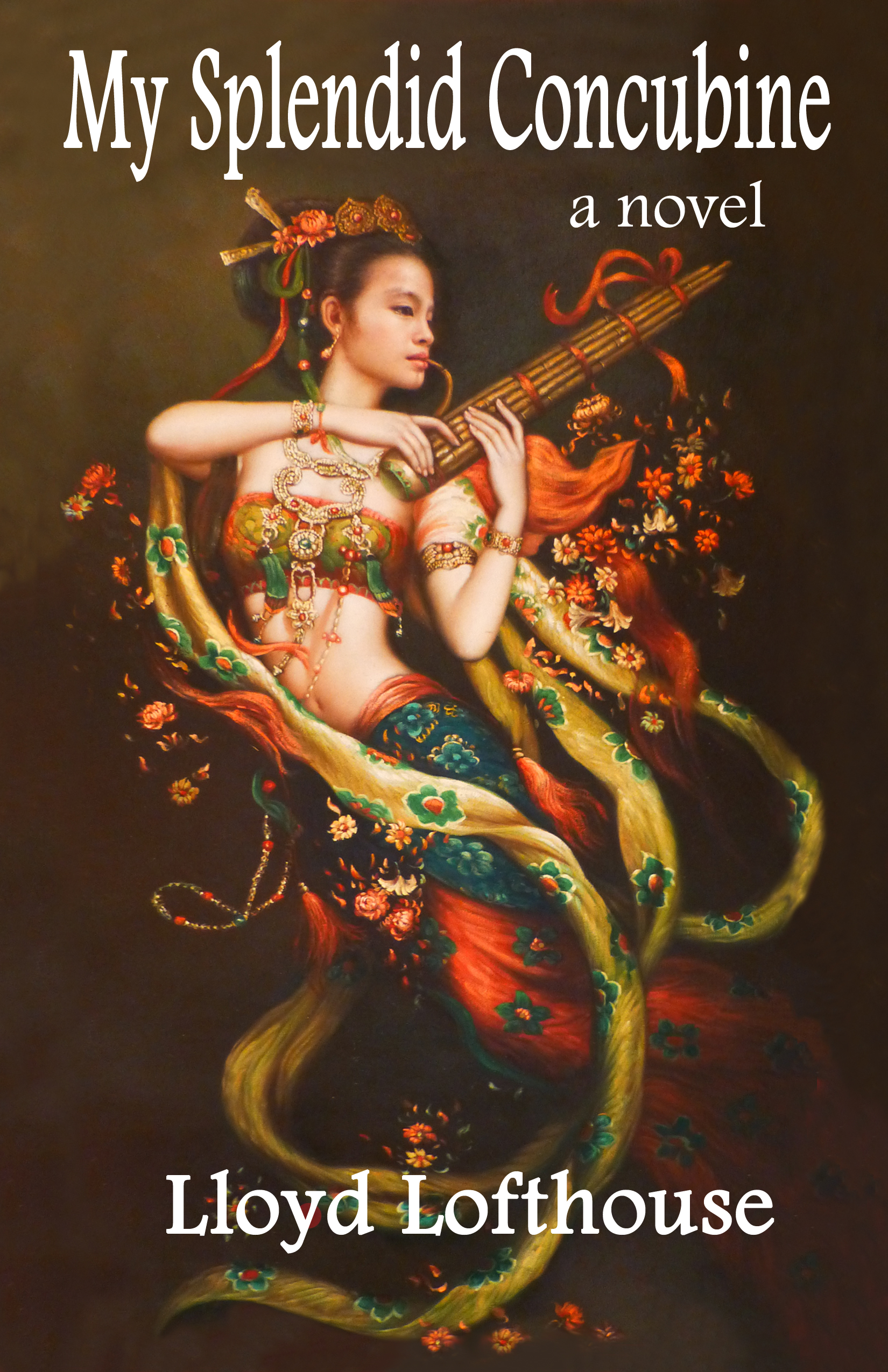
 E-book_cover_MSC_July_24_2013

Subscribe to “iLook China”!
Sign up for an E-mail Subscription at the top of this page, or click on the “Following” tab in the WordPress toolbar at the top of the screen.

About iLook China

China’s Holistic Historical Timeline


The Development of Food Safety in China versus the United States

January 7, 2015

A friend sent me a piece about tainted supplements in the United States, and one paragraph grabbed my attention.

The New York Times said, “In recent years, a vast majority of supplement suppliers have located overseas—principally in China. Nearly all of the vitamin C and many other supplements consumed in the United States are made from ingredients made in Chinese plants. Those plants are almost never inspected by the FDA because the agency is not required to do so, has little money to do so and does not view the plants as particularly risky.”

China has an agency that is similar to the U.S. Food and Drug Administration (FDA) called the China Food and Drug Administration (CFDA) founded in 2003 as part of an effort in China to improve food safety. Today, there are about ten government departments and ministries under the State Council responsible for food safety in China.

Although China’s CFDA is relatively new compared to America’s FDA (est. 1906), China appears to be taking food safety seriously compared to weaknesses discovered in America’s FDA.

Evidence that China is serious about food safety appeared on July 10, 2007, when Zheng Xiaoyu, the former head of the CFDA was executed by lethal injection for taking bribes from various firms in exchange for state licenses related to product safety. When has the United States sent a corrupt FDA or corporate official to prison let alone executed someone convicted of corruption?

Until the 1906 Food and Drug Act, America did not have an FDA (FDA Early History), and recently the Union of Concerned Scientists revealed that hundreds of agency scientists had been pressured to approve drugs despite reservations about safety.

For instance, WashingtonBlog.com reported that in the U.S. Giant Food Corporations Work Hand-In-Glove With Corrupt Government Agencies to Dish Up Cheap, Unhealthy Food. “Multinational food, drink and alcohol companies are using strategies similar to those employed by the tobacco industry to undermine public health policies, health experts said on Tuesday.”

Then there was the New Harvard Study that revealed how we cannot trust the FDA with public safety. The study points out how the FDA, which supposedly must be in charge of public health and safety, is nothing more than a puppet for giant pharmaceutical and drug companies.

 _______________

Lloyd Lofthouse is the award-winning author of My Splendid Concubine [3rd edition]. When you love a Chinese woman, you marry her family and culture too. This is the lusty love story Sir Robert Hart did not want the world to discover.

Honorable Mentions in General Fiction
2012 San Francisco Book Festival
2012 New York Book Festival
2012 London Book Festival
2009 Los Angeles Book Festival
2009 Hollywood Book Festival

Finalist in Fiction & Literature – Historical Fiction
The National “Best Books 2010” Awards

 E-book_cover_MSC_July_24_2013

Subscribe to “iLook China”!
Sign up for an E-mail Subscription at the top of this page, or click on the “Following” tab in the WordPress toolbar at the top of the screen.

About iLook China

China’s Holistic Historical Timeline


If China government isn’t a Monarchy or a Dictatorship, what is it? Part 4 of 4

December 13, 2014

Deng Xiaoping was China’s George Washington. What he did was what Dr. Sun Yat-sen wanted. China is a republic that combines Western thought with Chinese tradition.

However, the task to create China’s Republic fell to the Communist Party so China is a Socialist Republic with capitalist tendencies.

In China, Piety is important and advice from elders is often followed as if it is the law. Due to this, elder statesmen such as Jiang Zemin have great power in the government even after he no longer has a political title. After all, this is a Chinese tradition.

The Economist mentioned disagreements within the CCP among China’s leaders over what the country’s priorities should be—both on the economy and on political reform.

Whatever the final decisions will be, the consensus of the CCP will be guided by Chinese tradition and not Western thought.

The changes that “some” want to see take place in China will probably not arrive in a hurry if the wisdom of the I-Ching, The Book of Changes, is followed, which says change should come slowly.

In fact, China has proven it is a republic because none of China’s first four presidents are the sons of previous presidents and eventually death removes the elders. China’s presidents did not inherit that title due to heredity as kings do or the leader of North Korea did.

Return to Part 3 or start with  Part 1

View as Single Page

 _______________

Lloyd Lofthouse is the award-winning author of My Splendid Concubine [3rd edition]. When you love a Chinese woman, you marry her family and culture too. This is the love story Sir Robert Hart did not want the world to discover.

Low-Res_E-book_cover_MSC_July_24_2013

Subscribe to “iLook China”!
Sign up for an E-mail Subscription at the top of this page, or click on the “Following” tab in the WordPress toolbar at the top of the screen.

About iLook China

China’s Holistic Historical Timeline


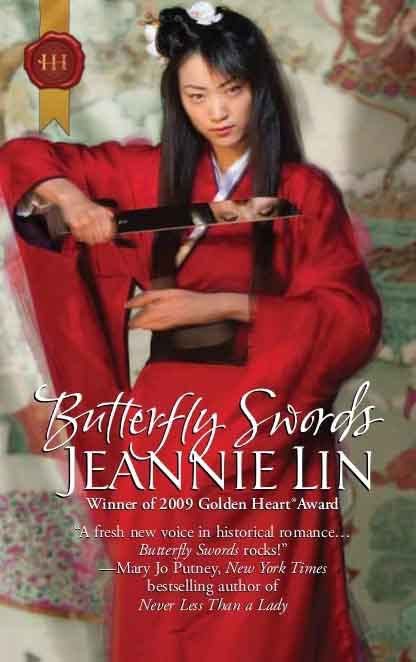
Harlequin comes to China wielding Butterfly Swords

December 9, 2014

A review of Jeannie Lin’s Butterfly Swords
Guest Post by Tom Carter

Enter Jeannie Lin, Harlequin’s rising red-star of romance writing.  She isn’t the first author on Harlequin’s roster to set her books in China (that honor goes to Jade Lee and her infinite “Tigress” series).

However, Lin’s debut novel, Butterfly Swords, has been attracting a viral buzz louder than a summertime cicada not just for being the first Harlequin novel to NOT feature a man on the cover, but for using an Asian model as the cover girl, another Harlequin first.

The star of Butterfly Swords is a Chinese woman, yes.  But to give American readers something that they can relate to, the male love interest of Lin’s novel is not Chinese but a wandering whiteboy from the west.

Ryam is drifting around the Tang (618-906 AD) empire begging for food (this sounds exactly like my own travels across China!) when he spots a disguised female being attacked by a pack of marauding bandits.

The swordsman, who evokes images of bare-chested, fur underwear-wearing Thundarr the Barbarian from the eponymous 80’s cartoon, rescues her, then agrees to escort her home.

Little does Ryam know that young Ai Li is really a princess on the run from an arranged marriage to a dastardly warlord.  The two proceed on their journey together across the 7th-century frontier, getting in adventures and slowly but surely falling in love.

Pitting strength, courage and her fabulous butterfly swords against the forces of evil, Ai Li proves herself in the battlefield (“With Ai Li’s swords and determined spirit it was easy to forget that she was innocent”).

However, where the book has significant cultural crossover appeal is in author Jeannie Lin’s ability to keenly capture the multi-dimensional perspectives of both characters throughout their budding interracial relationship.

From Ryam’s course communicative abilities (“Where did you learn how to speak Chinese” Ai Li asks him, laughing. “You sound like you were taught in a brothel”) to his struggles with his inner-white demons as a big, bad bai gui (“It was so much easier to seduce a woman than talk to her”), the reader is introduced not to some empty-headed he-man but a complex male of the species who is genuinely torn between his biological needs and respecting Ai Li’s virtue.

“I don’t understand what she’s talking about half the time,” Ryam grumbles to himself. “Everything is about honor and duty.”  Surely even expats living in present-day P.R.C. can relate to this dilemma.

Ai Li, meanwhile, finds herself attracted not only to Ryam’s “musky scent” and “sleek muscles” (Harlequin prerequisites; don’t blame the authoress), but his sincerity (“There was nothing barbaric about him. His manner was direct and honest. It was her own countrymen she needed to be worried about.”).

The protagonist does find herself frustrated with “this swordsman with blue eyes and the storm of emotions that came with him,” but, true to life, Ai Li comes with her own personality flaws as well (“she was being irrational and she knew it”).

Of course, it wouldn’t be a Harlequin without passionate love scenes, something my fiancée missed in the heavily censored Chinese versions.

This Jeannie Lin does in the poetic prose of a Tang Dynasty-era pillow book yet with just enough creatively-provocative language to keep sex-numbed westerners interested (“Ryam slipped his fingers into her silken, heated flesh…her body went liquid and damp in welcome.”).  And thankfully without ever once resorting to the word “loin.”

Ryam proves himself to be an ideal lover for nubile Ai Li, “rough enough to make her breath catch, gentle enough to have her opening her knees,” though one can’t help but wonder how these two nomadic warriors can go so long without bathing nor brushing their teeth yet still manage to say things like “her mouth tasted just as sweet as he remembered.”

If only real life were as hygienic as a Harlequin novel.

One of the reasons why Harlequin is able to sell over 100 million units per year (the most profitable publishing company in the industry) is because every book is part of a series.

There are no individual Harlequin titles, which brilliantly leaves the reader yearning for more from the characters they have literally become so intimate with.  In this respect, Butterfly Swords concludes with a wide opening that screams sequel, but thankfully lacks the typical Harlequin-happy ending of matrimonial bliss.

One familiar with Chinese culture can’t help but wonder, then, what kind of future Ai Li and Ryam actually have together: in reality, Ai Li would put on weight, cut her hair short and become a shrill nag; her parents and grandparents would all move into their cramped apartment, and a frustrated Ryam, now with beer-belly, would spend more and more time at card games and with karaoke parlor hostesses than at home.

But before the infuriating realties of interracial marriage set in, we hope Jeannie Lin has at least a few more of her trademark sword fights and steamy sensuality in store.

____________________________

Travel Photographer Tom Carter traveled for 2 years across the 33 provinces of China to show the diversity of Chinese people in  China: Portrait of a People, the most comprehensive photography book on modern China published by a single author.

If you want to subscribe to iLook China, there is a “Subscribe” button at the top of the screen in the menu bar.


Who eats Turkey in China on America’s Thanksgiving Day?

November 27, 2014

Turkey is a fowl the Chinese seldom eat. However, eating duck and chicken is common. Duck is even considered a delicacy. In fact, the Unvegan says, “No trip to Beijing is complete without eating some Peking Duck.”

Since I am a vegan, I didn’t eat Peking Duck, but I watched my wife eat it at Quan Ju De (Peking Duck) in Beijing.

The Virtual Tourist says, “It is thought that Beijing roast duck, like the tradition of roast turkey in America and the UK, owes its origin to the roast goose that is still popular in Europe on festive occasions.”

Most Americans do not celebrate the Chinese New Year (the Spring Festival) and most Chinese do not celebrate Thanksgiving. After all, Thanksgiving is an American holiday that Canadians celebrate too but on the second Monday in October.


Thanksgiving in Beijing with Peking Duck

China.org says, “From 2001 to 2005, China imported 486,000 tons of turkey, with all of the whole turkeys and 90 percent of Turkey parts coming from the US…. Currently, 70 to 80 percent of the consumers are Westerners.”

I’m assuming that Westerners eating turkey in China are there working, as tourists or are expatriates living in the Middle Kingdom and can’t do without turkey on Thanksgiving in October or November.

If you are from North America in China during Thanksgiving, you have a choice between Peking Duck, which is easy to find, and turkey.

Go China says, “Just head to your local international grocery store (Jenny Lu’s in Beijing, Cityshop in Shanghai) and stock up on all the fixings: frozen Butterball turkeys, cranberry sauce and pumpkin pie makings. But you better do it fast, there tends to be a run on these items so if you’re shopping on the last Thursday in November, you’ll be out of luck.”

And maybe I should have posted this before Thanksgiving day.
:o)

_______________

Lloyd Lofthouse is the award-winning author of My Splendid Concubine [3rd edition]. When you love a Chinese woman, you marry her family and culture too. This is the love story Sir Robert Hart did not want the world to discover.

Low-Res_E-book_cover_MSC_July_24_2013

Subscribe to “iLook China”!
Sign up for an E-mail Subscription at the top of this page, or click on the “Following” tab in the WordPress toolbar at the top of the screen.

About iLook China

China’s Holistic Historical Timeline