“Beijing – China suspended military exchanges with the United States and threatened sanctions against American defense companies Saturday, just hours after Washington announced 6.5 billion in planned arms sales to Taiwan.” by Cara Anna, Associated Press Writer
The private sector’s American Military Industrial Machine thrives on wars like Korea, Vietnam, Iraq and Afghanistan. Military industrial tycoons would have strokes if America didn’t have any enemies to scare the public with. Without fear of the boogieman, would America need the second-largest military on earth? Would America need to spend more money on weapons than the rest of the world combined? These Military Industrial types are like greedy Christmas morning kids who pout when there aren’t enough presents to open.
Don’t read me wrong. We need to fight the nasty Al Qaeda terrorists (the ones hiding in Pakistani caves like flea ridden Neanderthals) who want to burn our underwear and sink our cities from global warming.
Now, slip into China’s shoes. During the 19th century, China was the victim of Western Imperialism. The Chinese emperor didn’t want his people to have access to opium. The West did, and the British and French waged war against China forcing China to allow opium in. American merchants benefited from those wars too. Then China fought with Russia, Germany and Japan and lost more territory. Then along came WWII and a Japanese invasion that cost at least thirty million Chinese their lives.
Is it any wonder that China is upset that the United States industrial military machine is selling Taiwan $6.4 billion in weapons. Geez, these industrialists should be making enough off Iraq and Afghanistan and this “war” (oops, we aren’t supposed to say that—political correctness you know) on terror. Prior to 1949, Taiwan was part of China. After the Nationalists lost China, the people in Taiwan lived with martial law under a dictator for thirty years before being forced to hold democratic elections.
Think about this from the Chinese point of view. The Chinese want was lost to Western Imperialism in the 19th century and the early 20th century. Check China’s maps to see what was lost. Mao reclaimed Tibet, and China has been badmouthed in the Western media ever since. With this history, how would you feel if you were Chinese?
How many wars has China started with other countries in the last century? Make a list and compare it to the wars started by the other major powers (don’t forget America). Once you finish the list, tell me who should worry the most? China or America.
Of course, the Chinese could change the name of their political party to Republican or Democrat. They could do away with the yellow stars on their flag and replace those symbols with a red ass or a blue pachyderm. They could even vote to join America as the next state, but that would make the dreaded double “L” happy. No, not me—Lawyers and Lobbyists. Right now, China has about 110,000 lawyers for 1.3 billion people while America has more than a million to rob less than a quarter of China’s population.
Isn’t it bad enough that we’ve already given China fast food and Ford?
______________
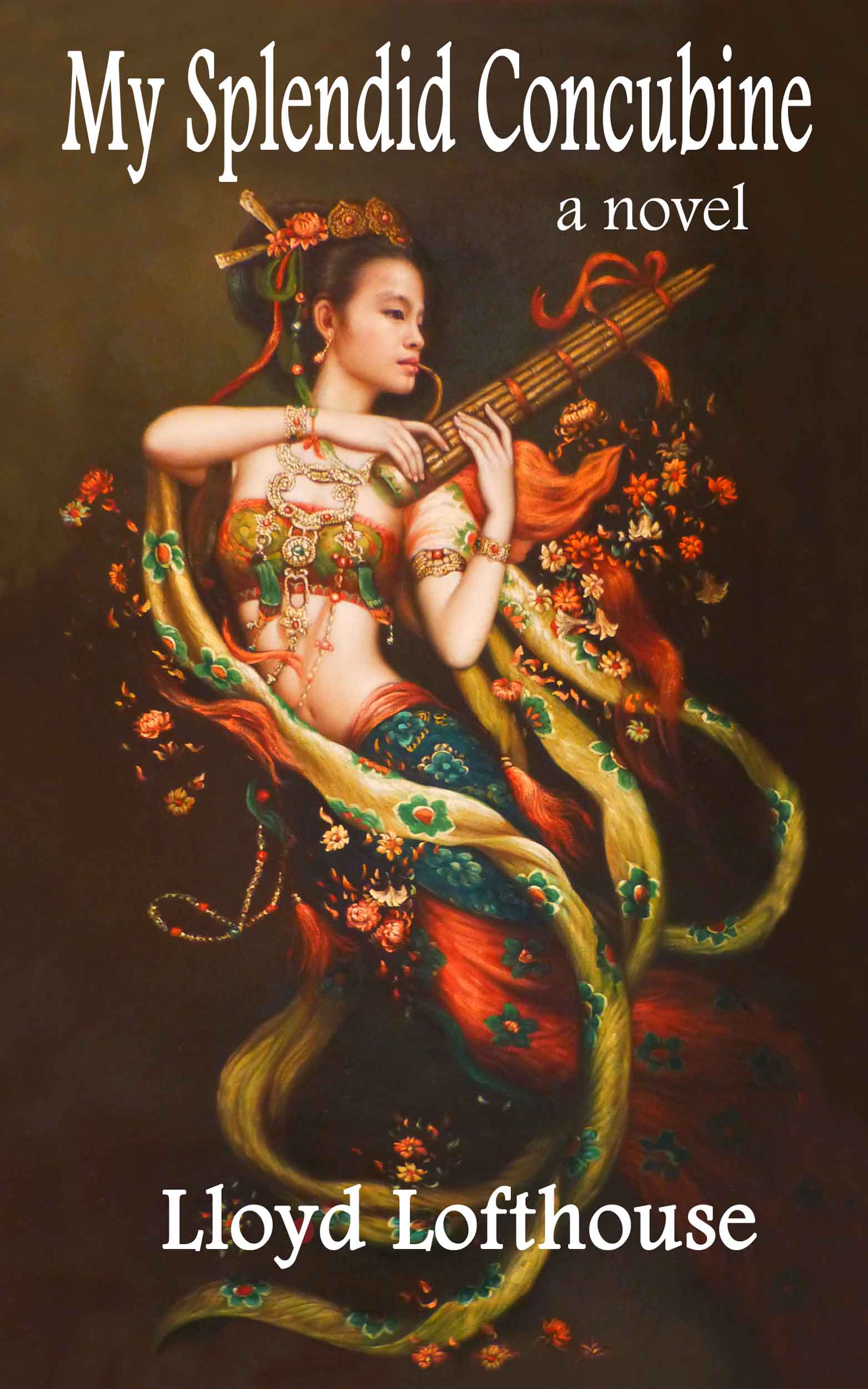
Lloyd Lofthouse is the award-winning author of the concubine saga, My Splendid Concubine & Our Hart. When you love a Chinese woman, you marry her family and culture too.
If you want to subscribe to iLook China, there is a “Subscribe” button at the top of the screen in the menu bar.
This morning, I read two pieces in the Contra Costa Times Travel section for Sunday, December 12, 2009. Both pieces were about China. The first was written by Carol Pucci, Seattle Times, and was about travelling around China independent of tourist groups, and I found the description of China to be one I’ve experienced many times since my first trip in 1999.
The second piece by John Boudreau, Mercury News, was a comparison between traveling to Taiwan and the mainland. Although it wasn’t as entertaining as Carol Pucci’s piece in the Seattle Times, it was interesting. However, I felt the piece by Boudreau was a little misleading when he wrote, “China maintains democratically ruled Taiwan as its territory. Taiwan, on the other hand, has evolved independently of Beijing since Chiang Kai-shek and his Nationalist forces fled to the island from Mao Zedong’s communist soldiers in 1949.” That statement is accurate, but I felt it wasn’t telling the whole story.
When Mao and his Chinese Communist Party won China in 1949, Chiang Kai-shek and his Kuomintang were the overloads of China. Chiang Kai-shek was a dictator and China had never held popular elections like in America and Europe, so in reality, one totalitarian government forced out another one. Of course, the United States supported Chiang Kai-shek. It didn’t matter if he was a dictator or not–at least he wasn’t a Communist.
It wasn’t until the 1986, under pressure from the United States and the United Nations, that Taiwan became a multi-party democracy and held elections. If they had not done that, the United States was threatening to stop protecting them from the mainland. That’s the primary reason that Taiwan became a democracy. A year later, Chiang Ching-kuo, Chiang Kai-shek’s son, lifted martial law. Until that day, Taiwan had been ruled by one party just like mainland China and was oppressed by martial law for thirty-seven years. I wonder why that wasn’t mentioned in Boudreau or Pucci’s pieces.
The big difference between these two one party systems was that in China, the communists leaned toward helping the working class improve their lifestyles while in Taiwan the rich and powerful were favored and everyone else was a second class citizen. When Chiang Kai-shek’s Nationalists ruled mainland China, the situation was the same. The poor people wanted change and that was what Mao, for better or worse, gave them. Under the Nationalists, there were drugs, prostitution, dangerous gangs, and women were second-class citizens. The communists dealt with those issues after they came to power—sometimes brutally. Chiang Kai-shek’s Nationalists could be brutal too.
China Crossings, Travel in China and Taiwan by John Boudreau
______________
Lloyd Lofthouse is the award-winning author of the concubine saga, My Splendid Concubine & Our Hart. When you love a Chinese woman, you marry her family and culture too.
If you want to subscribe to iLook China, there is a “Subscribe” button at the top of the screen in the menu bar.
Why is it that everything that happens in China is the government’s fault? At least that’s how the Western media and politicians tell it. If the Chinese government is to blame for what every Chinese citizen does, then every senator, congressmen, Supreme Court justice and the president of the United States are responsible for everything happening in America.
China has every right to deny they are responsible. After all, where is the evidence? I always thought people were considered innocent until proven guilty. Shouldn’t governments have the same right. Isn’t that the foundation of American justice? China has a huge population using the Internet. Anyone could be doing this. How would you like to keep track of 1.3 billion people? Heck, the government of the United States can’t even control its people, and I know that China does not control their people as much as Westerners believe.
Here’s an example of what happens when Western Yellow journalism and politicians stir the pot. One Blogger Who Found Them Guilty Evidence that “simple” minds jump to conclusions based on propaganda, which is a two way street.
Three times George Washington acted in a way that would insure the newly born US Republic would survive.
His first act was in 1782, when Colonel Lewis Nicola wrote a letter to Washington suggesting that Washington should set up a constitutional monarchy because of the inefficiency of the Continental Congress.
Washington was offended at such a suggestion and wrote to Nicola telling him to banish such thoughts from his mind. George Washington – Legends and Myths
His second act took place in 1783, when he stepped in and saved the republic by ending the Newburgh Conspiracy, a plot in the military to seize power and create a military dictatorship. Source: Early America
The third act was when Washington stepped down as President (1789 – 1797) and returned to his farm.
When King George III asked his American painter, Benjamin West, what Washington would do after winning independence, West replied, “They say he will return to his farm.”
“If he does that,” King George said, “he will be the greatest man in the world.” Cato Institute
The cover of The Economist for October 23, 2010—in the best tradition of biased and Yellow Journalism— SHOUTED: “The next emperor – Will Xi Jinping change China?”
As I read the feature article on page 13, I laughed when I saw, “Mr. Xi’s appointment was eerily similar to the recent anointment of Kim Jong-un in North Korea.”
The reason I saw humor in this absurd statement was that there is nothing similar. Kim Jong Un inherited his for-life position as Supreme Leader of North Korea. He is the son of Kim Jong-il, and the grandson of Kim Il-sung, the founder of North Korea.
The Economist implied in the October 23, 2010 issue of the magazine, that China is a monarchy.
However, China is not a monarchy as the Kim Dynasty in North Korea has become or a dictatorship-monarchy as many in the West think.
In North Korea, what started as a Socialist Dictatorship modeled on Maoism has become a Socialist Maoist Monarchy.
China, on the other hand, started as a Socialist Dictatorship under Mao (1949 to 1976) and is becoming a fledgling republic with Western critics looking for cockroaches and slugs under rocks.
In fact,Dr. Sun Yat-sen, the father of China’s Republic, wrote that he wanted to model China’s government after America but by combining Western thought with Chinese tradition.
He didn’t say he wanted China to be a clone of America’s Republic.
America was still a Republic prior to World War II. The US wouldn’t become a full-fledged democracy until the 1960s.
Unfortunately, Dr. Sun died in 1925 before he could finish what he started.
It wouldn’t be until after Mao died in 1976, that the leaders of the Communist Party under Deng Xiaoping would start the long journey to implement Sun’s dream of a Republic against great pressure from Western democracies to copy them.
Before we move on, let’s take a brief look at the Athenian democracy that was developed around the 5th century B.C. in the Greek city-state of Athens. Even though there is evidence that democratic forms of government existed before the 5th century, ancient Athens is generally believed to be the first democracy.
What did that democracy look like? Athens had a system of direct democracy, in which participating citizens voted directly on legislation and executive bills. But participation was not open to all residents: to vote, one had to be an adult, male citizen, and the number varied between 30,000 and 50,000 out of a total population of around 250,000 to 300,000—about 150,000 were slaves.
In comparison, the membership of the Chinese Communist Party (CCP) is now 86.7 million—men make-up 77 percent of CP’s membership, while woman make up 23 percent—making the CCP the world’s largest political party representing more than 6 percent of China’s population, and slavery is illegal just like it is in the U.S.
Regardless of what critics claim, China is becoming more like the republic Dr. Sun Yat-sen might have imagined by combining Western thought with Chinese traditions.
After Mao died, The Communist Party worked for several years to draft the 1982 Constitution, which included term limits of two five-year terms for elected government officials.
If you have read the Chinese Constitution carefully, it is obvious that the U.S. Constitution was used as a model. However, these two documents are not the same.
If the Party leadership is not happy with China’s president, he can be removed after one five-year term. There is even an article of impeachment in China’s Constitution.
China’s first president was Li Xiannian (1983 to 1988). He served one, five-year term, and then he stepped down.
From 1988 to 1993, Yang Shangkun would be China’s president for one five-year term. Deng Xiaoping (born 1904 – died 1997) was the Chairman of the Communist Party from 1983 to 1993, which was ten years—what China’s 1982 Constitution calls for, but Deng never served as the country’s president.
Due to how the Tiananmen Square incident in 1989 was handled, President Yang had to step down at the end of his first, five-year term. The only other way to remove him would have been through impeachment.
In 1993, Jiang Zemin became President and Chairman of the Communist Party. Then in 2003, Hu Jintao became President and Chairman of the Party. His term ended in 2012 when Xi Jinping became president of China.
Deng Xiaoping was China’s George Washington. What he did was what Dr. Sun Yat-sen wanted. China is a republic that combines Western thought with Chinese tradition.
However, the task to create China’s Republic fell to the Communist Party so China is a Socialist Republic with capitalist tendencies.
In China, Piety is important and advice from elders is often followed as if it is the law. Due to this, elder statesmen such as Jiang Zemin have great power in the government even after he no longer has a political title. After all, this is a Chinese tradition.
The Economist mentioned disagreements within the CCP among China’s leaders over what the country’s priorities should be—both on the economy and on political reform.
Whatever the final decisions will be, the consensus of the CCP will be guided by Chinese tradition and not Western thought.
The changes that “some” want to see take place in China will probably not arrive in a hurry if the wisdom of the I-Ching, The Book of Changes, is followed, which says change should come slowly.
In fact, China has proven it is a republic because none of China’s first four presidents are the sons of previous presidents and eventually death removes the elders. China’s presidents did not inherit that title due to heredity as kings do or the leader of North Korea did.
_______________
Lloyd Lofthouse is the award-winning author of My Splendid Concubine [3rd edition]. When you love a Chinese woman, you marry her family and culture too. This is the love story Sir Robert Hart did not want the world to discover.
Subscribe to “iLook China”!
Sign up for an E-mail Subscription at the top of this page, or click on the “Following” tab in the WordPress toolbar at the top of the screen.
I taught in the public schools for thirty years and Multiculturalism in the schools was an attempt to create respect for other cultures around the world. If you read this blog about Multiculturalism, you will learn why it isn’t working. The neo-conservative political alliance with conservative evangelicals have done all they can to sink this attempt to learn about other cultures and respect them for their differences.
The radical right has demonized Multiculturalism in the public schools as they have demonized the word liberal. The motivation for this is because they believe they can rebuild the world to be a mirror image of American neo-conservative, Christian values through the use of war induced nation building. Anyone who disagrees is considered a godless liberal.
Visiting a minority area in southeast China. These women never cut their hair. They even weave back in the hair that falls out.
When we hear attacks on China in the media or from American politicians (from both the radical right or liberal left) for violations of human rights, what does that mean? Sometimes those criticisms are justified when dictators like Kim Jong-il in North Korea abuses his power. However, when a country is doing something that could be explained through the context of the culture, it may not be a violation of human rights. Americans should know more before passing judgment.
Lloyd Lofthouse is the award-winning author of the concubine saga, My Splendid Concubine & Our Hart. When you love a Chinese woman, you marry her family and culture too.
If you want to subscribe to iLook China, there is a “Subscribe” button at the top of the screen in the menu bar.


 Posted by Lloyd Lofthouse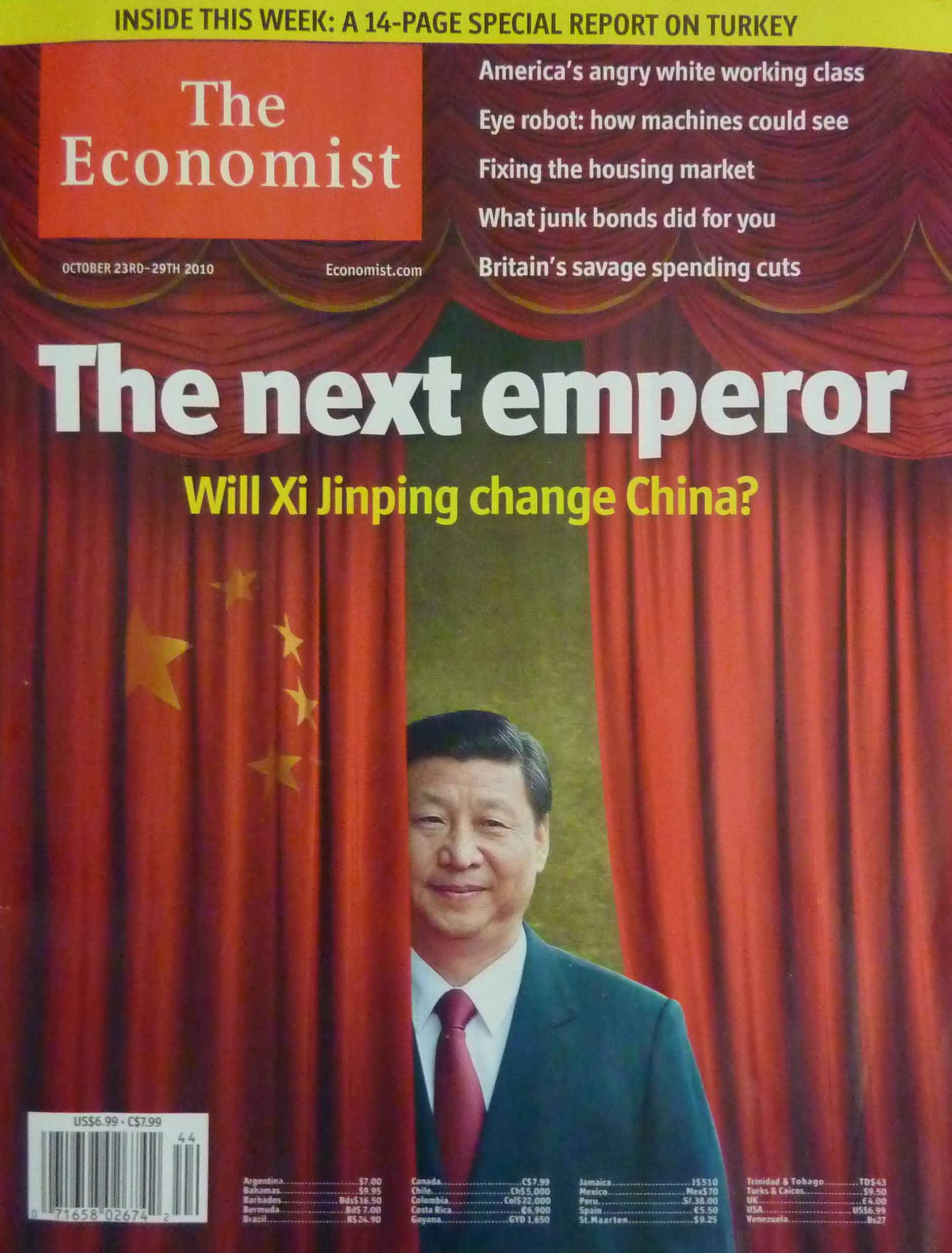

 iLook China