Nixon in China – Part 1/3

February 4, 2011

In 1969, the Soviet Union was planning a nuclear attack on China. The USSR only backed down when President Nixon’s administration warned Moscow that such a move would start World War Three since the US would bomb Russia in retaliation.

The United States, under President Nixon (1969-1974), clearly indicated that China’s interests were closely related to America’s. Source: Free Republic

At the time, I’m sure President Nixon had no idea how close those relations would become.

Thirty-nine years ago this month, in February 1972, President Richard Nixon went to China and changed the course of history a second time. His motives may not have been meant to encourage China to become the economic powerhouse it is today.

However, if it weren’t for Nixon, the odds say the Soviet Union would have bombed China with nuclear weapons and China would have retaliated.

While flying to China, President Nixon made notes. Here are a few.

What they (China) want? Build up their world credentials, Taiwan, and get the U.S. out of Asia (In 1968, Nixon ran for President promising to get the U.S. out of Vietnam).

What we (the US and China) both want? Restraint on USSR

The BBC reporter in the embedded video says that Nixon’s trip to Beijing wasn’t to see if China would help get the US out of Vietnam. Instead, the trip was designed to put pressure on the USSR with a goal to make them agree to strategic arms limitations.

Soon after Nixon’s China trip, the Soviets were forced to negotiate and within three months signed two arms control agreements.

What I find interesting is how often US Presidents (and politicians) have been wrong about China.

In 1961, President John F. Kennedy said if China had nuclear bombs, it would swallow Southeast Asia. That never happened and today China has more than three hundred nuclear bombs with the missiles to deliver them to targets thousands of miles distant.

In 1965, China successfully tested its first nuclear bomb. President Lyndon Johnson said it was “the blackest and most tragic day for the free world”.

How was that day the “blackest and most tragic day for the free world”?

After all, China has never used a nuclear weapon on another country as the US did on Japan to end World War II by bombing Hiroshima and Nagasaki killing about a quarter million people.

In fact, about 25 American POWs were also killed in the first blast. Most of the Japanese dead were noncombatants—the elderly, women and children.

Di Text.com reports that the US firebombed (with napalm) 67 Japanese cities in World War II.  More than half of Tokyo (one of the 67 cities) was destroyed. Estimates of the number killed in Tokyo range between 80,000 and 200,000.

Robert S. McNamara was reported to have said, “If we’d lost the war, we’d all have been prosecuted as war criminals.”

Question — In modern times, has Communist China inflicted that many casualties on another nation’s civilian population? Don’t forget that Japan killed about 30 million Chinese during World War II.

Discover what it took to survive Mao’s Long March.

______________

Lloyd Lofthouse is the award-winning author of the concubine saga, My Splendid Concubine & Our Hart. When you love a Chinese woman, you marry her family and culture too.

If you want to subscribe to iLook China, there is a “Subscribe” button at the top of the screen in the menu bar.


Tiger Mother Invades China

February 3, 2011

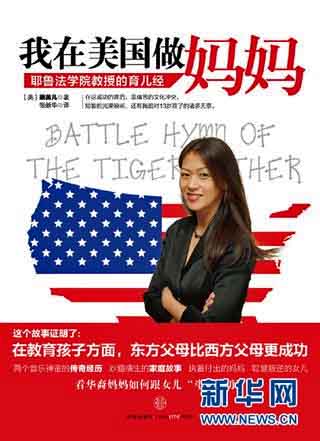
Amy Chua, the Chinese-American Tiger Mother has invaded China with her memoir.  Early results look promising in a market of 1.2 billion readers.

According to the Los Angeles Times, the book has been available online since mid-January and ranked No. 80 in sales as of Thursday on Joyo.com, a Chinese version of Amazon (its rank was 43 as I wrote this post).

The paper version of the book will be out after the Chinese New Year holiday.

However, keeping track of sales of the paper version may be difficult since the Chinese have a tradition of borrowing what someone else wrote, printing it without a contract and not paying the author for it while charging a more competitive price than the contracted publisher charges.

To many in the Middle Kingdom, printing a book you don’t have the rights to is not theft.

After all, Confucius considered all information and entertainment in the public domain even if it is against today’s Chinese law.

The Huffington Post was correct when it said the Chinese edition has a new title and a new cover, which I find more colorful than the drab US version.

The China Daily, which is China’s state owned English language newspaper/Website, quoted a Middle Kingdom mother saying, “I can’t imagine a mother in China so frankly revealing the embarrassment and brutal confrontation she went through while trying to tap her kids’ potential to succeed.”

This matches what my wife said about Chua’s memoir being very non-Chinese. It isn’t acceptable in China to talk publicly about White Elephants in the family and this story, to most mainland Chinese, is a White Elephant better kept as a family secret.

China Daily said, “Many Chinese parents see themselves in Chua, not only in terms of the strict parenting, but the desire to help their children excel. But few hope to be the next Tiger Mother.”

The best quote of the China Daily piece was from Zhang Yiwu, A Chinese literature professor and deputy director of the Cultural Research Center of Peking University: “If anything is worth introspection, I think the Tiger Mother has reminded both Chinese and American parents of the necessity to ditch stereotypical thinking and unrealistic fantasies about ideal parenting models.”

I wonder how many SAP parents (Self-esteem arm of Political Correctness in the US) will read those words and take them seriously–to question fantasy parenting models.

Discover Amy Chua Debates Former White House “Court Jester” Larry Summers

______________

Lloyd Lofthouse is the award-winning author of the concubine saga, My Splendid Concubine & Our Hart. When you love a Chinese woman, you marry her family and culture too.

If you want to subscribe to iLook China, there is a “Subscribe” button at the top of the screen in the menu bar.


Changing China through its Youth – Part 3/5

February 1, 2011

The PBS Frontline narrator mentions how entrepreneurs that have been away from China must get used to doing business in China, which may include bribes.

In fact, to Chinese there is no clear definition of what is bribery — what the West calls corruption is deeply rooted in China’s culture (and has nothing to do with Communism) and is not seen the same way.

Lu Dong, going into the business of Internet tailoring, says, “If we use Western values to judge a Chinese company’s behavior, I think it is very hard to do business with them.”

Ben Wu, the Internet Cafe owner, says they (Chinese businessmen) have no interest in helping or not helping him, and he cannot figure out how to influence them.

To get help in China, one must make friends and since China is an eating culture that takes money. To learn more, discover the meaning of Guanxi in China.

Ben Wu, who was born in China but educated in the US, says he will not bribe anyone. However, he doesn’t think he can stop his Chinese partner.

One wise quote explains the choices. “There is nothing you can do. A fish has to live in water and if the water isn’t clean you must get used to it.”

Now, for a corruption reality check. Here is a comparison with the US. We know an engineer who stopped working in construction because of the difficulty in finding contractors that are honest.

We also had a bad experience with a contractor we signed on to build an addition to our house. Twenty-eight thousand dollars later without any construction starting, he was still asking for money.

An investigation on my part revealed he hadn’t taken out the construction permit even though he had collected the money months earlier to do so. We cancelled the contract and he filed a lien on our property for about $200,000 US.

Months later, we managed to get about half the 28 thousand back and California forced him to cancel the lien. However, we had to see and pay for a lawyer, file a complaint with a state agency in California and the process was stressful and frustrating.

The fact is that there is corruption in every culture and country. It just wears different clothing.

Return to Changing China through its Youth – Part 2

______________

Lloyd Lofthouse is the award-winning author of the concubine saga, My Splendid Concubine & Our Hart. When you love a Chinese woman, you marry her family and culture too.

If you want to subscribe to iLook China, there is a “Subscribe” button at the top of the screen in the menu bar.


Amy Chua Debates Former White House “Court Jester” Larry Summers

January 31, 2011

A friend of mine forwarded a link to Larry Summers vs. Tiger Mom, which was published in The Wall Street Journal (WSJ) on January 27, 2011.

Larry Summers, who has billed himself as a “hard ass”, was President Barack Obama’s top economic advisor for the last few years. Summers recently left the White House to return to Harvard as a professor then had a debate with Chinese-American “Tiger Mom,” Amy Chua, who wrote an essay that appeared in the WSJ with a headline (she didn’t write), which said, Why Chinese Mothers are Superior.

Summers said why go through all the trouble to earn a university education when computers are eventually going to do the work that requires discipline.

He also said, “People on average live a quarter of their lives as children. That’s a lot. It’s important that they be as happy as possible during those 18 years. That counts too.”

Summers isn’t alone in his belief that children should focus on being happy instead of academic excellence.

The average American parent belonging to the Self-esteem arm of Political Correctness (SAPs) spends less than five minutes a day encouraging  his or her child to be happy which explains why the average American child enjoys ten hours a day watching TV, socializing on Facebook, playing video games, and/or sending hundreds of text messages.

Summers cites in his debate with Chua that Bill Gates and Mark Zuckerberg dropped out of Harvard. Look at what those “two” achieved without a university education.


“Asian countries value education more than other countries.”

While Gates was building Microsoft and Zuckerberg Facebook, do you believe these two billionaires spent ten hours a day doing what the average American child raised by SAPs such as Summers does to enjoy the first quarter of his or her life?

Summers doesn’t mention that Warren Buffet, one of the richest men on the planet, attended the Wharton Business school at the University of Pennsylvania for two years then transferred to the University of Nebraska-Lincoln. Working part time, he managed to graduate in only three years.

Summers doesn’t mention that it is common that the top one percent of executives with annual incomes of $500,000 or more often have Ivy league educations from universities such as Stanford, Harvard, Yale or Princeton.

Summers doesn’t mention that the top 15% of the upper middle class are highly educated and often have graduate degrees while earning a high 5-figure annual income commonly above $100,000.

To be specific, the median personal income for a high school drop out in the US with less than a 9th grade education is $17,422, and with some college that medium income jumps to $31,054, while a person with a professional university degree earns an annual medium income of $82,473.  Source: Wiki Academic Models (this source was citing US Census data).

It’s okay if Summers and his fellow SAPs let their children and teens have fun the first eighteen years of life, but don’t forget, the average life span in the US is 78.3 years. 

What are those children going to do for enjoyment while working to earn a living the next 60.3 years as an adult?

Most children raised by Tiger Moms such as Amy Chua shouldn’t have to worry. Those children as adults will probably be in the top 15% of income earners and enjoy life much more than those earning less than $18 thousand annually.

Discover In Defense of Tiger Mothers Everywhere

______________

Lloyd Lofthouse is the award-winning author of the concubine saga, My Splendid Concubine & Our Hart. When you love a Chinese woman, you marry her family and culture too.

If you want to subscribe to iLook China, there is a “Subscribe” button at the top of the screen in the menu bar.


Changing China through its Youth – Part 2/5

January 31, 2011

In Part 1 of this series covering a PBS Frontline documentary of how China’s youth is changing the country, we ended with  Ben Wu who had been away for more than a decade gaining a business education in the US and New York.

Recently, a Chinese-American friend returning from China after a long visit complained of the younger people (under 30) not saving money and using credit cards running up debt to buy consumer items (what I call mostly junk).

What Neil Genzlinger of the New York Times wrote of this Frontline series was true. “Soon it becomes clear that everything about them (the younger Chinese) is just like us. …” Learn more of The University Influence from the US and Europe.

This is scary since Money-Zine.com says, “The total amount of consumer debt in the United States stands at nearly $2.5 trillion dollars – and based on the latest Census statistics, that works out to be nearly $8,100 in debt for every man, woman and child that lives here in the US.”

Imagine what would happen to the world if China and America both had economic meltdowns equal to what started in the US in 2008? Instead of $64US trillion lost globally, the numbers would have been much higher.

Anyway, back to Ben Wu and his venture to start up an Internet cafe franchise. After months of living on caffeine and cigarettes (working two jobs–one to earn money and the other starting up the cafe), he opened for business.

By then it was probably 2005 or later. Soon after opening, Ben Wu reported, “The cafe is doing very well. It’s pretty much what I estimated.”

The next Chinese youth Frontline focuses on is Wang Xiaolei, a Chinese rapper using his music to express “his” dark view (opinion) of China’s new boom times.

In my opinion, Wang Xiaolei’s ignorance is on display. Since he doesn’t know how dark it was in China before the economic miracle, he has no idea what he is talking about. His own music says he’s never been to the US but it is apparent that he must have a gold plated perception of the US.

Facts say otherwise. Even the CIA reports that only 2.8% of China’s population lives in “absolute poverty”.

Meanwhile, in the US, the latest Census numbers reported by the Associated Press say “The number of poor people in the US is millions higher than previously known, with 1 in 6 Americans (almost 17%) – many of them 65 and older – struggling in poverty…”

Wang Xiaolei says, “There is a lot of discrimination in China. Like, if you don’t have money, people look down on you.”

How is that different from the US?

Try walking the streets of downtown Berkeley, California and see how many homeless beggars ask for money. Then drive around San Francisco and see if you can keep count of the homeless that live on the city’s streets.

In fact, “There is anecdotal evidence that many Americans complain about the presence of homeless people, blame them for their situation, and feel that their requests (begging) for money or support are unjustified.” Source: Wikipedia

Several years ago in this report, Frontline said that 70% of Chinese had no medical insurance. That was before current plans to improve medical services in urban and rural communities from 2011 to 2015. Source: Xinhuanet.com

What Frontline doesn’t say about health care in China is also important and puts the situation into perspective. The CIA reports that life expectancy in China for total population is 74.51 years. In 1949, life expectancy was a meager 35 years.

Return to China Changing through its Youth – Part 1

______________

Lloyd Lofthouse is the award-winning author of the concubine saga, My Splendid Concubine & Our Hart. When you love a Chinese woman, you marry her family and culture too.

If you want to subscribe to iLook China, there is a “Subscribe” button at the top of the screen in the menu bar.