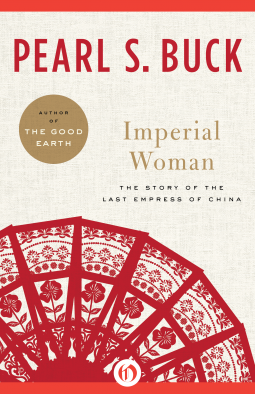
456 pages – Open Road Media (On Kindle – May 21, 2013)
This is the story of Tzu Hsi, a woman who rose from obscurity to rule first as regent to her son, the boy emperor, then ultimately as the last Empress of China from 1861 to 1908. Her death heralded the end of the old China. The empire collapsed only three years after her death, in 1911.
First chosen as one of many concubines to the young emperor – no more than a child himself – she manipulates herself into position as his favorite, cultivates his favor until he depends on her completely. Still in love with her childhood sweetheart, a single night of love produces a son, the next emperor.
Intelligent, highly (self) educated Tzu Hsi makes herself essential to her debauched, physically weakened…
The most popular flutes in China are theDiziand the Hsiao (Xiao), which rhymes with “cow”. I wrote about the Dizi—which is a transverse flute—in a previous post.
The Hsiao is longer than the Dizi and is used to play classical Chinese music and solo music. The Hsiao has eight holes for fingers. The other two Hsiao flutes are the Dong Hsiao from Southern China with six holes for the fingers and the Qin Hsiao, which is used mainly to accompany the ancient seven-string Chinese zither.
Xiao Solo by Zeng Gege – Mooring by the Autumn River at Night
Chinese flutes with finger holes have been traced back to the Han Dynasty (206 BC – 220 AD). These flutes have been made from the bones of birds or animals, from stone and jade. the Dizi became common later in the western region of the Han Dynasty.
If you enjoy listening to Chinese music, you may also enjoy the Chinese opera.
Lloyd Lofthouse is the award-winning author of My Splendid Concubine [3rd edition]. When you love a Chinese woman, you marry her family and culture too. This is the love story Sir Robert Hart did not want the world to discover.
Subscribe to “iLook China”! Sign up for an E-mail Subscription at the top of this page, or click on the “Following” tab in the WordPress toolbar at the top of the screen.
The Milky Way Maid says that the (ancient) Chinese focused more on the constellations, creating one of the earliest star maps ever found.
Chinese astronomers gave distinctive names to familiar Western constellations. For example, the Big Dipper was called The Plow. The North Star was Bei Ji. Another constellation was called the Winnowing Basket.
From the 16th century B.C. to the end of the 19th Century A.D., almost every (Chinese) dynasty appointed officials who were charged with the sole task of observing and recording the changes in the heavens.
However, the Chinese were not alone in mapping the heavens.
Ancient cultures in the West studied the skies too. The “Nebra Sky Disc”, discovered in Europe, dates to about 1,600 BC.
National Geographic says the Nebra Sky Disc is the oldest depiction of the night sky in history. It is a hundred years older than the oldest images found in ancient Egypt.
The Nebra Sky Disc may be the first representation of the universe in human history.
However, in China about 4,000 years ago, the oldest astronomical instrument known to man appeared. It was merely a bamboo pole planted in the ground so that the movement of the sun could be observed from the direction and length of the shadow of the pole. Source: China.org – Astronomy and Mathematics
Historians consider that the Chinese were the most persistent and accurate observers of celestial phenomena.
Lloyd Lofthouse is the award-winning author of My Splendid Concubine [3rd edition]. When you love a Chinese woman, you marry her family and culture too. This is the love story Sir Robert Hart did not want the world to discover.
Subscribe to “iLook China”! Sign up for an E-mail Subscription at the top of this page, or click on the “Following” tab in the WordPress toolbar at the top of the screen.
For thousands of years, Chinese astronomers have studied the stars and planets moving in their endless travels across the night sky.
Oracle bones from the Shang Dynasty (1766 – 1122 B.C.) recorded eclipses and as many as 90 novae (exploding stars).
For about two thousand years, the Chinese used the North Star (which remains constant). The Chinese used that star to map the location of every other star in the sky.
This method of mapping stars is called the equatorial system. The West would not use this method to map the heavens for almost two thousand years after the Chinese invented it.
In early 1980s, a tomb was found at Xi Shui Po (西水坡) in Pu Yang, Henan Province. There were some clamshells and bones forming the images of the Azure Dragon, the White Tiger and the Northern Dipper.
It is believed that the tomb belongs to the Neolithic Age, about 6,000 years ago.
Star names relating to the 28 lunar mansions were found on oracle bones dating back to the Wuding Period (about 3,200 years ago). Source: New World Encyclopedia
Lloyd Lofthouse is the award-winning author of My Splendid Concubine [3rd edition]. When you love a Chinese woman, you marry her family and culture too. This is the love story Sir Robert Hart did not want the world to discover.
Subscribe to “iLook China”! Sign up for an E-mail Subscription at the top of this page, or click on the “Following” tab in the WordPress toolbar at the top of the screen.
Ships from the Roman Empire first sailed to India and bought silk, which became very popular in Rome. In fact, purple silk was worth its weight in gold.
Eventually the Roman merchants set up trading posts all the way to China and reached Canton; then traded in Chang-Cheou near today’s Shanghai. Source: Romano-Chinese Relations
Until 73 AD, the sea route was the only one open since the caravan routes along the Silk Road were closed at that time.
Roman Emperor Augustus Caesar (31 BC to 14 AD) earned credit for establishing trade between Rome and China.
In 166 AD, Roman travelers arrived at the Court of the Han Dynasty (206 BC – 219 AD). These Romans met powerful representative of the Han Dynasty.
About the same time, Buddhist missionaries arrived in China by ship from India and introduced Buddhism to China.
The next paragraph may sound as if history were repeating itself between the U.S. and China.
Romans spent recklessly. Gold left Rome and flowed to the East at such a rate that the government had to restrict imports. After a long period of prosperity in Rome, the empire entered a serious economic crisis.
Rome was bankrupt from this overspending and couldn’t maintain the hundreds of thousands of troops needed to protect the empire.
In 312 AD, Constantine moved the Roman capital to Constantinople. In 395, the Roman Empire was divided between the Western and Eastern Empires. Then the Western Roman Empire collapsed.
Lloyd Lofthouse is the award-winning author of My Splendid Concubine [3rd edition]. When you love a Chinese woman, you marry her family and culture too. This is the love story Sir Robert Hart did not want the world to discover.
Subscribe to “iLook China”! Sign up for an E-mail Subscription at the top of this page, or click on the “Following” tab in the WordPress toolbar at the top of the screen.



 Posted by Lloyd Lofthouse
  iLook China