Are all Chinese Parents Tigers with their Children?

June 2, 2015

It’s been more than four years since Amy Chua’s memoir Battle Hymn of the Tiger Mother launched a vicious tsunami of words that swept across the United States. Critics judged the book largely by asking the following questions: Should self-esteem come before accomplishment, or accomplishment before self-esteem? The logical answer, I think, is that a child’s self-esteem must develop naturally and organically and not through the efforts of helicopter parents pressuring teachers to dumb down the curriculum and inflate grades.

The bad news is that helicopter parenting might be getting worse if Psychology Today.com is right.

About the same time that Chua’s memoir came out, research into parenting styles revealed that “almost 49% of the European-American parents used authoritative parenting (alleged to be the best parenting style), as did about 46% of the Asian-American parents. Both groups revealed about the same number of parents using authoritarian (Tiger Mom-style) parenting (23% for European-Americans, and 26% for Asian-Americans). In other words, the number using authoritative parenting was virtually the same for both groups. – Psychology Today.com

In addition, Pew Research.org reported “Fully 94% of parents say it is important to teach children responsibility, while nearly as many (92%) say the same about hard work. Helpfulness, good manners and independence also are widely viewed as important for children to learn, according to the survey.”

But work by Eva Pomerantz suggests that Chinese mothers think differently. They think “my child is my report card,” and they see the academic success of their children as a chief parenting goal. But the reasons why a particular type of parenting works in one cultural group may not translate to another cultural group, partly because parenting goals are different in different groups.

In early 2011, we went to see Amy Chua in Berkeley when she was on tour for her memoir. The room was packed with several hundred people and there was standing room only due to all the controversial attention the book was getting.

At the times, I thought that Amy Chua looked as if she were expecting an eighteen-wheeler to crash through the wall and flatten her. That is probably because I’d read that she’d received death threats from across the U.S. for revealing in her memoir that she had said NO to activities such as sleepovers, play dates, acting in school plays, and did not allow her daughters to watch endless hours of TV and/or play computer games like so many American parents do.

Imagine getting assassinated, not by your child but by a stranger, because you wouldn’t let your kid have a sleepover.

To many, Chua did the unthinkable and demanded excellence. Time magazine said, “Most surprising of all to Chua’s detractors may be the fact that many (but not all) elements of her approach are supported by research in psychology and cognitive science.”

And as Amy Chua sat in that tall chair on stage above the audience with her feet dangling a foot from the floor, the audience laughed, applauded and treated her as if she were a hero—not someone to condemn or shun.

In the Time magazine piece, Chua said, “I know some Korean, Indian, Jamaican, Irish and Ghanaian parents who qualify too. The tiger-mother approach isn’t an ethnicity but a philosophy: expect the best from your children, and don’t settle for anything less.”

The American Psychological Association defines tiger parents as those who practice positive and negative parenting strategies simultaneously. Tiger parents are engaging in some positive parenting behaviors; however, unlike supportive parents, tiger parents also scored high on negative parenting dimensions. This means that their positive parenting strategies co-exist with negative parenting strategies.

Tiger parents and harsh parents are alike, in that both use negative parenting strategies. Unlike tiger parents, however, harsh parents do not engage in positive parenting strategies. Easygoing parents have a more hands-off approach, and do not engage as much with their children, either positively or negatively.

Another study out of the University of Michigan comparing U.S. and Chinese public school systems discovered parental involvement is a critical component to a child’s educational experience. If a child’s parents value education, then the child is more likely to value school as well. In China, parental involvement is higher than compared to the US, because Chinese parents accept the critical role of helping their students to learn concepts if they are lagging behind in school. Chinese parents also make sure that their children complete their homework. Parents in the U.S. typically play a more passive role in the education of their children. … It was also proven that greater involvement in a child’s education fosters more positive attitudes toward school, can improve homework habits, increase academic success and can reduce dropout rates.

What parenting style did your parents use on you? My parents were mostly hands off and that might explain why I barely made it through high school, but I did much better in college after the Marines applied their harsh methods of discipline.

______________________________

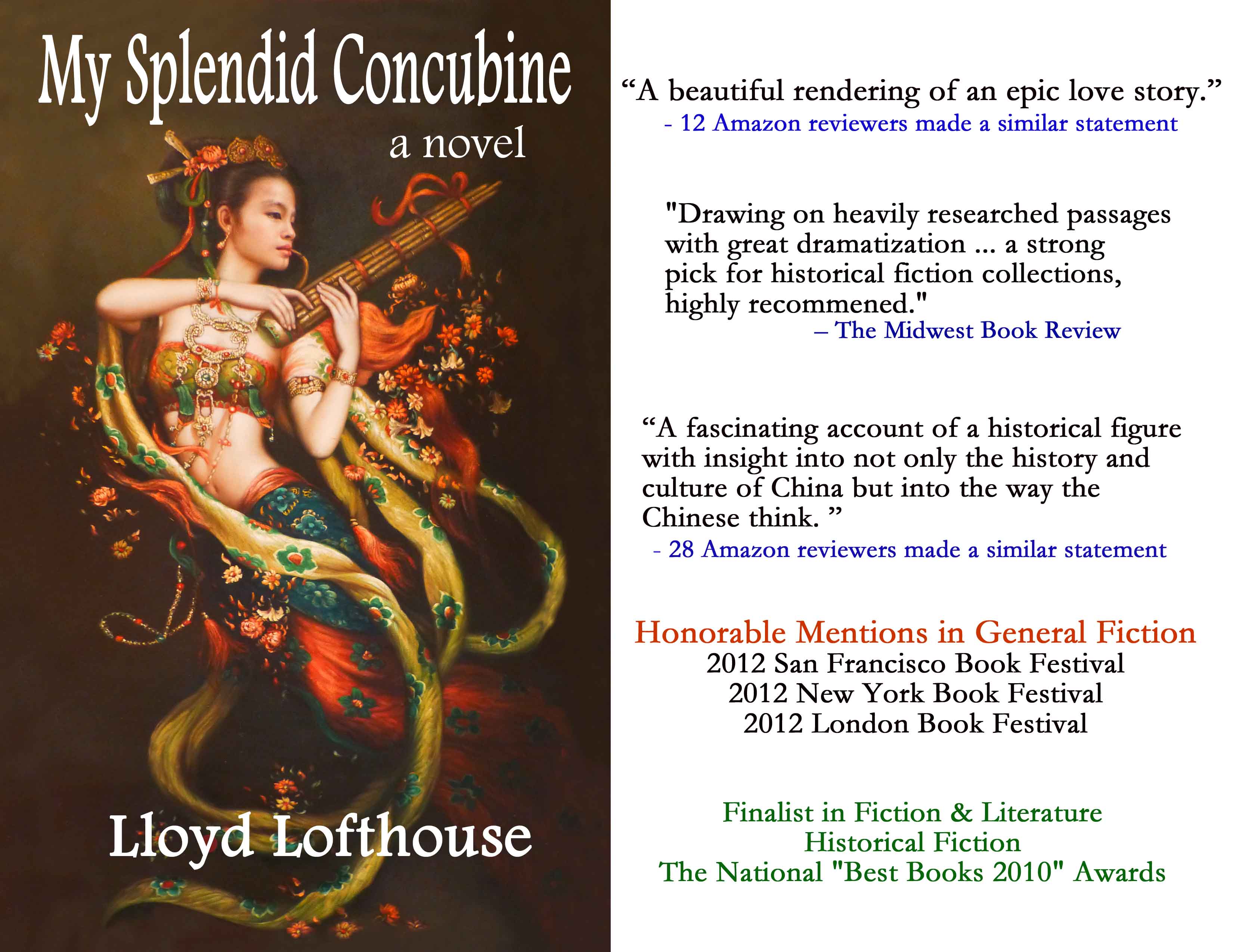
Lloyd Lofthouse is the award-winning author of My Splendid Concubine [3rd edition]. When you love a Chinese woman, you marry her family and culture too. This is the lusty love story Sir Robert Hart did not want the world to discover.

IMAGE with Blurbs and Awards to use on Twitter

Subscribe to “iLook China”!
Sign up for an E-mail Subscription at the top of this page, or click on the “Following” tab in the WordPress toolbar at the top of the screen.

About iLook China

China’s Holistic Historical Timeline


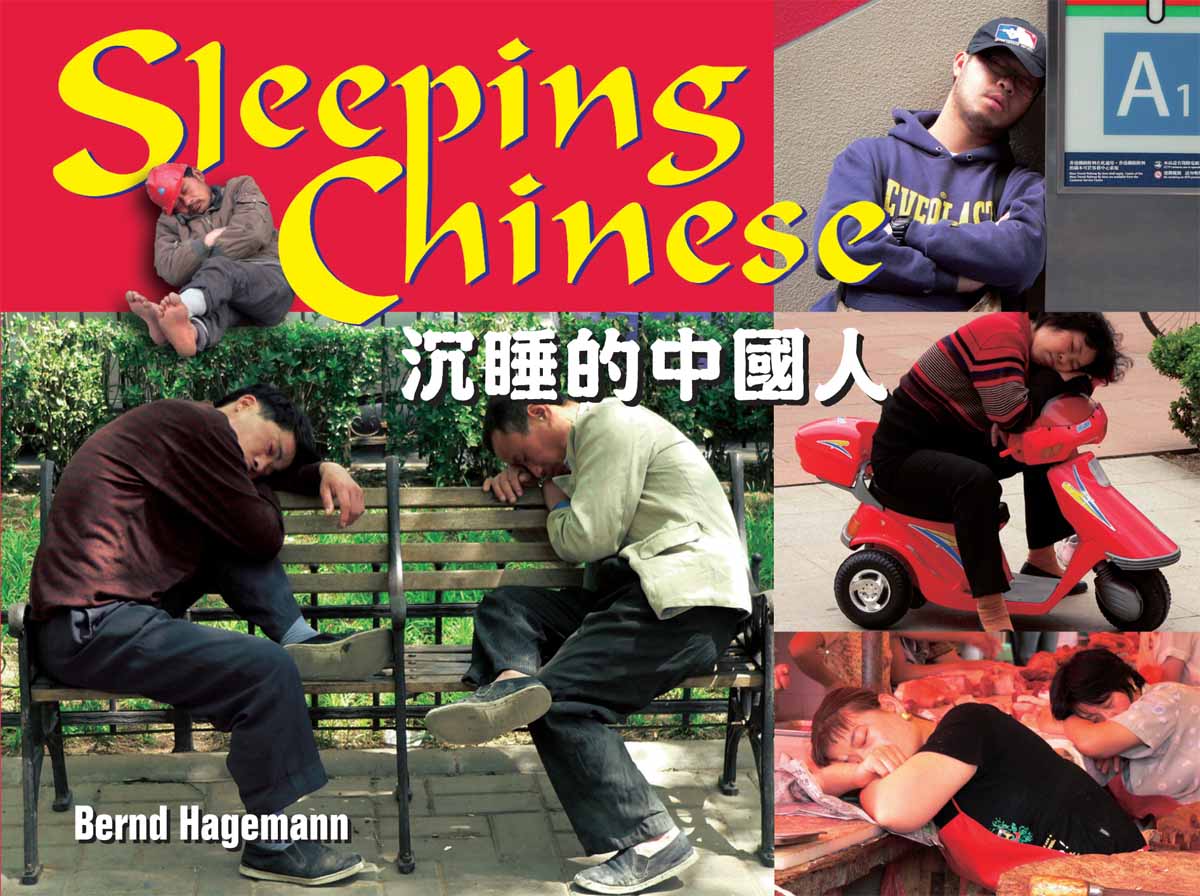
Bernd Hagemann’s “Sleeping Chinese”

May 27, 2015

a guest post by Tom Carter of Bernd Hagemann’s Sleeping Chinese

German businessman Bernd Hagemann arrived in China in 2002 amidst media reports of China’s impending rise to global domination. “News outlets around the world,” he writes, “were warning us about… how fast China is developing, how competitive it is, and what a tense life the Chinese people must live.”

Casual strolls down the streets of China in between boardroom meetings and networking, however, soon revealed to Hagemann a far less threatening side of China. So he took out his point-and-shoot camera and documented what he saw all around him. In just 148 pages, Hagemann’s debut photography book Sleeping Chinese swiftly dispels 9 years of chest-pounding by the PRC propaganda machine.

Sleeping Chinese is a fun little novelty item the exact same dimensions as a postcard that will leave you either laughing out loud or scratching your head in perplexity. The pages are divided into 3 parts: Hard Sleepers, Soft Sleepers and Group Sleepers, a clever allusion to China’s train carriage classification system.

Hard Sleepers: “Those who snooze in hard and uncomfortable places can fall asleep anywhere – even on a pile of bricks in a construction site!” Hagemann defines.

Witness, then, the dozens of people who have drifted into deep slumber atop stones, wood, mortar blocks, concrete and even cold slabs of raw meat. The most comical of the chapter being the dozing shoe repair man balancing precariously on a saw horse with an extra 2×4 for a pillow.

Soft Sleepers: “A little more fussy than their hard sleeper comrades,” the chapter intro explains, “fussy” meaning in plastic wash bins, hammocks slung under freight trucks, sleeping lengthwise across a motor scooter and even a laborer using a tape measure to cover his eyes.

Group Sleepers: “A traveling family needs no pillows when they have each other’s knees.” Truly, the photo of the family of five all huddled together like newborn puppies gives greater meaning to ‘jiating,’ China’s family unit.


Some Chinese might take offense to Hagemann’s photographic agenda, but anyone with a sense of humor will see that the book was made out of affection.

“I’d like to express my appreciation of the hard work and effort put in by migrant workers who play a central role in China’s success story but seldom receive the attention they deserve,” writes Hagemann.

Indeed, anyone who has spent quality time in China knows that these laborers, more than anyone else, deserve their rest — anywhere they can get it.

None of the snapshots in Sleeping Chinese were staged. Any foreign tourist in China who bothers to stray from his package tour group or get out of his hotel for a jaunt off the tourist trail will see these exact same sights, and more.

Incidentally, taking and publishing photos of sleeping Chinese people will often land a foreign tourist in hot water if caught by the authorities (the subjects themselves tend not to mind).

People’s Daily newspaper, the official mouthpiece of the Politburo, even attempted to put a socialist spin on Hagemann’s revealing imagery in an article about Sleeping Chinese: “If (we) are tired, (we) lie down anywhere and anytime and sleep. This shows (our) society’s accepting attitude.”

Regarding the western media’s scare tactics of China’s “waking dragon,” this reviewer is reminded by Sleeping Chinese of a particular song from old-school hip-hop artists Public Enemy (who I had occasion to watch perform during their 2007 tour through Beijing): Don’t Believe the Hype!

____________________

Travel photographer Tom Carter is the author of CHINA: Portrait of a People, a 600-page China photography book, available through Amazon.com

If you want to subscribe to iLook China, there is a “Subscribe” button at the top of the screen in the menu bar.


Yao Ming, China’s basketball superstar

May 26, 2015

The embedded ten-minute video of the China Daily interview with Yao Ming is in Mandarin with English subtitles.

For those who don’t know who Yao Ming is, he was born in Shanghai, China in 1980.  When he was twenty-two, Yao Ming came to the US. where he played for the Houston Rockets of the National Basketball Association and, at the time, was the tallest player in the NBA at 2.29 meters or 7 feet 6 inches.

Before Yao Ming came to the US, he played for the Shanghai Sharks as a teen then played on their senior team for five years in the Chinese Basketball Association.

Watching the China Daily interview revealed another side to this gentle giant. A brief abridged transcript of the interview is provided.

The People Daily interview took place in July 2010 shortly before a charity game held in Beijing. The reporter conducting the interview is Yu Yilei

Yu Yilei – Your charity game will be held in Beijing. What idea do you want to convey through it?

Yao Ming – The main purpose of the game is to help kids in Sichuan and other remote areas to rebuild their schools. In addition, we want to tell the public that people like us, who live in big cities, have the responsibility and obligation to help others.

It (the charity) was actually Steve Nash’s idea. Nash had a friend who was an entrepreneur in China, and he’d been concerned about China’s education in its remote areas.  It was an early time, the beginning of 2007.

I said I needed to think it over, because I didn’t have any experience in terms of charity (In fact, Charity as we know it in America and/or the West was new to the Chinese).

The man who provided the information about education in remote areas of China shocked “us” deeply.

A foreigner knew more about China than I did.  It feels… It makes me blush. (He then mentions that charity is just getting started in China and there hasn’t yet been time to develop regulations to supervise and protect it.)

Yu Yilei – How to you insure the regulation of the Yao Foundation?

Yao Ming – I think information transparency is most important. There is a professional management team and accountants. You can also find out very clearly on our website what each donation has been used for.

Yao Ming goes on to talk about his son and how China and America have influenced him.

Notes: In 2004, Business Week reported that Yao’s four-year contract with the Rockets was worth $18 million, and he earned an estimated $15 million a year in longer-term deals with top-tier brands Pepsi, Reebok, Gatorade, and McDonalds.…Some executives believe Yao has the potential to gross $300 million in his first 10 years in the league. Yao Ming earned 51 million U.S. Dollars (357 million yuan) in 2008 alone.

In July 2011, Yao announced his retirement from professional basketball due to a series of foot and ankle injuries that forced him to miss 250 games in his last six seasons. In eight seasons with the Rockets, Yao ranks sixth among franchise leaders in total points and total rebounds, and second in total blocks.

Yao is married to Ye Li, a women’s basketball player for China. He met her when he was 17 years old. Ye was not fond of Yao at first, but finally accepted him after he gave her the team pins he had collected during the 2000 Summer Olympics. She’s the only woman he has ever dated. Their relationship became public when they appeared together during the 2004 Olympics closing ceremony. On August 6, 2007, Yao married Ye in a ceremony attended by close friends and family and closed to the media.

In August 2012, Yao started filming a documentary about the northern white rhinoceros. He is also an ambassador for elephant conservation. Yao has filmed a number of public service announcements for elephant and rhino conservation for the “Say No” Campaign with partners African Wildlife Foundation and WildAid.

______________________________

Lloyd Lofthouse is the award-winning author of My Splendid Concubine [3rd edition]. When you love a Chinese woman, you marry her family and culture too. This is the lusty love story Sir Robert Hart did not want the world to discover.

2015 Promotion Image for My Splendid Concubine

Subscribe to “iLook China”!
Sign up for an E-mail Subscription at the top of this page, or click on the “Following” tab in the WordPress toolbar at the top of the screen.

About iLook China

China’s Holistic Historical Timeline


China’s eBook Explosion

May 20, 2015

The first time I visited China in 1999, we visited Book City in Shanghai. It was the largest bookstore I’d seen—ever! Book City had several floors with elevators and escalators, and at each floor I had to wait in line to get on the next escalator up.

It was that busy. Bookstore owners in the US only get to dream of such traffic.

Most of the books were by Chinese authors and written in Chinese. One small segment on the fourth floor offered books from the rest of the world and most were in English.

Then, for a few years, bookstores owned by private companies—not state owned—sprouted like mushrooms, but today, as in the United States, those brick and mortar bookstores may be struggling to survive.

The Independent in the UK said, “Hard times for traditional books as China’s digital publishing industry grows. Pity the poor paperback. The days of the traditional book in China are numbered, according to figures just released by the central government, it seems more and more people are now turning their attention to digital forms of publishing.”

And the Chinese are buying eBooks with a passion, as you may witness from the next embedded video.

It you have never been to China, you should not be surprised, because China has had a thriving publishing industry for longer than a thousand years and more than 95% of its population is literate.

Vearsa.com reported (March 30, 2015), “The eBook market, and in particular the English language eBook market, in China is still in its infancy but the scope and impact of eBooks in China is evolving at an incredible pace.” In addition, Digital Bookworld.com says, “China’s book market is growing fast. And ebooks in particular are on the rise thanks largely to the worldwide mobile boom impacting publishers everywhere.”

After all, the Chinese invented paper and the printing press centuries before it appeared in Europe. In China, the printing press was invented during the Tang Dynasty between the 4th and 7th century AD. In Europe, Gutenberg’s movable type press didn’t appear until about 1450 AD—the Chinese beat the West by about a thousand years with this innovation (hundreds of other). Computer Smiths.com

______________________________

Lloyd Lofthouse is the award-winning author of My Splendid Concubine [3rd edition]. When you love a Chinese woman, you marry her family and culture too. This is the lusty love story Sir Robert Hart did not want the world to discover.

2015 Promotion Image for My Splendid Concubine

Subscribe to “iLook China”!
Sign up for an E-mail Subscription at the top of this page, or click on the “Following” tab in the WordPress toolbar at the top of the screen.

About iLook China

China’s Holistic Historical Timeline


The World’s Two Peace Prizes: Confucius versus Nobel

May 19, 2015

Michael Martina of Reuters reported on The Confucius Peace Prize. The headline read, China stood up by winner of ‘Confucius peace prize’.

The headline used for this Reuters news made mockery of what a few Chinese citizens attempted and the lead paragraph goes, “It was meant to be China’s answer to the Nobel Peace Prize …”

At first, it sounds as if China’s Communist Party was behind this alternative to the Nobel Peace Prize.

After reading the rest of Martina’s piece, we learn that the Confucius Peace Prize had no connection to China’s central government. Since news of it wasn’t reported in China’s state media, few in China probably even heard of it.

A spokesperson for the Confucius Peace Prize said, This prize is from the people of China, who love and support peace.” The Confucius Peace Prize is a prize established in 2010 in the People’s Republic of China in response to a proposal by business person Liu Zhiqin on November 17, 2010. The chairman of the committee said that the award existed to “promote world peace from an Eastern perspective”, and Confucian peace specifically.

The Confucius Peace Prize may never rival the Nobel, but using Confucius’s name for a peace prize makes more sense than using Alfred Bernhard Nobel’s name.

If you compare The Life of Confucius and/or watch the Confucius film starring Chow Yun Fat you might understand why Confucius deserves the honor more.

After all, Nobel built his fortune on death. He was a Swedish chemist, engineer, innovator and armaments manufacturer. The Chinese—not Confucius—might have invented gunpowder, but Nobel invented dynamite and manufactured cannons and other more advanced weapons.

He also waited until after his death to make amends for the suffering and destruction his products had caused.

In his last will, Nobel directed that his enormous (blood drenched) fortune be used to institute the Nobel Prizes and made sure to name these prizes after himself so he wouldn’t be remembered as the “Merchant of Death” or the “Lord of War”.

To understand better who Alfred Nobel was, I suggest you watch Nicolas Cage in the Lord of War, a movie released in 2005. Although the movie was not about Nobel, it is about a “Merchant of Death”.

In fact, it may not have been Nobel’s idea to include the Peace Prize. Although Nobel never married, his first love, a Russian girl named Alexandra corresponded with him until his death in 1896. Many believe she was a major influence in Nobel’s decision to include the Peace Prize among the other prizes provided for in his will for science.

______________________________

Lloyd Lofthouse is the award-winning author of My Splendid Concubine [3rd edition]. When you love a Chinese woman, you marry her family and culture too. This is the lusty love story Sir Robert Hart did not want the world to discover.

2015 Promotion Image for My Splendid Concubine

Subscribe to “iLook China”!
Sign up for an E-mail Subscription at the top of this page, or click on the “Following” tab in the WordPress toolbar at the top of the screen.

About iLook China

China’s Holistic Historical Timeline