The Spy that Never Was

June 20, 2011

A friend sent me a link to the story of Glenn Shriver, an American sent to jail for four years after he pleaded guilty for being paid $70,000 by China to attempt to get a job with the CIA or another intelligence agency in the US.

The Huffington Post said, “Court documents said Shriver was approached by Chinese officers while living in Shanghai in 2004 after earlier study trips to China.”

Shriver didn’t get the job since the CIA caught him before he was hired by the agency.

In fact, the Daily Herald reported that Shriver isn’t alone and “was one of at least 57 defendants in federal cases prosecuted since 2008 involving espionage conspiracies with China or efforts to pass secret information, sensitive defense technology or trade secrets to various players within the nation — be them intelligence operatives, state-sponsored research institutes or private-sector businessmen, according to an Associated Press review of U.S. Justice Department cases.”

It’s a fact that China spies on the US. That cannot be denied. Heck, there are cases where England and Israel have spied on the US too.

However, before you start ranting about China being sneaky and underhanded, you may be interested that spying is a two way street between nations and the US plays the same serious game.

In February 2003, the BBC News World Edition reported, “The US Central Intelligence Agency has launched a campaign to attract Chinese-American recruits with an advert welcoming the Year of the Goat.” The CIA advertised in newspapers and magazine in American cities with big Chinese communities.

What’s ironic, is Glenn Shriver never became a spy. He only appeared to have had the intent to spy. Since Shriver was paid $70,000 over a period of several years and still failed to get a job, who are the fools here?

How much does the CIA spend for its operations?

The overall US intelligence budget has been considered classified until recently when Mary Margaret Graham, a former CIA official and deputy director of national intelligence for collection in 2005, said the annual intelligence budget was $44 billion. Source: Wikipedia.org

However, that may not be all the money the CIA spends on spying.

According to Source Watch.org, “The CIA black budget is annually in the vicinity of 1.1 trillion dollars and the covert world of ‘black programs’ acts with virtual impunity, overseen and regulated by itself, funding itself through secret slush funds, and is free of the limitations that come from Congressional oversight, proper auditing procedures and public scrutiny.”

Don’t have any secrets to sell. Don’t worry. Glenn Shriver was paid $70,000 by China and had nothing to sell and if Source Watch is correct, the CIA has a lot of money to throw around but watch out. You may find yourself in prison for just wanting to be a spy for the other side.

Discover more about Serious Spy Games

______________

Lloyd Lofthouse is the award-winning author of the concubine saga, My Splendid Concubine & Our Hart. When you love a Chinese woman, you marry her family and culture too.

To subscribe to “iLook China”, look for the “Subscribe” button at the top of the screen in the menu bar, click on it then follow directions.


The “Vanishing” Street Art of Chinese Calligraphy

June 19, 2011

Chinese calligraphy is not vanishing. What I’m talking about is demonstrated in the videos included with this post. In China, many artists use sidewalks as a canvas and a brush with water to paint the beauty of calligraphy. As the water evaporates, the art vanishes.

In fact, calligraphy is more popular than ever. After the Cultural Revolution, many people turned to calligraphy in the hope of finding solace in the calm repetition of its exercises. Then, in 1981, the authorities took the lead in setting up a Chinese Calligraphers’ Association, the first such nationwide body ever to be established in the country. Source: Fathom.com, The British Museum

Both a language and an art, Chinese calligraphy has been traced back more than 4,000 years to the crude form called “Jia Gu Wen” found on turtle shells from the Shang Dynasty.

Calligraphy first bloomed as an art during the Han Dynasty but by the time of the Tang Dynasty, it had declined as an art. Source: Chinese Calligraphy History

It would be difficult to talk about Chinese art without understanding Chinese calligraphy and its artistic inspiration. A painting has to convey an object, but a well-written character conveys only its beauty through line and structure.

In Shanghai on sidewalks, or Beijing at The Summer Palace, I’ve watched men with long handled brushes, as seen in the first video, using water for ink and concrete for paper. With grace, they exhibit the skills of a Rembrandt breathing life into the characters.

America’s so called street artists should copy the Chinese that practice calligraphy and trade in their cans of spray paint for brushes and water, which would save US taxpayers much money.

Lin Yutang writes in My Country and My People that Western art is more sensual, more passionate, fuller of the artist’s ego, while the Chinese artist and art-lover contemplates a dragonfly, a frog, a grasshopper or a piece of jagged rock—more in harmony with nature.

Owing to the use of writing calligraphy with a brush, which is more subtle and more responsive than the pen, calligraphy as art is equal to Chinese painting.

Through calligraphy, the scholar is trained to appreciate, as regards line, qualities like force, suppleness, reserved strength, exquisite tenderness, swiftness, neatness, massiveness, ruggedness, and restraint or freedom.

Maybe this helps explain why the Chinese are not as warlike as Christian and Islamic cultures.

This revised and edited post first appeared on July 3, 2010 as Caressing Nature with Chinese Calligraphy

______________

Lloyd Lofthouse is the award-winning author of the concubine saga, My Splendid Concubine & Our Hart. When you love a Chinese woman, you marry her family and culture too.

To subscribe to “iLook China”, look for the “Subscribe” button at the top of the screen in the menu bar, click on it then follow directions.


Chinese Opera and Mao Wei Tao, China’s Living Treasure

June 18, 2011

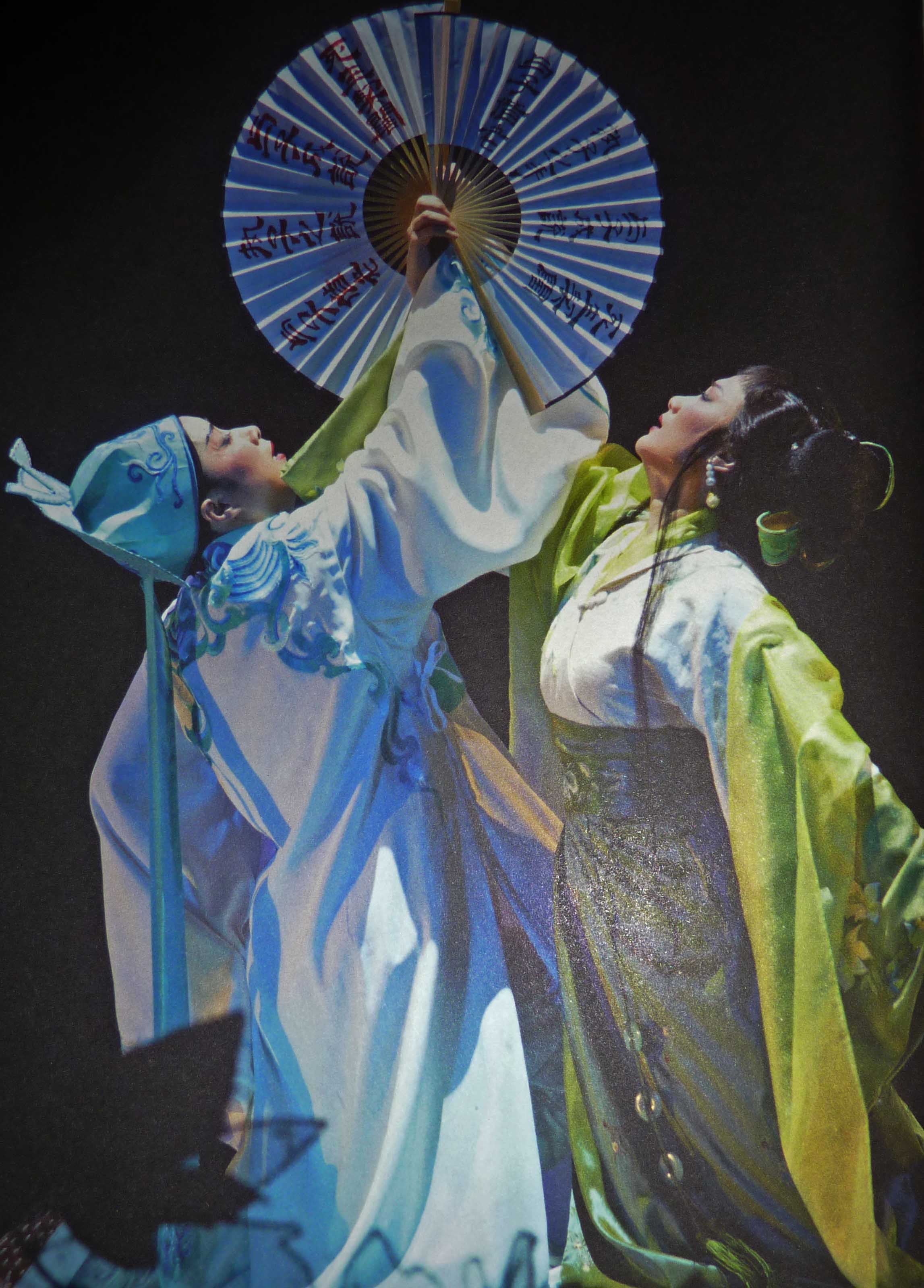
Mao Wei Tao is considered a living treasure in China. She imitates men in the opera roles she plays—a reversal from Imperial China when women were not allowed on stage so men played female roles.

“In 1923, the training of female actors for this art form was set up. Since 1928, the Shaoxing opera troupes, consisting of solely female actors, began their performances in Shanghai. In a few years, females impersonating males had become the most important feature of this opera form, and at the same time the Yue opera became well known all over China.”

East China’s Zhejiang province gave China Shaoxing Opera’s Mao Wei Tao.

In her thirty-year career on the stage, she’s best known as an outstanding male impersonator with a cult following of women.

I was introduced to Yue Opera in Hangzhou, Zhejiang Province about a decade ago.

Mao Wei Tao and her husband have a theater company near the shores of the famous Westlake. My wife translated while I watched the live-opera performance in fascination.

The costumes were lavish and the acting and opera was dramatic while classical Chinese music played in the background.

The challenge today is to keep this form of Chinese opera alive. The audience for opera is shrinking dramatically in China while remaining popular with the older generation.

Television, movies and the Internet are claiming the shorter attention spans of younger Chinese

Mao Wei Tao, considered an innovative genius on stage, adapts and works to keep the art form alive. According to her husband, no two performances are exactly alike.

In November 2010, she performed in Taiwan as a cultural ambassador from the mainland.

This revised and edited post first appeared on March 14, 2010 as Mao Weitao and Yue Opera

______________

Lloyd Lofthouse is the award-winning author of the concubine saga, My Splendid Concubine & Our Hart. When you love a Chinese woman, you marry her family and culture too.


To subscribe to “iLook China”, look for the “Subscribe” button at the top of the screen in the menu bar, click on it then follow directions.


Bobbleheads Still Predicting Bursting Bubbles in China

June 17, 2011

It wasn’t that long ago (May 17) that I wrote about a Chicken Little-Henny Penny predicting a real estate bubble bursting in China and wrecking its economy as it did in the US in 2008.

Then a friend recently sent me another link to another “sky is falling” piece.  This time, the “want-to-happen” bad news came from Jeff Cox, a staff writer for CNBC.

Cox wrote, “China’s economy is showing real signs of weakening, particularly in real estate, and even could tip into a recession, hedge fund manager Jim Chanos told CNBC.”

I’m surprised that Cox looked under a Hedge Fund rock to find a quote predicting a bad economic future for China.

Basically, Hedge Fund managers do two things: they use small amounts of money, or leverage, to promise large amounts of stocks or commodities. Secondly, they all say they will deliver this stock or commodity at a particular point in time. In that sense, hedge fund managers are trying to time the market, which some would say is very difficult if not impossible to do unless they manage to manipulate the market in some way or have a crystal ball.

Using other sources, we discover a few facts that tell us Cox should have left that quote under the Hedge Fund rock where he found it and called someone else.


Discover how many Chinese buy real estate.

First on May 5, Jason Simpkins writing for Seeking
Alpha says,
 “Yes there are probably pockets of bubbles in China and in the real estate market, but against that backdrop you have 500 million people expected to move into Chinese cities by 2020. That means the number of people expected to move into cities is almost double the population of the United States,” said Money Morning Chief Investment Strategest Keith Fitz-Gerald. “So in the context of China’s explosive growth, what we’re looking at are some moderate setbacks over an extended period of high growth.”

Second, on May 9, James Kostohryz writing for Minyanville says, “China’s Housing Bubble: Mainly Hot Air… Studies by the World Bank, The Economist Intelligence Unit, and UBS have noted that average home prices in China as a whole have risen by roughly 6%-7% per annum in the past decade.

Third, China’s real estate investment accounts for roughly 11% of its GDP, and from Chris Oliver writing for Marketwatch on May 18, we discovered that “New home prices rose across leading Chinese cities in April, even as many key cities saw the pace of appreciation and sales volume cool, according to official data Wednesday.… Of 70 cities tracked in the survey, 56 reported gains in new home prices.”

“So, I think that it should be clear by now, that there is no generalized price or quantity bubble in the Chinese residential real estate market,” Kostohryz wrote, “Home prices have actually been getting substantially more affordable in China in the past decade relative to income levels.”

To learn more, I recommend reading what Simpkins, Kostohyrz and Oliver wrote on this topic. The links have been provided.

______________

Lloyd Lofthouse is the award-winning author of the concubine saga, My Splendid Concubine & Our Hart. When you love a Chinese woman, you marry her family and culture too.

To subscribe to “iLook China”, look for the “Subscribe” button at the top of the screen in the menu bar, click on it then follow directions.


Beware of Biased Rumors Masquerading as Truth

June 16, 2011

A Music Blog Post written by Caryn Ganz (posted May 13, 2011) reveals how often the Western media plays into the hand of rumors and misinformation. Bias has much to do with that as you may discover.

A 2010 Pew Global Attitudes Project revealed that unfavorable views of China in the West are legion.  The question Pew asked was, “Please tell me if you have a very favorable, somewhat favorable, somewhat unfavorable or very unfavorable opinion of China.”

The response—sixty-one percent (50 million) of those that responded in Germany had an unfavorable opinion of China; France 59% (39 million); Turkey 61% (45 million); Spain 38% (17.5 million); United States 36% (112 million), and Britain 35% (22 million).  More than 285 million minds and mouths may have a negative opinion of China. To see the entire list (for other countries), click the link for the Pew Project.


Mao died in 1976 and the Communist Party guided by Deng Xiaoping repudiated Revolutionary Maoism. When anyone mentions Mao, they are talking of history—not today.

Just to make clear what an “opinion” means, here are a few definitions: judgment or belief not founded on certainty or proof; the prevailing or popular feeling or view (public opinion); an opinion formed by judging something

Just because people believe something that does not mean it is a fact.

With this in mind, consider that many of those people that have unfavorable opinions of China are publishers, editors and reporters working in the Western Media spreading rumors and misinformation in what they write and report.

For example the media rumor mill reported Bob Dylan was refused permission to perform in China.

In fact, Western newspapers and magazines made all kinds of incorrect claims that Bob Dylan played to half-empty audiences, and the Chinese government censored what he would play when he performed in China

Bob Dylan was not pleased. In fact, Bob Dylan wrote on his Website, “Allow me to clarify a couple of things about this so-called China controversy which has been going on for over a year. First of all, we were never denied permission to play in China….”

Dylan said, “According to Mojo magazine, the concerts were attended mostly by ex-pats and there were a lot of empty seats. Not true. If anybody wants to check with any of the concertgoers they will see that it was mostly Chinese young people that came.… Out of 13,000 seats we sold about 12,000 of them, and the rest of the tickets were given away to orphanages.”

“As far as censorship goes, the Chinese government had asked for the names of the songs that I would be playing…. If there were any songs, verses or lines censored, nobody ever told me about it and we played all the songs that we intended to play.”

If you are interested in everything Bob Dylan said, I suggest you visit his Website (the link above).

For those readers with open minds, if we are to learn anything from this,
“It is to take with a grain of salt everything you hear or read in the World about China.”  Most of it will be opinions written as fact based on bias, which shows us that Yellow Journalism  is alive and well in freedom land proving that in the West we have the freedom to lie and pretend it is the truth.

To discover the possible truth about other opinions of China, learn from What is the Truth about Tiananmen Square? and/or 2/28 Massacre in Taiwan

______________

Lloyd Lofthouse is the award-winning author of the concubine saga, My Splendid Concubine & Our Hart. When you love a Chinese woman, you marry her family and culture too.

To subscribe to “iLook China”, look for the “Subscribe” button at the top of the screen in the menu bar, click on it then follow directions.