The Sheng, one of China’s Oldest Musical Instruments

August 23, 2010

According to one source, the Sheng dates back as far as 1200 BC. Many Westerners also call it a “Chinese mouth organ”.

An early Sheng was discovered in Hubei Province in a Zeng royal tomb dating back 2400 years to the Zhou Dynasty (1111-222 BC).

 The Sheng has also been found in Han tombs in Hunan province.

The Sheng is a wind instrument with a bundle of between 17 and 37 pipes. Music is made by blowing and/or sucking the air through a tube connected to the base.  The tubes are connected to shape like a gourd.

http://www.youtube.com/watch?v=s7OWX6Aliok

This instrument predates the organ, concertina, harmonica and accordion.

One source says that most modern shengs have 17 pipes that produce crisp, melodious tones using a chromatic scale.  Source: Sheng (instrument) – Wiki

If you want to learn more about Chinese music, see the Jing-Hu

_______________

Lloyd Lofthouse is the award-winning author of the concubine saga, My Splendid Concubine & Our Hart. When you love a Chinese woman, you marry her family and culture too. 

Sign up for an RSS Feed for iLook China


Honoring the Dead

May 13, 2010

Ancestor worship may well be the oldest, unorganized religion in China. Take Tomb Sweeping Day for example. The practice that honors family ancestors started during the Zhou Dynasty and has been around for more than 2,500 years.

The first emperor Qin Shi Huangdi had not unified China yet. China was divided into several nation states governed by hereditary rulers and worshiping ancestors was important in maintaining a link with the past.

Today, many Chinese homes and businesses have a shrine set up to honor the ancestors. This shrine may have the name of the ancestor carved into wood or rock or there is a photo. Food is often left on the table for the ancestors. 

Honoring the Ancestors

Ancestor respect is also an important part of Confucianism and there is still an ancestor hall for Confucius in Chufu that is maintained by a direct descendant. Next time you are in a Chinese or Southeast Asian restaurant, look around and see if you can spot a shrine to the ancestors.

Confucianism and ancestor worship is not exclusive to China. After all, China was a super power in Asia for more than two thousand years and had a large influence over other cultures in the region.

Learn more about Confucius from this five-part series about the sage’s life.

______________

Lloyd Lofthouse is the award-winning author of the concubine saga, My Splendid Concubine & Our Hart. When you love a Chinese woman, you marry her family and culture too. 

If you want to subscribe to iLook China, there is a “Subscribe” button at the top of the screen in the menu bar.


Chinese Herbalism

March 15, 2010

If given a choice, I will use herbal medicines when I’m sick instead of modern Western medicine, which will be my last resort.

The use of herbal medicines in China has been traced back to the Zhou Dynasty, late Bronze/early Iron Age, about 2500 to 3000 years ago. The video at the end of this post will give you a better idea how herbalism came to be.

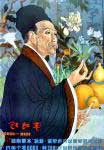
Li Shizhen

In 1596, hundreds of years before Western modern medicine, Li Shizhen spent decades writing down the vast knowledge of herbal lore.

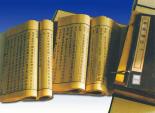
His book, the Ben Cao Gang Mu (1596), has been used as a pharmacopoeia, but it was also a treatise on botany, zoology, mineralogy and metallurgy.

 
Ben Cao Gang Mu

The Ben Cao Gang Mu mentions 1,892 different herbs and is divided into 6 sections, 52 scrolls and 60 different categories.

It has been reported that Darwin had a copy of the Ben Cao Gang Mu with him on his voyage of discovery in 1831.

In fact, the World Health Organization reports that about 80% of people worldwide use herbal medicines for their healthcare.

Discover more about Health Care Without Drugs

______________________________

Lloyd Lofthouse is the award-winning author of My Splendid Concubine [3rd edition]. When you love a Chinese woman, you marry her family and culture too. This is the lusty love story Sir Robert Hart did not want the world to discover.

#1 - Joanna Daneman review posted June 19 2014

Where to Buy

Subscribe to “iLook China”!
Sign up for an E-mail Subscription at the top of this page, or click on the “Following” tab in the WordPress toolbar at the top of the screen.

About iLook China

China’s Holistic Historical Timeline