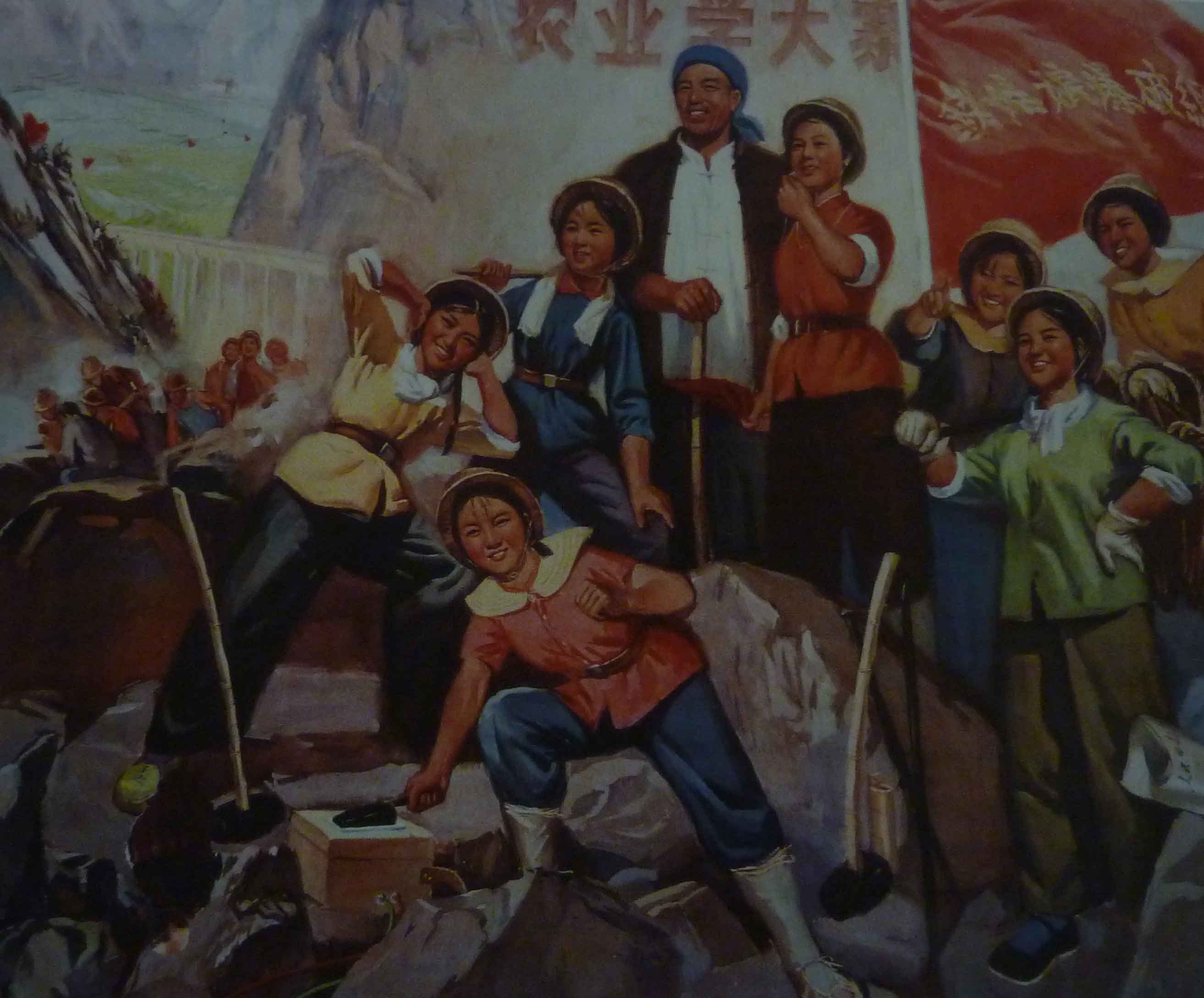
Mao Zedong, the Poet

July 27, 2010

Many outside China think of Mao Zedong (1893 – 1976) as a brutal dictator. Yet, he was fifty-six when he became the ruler of China and seventy-two at the beginning of The Cultural Revolution.

In fact, while commanding the Red Army during The Long March (1934-1935), we see a man who respected China’s peasants proving he was more of a nationalist than a Communist. Then there was the move away from Communist Russia after Nixon’s visit to China in 1972, when Mao said, “Our common old friend, Generalissimo Chiang Kai-shek, doesn’t approve of this.”

In 1935, Mao’s poem, “The Long March”, reveals an awareness of the sacrifice and the willingness to suffer to accomplish great things.

The Red Army fears not the trials of the March,
Holding light ten thousand crags and torrents.
The Five Ridges wind like gentle ripples
And the majestic Wumeng roll by, globules of clay.
Warm the steep cliffs lapped by the waters of Golden Sand,
Cold the iron chains spanning the Tatu River.
Minshan’s thousand li of snow joyously crossed,
The three Armies march on, each face glowing.

Mao was a complex man, and it wasn’t until after the failure of the The Great Leap Forward (1958 – 1961) that the fatal attraction and power of leadership corrupted him leading to the horrors of The Cultural Revolution (1966 – 1976), which Mao’s critics in the West use to define him.

Anyone who follows all of Mao’s life instead of relying on his last decade would understand that he cared deeply about the common people while punishing the landowners and wealthy, who abused them.  On the other hand, his foe, Chiang Kai-shek, supported the landowners and wealthy while crushing the peasants and workers.

There is a post on About China.info that says, “Mao’s poetry exhibits a spirit of boldness and power, weaving together history, reality and commitment… Bold transformation of myth and literary quotations are a distinct feature of Mao’s poetry.”

At Mao Zedong Poems, Two Birds” A Dialogue (1965), reveals what Mao may have been thinking about as President Johnson increased America’s involvement in Vietnam. Was Mao also warning us of what he was about to do in 1966, when he launched The Cultural Revolution?

Two Birds: A Dialogue (1965)

The roc wings fanwise,
Soaring ninety thousand li
And rousing a raging cyclone.
The blue sky on his back, he looks down
To survey Man’s world with its towns and cities.
Gunfire licks the heavens,
Shells pit the earth.
A sparrow in his bush is scared stiff..
“This is one hell of a mess!
O I want to flit and fly away.”
“Where, may I ask?”
The sparrow replies,
“To a jewelled palace in elfland’s hills.
Don’t you know a triple pact was signed
Under the bright autumn moon two years ago?
There’ll be plenty to eat,
Potatoes piping hot,
Beef-filled goulash.”
“Stop your windy nonsense!
Look, the world is being turned upside down.”

Through Mao’s poetry, we learn more about the man—not the modern emperor.

Discover China’s Privately Passionate Poetry

______________

Lloyd Lofthouse is the award-winning author of The Concubine Saga. When you love a Chinese woman, you marry her family and culture too. This is the love story Sir Robert Hart did not want the world to discover.

Subscribe to “iLook China”!
Sign up for an E-mail Subscription at the top of this page, or click on the “Following” tab in the WordPress toolbar at the top of the screen.

About iLook China


American Grasshoppers and Chinese Ants

May 26, 2010

In The Ant and the Grasshopper, as retold from Aesop’s fable and illustrated by Amy Lowry Poole, the grasshopper plays, while the ants work and save diligently gathering grain for winter. The ants urge the grasshopper to prepare for hard times, but the grasshopper will not be bothered.

After all, under Confucianism, absolute obedience to authority, a strict family structure and hard work have been valued for more than two millennia so the ants keep working while grasshoppers play.

In Time to Defriend China, Elizabeth Economy (Is that really Liz’s last name—Economy?) and Adam Segal say we should stop negotiating with China. This post at the “Foreign Policy” Blog, like the grasshopper in Aesop’s fable, is self-centered and out of touch.

Liz and Adam say China isn’t cooperating globally as if China has an obligation. They say, “The sticking points in U.S.-China relations are mirrored in China’s relations with much of the rest world. The European Union and Japan, for example, find it no easier to negotiate with China on issues such as trade, climate change, cyber conflict and the Dalai Lama.”

Really— climate change and cyber conflict? Didn’t China recently announce they were going to cut carbon emissions by 40% or more in the next few years while President Obama thought the US might reach 17%? As for cyber conflict, that’s a two-way street, and the Dalai Lama’s claims are a mix of big lies and small truth.

Meanwhile, China has its hands full with a greater challenge—the 1.2 billion Chinese outside the Communist Party who expect a better life.

In 1950, China was generating 0.005 kilowatts of electricity and much of the country was without.  Under Mao, there was the tragedy of The Great Leap Forward and The Cultural Revolution costing tens of millions of lives. It wasn’t until Mao was gone that China started modernizing and improving the lifestyles of hundreds of millions of people.

Today, China is breaking records building modern cities and growing the second largest economy in the world and with a savings account. However, China still has 750 million people without proper medical care, electricity or modern connivances. In addition, they have problems with Tibet and with the Uyghurs in Xinjiang Province, who want to break free with support from Hollywood and maybe the CIA.

Then there is the Taiwan issue. If the US had not interfered in 1949, that issue would not exist. Taiwan would be part of China today and America would have a larger Chinese population.  Don’t forget that the Kuomintang until the 1980s, was a dictatorship that America supported and the Taiwanese were burdened with martial law for more than thirty years.

When China meets its goals at home, then “maybe,” China will be willing to help the West.

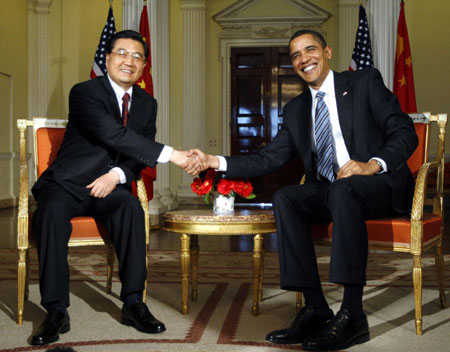
Hu Jintao and Obama shaking hands

Instead of walking away from negotiations as Liz and Adam suggest, the US and the rest of the developed world should find ways to offer a win-win situation that helps China meet its internal goals. How will China do that if they allow the global exchange rate for their currency to fluctuate putting millions of Chinese out of work? If America wants to grow jobs, the US must find ways to do so without hurting the Chinese worker any more than these people have already been hurt. Since the 2008 global economic crises caused by American greed, more than 20 million Chinese workers lost their jobs and 70,000 factories went out of business.

Like those ants in the fable, don’t expect the Chinese to come running to rescue nations that squandered their future while China is still building one. A better opinion on this topic might be this one from Martin Wolf in the Financial Times.

____________________________

Lloyd Lofthouse is the author of the award winning novels My Splendid Concubine and Our Hart. He also Blogs at The Soulful Veteran and Crazy Normal.

Sign up for an RSS Feed for iLook China


Mao Zedong and Edgar Snow

March 3, 2010

During one of our trips to Shanghai, China, my wife and I went to see a film called Mao Zedong and Edgar Snow. It was in Mandarin and wasn’t subtitled, so I had to watch carefully to understand what was going on. Today, I Googled the move and found little about it on the Internet.  I discovered that Edgar Snow’s wife threatened to sue China if the movie was released.

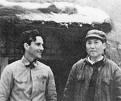
Edgar Snow and Mao

There’s no doubt that Mao had to have had charisma to lead so many men in battle for so many years to win the revolution. Mao changed after he became the modern emperor, and the power corrupted him. The evidence—The Great Leap Forward, The Cultural Revolution and the purges that killed so many. Students of China may want to see this movie, but the only place one may buy a DVD of this movie is probably China.

The next best thing would be to read Snow’s book about Mao, Red Star Over China and/or discover about Health Care During Mao’s Time.

______________

Lloyd Lofthouse is the award-winning author of the concubine saga, My Splendid Concubine & Our Hart. When you love a Chinese woman, you marry her family and culture too.

If you want to subscribe to iLook China, there is a “Subscribe” button at the top of the screen in the menu bar.