The state of Wu has only 33,000 troops while Chu can field a force of 300 thousand.
Outnumbered ten to one, Sun Tzu could build his defenses and wait for the attack. However, he does the unexpected. He invades Chu.
He doesn’t attack Chu’s main army. Instead, he attacks outposts and weaker targets. When Chu sends an army to fight, Sun Tzu slips away emphasizing maneuver, surprise and deception.
After every battle, Sun Tzu learns more about his enemy.
During another war more than two thousand years later, Sun Tzu’s ultimate secret becomes more evident. In the mid 1960s, the world’s largest super power is fighting in Vietnam—a country smaller than the state of Montana.
The American general sees the battlefield like a chessboard where armies stand and fight. However, Vietnam has no clear objectives to attack and destroy.
The Communist general understands Sun Tzu and uses the Viet Cong in hit and run attacks against fixed US positions.
Sun Tzu said, “It is more important to outthink your enemy than outfight him. In war, numbers alone confer no advantage. Do not advance relying on sheer military power.”
The US commander breaks these rules.
Go to Sun Tzu’s “The Art of War” – Part 3 or return to Sun Tzu’s “The Art of War” – Part 1
中
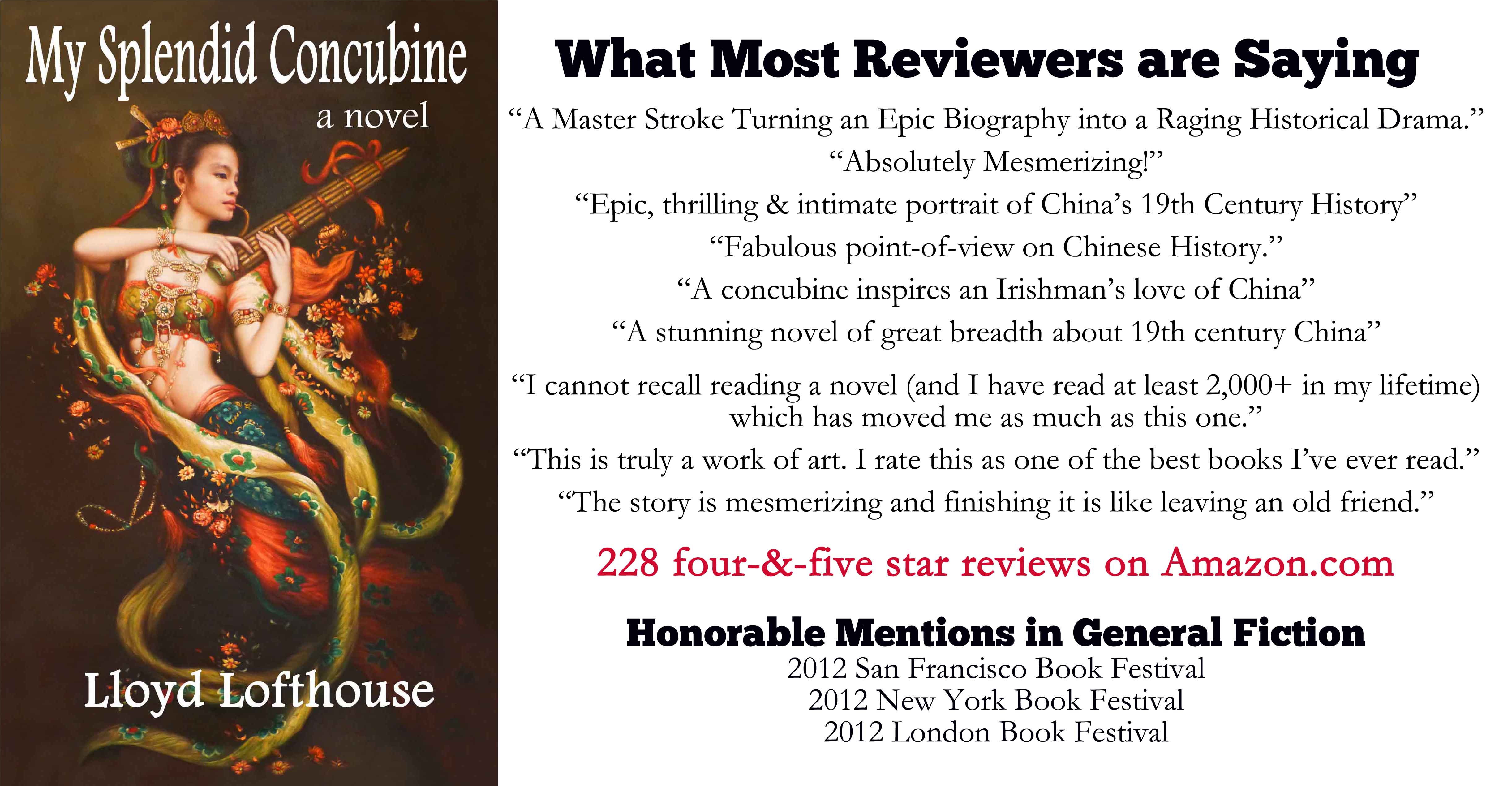
Lloyd Lofthouse is the award-winning author of My Splendid Concubine [3rd edition]. When you love a Chinese woman, you marry her family and culture too. This is the unique love story Sir Robert Hart did not want the world to discover.
Subscribe to “iLook China”!
Sign up for an E-mail Subscription at the top of this page, or click on the “Following” tab in the WordPress toolbar at the top of the screen.
China’s Holistic Historical Timeline


 Posted by Lloyd Lofthouse
  iLook China